
EV Charging Station Installation in Norfolk: A Guide for Homeowners and Businesses
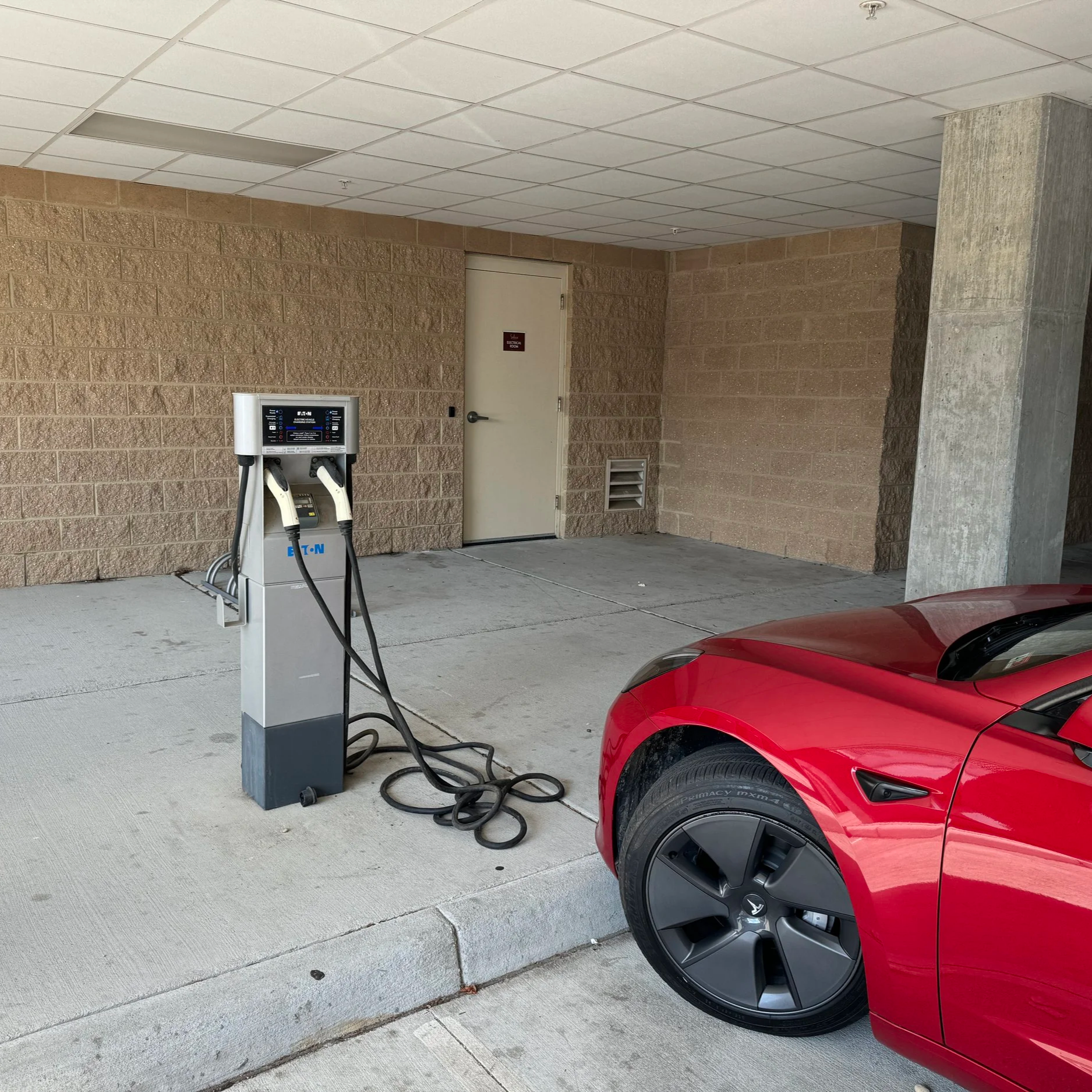
Castles Electrical has handled enough of these calls to know exactly what comes next in the conversation, and this guide covers it plainly so you know what you are getting into before you call.
You finally got the electric vehicle. You drove it home, plugged it into the outlet in your garage, and did the math on how long it would take to charge overnight. If you have a long commute or drive a larger EV, the math probably did not work out the way you hoped. That standard 120-volt outlet, the same kind you use for your phone charger, adds four to five miles of range per hour. If you need 200 miles of range and you are starting from empty, you are looking at a 40-hour charge. That is not a charging strategy. That is a problem, and it is what sends most new EV owners in Norfolk, VA, searching for information on Level 2 charger installation within the first month of ownership. Castles Electrical has handled enough of these calls to know exactly what comes next in the conversation, and this guide covers it plainly, so you know what you are getting into before you call.
For businesses in Norfolk, VA, the conversation starts from a different place but arrives at similar questions. Whether you are a retail property trying to attract customers with longer dwell times, a multifamily property owner evaluating EV infrastructure as a tenant amenity, or a fleet operator trying to charge vehicles overnight without sending them to a public charging station, the underlying questions are the same: What does it actually cost, what does the electrical infrastructure need to support it, and what does the installation process involve? The answers depend significantly on your specific electrical situation, and the gap between the best-case scenario and a more complex installation is wide enough that understanding it up front matters.
Level 1 vs Level 2 vs DC Fast Charging: What the Labels Mean
The electric vehicle charging industry has settled on a tiered labeling system that describes charging speed in terms of voltage and power delivery. Level 1 charging uses a standard 120-volt household outlet and delivers roughly 1.2 to 1.9 kilowatts of power, translating to approximately three to five miles of range per hour, depending on the vehicle. This is the charging method available to any EV owner with a standard outlet in their garage or carport, and it is adequate if your vehicle rarely dips below 50 percent state of charge and you have many hours overnight to replenish what you used during the day. For most people who switch to an EV for meaningful daily driving, Level 1 charging is either marginally adequate or genuinely insufficient.
Level 2 charging operates at 240 volts, the same voltage as your electric dryer or range, and delivers between 7 and 19 kilowatts, depending on the charger rating and the vehicle's onboard charger capacity. This translates to approximately 15 to 40 miles of range per hour, which makes overnight charging reliable for essentially any real-world driving pattern. A vehicle parked overnight for eight hours on a Level 2 charger will typically wake up with a full or nearly full charge, regardless of how depleted it was when you arrived home. DC fast charging, sometimes called Level 3 or DCFC, is the technology used by commercial charging networks and delivers power directly to the vehicle's battery at much higher rates, adding 100 to 200 miles of range per 30 minutes. DC fast charging is not a practical residential installation and is not typically what homeowners in Norfolk, VA, are considering.
What Your Home's Electrical System Needs to Support Level 2 Charging
Adding a Level 2 charging circuit to your home is electrically comparable to adding a dedicated circuit for a large appliance. The charger connects to a 240-volt circuit, typically rated at 40 or 50 amps, which requires its own dedicated breaker in your panel. The first question Castles Electrical asks when a Norfolk, VA, homeowner calls about EV charger installation is about the panel: what is the service size, and is there capacity in the panel for an additional large circuit? A 200-amp panel with several open slots can almost always accommodate a 50-amp EV charging circuit without any panel work. A 100-amp panel that is already heavily loaded may not have the capacity to reliably support a 50-amp charging circuit without either upgrading the panel or carefully evaluating which existing loads can share the panel without creating problems.
The physical distance between the panel and where the charger needs to be installed also affects the cost and complexity of the project. A charger location directly adjacent to the panel, on the same wall as the garage, is the simplest scenario. A charger location at the far end of a detached garage on the opposite side of the house from the panel involves running considerably more wire, potentially through conduit along exterior walls or trenched underground, which increases material and labor costs. The mounting location should be chosen with both practical use and installation efficiency in mind. Castles Electrical will evaluate the run from your panel to the intended charger location as part of the project scoping process and provide you with an honest cost estimate before any work begins.
Choosing Between a Hardwired Charger and a Plug-In Setup
Level 2 home charging equipment can be installed in two configurations: hardwired to a dedicated circuit, or connected via a NEMA 14-50 outlet to which the charger's cord plugs. Hardwiring the charger creates a permanent installation and is the method typically associated with higher-powered chargers. A NEMA 14-50 outlet installation keeps the charger portable, which matters if you own the charger but rent the home and want to take the unit with you when you move, or if you want the flexibility to use a portable Level 2 adapter in addition to your home unit. The outlet also makes it easier to replace the charger unit itself if you upgrade vehicles or charger models in the future, without needing an electrician to disconnect and reconnect the wiring.
From an electrical code standpoint, both approaches are acceptable for residential EV charging installations in Norfolk, VA. The choice often comes down to the homeowner's preference, whether the charger manufacturer requires or recommends a specific installation method, and how permanent you want the setup to be. Military families and frequent movers tend to favor the NEMA 14-50 outlet approach for portability reasons. Homeowners who are settled in a property and want a clean, integrated installation often prefer the hardwired approach. Castles Electrical installs both configurations and can help you decide which better matches your situation.
Commercial and Multifamily EV Charging in Norfolk
Businesses in Norfolk, VA, evaluating EV charging infrastructure are navigating a different set of questions than residential homeowners. The decision framework for a commercial installation starts with understanding the use case: are you installing chargers for employee use, for customer use to increase dwell time, for fleet vehicles, or as a tenant amenity in a multifamily property? Each of these use cases has different implications for how many chargers you need, where they should be located, how they should be metered and managed, and what the business model for the infrastructure looks like over time.
The electrical infrastructure requirements for commercial EV charging scale significantly with the number of chargers. A single Level 2 commercial charger in a small retail parking lot is not fundamentally different from a residential installation in terms of electrical requirements. Ten Level 2 chargers in a multifamily property parking structure require a load management strategy, coordination with Dominion Energy on service capacity, and potentially a significant service upgrade or a dedicated transformer, depending on the property's existing electrical infrastructure. Castles Electrical approaches commercial EV charging projects with a load management plan as part of the installation design, which matters because a commercial property owner who installs EV chargers without understanding the aggregate electrical demand may find themselves with a utility demand charge they did not anticipate.
Permits, Rebates, and Incentives for EV Charger Installation in Norfolk
EV charger installation in Norfolk, VA, requires a city permit for the electrical work. This is standard for any new circuit installation, and the permit process is managed by the licensed electrician handling the project. Castles Electrical pulls the permit, coordinates the inspection, and delivers a completed installation that the city electrical inspector has reviewed. The permit record is useful for insurance purposes and for future property transactions, where buyers may ask about electrical system modifications.
On the incentive side, federal tax credits are available for residential EV charger installation costs under current tax law, with a credit equal to a percentage of the purchase price of qualifying charging equipment. Virginia has state-level incentives that have varied over time, and Dominion Energy has periodically offered rebate programs for residential Level 2 charger installations by customers within its service territory. The incentive landscape changes with legislation and utility program cycles, so checking current availability when you are ready to proceed is more useful than relying on what was available when your neighbor installed their charger two years ago. Castles Electrical can point you to the right resources to verify current incentive eligibility during the installation planning conversation.
What Can Go Wrong With DIY EV Charger Installation
The appeal of handling an EV charger installation without a licensed electrician is understandable — the charger instructions look straightforward, and the NEMA 14-50 outlet needed for a plug-in setup looks like just another outlet. The problem is that the 240-volt circuit feeding that outlet is not something to approach without understanding how to work safely with higher-voltage wiring, and the permit required for the circuit installation means the work must be done by a licensed electrician, regardless of who physically installs the charger unit. An installation done without a permit may not be discovered until the property is sold or an insurance claim is filed, at which point unpermitted electrical work creates real liability.
Beyond the permit issue, DIY installations sometimes result in undersized wiring for the charger's actual load. A 50-amp charger installed on 10-gauge wire rated for 30 amps is a fire risk, and this is the kind of error a licensed electrician would catch, while a homeowner without electrical training might not. The charger may work initially, particularly if it is not drawing its maximum rated current continuously, but the wiring running at or near its capacity limit generates heat inside the wall, which is not visible and not immediately apparent. Castles Electrical's position on EV charger installation in Norfolk, VA, is consistent with what any reputable electrician would tell you: the right installation is a permitted installation with appropriately sized wiring, performed by someone who understands how to verify that the circuit meets the charger's load requirements.
Installing an EV Charger Soon? Get Clear Answers Before You Start
How long does EV charger installation take?
For a straightforward residential installation in Norfolk, VA, where the panel has capacity and the charger location is close to the panel, the installation work itself takes a few hours. The overall project timeline includes the permit application and inspection appointment, which add time beyond just the installation day. Castles Electrical provides a realistic timeline at the start of the project based on current permit processing times and scheduling availability.
What is the difference between a NEMA 14-50 outlet and a hardwired charger?
A NEMA 14-50 is a 240-volt outlet designed for high-amperage applications, and many Level 2 EV chargers can be plugged into one rather than being hardwired directly to the circuit. The NEMA 14-50 approach makes the charger unit portable and easier to replace, which matters if you move frequently or want the flexibility to use different charging equipment. A hardwired installation connects the charger directly to the circuit without an outlet in between, which is preferred by some charger manufacturers and creates a more integrated installation appearance.
Can my panel support an EV charger without an upgrade?
That depends on your current panel size and how much of its capacity is already in use. A 200-amp panel with available breaker slots and a reasonable existing load can support a 50-amp EV charging circuit without panel work. A 100-amp panel in a home with central HVAC, electric water heating, and a washer and dryer may have little remaining capacity. Castles Electrical evaluates panel capacity as the first step in any EV charger installation project in Norfolk, VA, and provides a clear answer before any commitment is made.
Are there EV charging incentives available in Norfolk, VA?
Federal tax incentives for residential EV charger equipment have been available under recent tax legislation, and Dominion Energy has offered rebate programs for qualifying customers in Virginia. Incentive availability and amounts change with legislative cycles and utility program periods, so verifying the current program status when you are ready to proceed is important. Your tax advisor can confirm eligibility for federal credits, and Castles Electrical can help you identify current utility rebate opportunities specific to Norfolk, VA.
How many Level 2 chargers can a typical residential panel support?
Most residential electrical panels in Norfolk, VA, are rated at 200 amps, and a household with normal appliance loads and a single EV charger operating at 50 amps is well within the capacity of that service. Adding a second EV charging circuit for a two-vehicle household requires carefully evaluating the total connected load, as two 50-amp circuits combined with the rest of the home's electrical demand may push a 200-amp service to its limits during peak use periods. Load management strategies, including smart charger scheduling that limits simultaneous charging draw, can make two-vehicle charging feasible without a service upgrade in some situations.
The licensed electricians at Castles Electrical in Virginia Beach offer electrical safety inspections & code compliance, EV charging station installation, and commercial electrician services. We are committed to delivering excellence at straightforward pricing. We offer prompt services to quickly restore your electrical system functioning. Call now!