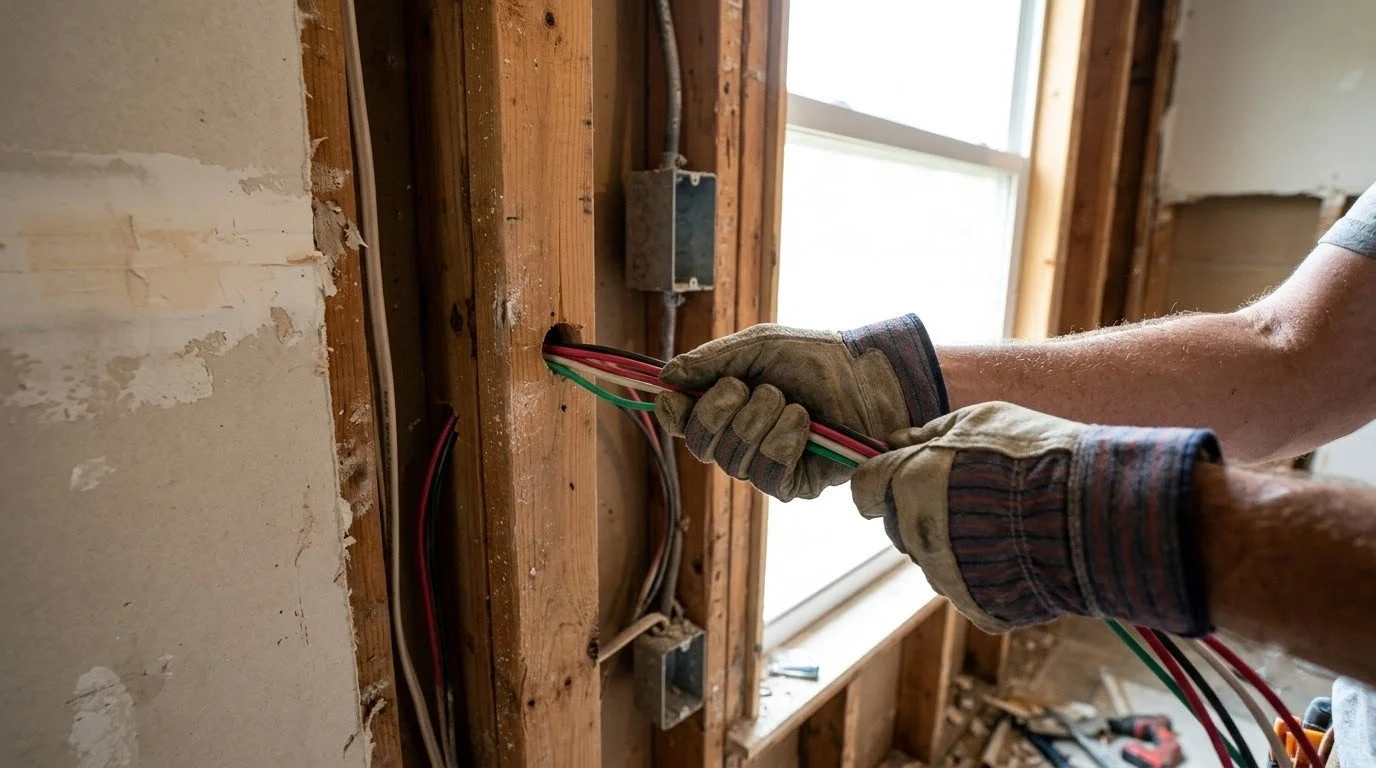
Rewiring an occupied home is careful work: fishing new wire through finished walls, minimizing drywall damage, keeping the home livable during the project, and bringing grounding, AFCI, and GFCI protection up to current code. We tell you honestly whether you need a full rewire or only the affected circuits, and we price based on what your walls actually allow rather than a one-size-fits-all number. Customers describe patient, transparent work delivered up to code without a sales pitch.
Whether you are remodeling with the walls already open, fighting an insurance flag on old wiring, or just tired of a house that was never grounded, one call gets you a licensed electrician who will scope only what your home actually needs, walls open or closed.
01 — Why Homeowners Choose Castles Electrical
Why Homeowners Choose Castles Electrical for Rewiring
Licensed & Insured
Master Electrician and Class B Contractor licensed, fully bonded, and insured for whole-home rewiring.
Old-Wiring Specialists
Knob-and-tube, cloth-wrapped, and aluminum branch wiring are replaced and brought to code across the cities we serve.
Minimal Wall Damage
We fish new wire through finished walls and patch conservatively, keeping demolition to what the job truly needs.
Insurance-Ready
We handle the aluminum and knob-and-tube remediation carriers now require and provide the documentation.
Grounded & Code-Current
Every rewire includes proper grounding and the AFCI and GFCI protection required by the current code.
Free Written Estimate
A firm written estimate after we see your walls and access, honored for 30 days, with no hidden fees.
02 — Three Reasons Homeowners Rewire
Three Reasons Local Homeowners Rewire
The wiring is a documented fire and safety risk
Knob-and-tube and cloth-wrapped wiring from before the 1960s has brittle, degraded insulation, no ground, and connections that were never made for modern loads. Aluminum branch wiring from the 1960s and 1970s loosens and overheats at terminations over time. These are not cosmetic issues. They are the wiring types most associated with electrical fires, and replacing them removes the risk at the source rather than chasing symptoms one outlet at a time. Once the old wiring is gone, the flickering, the warm outlets, and the mystery breaker trips tend to go with it.
Your insurer flagged it or will not renew
Virginia insurance carriers increasingly refuse to write or renew policies on homes with active knob-and-tube or unremediated aluminum branch wiring. If you got a letter, or a home you are buying failed an inspection on the wiring, a rewire or a proper remediation is what restores your coverage. We provide the documentation your carrier needs. Getting ahead of a non-renewal is far less stressful than scrambling after a policy is dropped, and we can usually schedule the assessment quickly when a deadline is looming.
The walls are already open, or the house was never grounded
The best time to rewire is when a remodel, an addition, or a re-side has the walls open, because access is what drives the cost. It is also the moment to fix a house full of ungrounded two-prong outlets. Doing the rewire while the walls are exposed saves money and gives you a grounded, modern system for decades. If you are already paying for a remodel or new siding, folding the rewire into that work is the single best value in this trade, because you never pay twice to open the same wall.
03 — Common Rewiring Problems We Fix
Common Rewiring Problems We Fix in Virginia Beach, Chesapeake & Norfolk
Obsolete and unsafe wiring
These are the wiring types insurers flag and the ones worth replacing on safety grounds.
- Knob-and-tube wiring removal and replacement
- Cloth-wrapped and rubber-insulated branch wiring replacement
- Aluminum branch-wiring remediation and full rewire
- Ungrounded two-prong receptacle systems
- Fuse-box and obsolete-panel service still feeding old wiring
Symptoms of failing wiring
When the wiring is going, the house tells you before it fails.
- Burning smell, warm outlets or switches, and scorch marks
- Flickering or dimming lights not tied to a single fixture
- Frequent breaker or fuse trips
- Buzzing or crackling in walls, outlets, or switches
- Reverse-polarity and open-ground faults on outlet testers
Scope and code items
A rewire is the moment to bring the whole system current, not just swap wires.
- Whole-home versus selective (kitchen, bath, service-entrance) rewiring
- Grounding added throughout, two-prong to grounded conversion
- AFCI and GFCI protection brought to the current code
- Dedicated circuits added for modern appliance loads
- Rewire coordinated with a remodel, addition, or re-side
05 — What Drives Rewiring Cost
What Drives the Cost of a Rewire
Every home is different, so we give a firm written estimate after seeing yours. If you would rather pay over time, we offer financing through Wisetack on repairs and replacements; financing is subject to credit approval and terms may vary. Here is what moves the number, so there are no surprises.
Wall access is the biggest factor
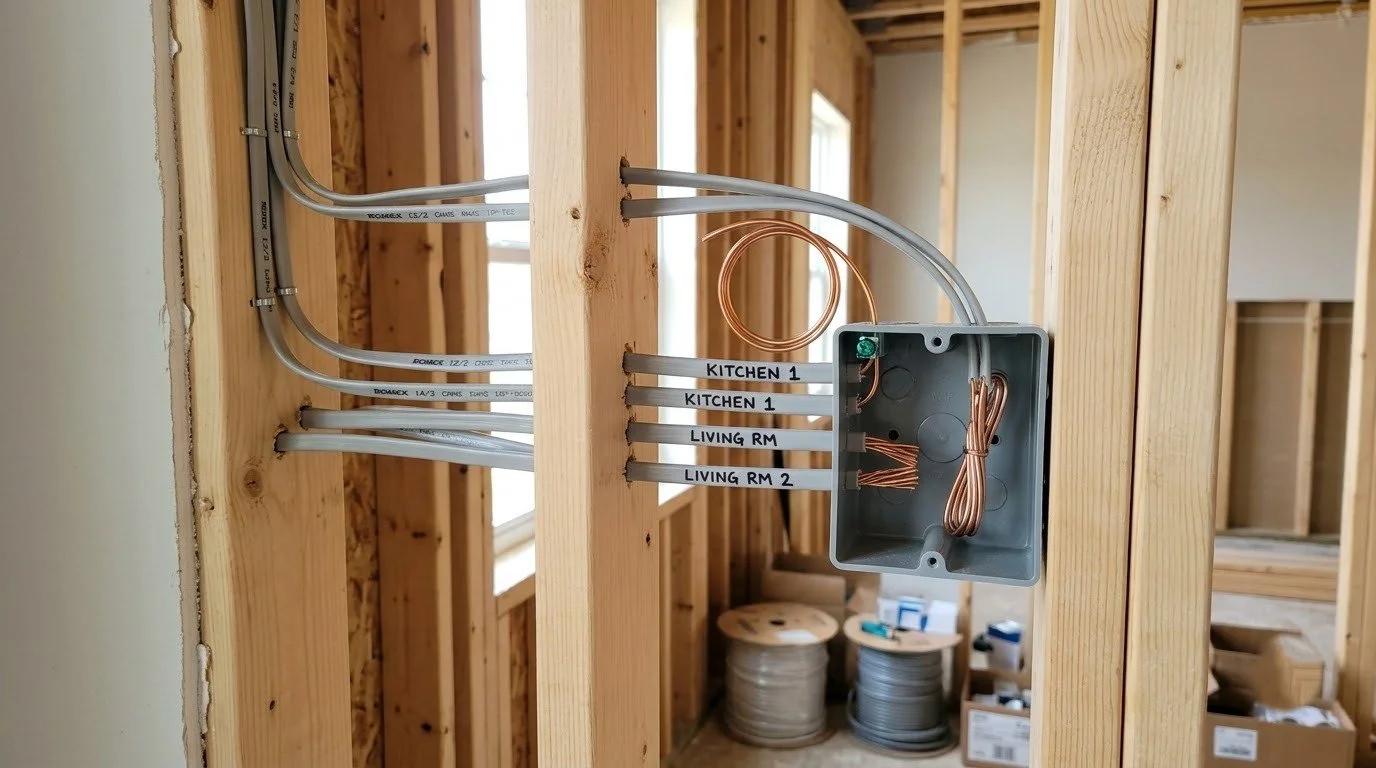
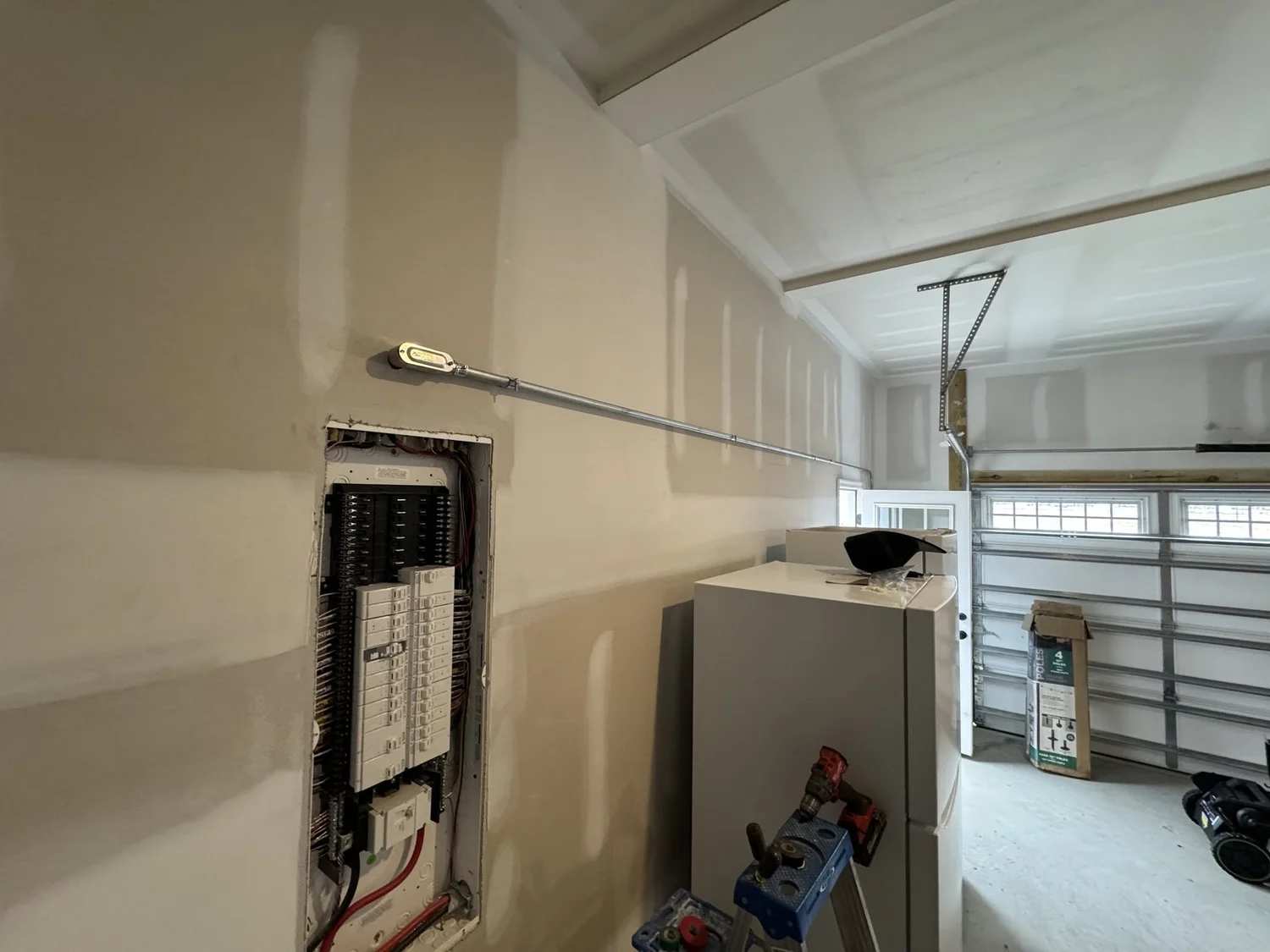
Rewiring a home with open walls during a remodel or re-side costs far less than fishing wire through finished, insulated walls. The more we can reach without opening drywall, the lower the cost, which is why we assess access before quoting. Attics, crawlspaces, basements, and unfinished garages offer paths that keep demolition to a minimum, while a slab home with finished ceilings on every level is the hardest and most involved to rewire.
New wiring is priced by square footage
For new wiring, such as an addition or a gutted space, we price by square footage regardless of the home's size, which keeps the estimate predictable. A rewire of existing finished space is priced by how accessible those walls are. That is why two homes of the same square footage can carry very different rewire prices, and why we would rather see your walls than guess at a number over the phone.
Scope and code coverage
A whole-home rewire costs more than a selective rewire of the kitchen, baths, and service entrance. Bringing the home up to current code with grounding, AFCI, and GFCI protection, plus any panel work the rewire exposes, is part of a job done right, and we itemize it so you can see where the cost goes. Old wiring and an old panel usually go together, so a rewire is often the moment a fuse box or obsolete panel is replaced.
06 — Real Virginia Beach Rewiring Stories
Real Rewiring Projects in Virginia Beach and Nearby Cities
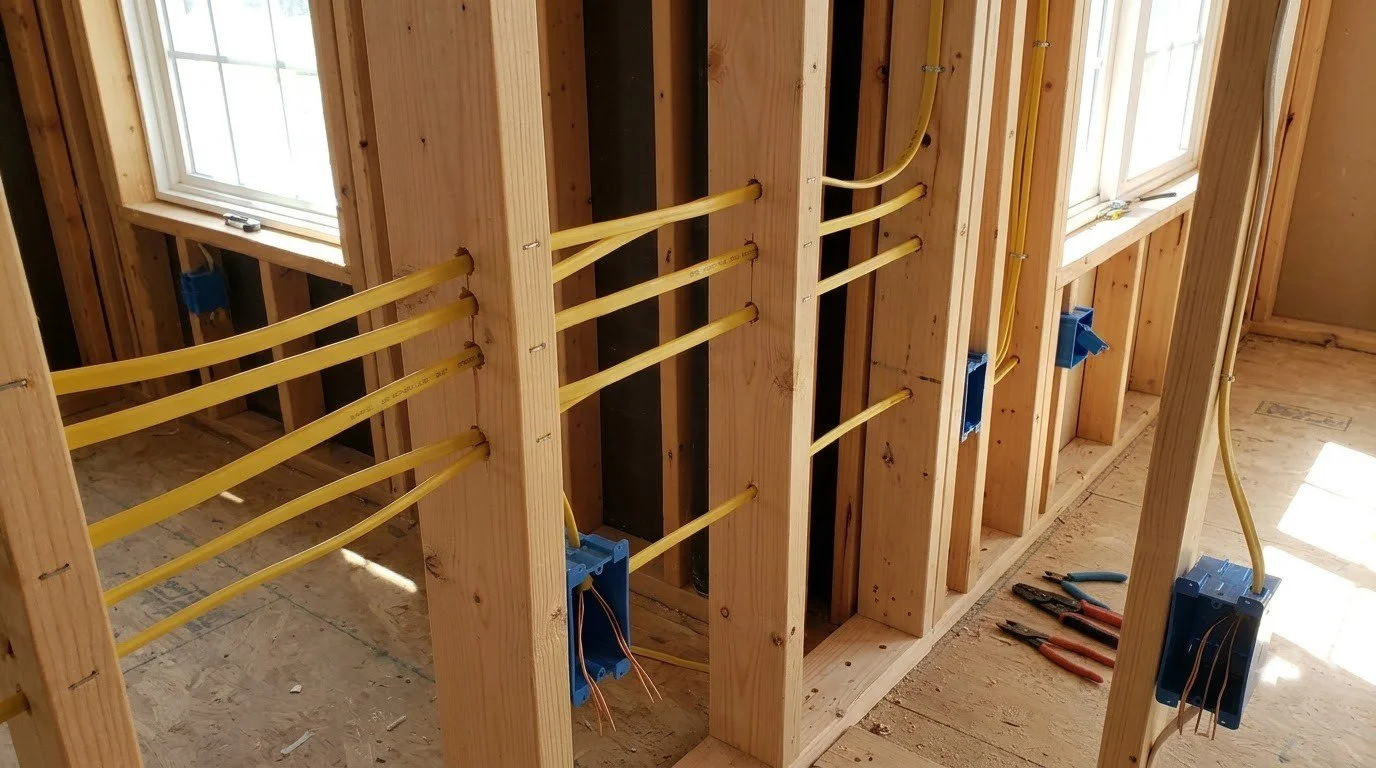
Wilson had Castles Electrical work alongside a whole-home siding project, running new wires between the exposed studs, adding outdoor outlets, relocating exterior lights, and adding whole-house surge protection, all to code. He noted that the project was not rushed, delivered high-quality results, and included solid future-proofing advice with no unwanted sales pitch.
Real Customer Example | From a verified Google review (Wilson C., April 2026)
Pat called Castles Electrical for a complicated wiring problem that another visit might have left half-solved. Castles Electrical diagnosed and fixed it the same day, including ground-wire work, and left it right.
Real Customer Example | From a verified Google review (Pat S., June 2026)
Scott had electrical wiring installed and called the service outstanding, polite, and professional on top of an exceptional job, the kind of result that turns a one-time customer into a repeat one.
Real Customer Example | From a verified Google review (Scott G., June 2026)
Castles Electrical vs. National Franchise Electricians
How a locally owned, owner-licensed shop approaches a rewire compared with the chain model.
07 — Virginia Beach Local Conditions
Virginia Beach Conditions That Affect Rewiring
Local housing spans two centuries, and that wiring history shapes what a rewire here really involves.
Pre-1940 historic homes carry knob-and-tube and cloth wiring
In the older Norfolk and Portsmouth neighborhoods we cover, such as Ghent and Freemason in Norfolk and Olde Towne Portsmouth, plus downtown Suffolk, knob-and-tube and cloth-wrapped wiring still surfaces when walls are opened. We remove and replace it correctly, working within the constraints these older homes impose, preserving what matters and updating what is unsafe.
The 1960s-to-1970s aluminum branch-wiring cohort
A wave of homes here built in the late 1960s and early 1970s used aluminum branch wiring, which loosens and overheats at terminations over decades. This is one of the most common remediation calls we get, and it is exactly the wiring insurers now single out. Homeowners are often surprised to learn that their 1970s house has it, because it looks fine behind the walls until a connection heats up.
Insurance-driven remediation is a leading trigger
Virginia carriers increasingly require aluminum or knob-and-tube remediation as a condition of coverage, and many of our rewire calls start with a renewal notice or a failed pre-purchase inspection. We perform the remediation and document it for the carrier, so you can provide your insurer with proof rather than a promise. That paperwork is frequently the difference between a renewed policy and a dropped one.
Coastal humidity and salt air age insulation faster
Decades of coastal humidity and crawlspace moisture bake and embrittle old wiring insulation and corrode splices in a way a drier inland climate never does. In older coastal homes, we frequently find insulation that is more brittle than its age alone would suggest, along with corrosion at splices and device terminals that a dry-climate electrician would rarely see. It is one more reason legacy wiring here does not age gracefully.
Remodels and re-sides are the ideal rewire window
This area has a steady remodel and re-siding market, and an open wall is the cheapest wall to rewire. We coordinate with siding and remodel projects, so the rewire happens while access is free, exactly as we did on a recent whole-home siding job.
Ungrounded two-prong receptacles are widespread in older stock
Much of the region's pre-1970s housing was wired without a ground, leaving two-prong outlets that cannot safely serve modern electronics and appliances. A rewire is the opportunity to ground the whole home and bring every receptacle to current code. It is the difference between a house that merely has power and one that is actually safe for the electronics, appliances, and people that depend on it.
Historic-district review affects exterior and panel work
In Ghent, Olde Towne Portsmouth, and downtown Suffolk, historic-preservation review can govern exterior electrical elements and panel placement. We plan the visible parts of a rewire with those constraints in mind so the work stays compliant. Getting the exterior details right the first time avoids a stop-work order or a redo, which is exactly what a homeowner in a protected district does not want.

09 — Rewiring FAQs
Whole-Home Rewiring FAQs
Google 5.0 Rated by Virginia Beach Homeowners
Castles Electrical maintains a 5.0 rating on Google. The reviews below load as a live widget, so this page always shows current, verified feedback from real customers across Virginia Beach, Chesapeake, Norfolk, and the surrounding communities.