02 — Beyond Downtown
Beyond Downtown: Suffolk’s Railroad and Mill Villages
Old Suffolk houses are not only in New Town. Virginia’s register listing for Holland says the town’s fabric dates mainly from the late 19th century, and that after a fire on January 1, 1910, much of the town was rebuilt in brick. In a brick house, fewer hidden wall cavities mean routes often run through the attic and crawlspace.
Whaleyville’s fabric reflects the town’s 1880 to 1920 boom, and its modest, nearly all-frame houses were largely built for timber industry workers. In Driver, the earliest house dates to between 1820 and 1840, and most buildings went up in the late 1880s, after the Norfolk and Carolina Railroad arrived. Many houses from those eras now carry a mix of original and later circuits, and the register listing is separate from the city’s historic overlay.
03 — Old Wiring
What Old Wiring Looks Like, and Why Age Matters
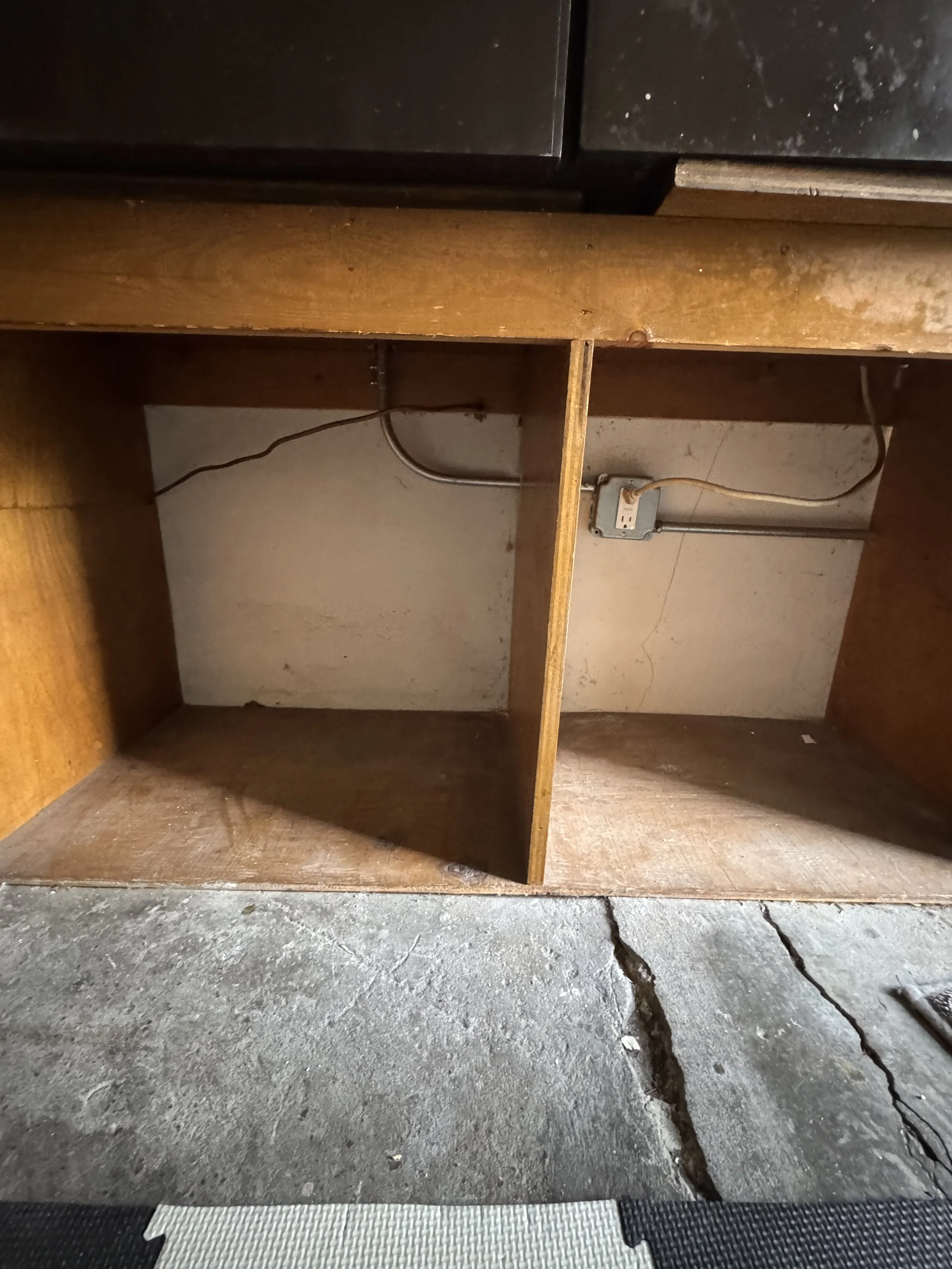
The Department of Energy describes knob-and-tube wiring as insulated copper conductors supported by porcelain knobs along their length and porcelain tubes where they pass through framing, used widely from the 1880s into the 1930s. In an unfinished attic, basement, or crawlspace, those single wires on porcelain are often visible.
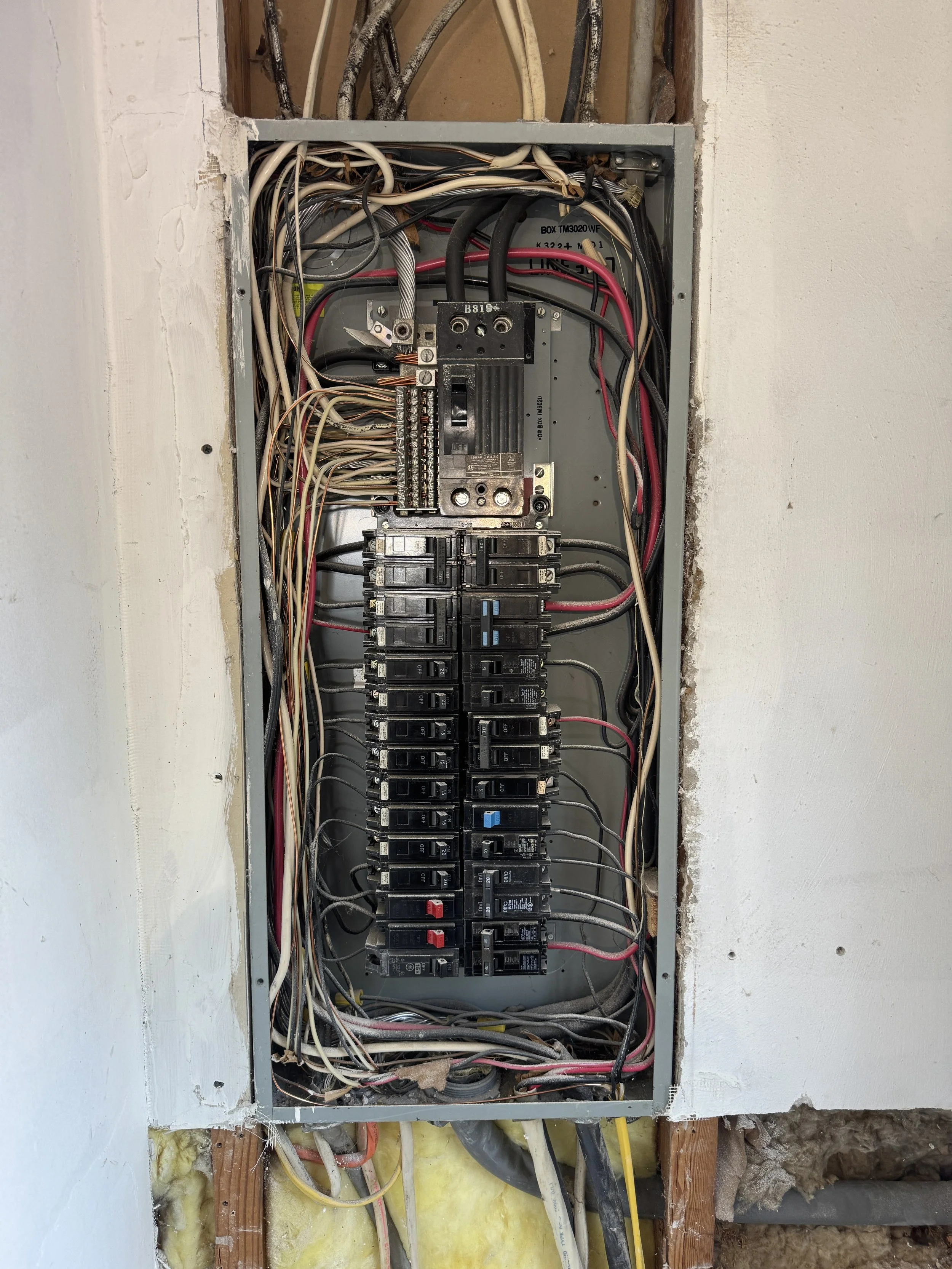
The Consumer Product Safety Commission has noted that wiring components wear out over time and that older systems can struggle with modern appliances such as microwaves, hair dryers, and space heaters. When components age or are overloaded, they can overheat and wear out insulation, which can lead to arcs and short circuits.
Seeing old wiring does not prove it is still live, and not seeing it does not prove it is gone. We trace which circuits are actually in service before recommending a full or partial rewire.
04 — Insulation
Adding Insulation? Deal With Live Knob-and-Tube First
Energy upgrades are often when old wiring becomes urgent. A Department of Energy weatherization notice explains that knob-and-tube wiring in a wall cavity or on an attic floor was intended to have free air around it to cool the wiring, and that laboratory tests showed that insulation packed around such wiring can cause it to overheat. The electrical code does not allow hidden knob-and-tube to be buried in blown-in, batt, or spray-foam insulation that surrounds the wires.
The Consumer Product Safety Commission advises having the electrical system checked by a qualified person before thermal insulation goes in, including whether fuses and breakers are the proper size. The Department of Energy’s attic guidance says to check for live knob-and-tube and either fence it off with a barrier that keeps insulation away or replace it with modern wiring. Live wiring in the space is identified and handled first, and the insulation contractor follows.
05 — Code
How Far a Rewire Reaches Into Code Updates
Virginia’s existing-building code says an alteration cannot leave a house less code-compliant than it was, and portions of the house that are not being altered do not have to be brought up to current code. Opening exterior walls can bring other code items, such as insulation in the opened cavities once the old wiring there is gone, so we confirm with the building official what opening an exterior wall would trigger.
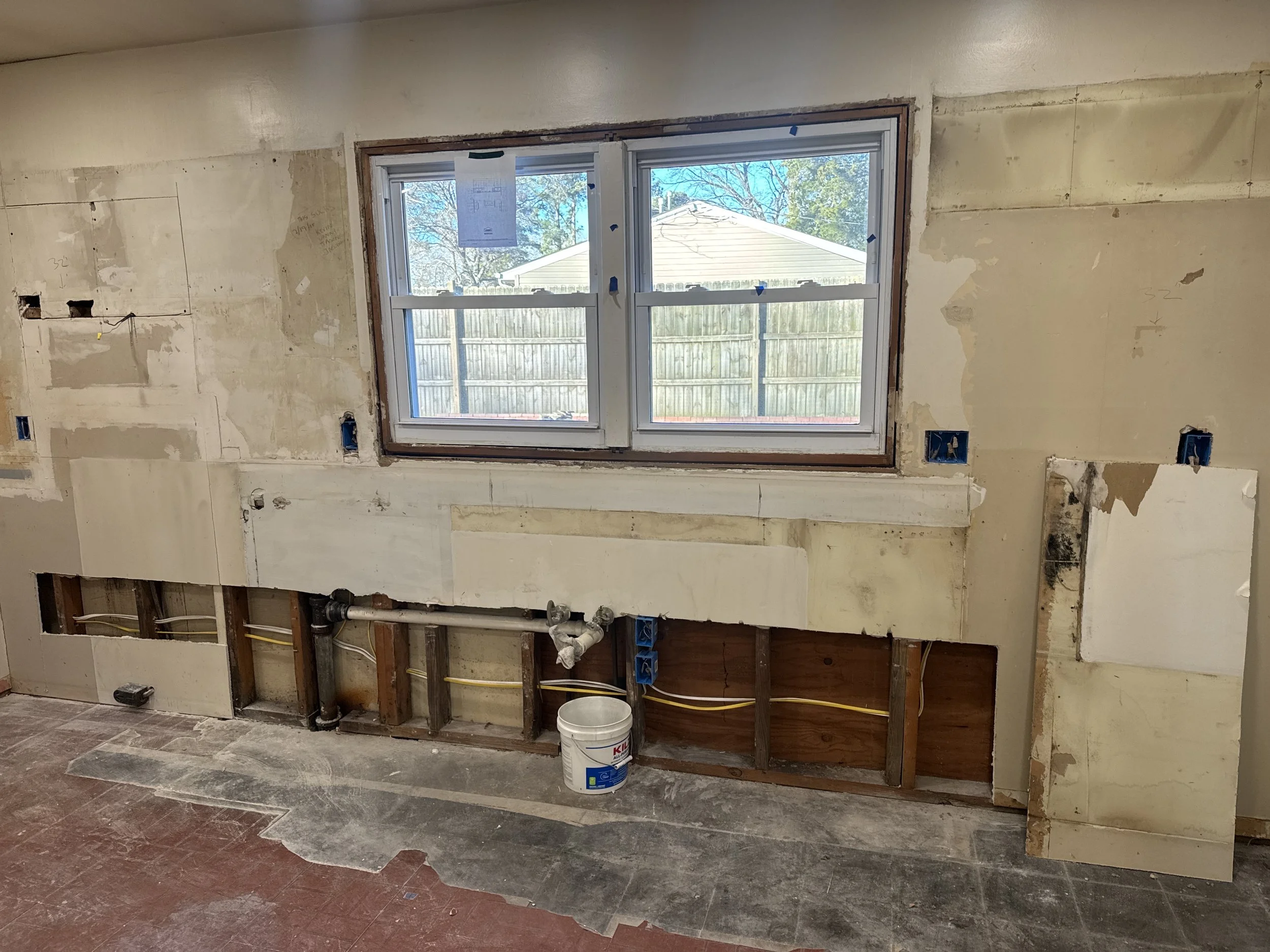
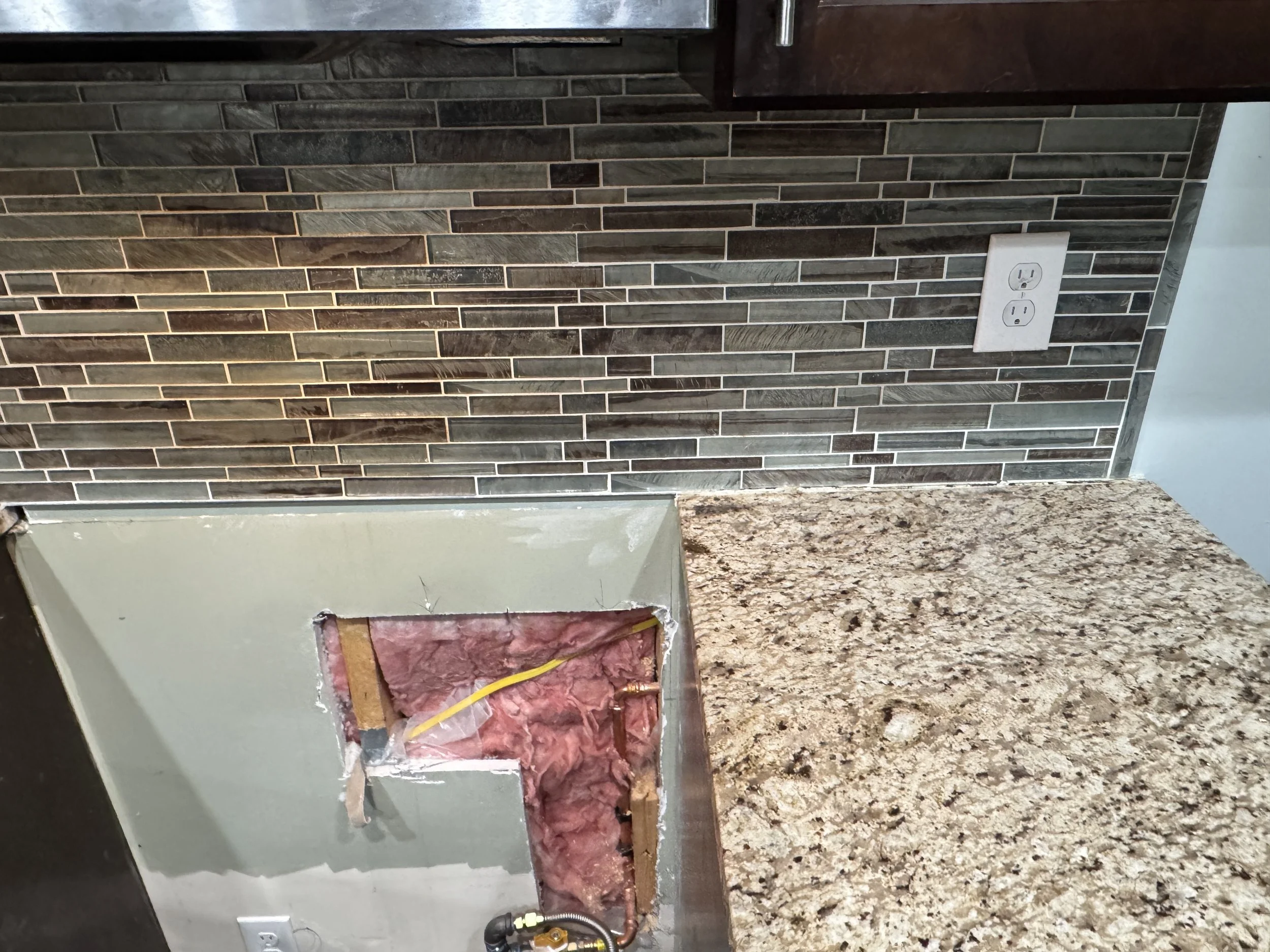
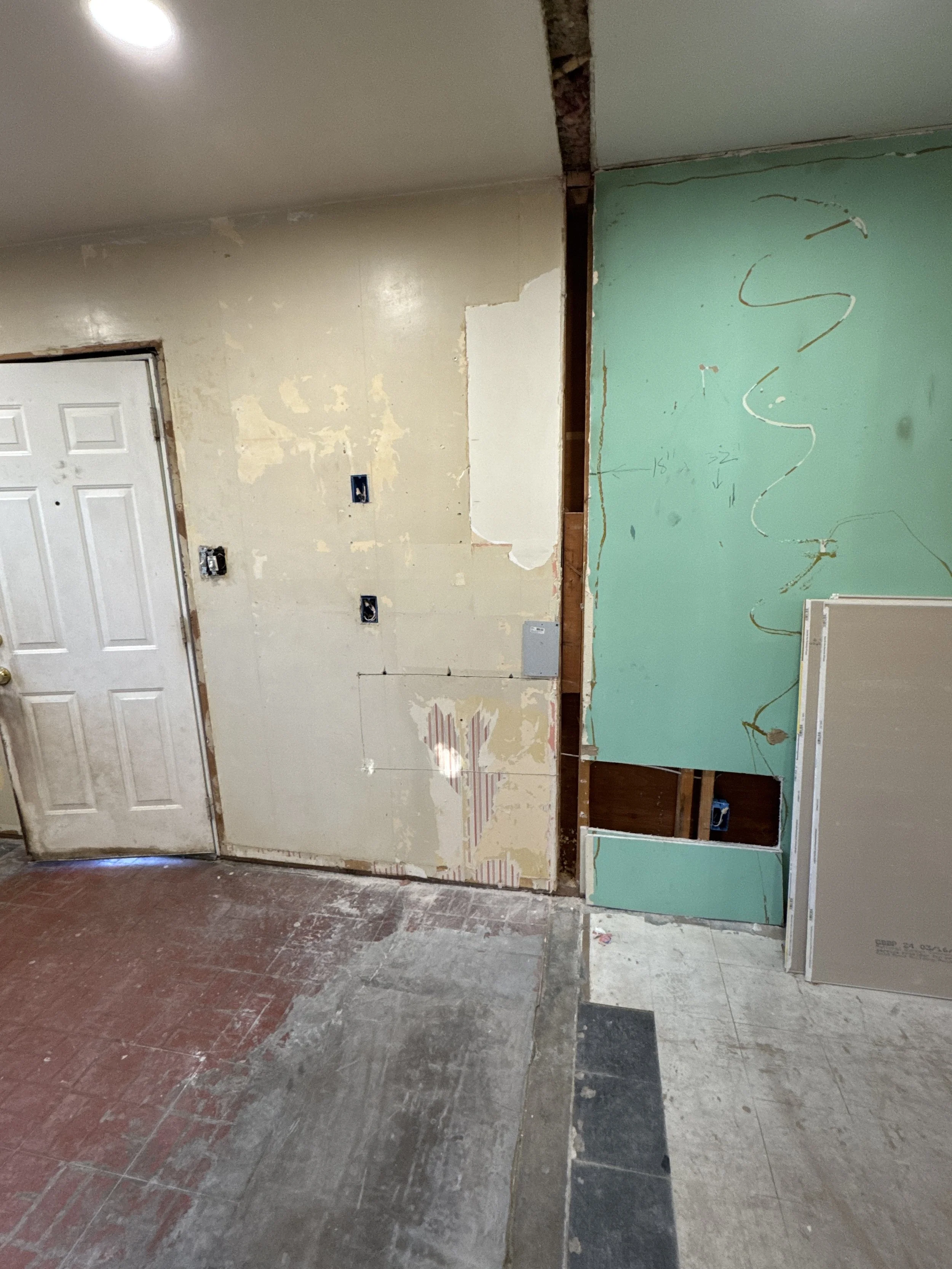
In practice, access decides how much wall gets opened. In many older houses, cable can reach most rooms from above or below without opening finished walls, and access openings stay open until the inspector has seen the work; then they are patched.
Arc-fault protection on replaced circuits
In the residential code Virginia uses, a branch circuit that is modified, replaced, or extended in an area requiring arc-fault protection gets AFCI protection, either at the breaker or at the first receptacle. Virginia added an exception to its AFCI rule, so AFCI is not required where GFCI protection is already required, such as many kitchen and laundry locations.
How Suffolk’s permit is written
Suffolk’s electrical application counts branch circuits and feeders by amperage, so the room-by-room circuit plan is finished before we file. The city asks for inspection requests by 3:30 p.m. to be scheduled for the next business day.
06 — Process
Downtown Suffolk Rewire, Start to Sign-Off
Confirm the district status
Whether the address is in the overlay and whether any exterior change is planned.
Trace and plan
Live circuits identified, then interior routes chosen, with any exterior pieces kept to the least visible side.
Rough-in, final, and patching
Inspections at rough-in and at the end, then access points patched.
07 — Why Castles
How a Suffolk Rewire Is Handled
Routed Off the Street Face
We keep new cable out of the front half of the house, the way the district guidelines ask.
Certificate First, Permit Second
We confirm the overlay status before anything is filed.
08 — Proof
Work Other Companies Could Not Handle
A couple of other companies could not handle one customer’s electrical work. We did, and the review describes the service as prompt and professional.
From our five-star Google reviews
Google 5.0 Rated by Hampton Roads Customers
Castles Electrical maintains a 5.0 rating on Google. The reviews below load as a live widget, so this page shows current feedback from real Castles Electrical customers.
09 — FAQS