02 — The Disconnect Question
Where Is Your Main Disconnect?
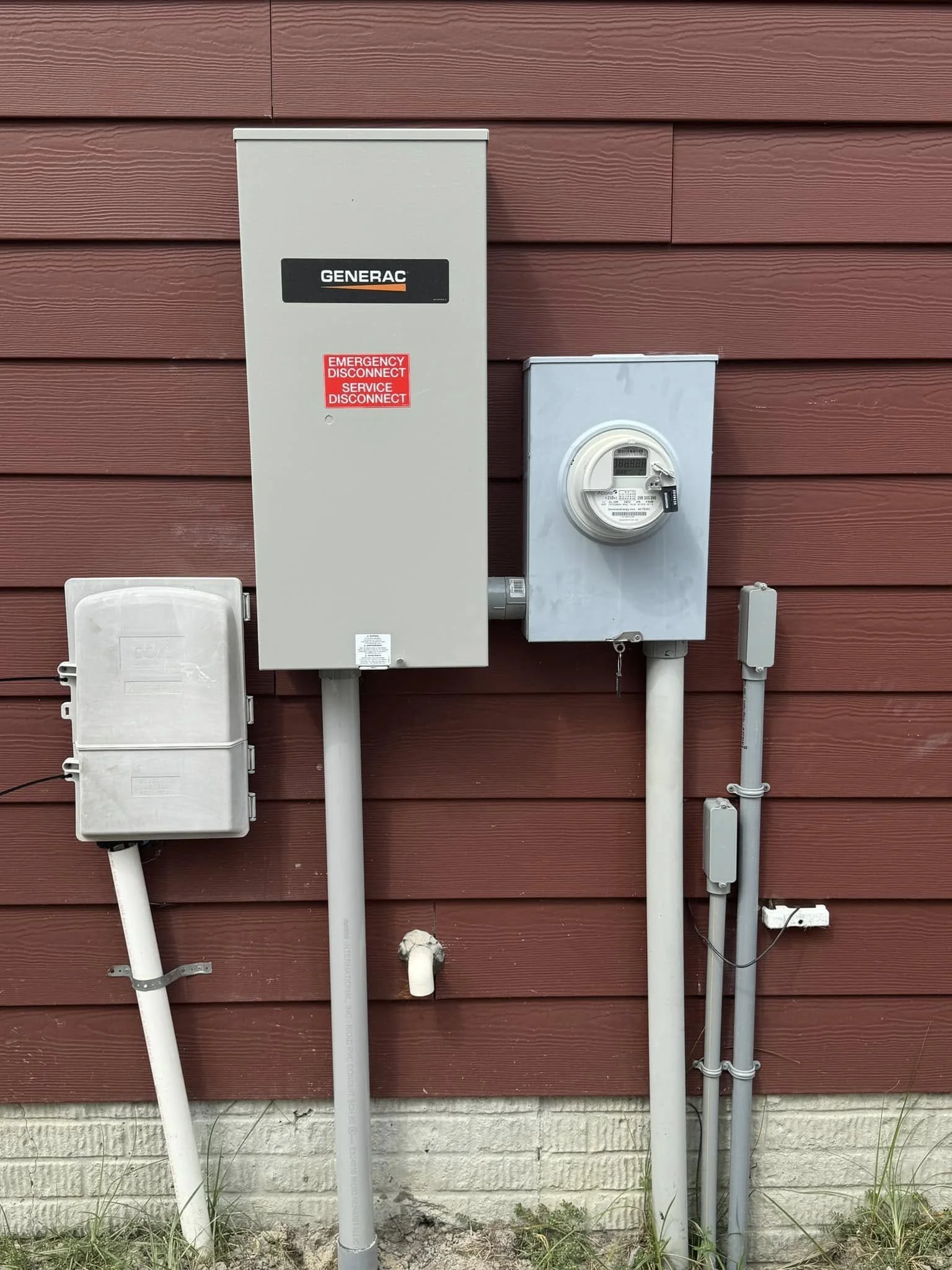
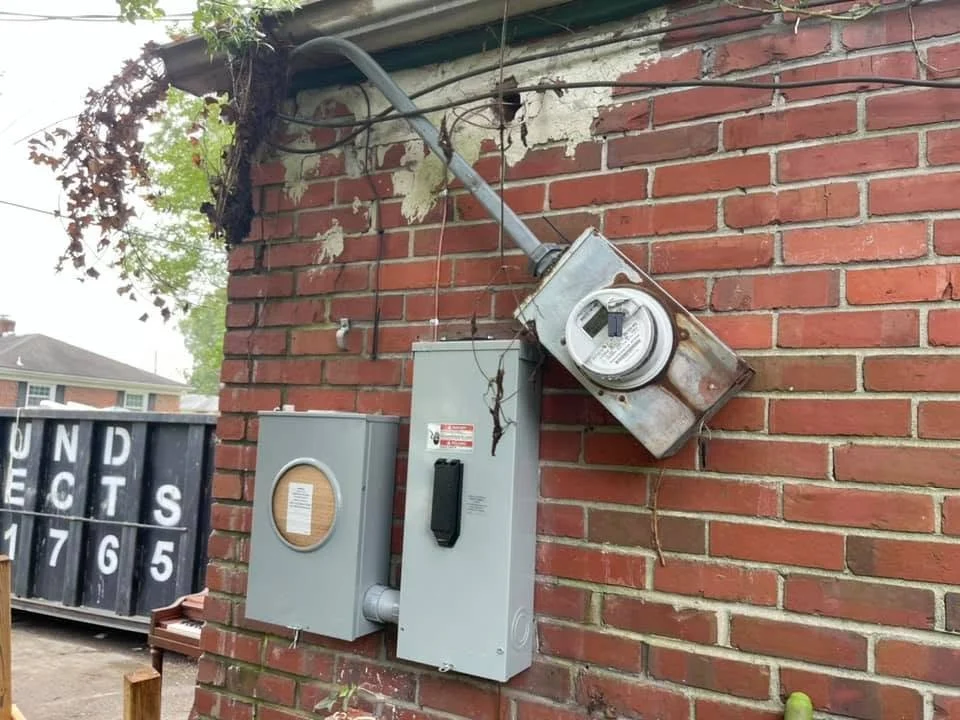
The main disconnect is the switch or breaker that shuts off power to everything on the property. In a typical suburban home, the meter sits on the outside wall or just inside it, and an upgrade replaces the panel and, where the new capacity calls for it, the meter base and the service conductors, all in one place.
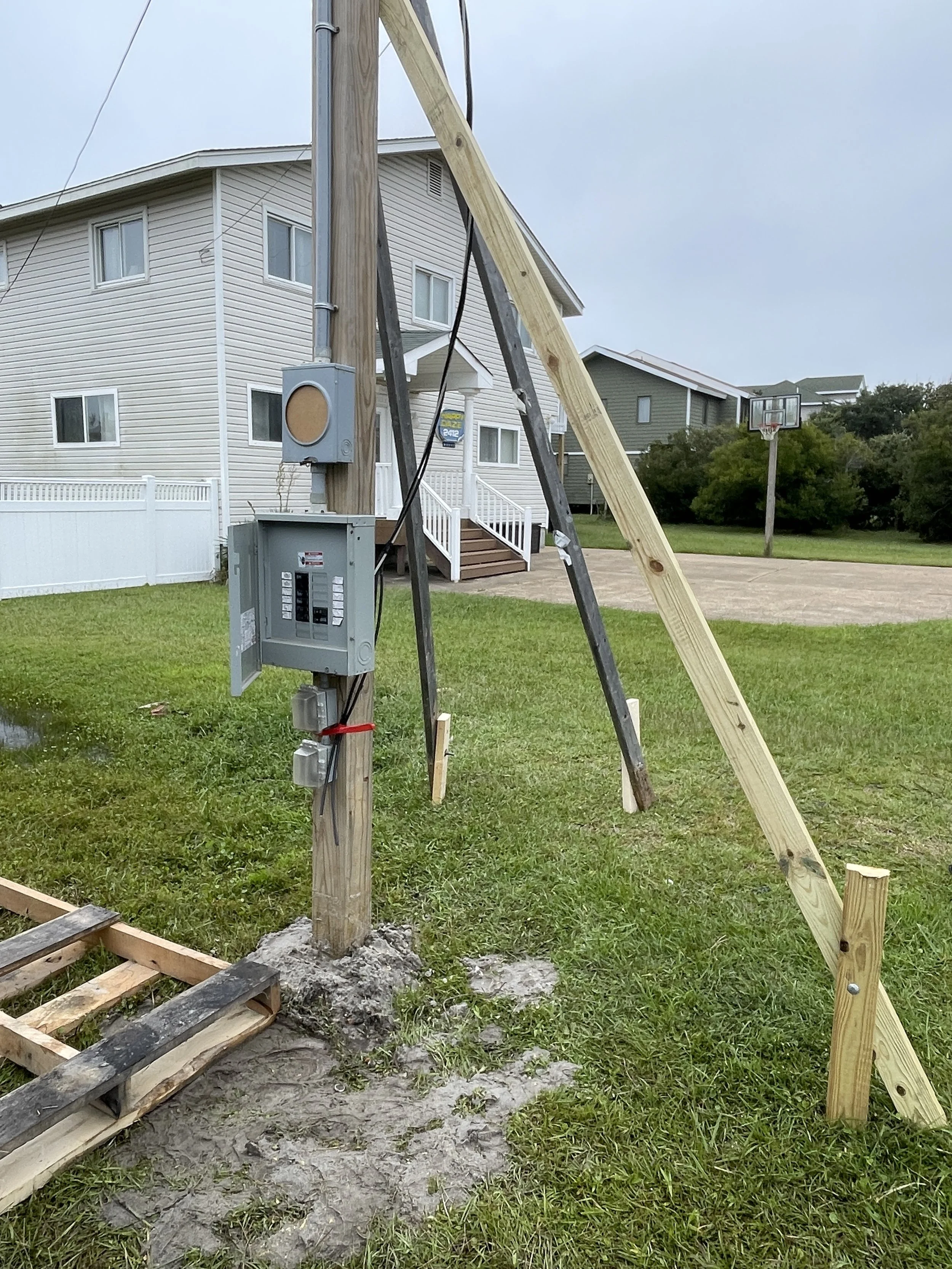
When the main disconnect is out at a pole instead, the house panel is treated as a separately fed panel, like one in an outbuilding. On a code-compliant feeder, it keeps neutral and ground apart and has its own grounding electrode. A bigger panel in the house changes nothing if the feeder from the pole is too small to carry more current.
Farm properties wired in stages
On a farm property electrified decades ago and added to as outbuildings, pumps, and shops came along, a single service can end up feeding several buildings, with the house getting whatever capacity was left when it was last updated.
Distance and older feeders
On a run of a few hundred feet, voltage drop over the distance sizes the feeder as much as the amps do, so an upgrade can mean new wire all the way back to the pole.
Age shows up in the feeder too. Older runs to a separate building were often installed with three wires, with the neutral and ground sharing a single conductor, which earlier code editions allowed. A replacement feeder is run with four wires, and that change alone can decide whether existing wire is reused or replaced.
03 — Comparison
House-Mounted Service vs. Pole-Fed Service
04 — Process
How We Upgrade a Panel in Suffolk
Identify the utility and walk the property
We confirm who serves you, then follow the power through every building on the property and note the wire, the pole, and the condition of each panel.
Load calculation per building
We add up what the house, the shop, and the well actually run, and what you plan to add, so the capacity goes where the loads are.
Written scope and estimate
You get a line-by-line estimate covering each piece of equipment.
Permit, notices, and the cutover date
We pull the permit, prepare and coordinate the utility approval or notice step with you, and, when a pole needs to be replaced first, coordinate that step to ensure it is finished before panel day.
Cutover
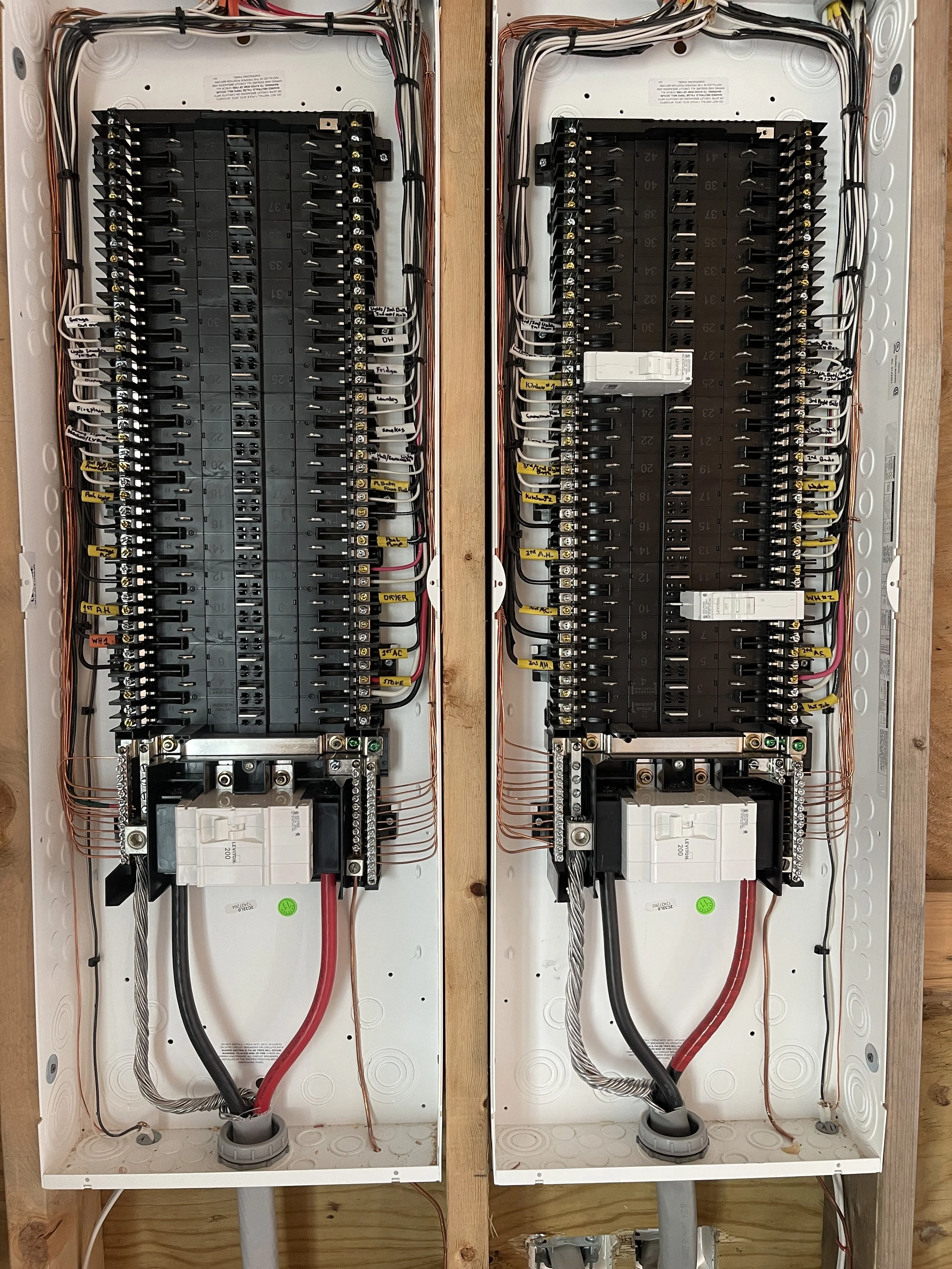
Our crew shuts off power at the disconnect, replaces the equipment from the pole to the house panel, and restores power in the order we planned with you.
Inspection and labeling
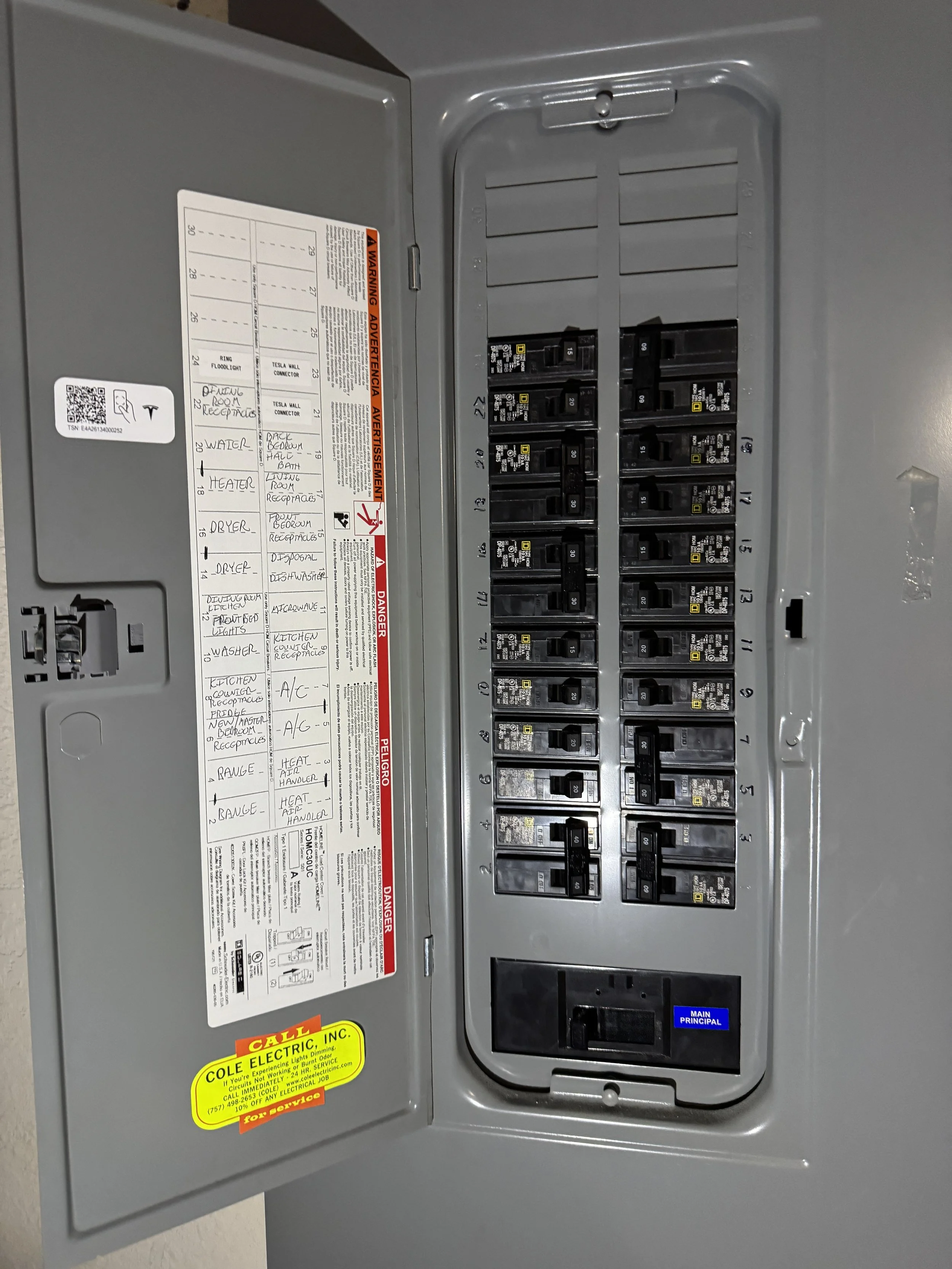
The city inspects, and the panel leaves with a directory that names each breaker by the room or the equipment it feeds.
05 — Proof
Itemized Panel Work in Google Reviews
Reviews mention an estimate itemized line by line before the work began, and a panel replaced along with new wiring run to an above-ground pool, done professionally and on time.
From our five-star Google reviews
Google 5.0 Rated by Hampton Roads Customers
Castles Electrical maintains a 5.0 rating on Google. The reviews below load as a live widget, so this page shows current feedback from real Castles Electrical customers.
06 — FAQS
Questions Suffolk Owners Ask About Panel and Pole Work
07 — Why Castles
What Sets a Castles Service Upgrade Apart
Whole-Property View
The house, the barn, and the well are scoped together.
Load Math per Building
Capacity sized to where the loads actually are.
Either Utility
Dominion approval or co-op notice planned alongside the permit.
Free Written Estimates
Itemized, and honored for 30 days.