01 — The Starting-Current Ceiling
The Number That Decides a Well-Water Battery Design: 185
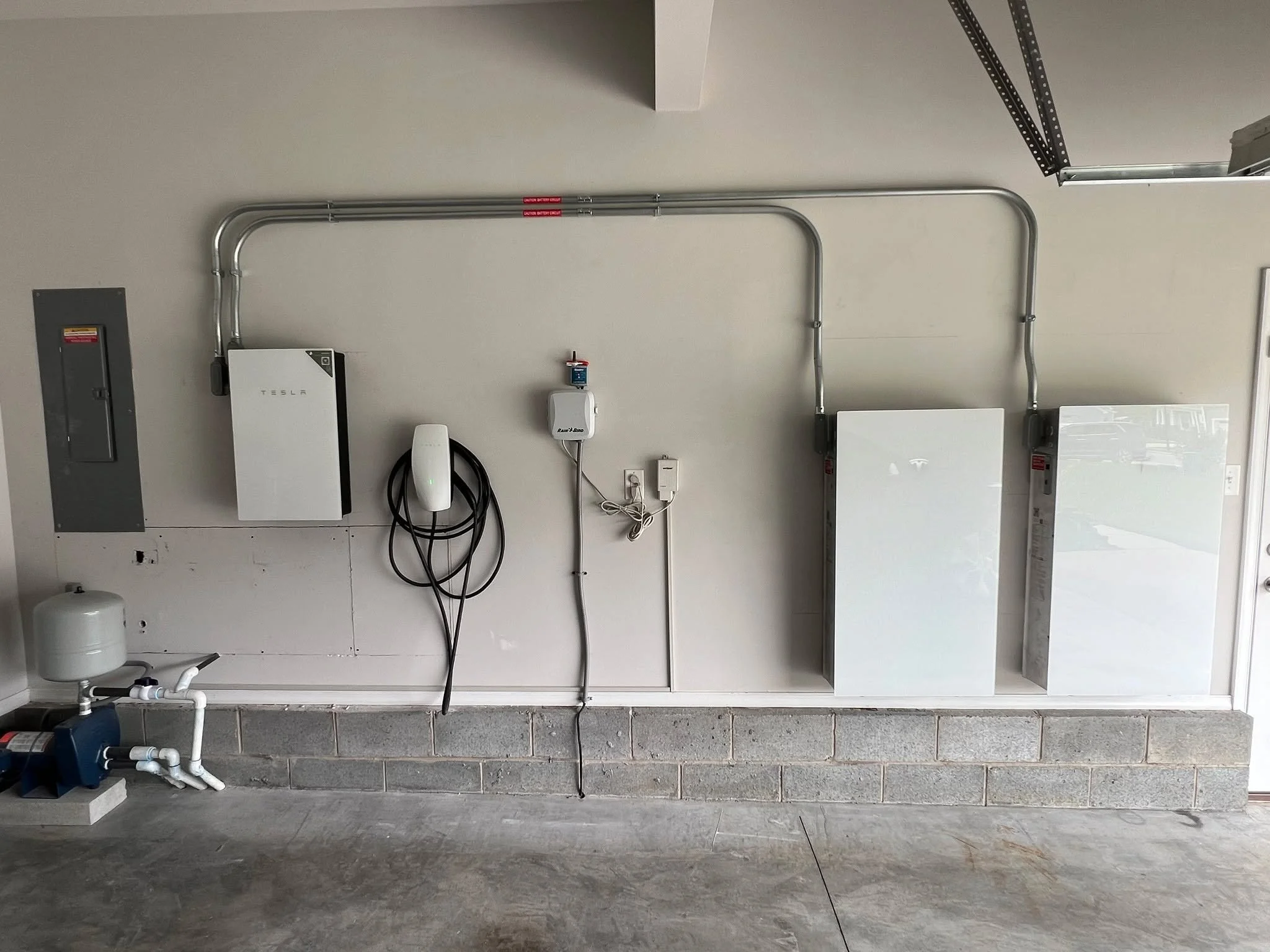
Tesla rates each Powerwall 3 at up to 11.5 kW of continuous power and 13.5 kWh of stored energy, and lists its load start capability at 185 locked rotor amps. Locked rotor amps, or LRA, is the brief surge a motor draws the instant it starts, and Tesla’s installation guidance limits that inrush to 185 amps per Powerwall 3.
Franklin Electric, a major maker of submersible pump motors, puts it in plain terms: locked rotor amps are generally around five times a motor’s maximum running amps.
That is why a battery design starts with the motor labels. A pump’s starting current, plus any other motor that could start at the same moment, has to fit under the ceiling of the Powerwall units installed. With a generator, the fix is a larger unit. With a battery, it is another unit, a motor moved off backup, or a lower starting current.
Two motors, one moment
A pressure switch does not check whether the air conditioner is starting. It calls the pump whenever tank pressure drops, so on a hot afternoon during an outage the pump and a compressor can start in the same second. A design that only checks each motor alone can pass on paper and trip in practice, which is why we add up the motors that could realistically start together.
Where the Starting Numbers Come From
02 — Options
Ways to Fit Your Pump Under the Ceiling
- Adding Powerwall units, which is Tesla’s own guidance when a motor’s starting current is too high
- Keeping a large compressor off the backed-up circuits so it never competes with the pump
- A soft-start kit on a compatible pump motor, designed to lower the starting surge
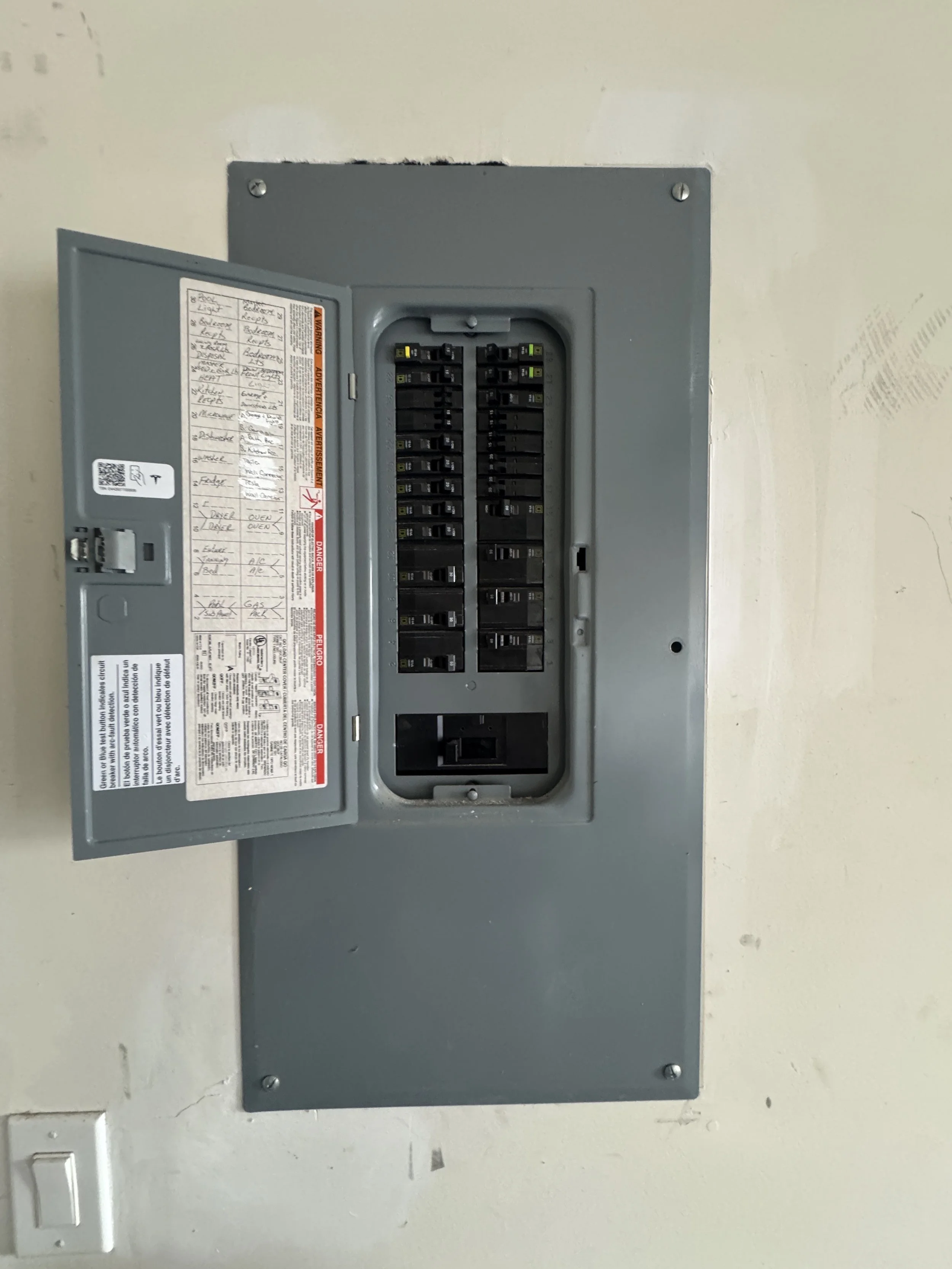
- Backing up selected circuits, which keeps large loads from starting unexpectedly during an outage
04 — Co-op Solar
Adding a Powerwall to Existing Solar on a Co-op Account
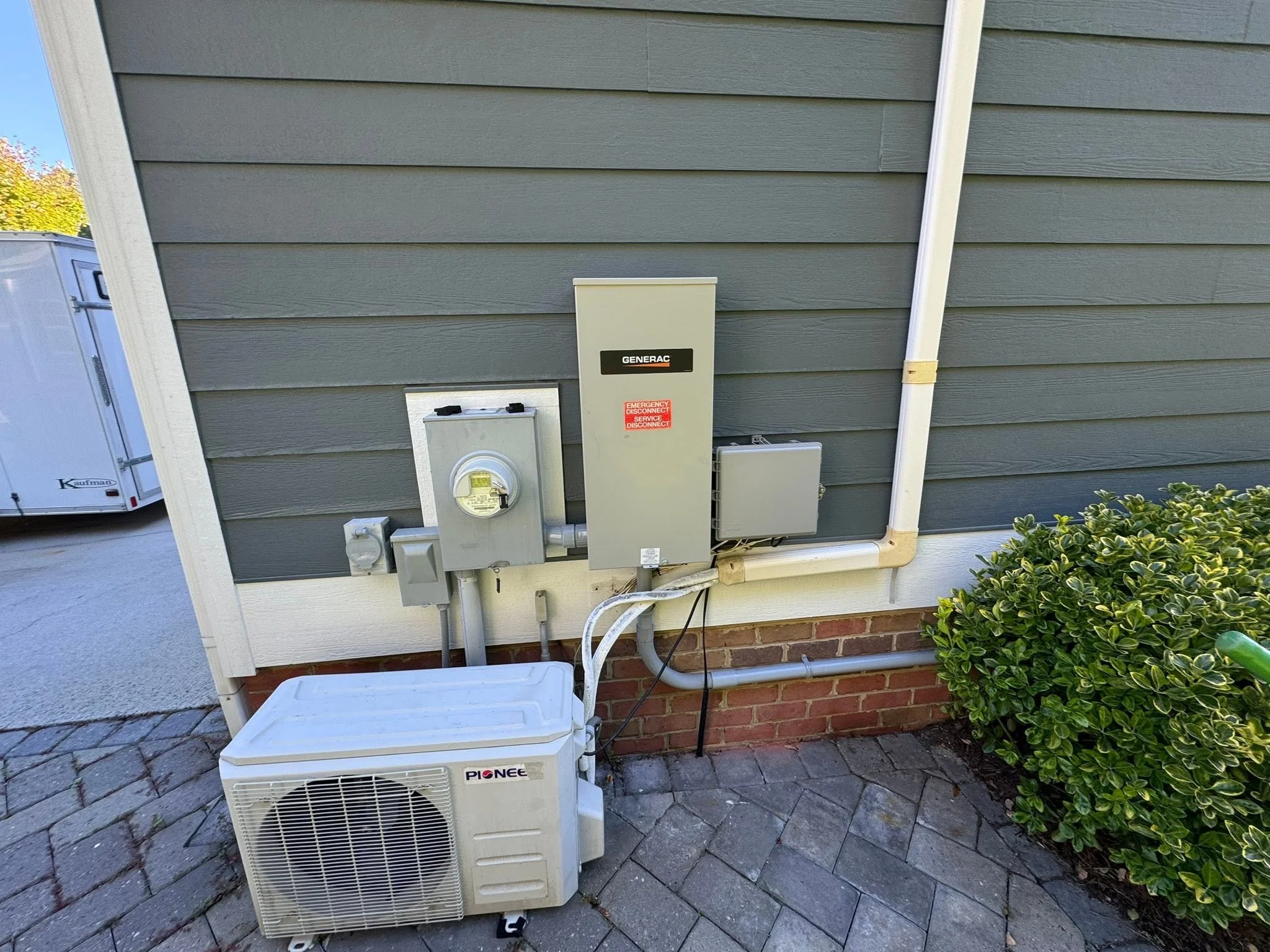
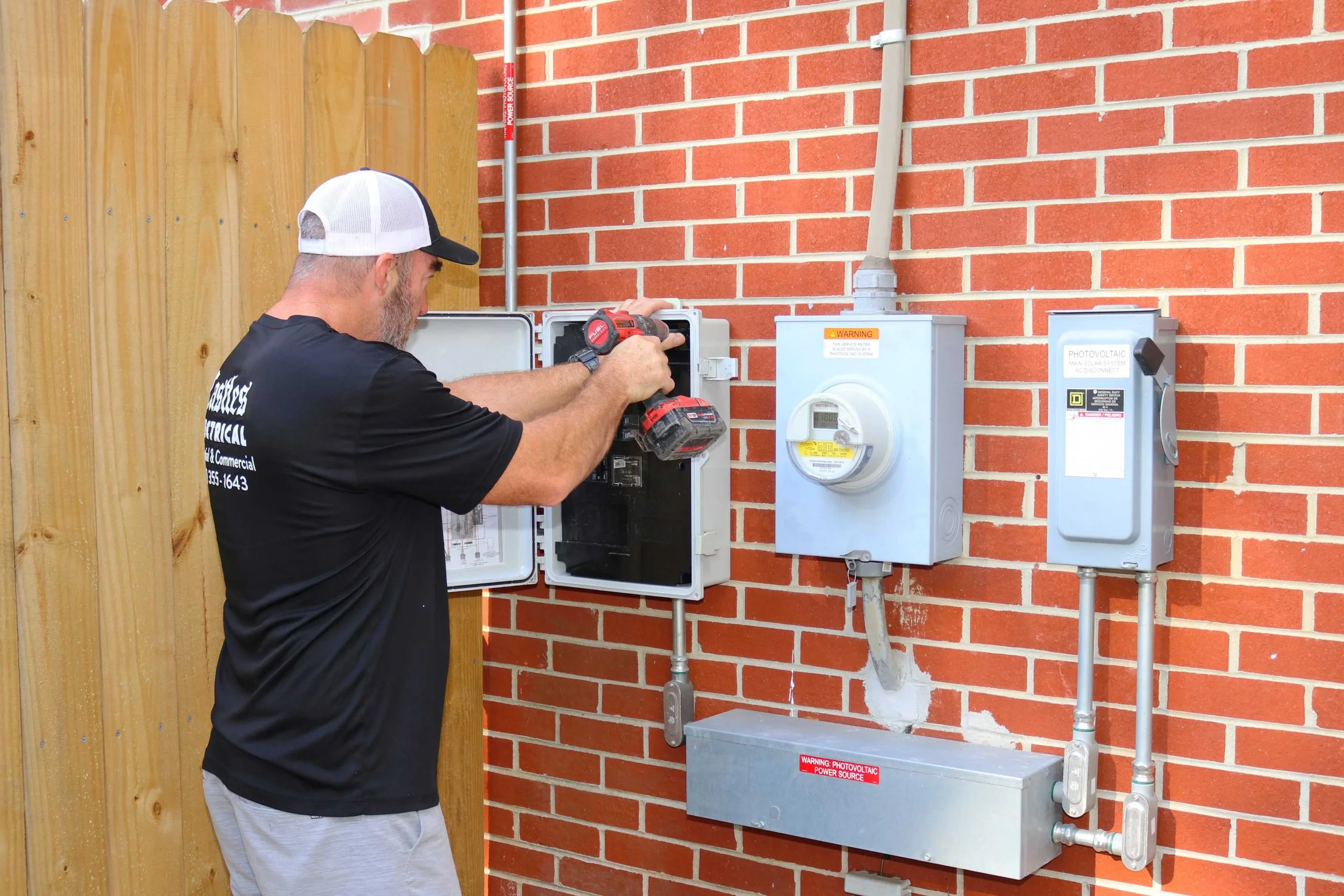
Community Electric Cooperative serves much of rural Suffolk, and members with solar on its net metering program have gone through its interconnection process. The co-op explains that a net-metered member’s generation must disconnect from its system whenever an outage occurs, so the member’s equipment never energizes the co-op’s lines, and that a net meter goes in once the interconnection passes the co-op’s inspection. Its residential net metering limit is 20 kilowatts.
Virginia’s net metering regulation requires a residential customer to notify the supplier before adding capacity to an existing generating facility and to obtain approval before interconnecting it. The licensed electrician who installs the equipment signs the notification form, certifying that any required manual disconnect switch is installed properly and that the equipment was installed in accordance with the manufacturer’s specifications and all applicable provisions of the National Electrical Code.
Whether a battery added to an existing array counts as added capacity depends on how the system is designed, so we review the solar equipment and check with the cooperative before the installation is scheduled.
05 — Cold Mornings
Cold Mornings and Battery Charging
A winter outage can arrive on a cold night, and battery chemistry responds to temperature. Tesla’s Powerwall 3 owner’s manual says the battery can charge and discharge within its rated operating range, and that at the extremes of that range it may limit charge or discharge power to protect battery life.
Tesla has kept working on this through software. Its update notes list improved cold-weather performance for Powerwall systems in 2023 and heat mode improvements for Powerwall 3 in 2024.
For a well-water home, that shapes the plan. A pump start on a frigid morning draws the same current as always, even when the battery is holding back power to protect itself. We size the backed-up loads with some margin for winter, so the circuits you depend on most are not the ones competing for power on the coldest day.
06 — Shop Mounting
Mounting the Battery in a Shop or Detached Garage
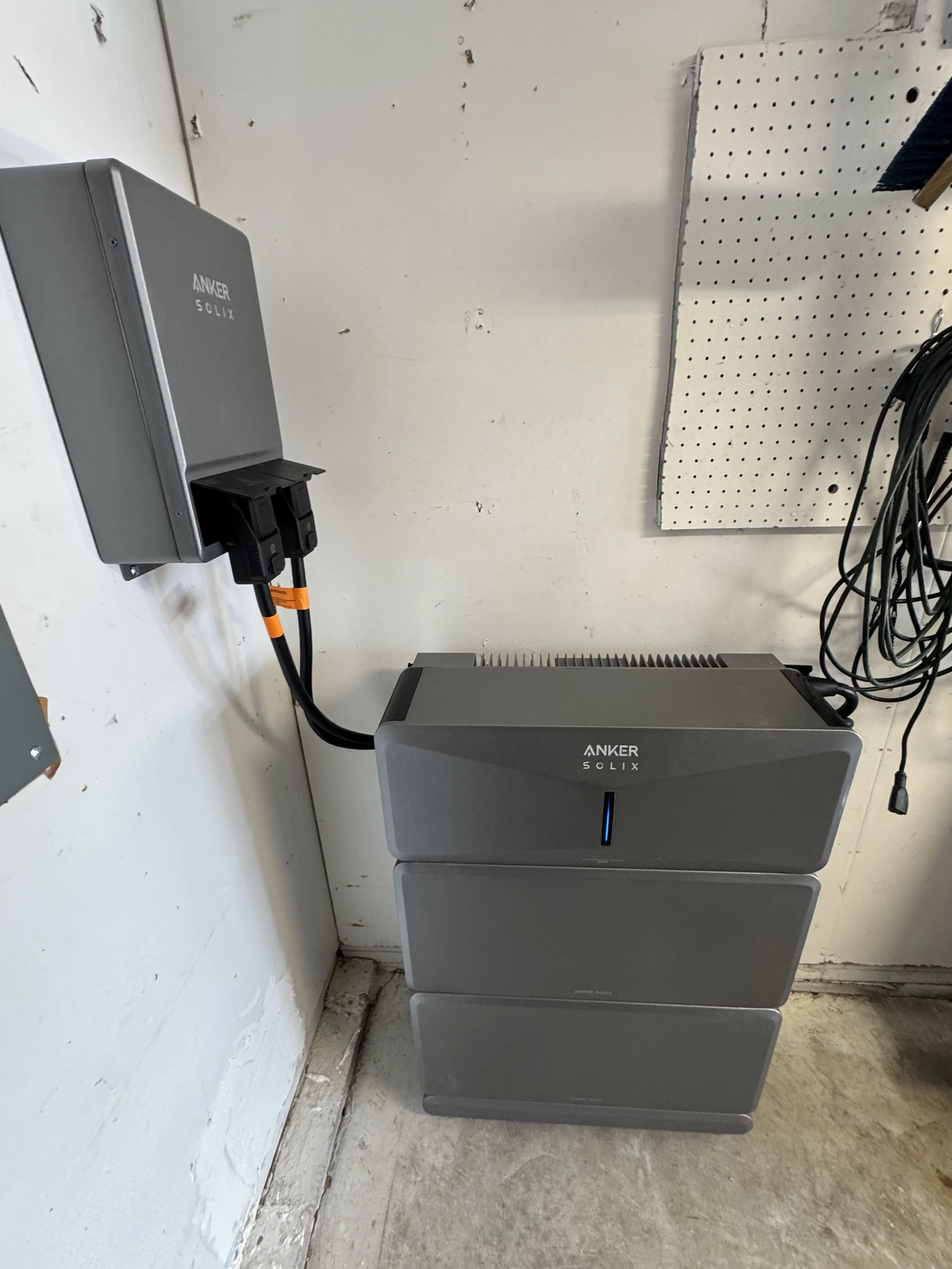
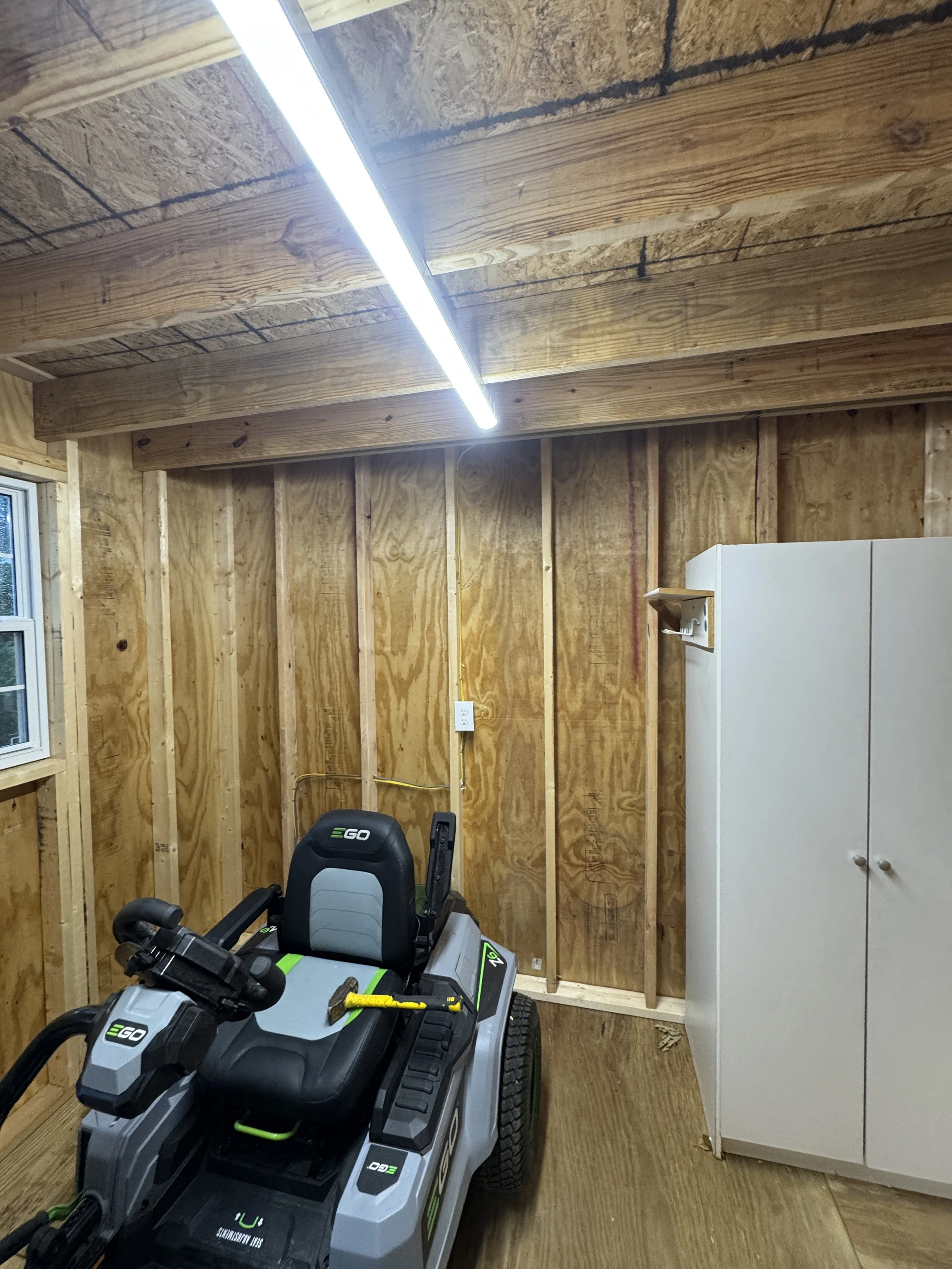
On a property with a detached garage or shop, the outbuilding can look like the natural home for a battery. Virginia’s residential code lists detached garages and detached accessory structures as locations where energy storage systems may be installed, so the question usually comes down to distance.
Tesla sets maximum lengths for the wiring that lets the battery talk to its switching equipment. For systems using its Backup Switch, the communication wiring to the lead Powerwall 3 can run up to 150 feet with 16 AWG wire, or 82 feet with 18 AWG wire, and Tesla warns that exceeding its limits can cause unreliable operation even after commissioning.
We measure the actual route from the shop to the service before recommending that location, and the feeder between buildings follows the same underground rules as any other outbuilding run.
07 — FAQs
Suffolk Battery Backup FAQs
08 — Why Castles
Backup Designed Around the Pump
Motor Labels Read First
We read the pump’s label before we count Powerwalls.
Selected-Circuit Design
Backup built around water, food, and light.
09 — Proof
What Powerwall and Battery Customers Tell Us
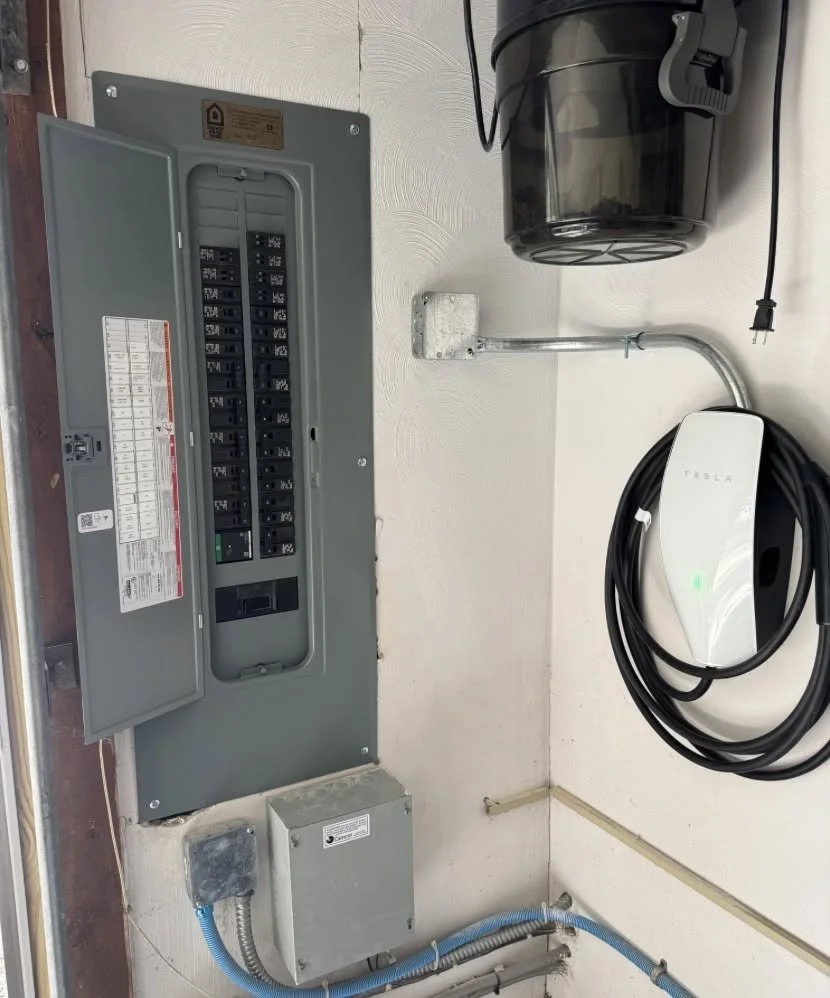
One reviewer describes a Powerwall 3 quote, and another a project that paired a battery with a panel upgrade and an EV charger.
From our five-star Google reviews
Google 5.0 Rated by Hampton Roads Customers
Castles Electrical maintains a 5.0 rating on Google. The reviews below load as a live widget, so this page shows current feedback from real Castles Electrical customers.