01 — The Fuel Math
What a Full Propane Tank Buys, in Days
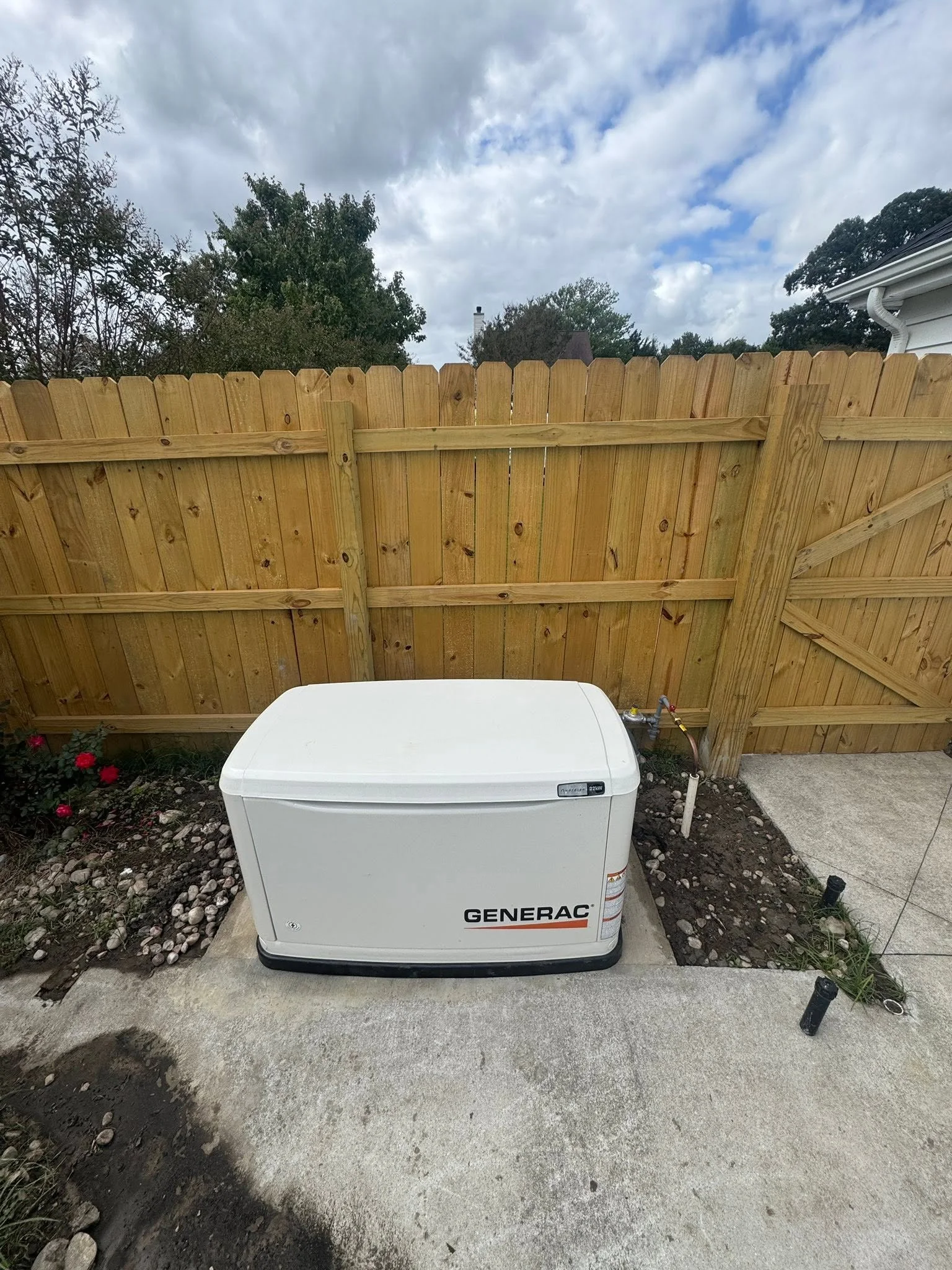
For its 24kW Guardian home standby generator, Generac lists propane use at 2.53 gallons per hour at half load and 3.90 gallons per hour at full load. Propane tanks are filled to about 80% of their rated capacity to leave room for the liquid to expand, so the usable fuel is less than the number stenciled on the tank. Starting from a full fill, the math works out like this:
Lighter loads stretch these numbers, and a cold snap with a low tank can cut them short, as the next section explains. The gauge reads against the tank’s full size, so 40% on the gauge is half a normal fill and half the days in the table.
02 — Cold Weather
Why a Cold Snap Can Starve a Small Tank
A generator runs on propane vapor, and the liquid in the tank has to boil off fast enough to keep up. A cold day and a low tank both slow that down. Generac’s fuel design guide for its industrial gas generators warns about exactly this and recommends keeping about 20% of the tank’s capacity for boil-off.
Generac’s minimum tank for a home standby unit is 250 gallons, and it says climate can call for more. Its industrial design guide notes that a tank often needs to be larger than runtime math alone suggests. Running a 24kW unit hard through a freezing outage is the case where we raise a bigger tank with your supplier.
04 — Tank Placement
Where the Propane Tank Can Sit, and Who Owns It
Virginia’s fire code follows the national propane code, NFPA 58, on where tanks go. As NFPA’s own fact sheet summarizes, an aboveground tank up to 500 gallons is located at least 10 feet from the house and from a neighboring lot line that can be built on.
A larger aboveground tank, up to 2,000 gallons, generally needs 25 feet. A buried tank keeps 10 feet.
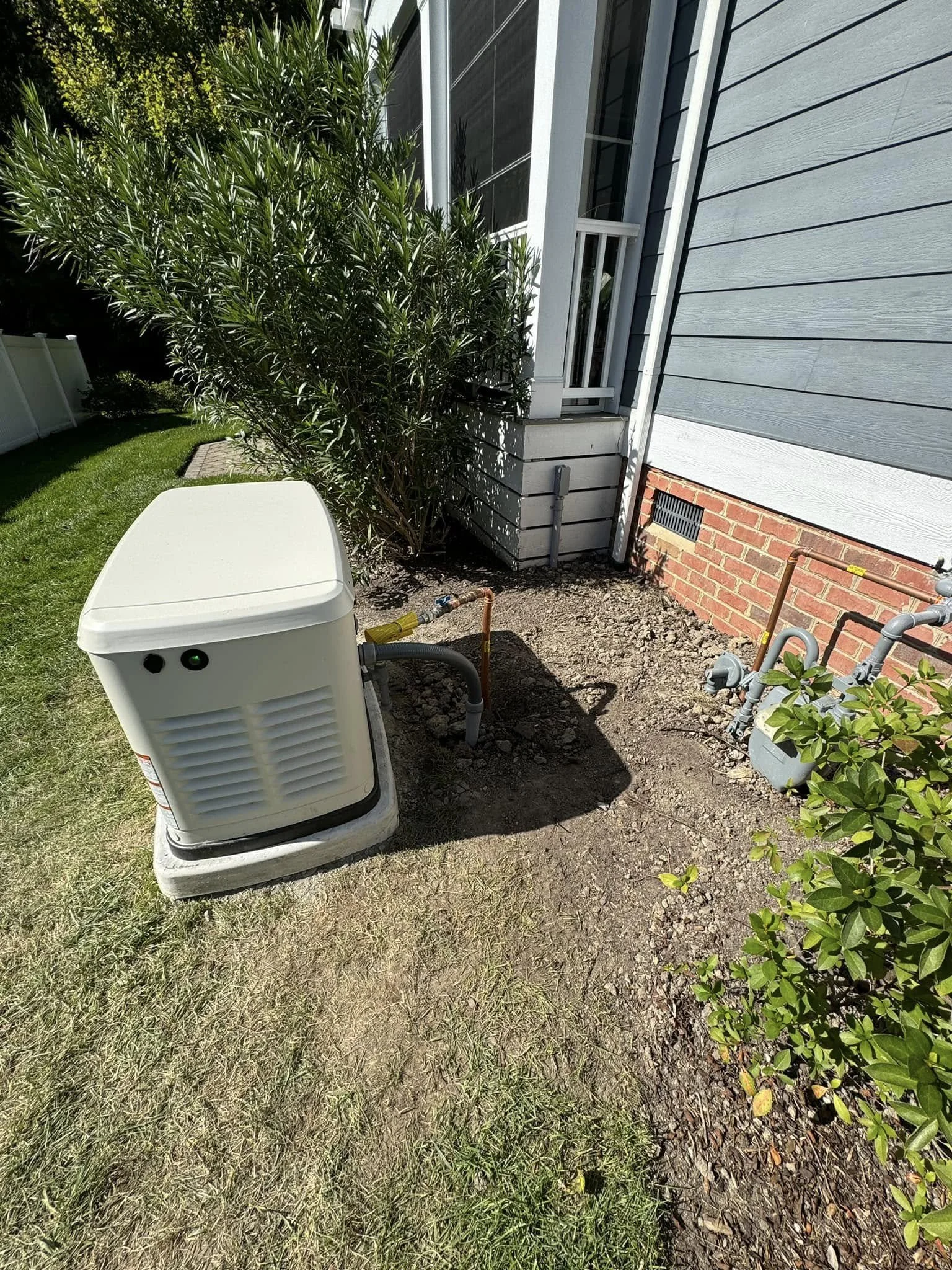
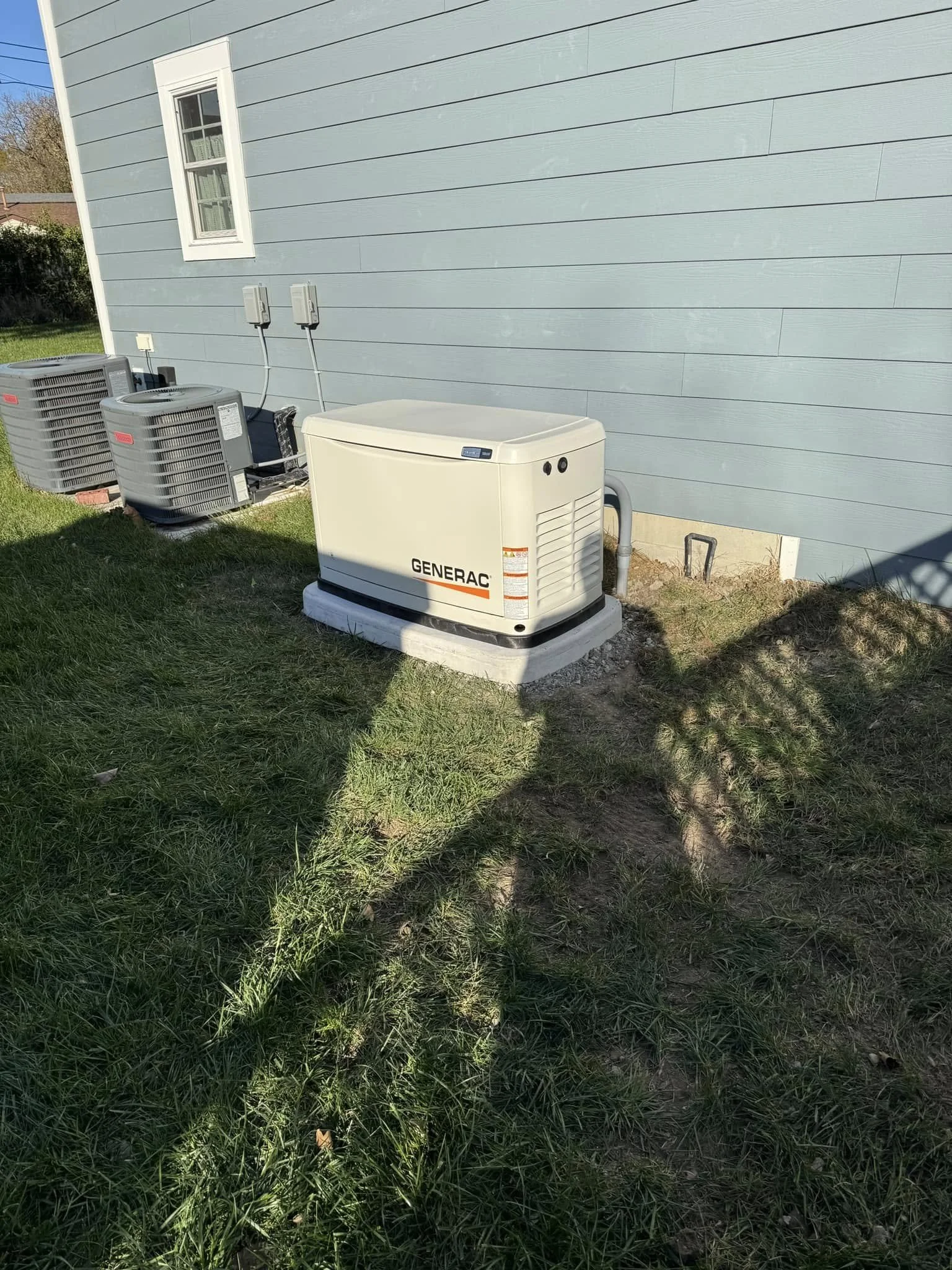
The tank’s fill connection and relief valve also stay 10 feet from things that can spark, such as an air conditioner’s outdoor unit, and Virginia code requires protection when a tank or regulator sits near a driveway. Your propane supplier confirms which distance applies. We place the generator pad with those zones in mind, and if a propane company owns your tank, its location is settled with that company.
Setting up and filling the tank are the responsibility of your propane supplier. Running the line from that tank to the generator and making the connection is plumbing work, handled by the partner plumbing company we bring onto the job. Castles does the electrical work and keeps the two visits in step.
05 — What We Size
What Goes Into Sizing a Suffolk Generator
- Your outage load: heating or cooling, refrigeration, lights, outlets, and any well pump
- Generator capacity matched to that load, from Generac or Kohler
- Tank size measured against the number of days you want covered
- Transfer switch type
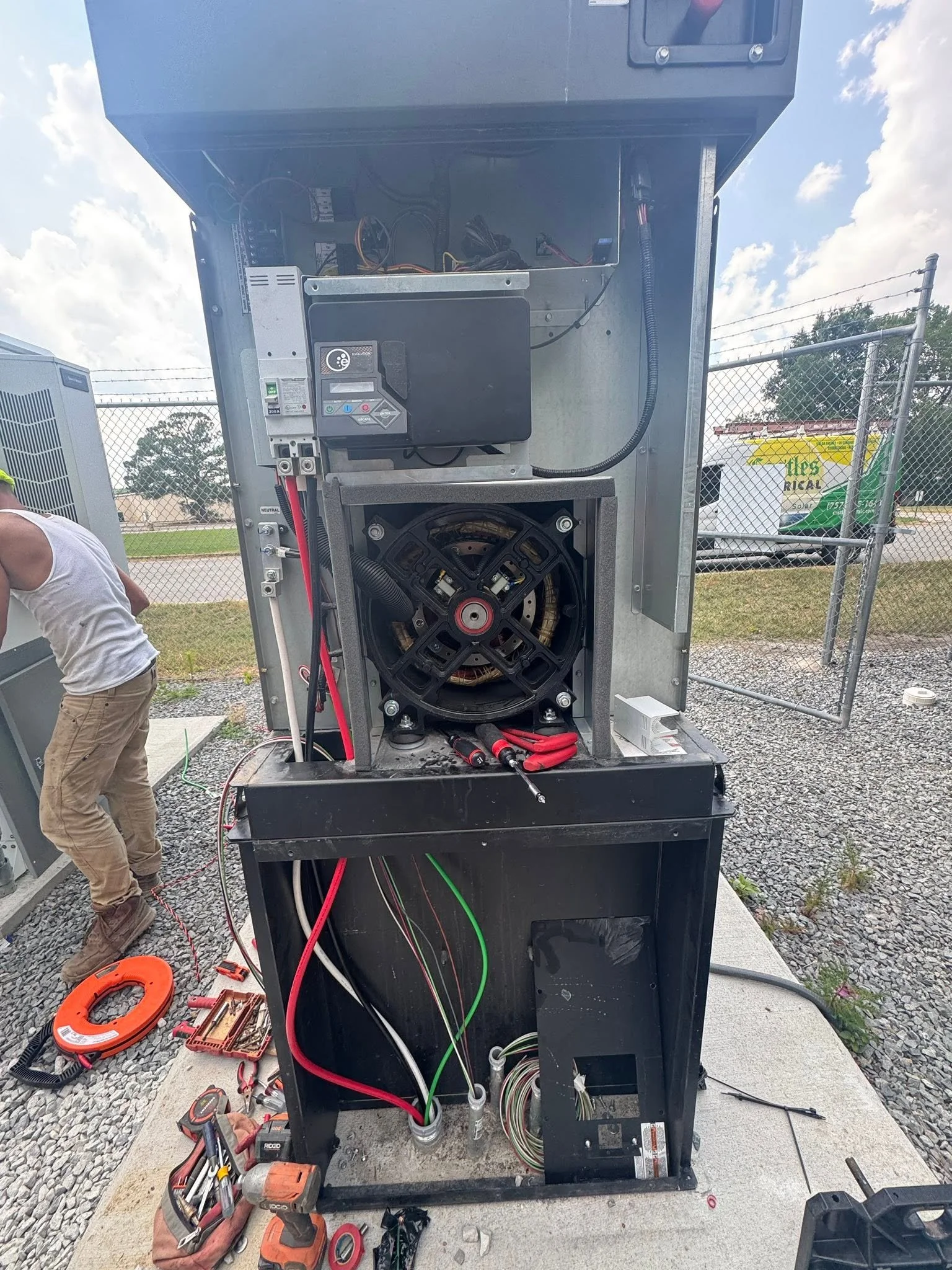
The gap between the half-load and full-load columns in the table is the part of runtime you control. Keep the average load down, and the same tank lasts longer. A managed transfer switch can hold off a large load, such as a second heat pump, a range, or a water heater, until the generator has capacity to spare. A whole-home switch with no management leaves that choice to whoever is home, and the estimate covers both options.
06 — Rural Motors
Well Pumps and Other Motors on a Rural Lot
Franklin Electric, a submersible motor maker, publishes minimum generator sizes, and its chart covers one pump motor at a time. According to that chart, a 1-horsepower pump needs at least a 4 kW generator, a 1.5-horsepower pump needs 5 kW, and a 2-horsepower pump needs 7.5 kW. Those figures are for three-wire motors on the common externally regulated generator. A two-wire pump needs half again as much. Treat them as a starting floor for sizing.
Anything else on the property loads the generator on top of that: a septic or grinder pump, a shop freezer, barn lights, and a heat pump or central air starting up.
07 — Why Castles
Why Propane Owners Call Castles
Runtime Math Up Front
Your estimate shows days of fuel for the tank and model proposed.
Kohler Too
Certified Kohler installs when that unit fits better.
Fuel Plan in the Estimate
The furnace, the water heater, and the range come off the same tank. They go into the fuel plan before the generator is sized.
Straight Answers on Tanks
If your tank is too small for the plan, you hear it first.
08 — Process
Propane Generator Install, Step by Step
A call, then a look at the property
We ask what you need powered, look at the tank you have or where one would go, check the electrical service, and choose the pad location.
A written estimate with the fuel plan
The estimate spells out the generator size, the transfer switch, whether your tank is covered by the plan, and an estimated runtime for your likely load, using the published rate for the exact model we propose. It is free.
Permit, pad, and installation
We pull the permit, set the unit and the transfer switch, schedule our partner plumbing company to make the propane connection, and see the job through inspection.
A load plan for long outages
After inspection, we walk you through which loads to hold off on during a long outage and how to read the gauge against the runtime table.
09 — Proof
A Transfer Switch Job, Reviewed
A Google reviewer who needed a generator transfer switch installed recommended Castles.
From our five-star Google reviews
Google 5.0 Rated by Hampton Roads Customers
Castles Electrical maintains a 5.0 rating on Google. The reviews below load as a live widget, so this page shows current feedback from real Castles Electrical customers.
10 — FAQS