01 — The Trench Question
Running Power to a Detached Garage or Shop: What 811 Does Not Mark
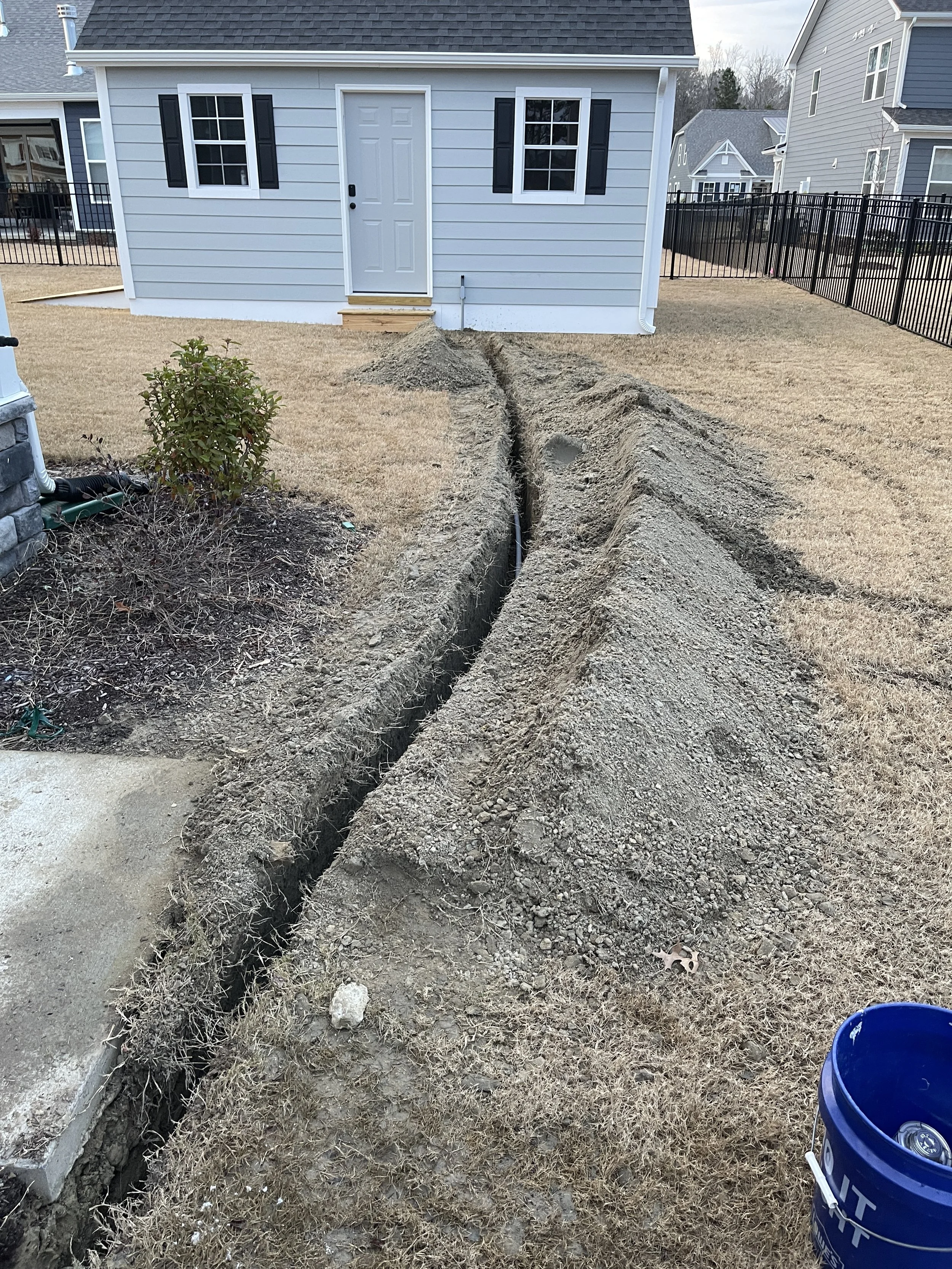
Before anyone digs in Virginia, a notice of excavation goes to Virginia 811, and the public utility owners on that system mark their lines. What the notification center makes clear is what does not get marked: private lines on your own property. Its own examples include electric wires to lampposts or outbuildings and propane lines from the tank to the house, and the property owner is responsible for locating those.
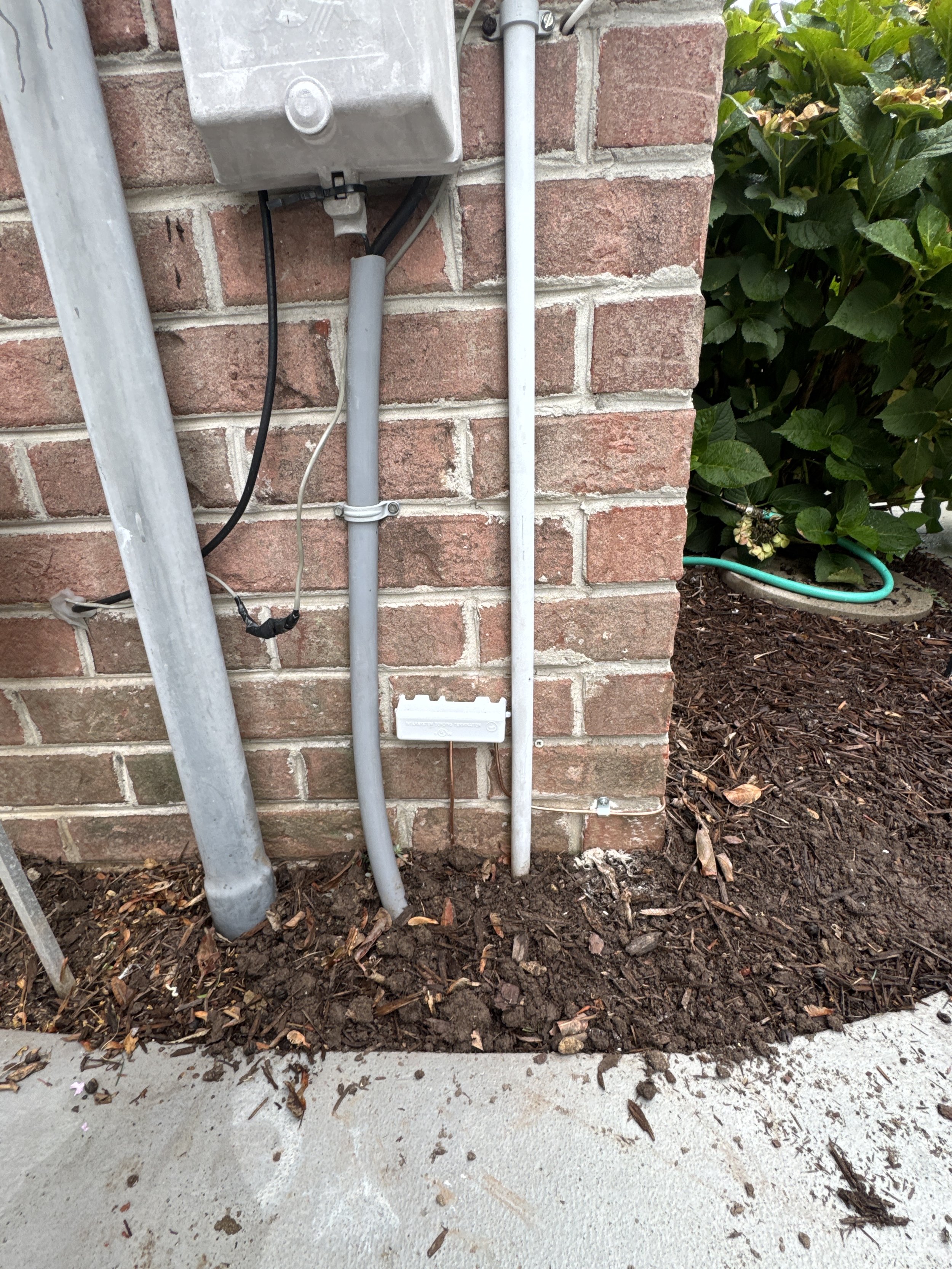
That matters on a rural lot. The path from the house panel to a shop can cross a well line, a feeder someone buried decades ago, or the gas line from a propane tank, none of which shows up as a paint mark. So route planning starts with what you know about the property, what we can trace, and whether a private locating service should sweep the path before the trench is opened.
House panel or shop panel?
If the shop already has its own panel with capacity, the charger circuit can start there, and the trench may not be needed at all. If it does not, a new underground run from the house is planned around the property’s private lines and sized for the charger. On a property fed from a pole, where the service splits between buildings, our Suffolk panel page covers how that split affects capacity.
Outdoors, near where the truck parks
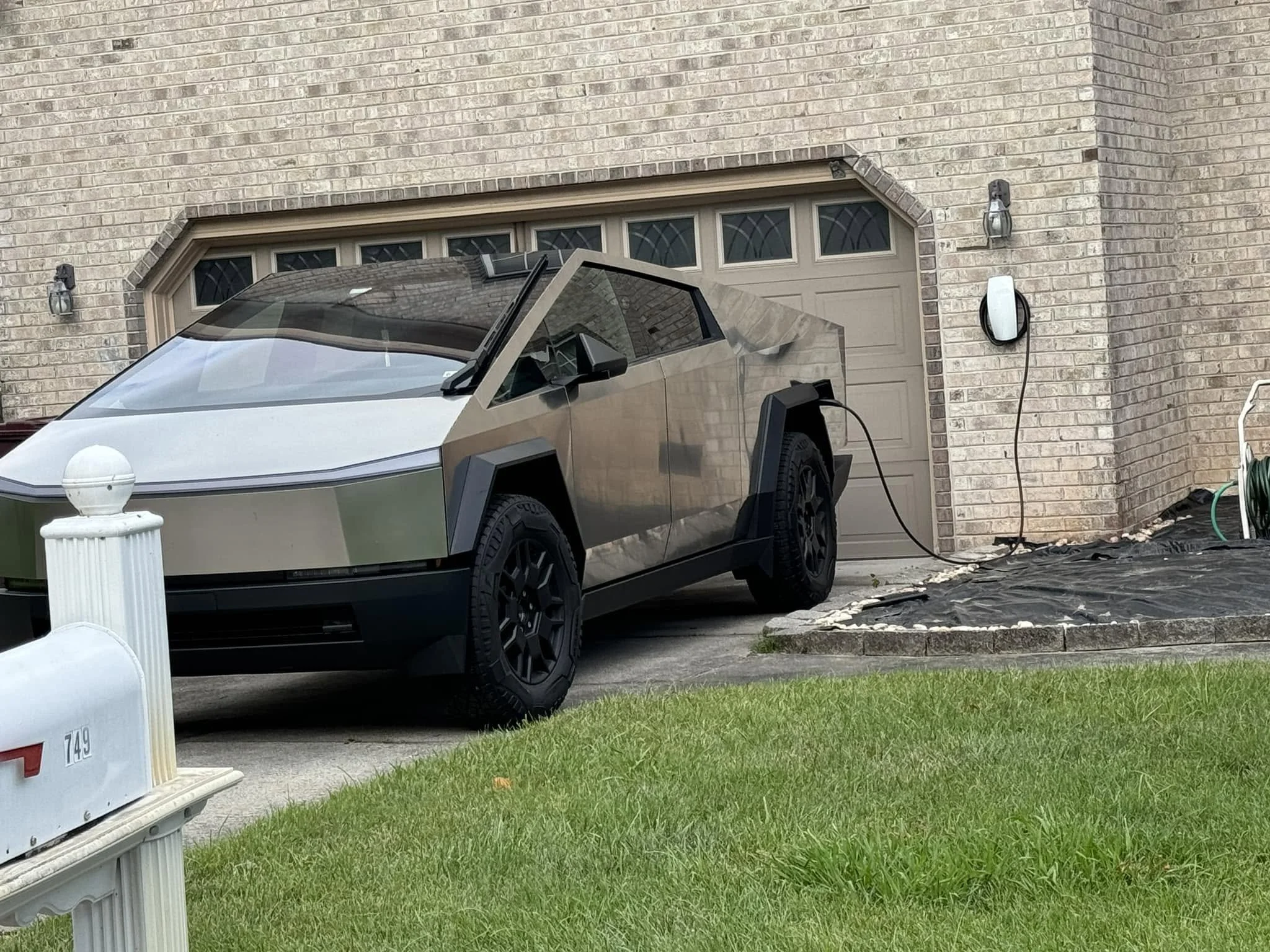
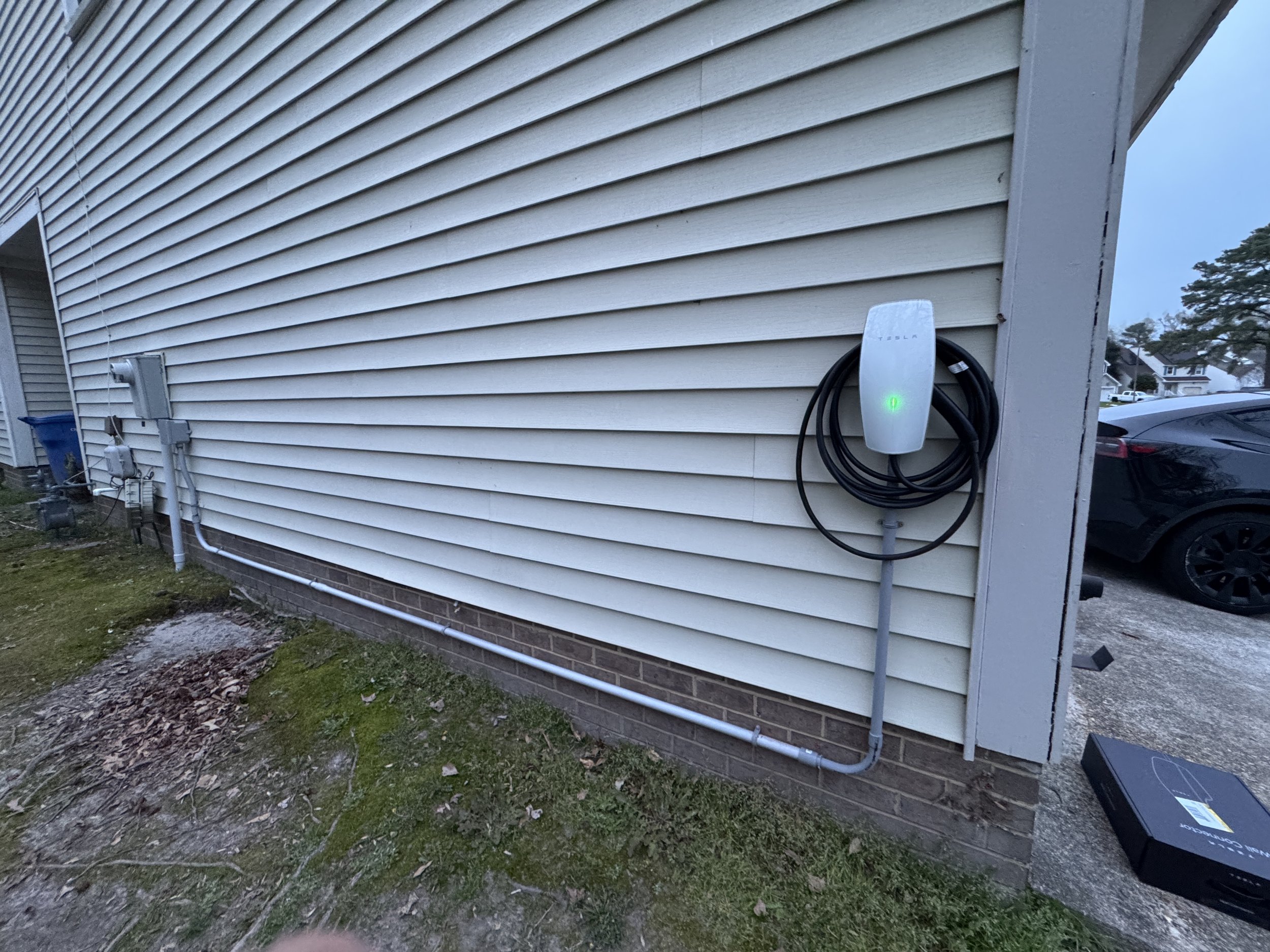
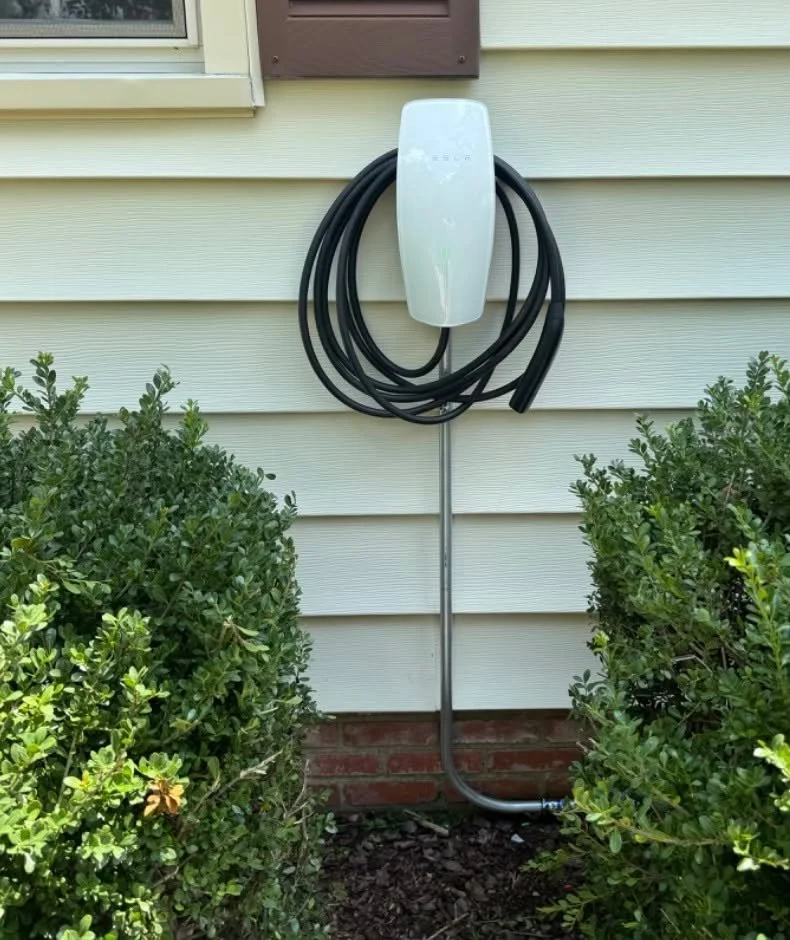
When the vehicle stays outside, the charger can be mounted on an exterior wall or a sturdy post with weather-rated connections, placed clear of where trailers and equipment turn around. A post mount can also shorten the run when the building wall is on the far side of the parking area.
02 — Comparison
Charging Setups for a Suffolk Property
03 — Shop and Barn Chargers
Putting a Charger Inside a Shop or Barn
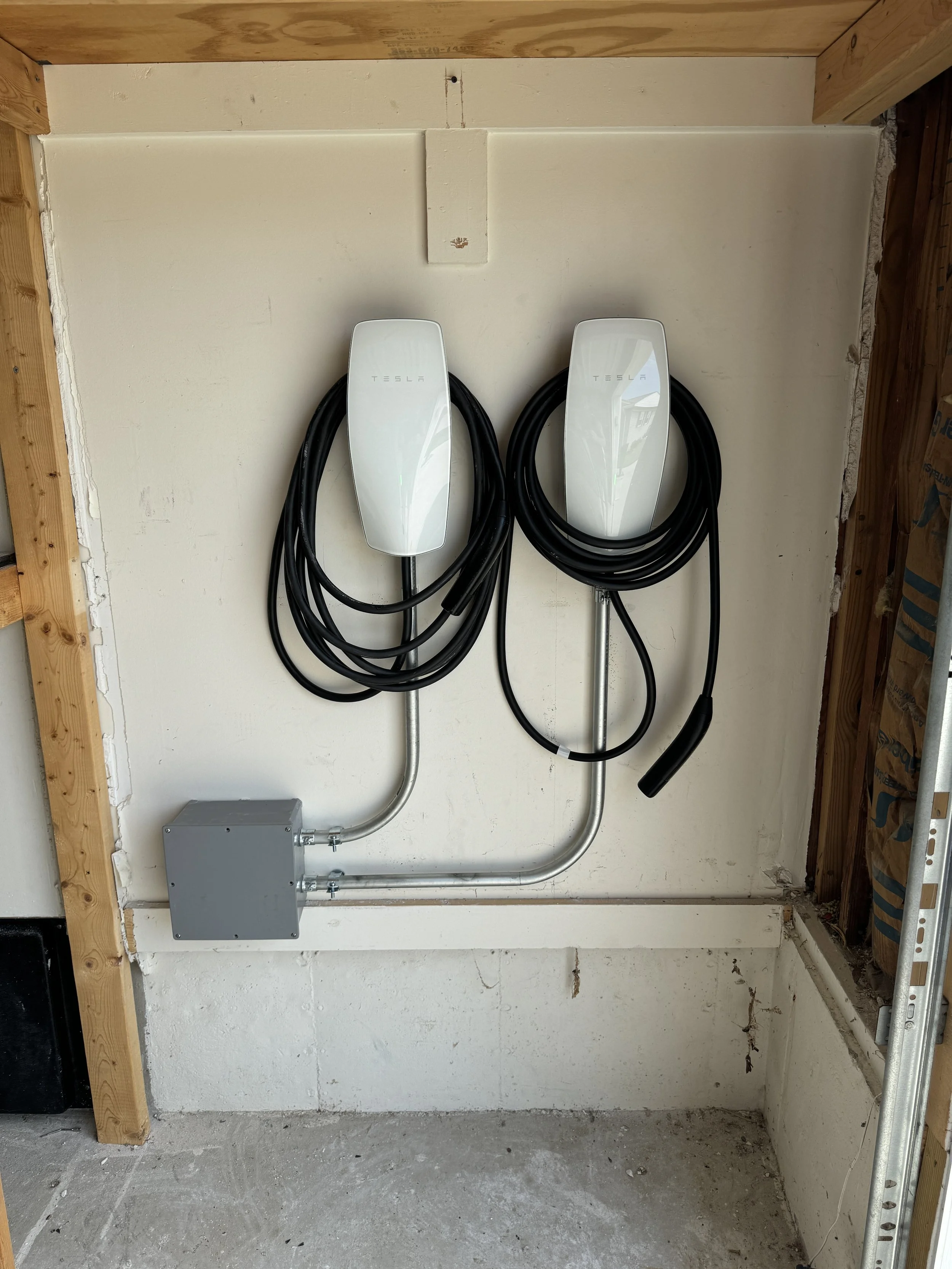
On acreage, the shop is often where the gas cans, the mower, and the solvents live. Tesla’s manual says not to install the Wall Connector near flammable or combustible materials, chemicals, or vapors. It also calls for a flat, vertical mounting surface without significant irregularities, so the charger wall is chosen away from fuel storage, and a rough post or board wall may need solid backing first.
Wi-Fi at the far end of the yard
Tesla says Wall Connectors receive firmware updates automatically over Wi-Fi and recommends staying connected for the latest updates and remote troubleshooting. Its power management features do not need an internet connection to work.
A home router may not reach a pole barn across the yard, so check whether your phone can see the home network at the parking spot. The charger is installed and set per the product instructions, and it charges on the circuit whether or not it reaches the network.
04 — Trucks as Backup
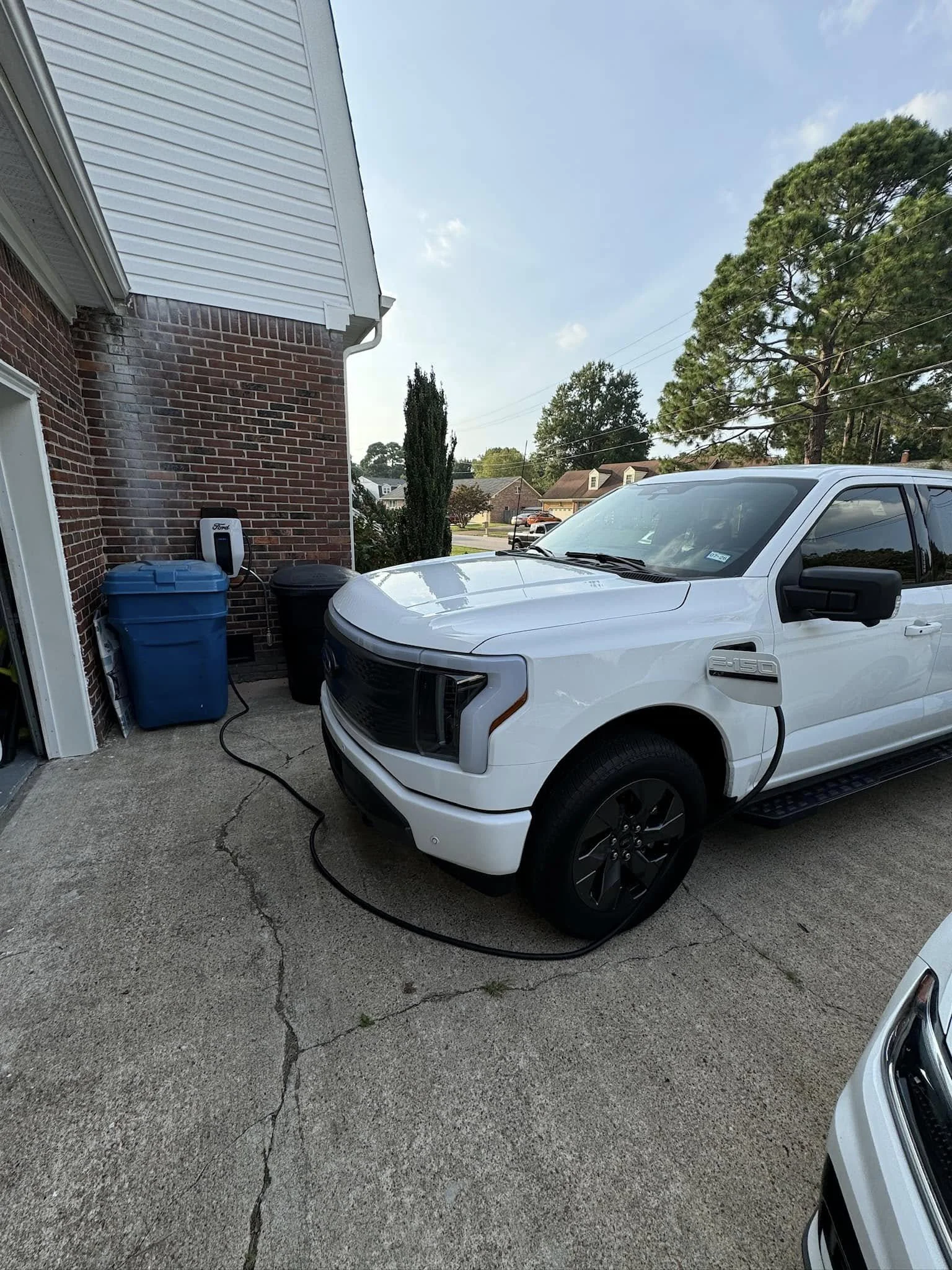
When the Truck Can Back Up the House
Tesla describes Powershare as delivering up to 11.5 kW of power, and says a Cybertruck can back up a home for over three days depending on use. For a home without a Powerwall, Tesla’s setup pairs a Powershare Gateway with a Universal Wall Connector, installed by a Tesla Certified Installer, and the gateway is what separates the house from the grid while the truck supplies power.
On a rural property, the useful question is what the truck should run. A well pump, refrigeration, and lights are a very different load from a whole house with a heat pump, and a truck that leaves for work in the morning is not backing up anything while it is gone. We plan the backed-up circuits the same way we would for a battery, then show you how the pieces fit.
We install Tesla Powershare backup setups, whole-home or planned around selected circuits. For Ford owners, Ford states that the Charge Station Pro required for its automatic Home Backup Power is no longer for sale, and we can still install a standard Level 2 charger for any Lightning. Tell us your vehicle and your existing equipment, and we will lay out which backup setup fits.
06 — Why Castles
Built for Shops, Barns, and Trucks
Tesla Certified Installer
Wall Connector and Powershare installations.
Outbuilding Runs Planned
811 will not mark your well line, so we plan the trench as if nothing underground is mapped.
Powershare Setups
Gateway and Universal Wall Connector installed together.
Shop Walls Checked
Charger placed away from fuel and solvents.
07 — Proof
What EV Charger Customers Tell Us
EV reviews mention a Level 2 charger installed 50 feet from the house that required digging around utility cables, conduit routed and sealed neatly under the house, and a clean finish.
From our five-star Google reviews
Google 5.0 Rated by Hampton Roads Customers
Castles Electrical maintains a 5.0 rating on Google. The reviews below load as a live widget, so this page shows current feedback from real Castles Electrical customers.
08 — FAQS