whole-home surge protection in Suffolk, VA, Castles Electrical

Master Electrician & Class B Licensed

Whole-Home Surge Protection in Suffolk, VA

A Suffolk house finished in 2019 can look brand new and still have no surge device at its panel. Virginia only began requiring one at the service with the 2021 residential code, which took effect in 2024. With the median Suffolk home dating to 1994 in Census estimates, newer than in Chesapeake, Norfolk, or Portsmouth, it is easy to assume protection came with the house, but the permit date decides whether it was required.

That makes the first step a look rather than a sale. Finding out whether the builder has already fitted a device takes about a minute at the panel door, and installation estimates are free and written.

Master Electrical & Alternative Energy License #2710048784 Class B Contractors License #2705166194 Google 5.0 Rated Family-Owned & Operated Since 2012 Tesla Certified & Generac Dealer Licensed Electricians, Never Subcontracted Free Installation Estimates
Licensed. Insured. Trusted. We treat your home like it’s our own.
Locally Owned in Virginia Beach Since 2012 Serving Virginia Beach & Nearby Cities
GENERAC
TESLA
KOHLER
NABCEP
BBBA+
SquareD
GENERAC
TESLA
KOHLER
NABCEP
BBBA+
SquareD
Home / Suffolk, VA / Whole-Home Surge Protection in Suffolk

01 — Suffolk Conditions

Does Your Suffolk Home Already Have One?

The 2021 Virginia Uniform Statewide Building Code became effective January 18, 2024, and permit applicants could still choose the previous code for one more year. Its residential section makes a surge device, either Type 1 or Type 2, mandatory at the service of one- and two-family homes. A house permitted before that change, which includes homes built in the 2000s and 2010s, was not required to have one.

That puts many Suffolk homeowners in an uncertain spot. The subdivision may be recent, but the permit may predate the requirement, and some builders added a device before it was required while others did not. The quickest answer is to look.

How to check

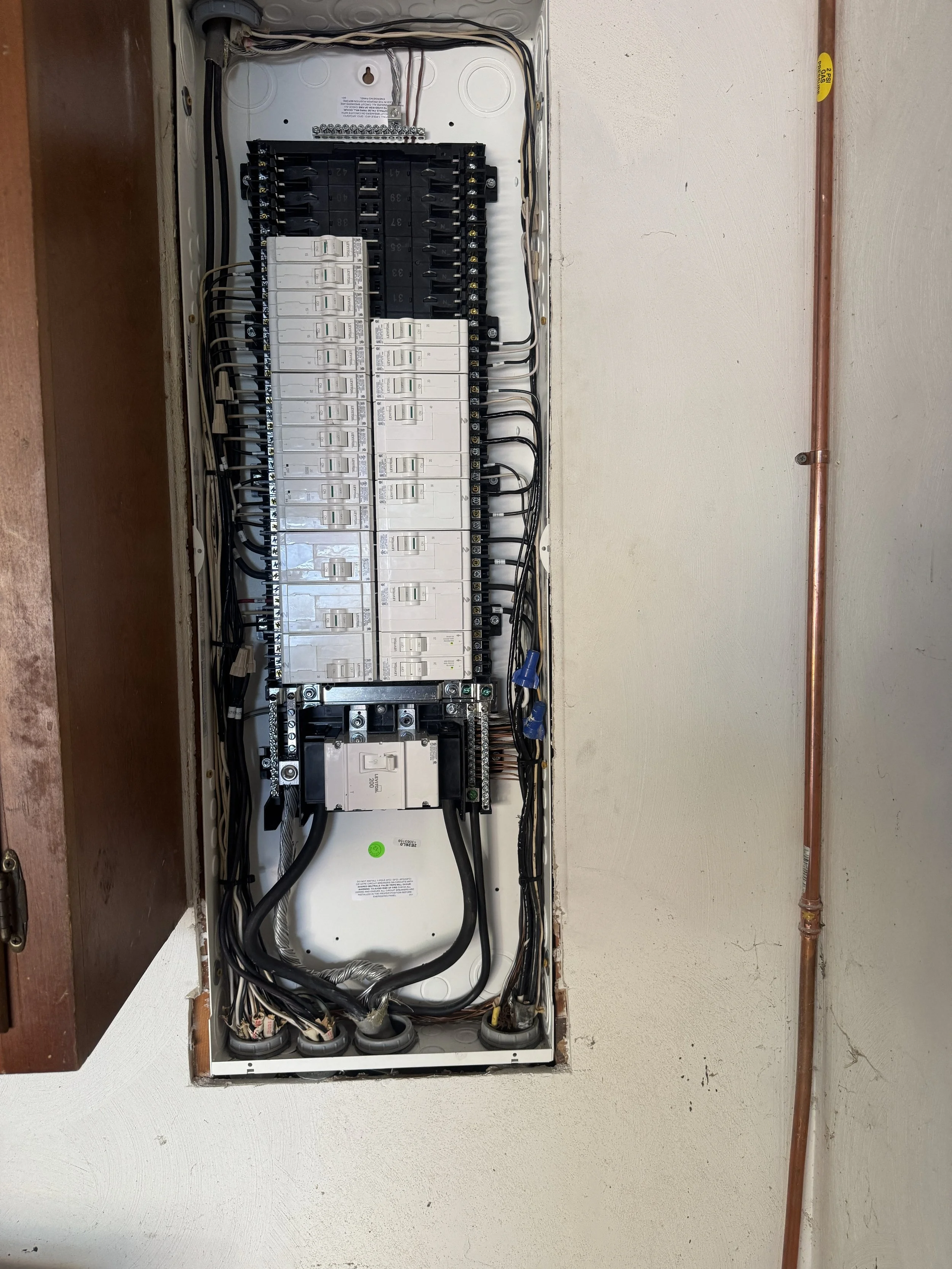
Open the panel door and leave the cover in place. A surge device is usually a small unit attached to the panel or next to it, connected to its own breaker, with one or more indicator lights.

A lit indicator generally means the device is still providing protection. If the light is out, check that its breaker is on; if it is, the device likely needs to be replaced, and we can confirm. If you find nothing, the house likely has no protection at the service, unless a device is mounted at the meter.

Rural Suffolk and the meter

Community Electric Cooperative serves rural parts of Suffolk and offers members a surge protector installed in the meter socket. The co-op describes that device as protecting motors and appliances that operate without sensitive electronic circuitry, and it recommends site-specific protection for electronics. Plug-in protectors at those electronics are the site-specific layer the co-op describes, and a panel device adds a second layer for the circuits inside the home.

02 — Permit Timing

When Your Home Was Permitted and What to Expect

When permitted
Surge device at the service
What we suggest
Before January 18, 2024
Not required; present only if the builder added one
Check the panel, then add a Type 2 device if none
During the one-year transition that began January 18, 2024
Required only if the 2021 code was used
Check the panel and the indicator
After the transition ended
Required at the service
Confirm the indicator still shows protection
Required with the replacement
Confirm it was installed and is working

03 — Lightning Numbers

Virginia Lightning by the Numbers

Vaisala Xweather’s 2025 annual lightning report counted 3,143,967 lightning events in Virginia, out of about 252 million across the continental United States. Vaisala said U.S. lightning activity reached an eight-year high in 2025, up 20% from 2024. Those counts include both cloud-to-cloud and cloud-to-ground lightning, so they measure how active storms were, and not every flash reaches the ground.

A panel surge device limits surges that arrive on the service. On a spread-out property, though, some of the equipment most exposed to a strike close to the property sits at the far end of long wires: a well pump, a detached shop, an irrigation controller, or a gate operator. The sections below cover those.
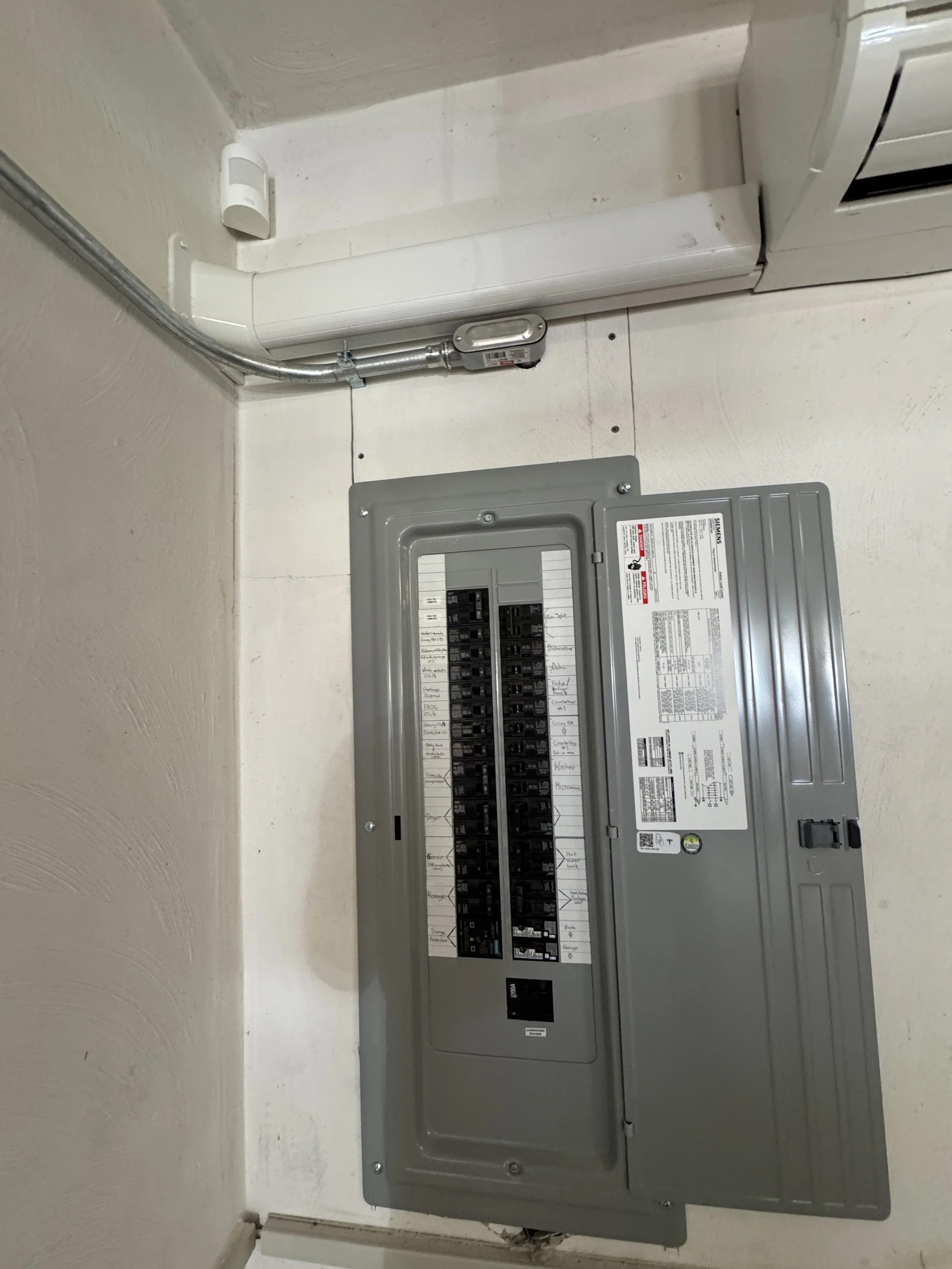
Panel in a garage workshop on a Suffolk, VA property

04 — Shops

Shops and Barns Fed From the House

A detached shop or barn with its own panel sits at the end of a feeder from the house, and the electrical code treats that building separately for grounding. Under the National Electrical Code, a separate building supplied by a feeder must have its own grounding electrode system, and the feeder generally must include an equipment grounding conductor.

That matters for surge protection because a surge device works by diverting surge current into the grounding system. NEMA’s Surge Protection Institute defines a Type 2 device as one installed on the load side of the service equipment, including devices at a branch panel, so a shop panel can carry its own.

For a shop running a compressor, a welder, or a chest freezer from its own panel, we look at a Type 2 device at that panel in addition to the one at the house, after checking that the building’s grounding is in place. Virginia’s code requirement applies at the service, so a device at the shop panel is our recommendation for that equipment.

05 — Well Pumps

Well Pumps and the Wire Down the Well

A submersible well pump motor sits at the bottom of a long cable, and pump makers sell surge arrestors to protect these motors. Franklin Electric calls its arrestors highly recommended for protecting submersible motors from common high voltage spikes that can damage motor insulation and cause winding failure, and it offers a lightning surge arrestor for its SubDrive pump drives as well.

Our part is the electrical supply: a hardwired surge protector on the pump’s circuit or at its disconnect, in addition to the panel device. Which arrestor belongs inside a pump control box or drive is a question for your well contractor and the pump’s manual. Protection like this helps limit damage and cannot make a pump lightning-proof.
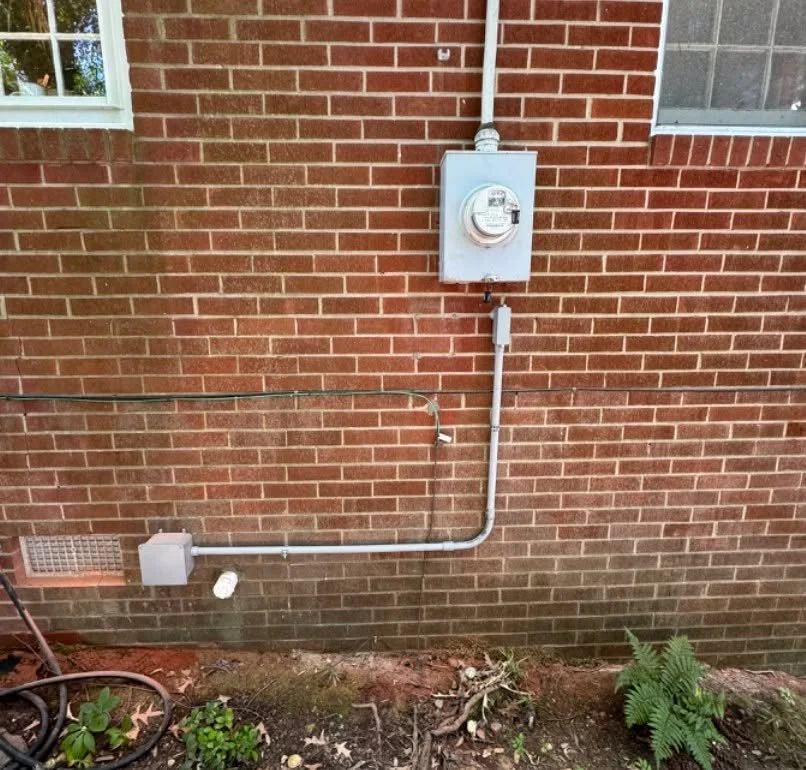
Outdoor disconnect where an underground circuit leaves the house on a Suffolk, VA property

06 — Controllers

Irrigation Controllers, Gate Openers, and Other Long Runs

An irrigation controller can take a surge from two directions: its power supply, and the field wires running out to valves across the yard. Rain Bird’s grounding guide says surge devices must be connected to a suitable ground electrode to be effective, since they are designed to send surge energy to ground before it travels through the protected equipment, and that a lower-resistance ground dissipates a surge better.

The same guide is candid that no system can be protected against lightning damage 100% of the time. It is written for large golf course systems, so the principle carries over better than its specifications.

For a home, we can protect the circuit feeding an outdoor controller or gate operator, alongside the panel device. Protection on the controller’s own field wiring is for the irrigation or gate installer and the equipment manufacturer to specify.
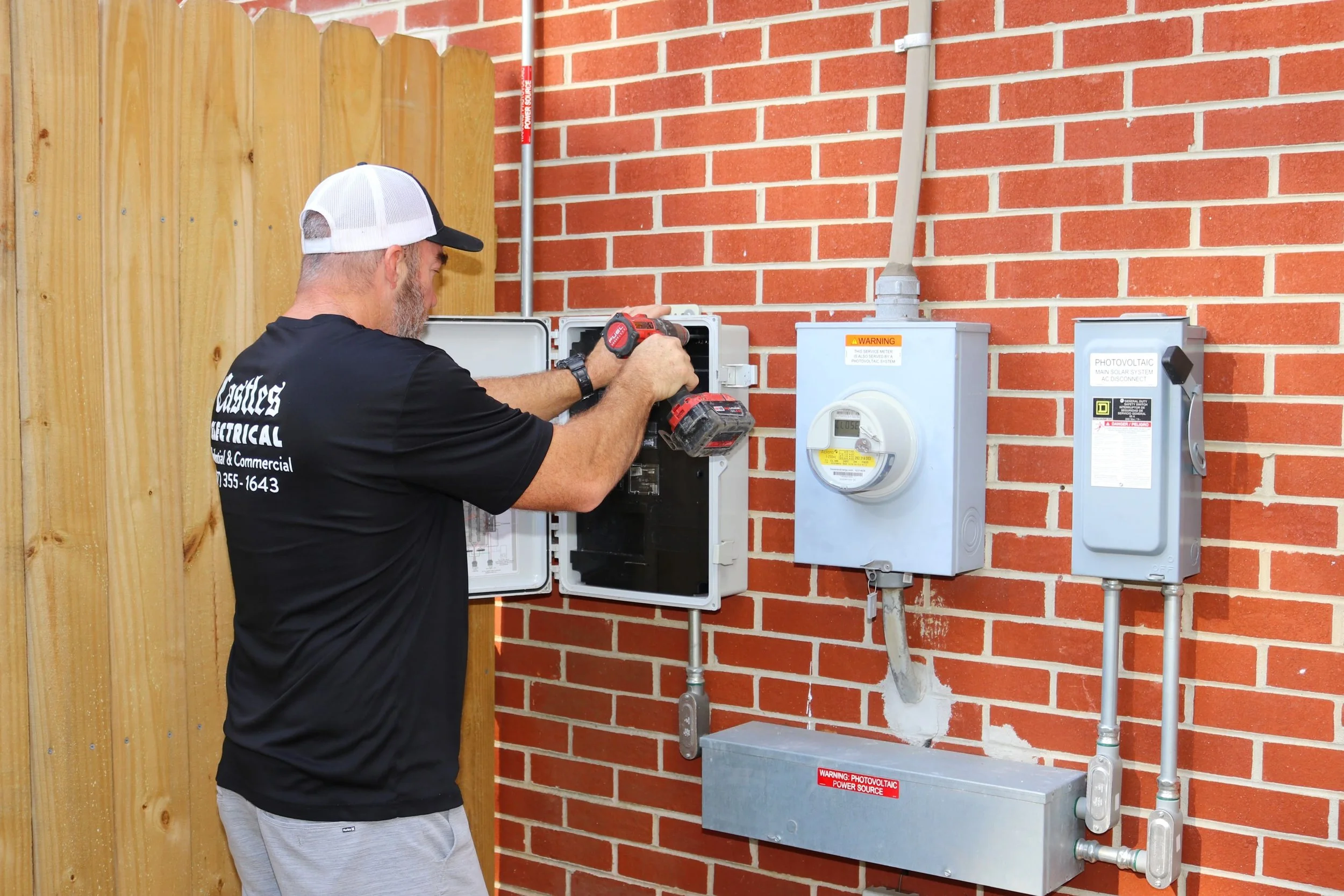
Castles Electrical electrician at the service equipment of a Suffolk, VA home

Castles Electrical

Licensed, insured, and locally owned. The work is done by our own electricians, never subcontracted.

07 — Why Castles

Where a Suffolk Visit Starts

Newer Homes Checked First

We look before recommending a device.

Dominion and Co-op Homes

Both served the same way.

08 — Process

How a Suffolk Surge Protection Visit Works

01

Check for an existing device

We look for a surge device at the panel, read its indicator, and check its breaker.

02

Written estimate

If a device is needed, you get a free written installation estimate before any work.

03

Install and confirm

A Type 2 device goes on its own breaker, and we show you what its indicator should read.

04

Review the other protection

We point out equipment that would benefit from hardwired or plug-in protectors.

09 — FAQS

Suffolk Surge Protection FAQs

The builder installed a surge device. Do I still need anything?+

If the indicator shows protection, the service has a working device. You may still want plug-in protectors at sensitive electronics, and hardwired protection for outdoor equipment.

Do I need surge protection if I have a whole-home generator?+

It is still worth having. A generator covers outages, but surges can still arrive on the electrical service or start inside the house the rest of the year. We can add the surge device while the generator’s transfer switch is being installed.

Our standby generator’s transfer switch has a surge device built in. Does it protect the generator?+

Not necessarily. Generac explains that the surge device in its automatic transfer switch protects the home’s loads, not the transfer switch or the generator, and that a dealer can install a second device on the generator side. As a Generac Authorized Dealer, we can tell you which setup your switch has.

Our shop runs on a single circuit from the house. Does it need its own grounding electrode?+

The electrical code makes an exception for a building supplied by a single branch circuit that includes an equipment grounding conductor. A shop with its own feeder and panel is the case that needs its own grounding electrode system.

The co-op installed its meter device years ago. How do I know it still works?+

That device is part of the cooperative’s program, so the co-op is the right place to ask about it. We check the protection on the house side of the meter.

10 — Proof

Clear Communication From Google Reviews

“

A reviewer credited clear communication with getting power restored after a generator problem.

From our five-star Google reviews
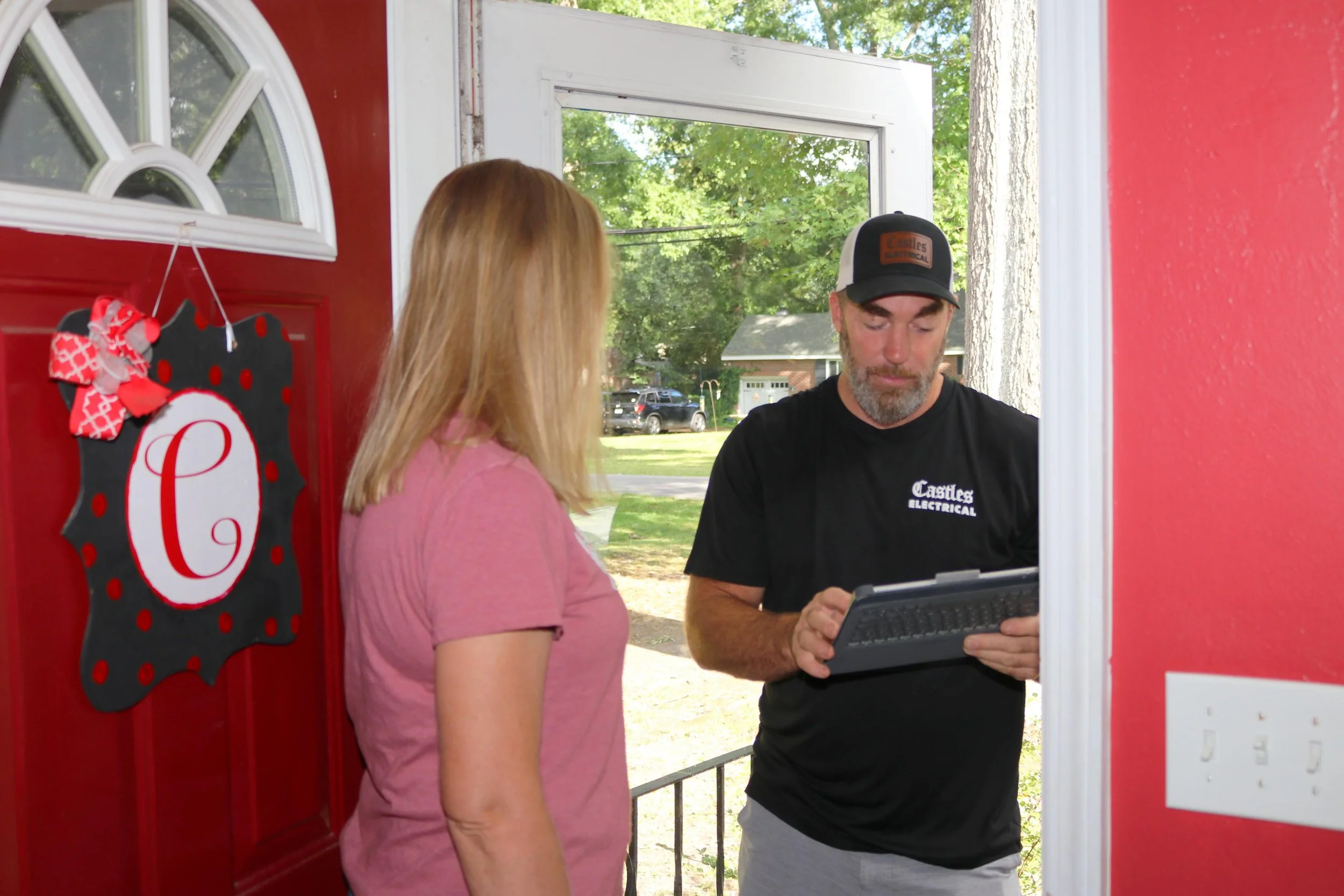
Castles Electrical electrician explaining the visit to a Suffolk homeowner
Suffolk, VA panel with a surge protective device fitted on its own breaker

Google 5.0 Rated by Hampton Roads Customers

Castles Electrical maintains a 5.0 rating on Google. The reviews below load as a live widget, so this page shows current feedback from real Castles Electrical customers.
Leave Us a Google Review

Ready When You Need Us

Not Sure Whether Your Suffolk Home Is Protected?

Share the year the home was finished and what you see at the panel. We will confirm what is there, and if a device needs adding, the installation estimate is free.

Office and hours

Based at 2984 S Lynnhaven Road, Suite 104, Virginia Beach, VA 23452.

  • Monday to Friday: 7:00 AM to 10:00 PM
  • Saturday: 7:00 AM to 7:00 PM
  • Sunday: Closed
  • After-hours voice messages are checked, and we take emergency and after-hours calls when we can

Before anything is added, Castles Electrical looks at what a Suffolk home already has.

Castles Electrical electrician reviewing the job with a homeowner