01 — Larger Homes
Two HVAC Systems on One Engine
More rooms usually mean more space to heat and cool, and many larger houses split that job between two HVAC systems. Add an electric range, a water heater, a dryer, and perhaps a detached shop, and the house can ask for more at one moment than a mid-size standby generator can supply.
Load management lets a right-sized generator carry that house by deciding what runs and what waits. Kohler’s manual puts the idea simply: less critical appliances can run on the generator while the more important ones are not running.
02 — What We Check
What We Look at Before Recommending a Setup
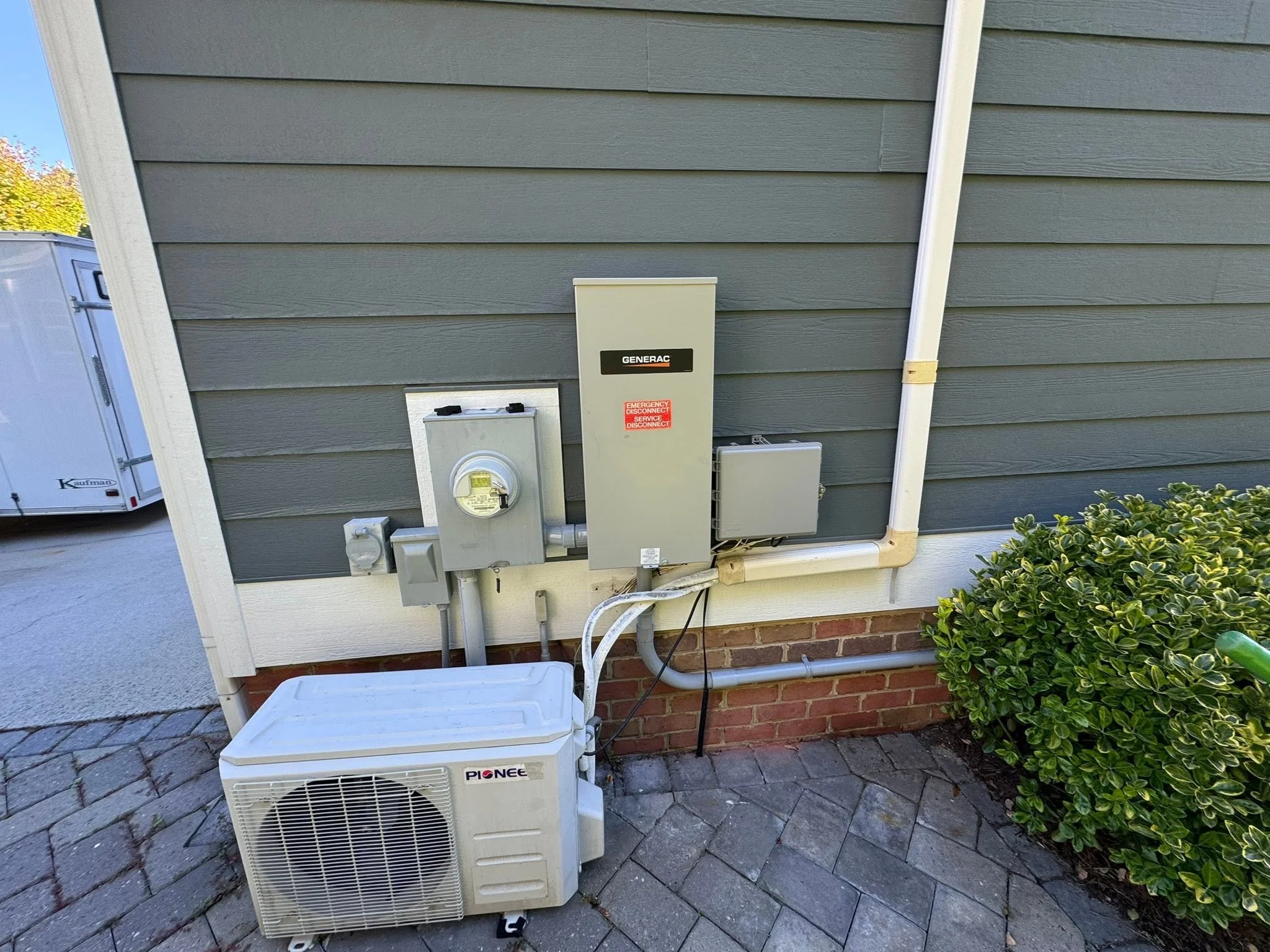
The choice between a managed switch and a generator sized for everything comes from the house itself. Before we write the estimate, we gather:
- The nameplate on every outdoor HVAC unit
- Which appliances are electric, such as the range, dryer, and water heater
- Detached buildings fed from subpanels
- Thermostat wiring, and whether a low-voltage control wire is available
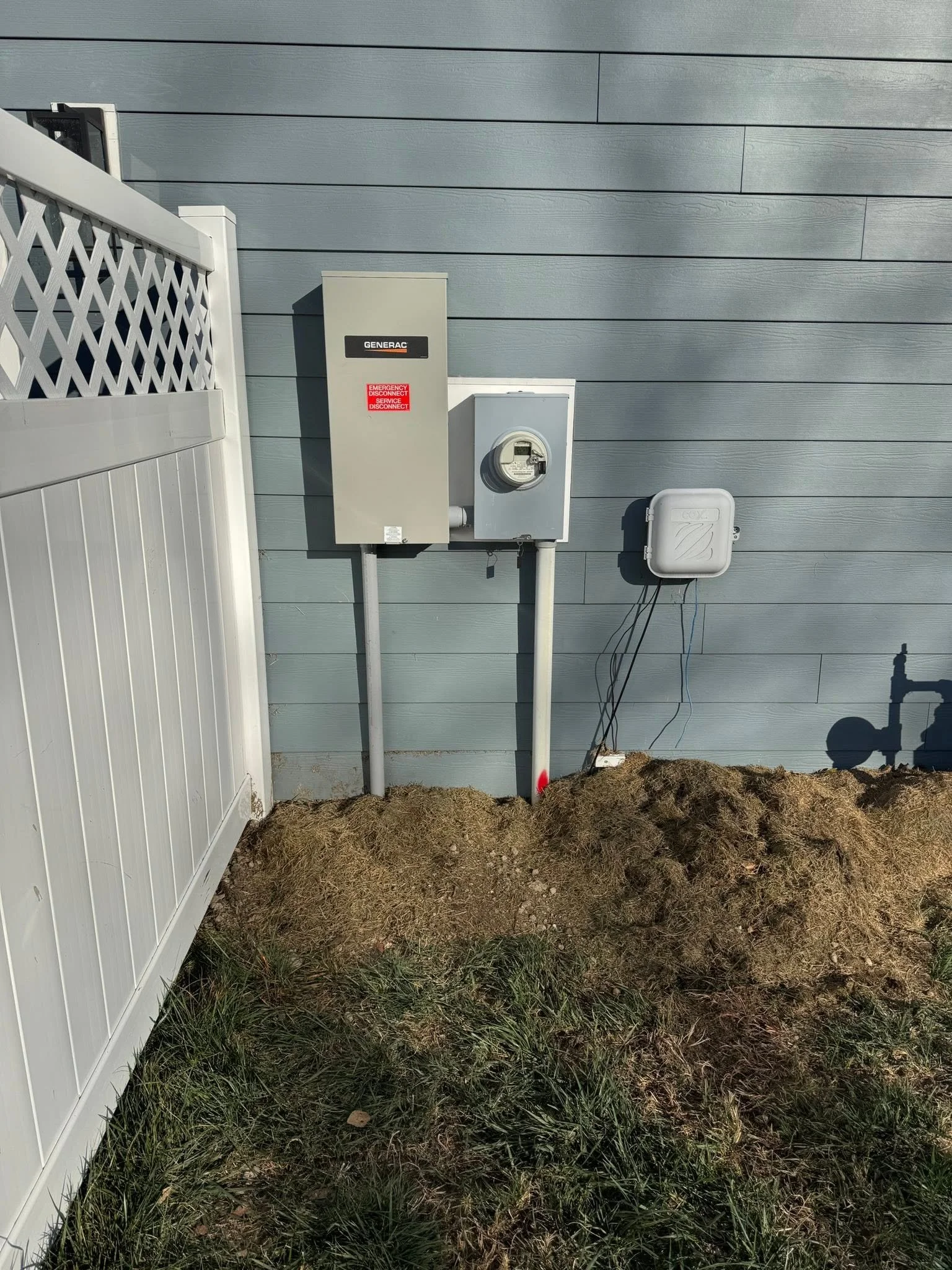
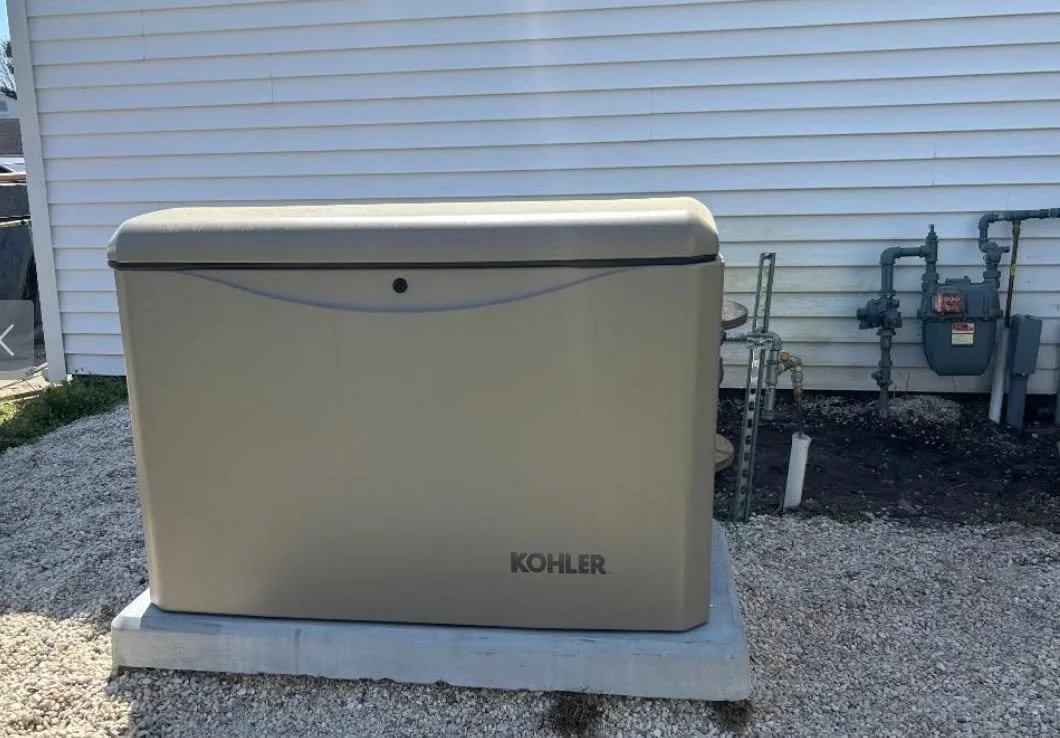
- The generator model and whether its switch includes load management
- Service size, and whether a panel upgrade belongs in the same project
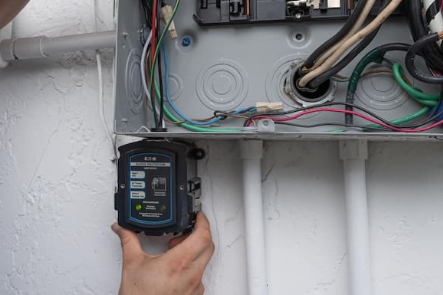
Two houses of the same size can land on different setups. A home that cooks and heats water with gas has fewer large electric loads to manage than an all-electric one. And on a Suffolk lot the shop, the barn, or the detached garage usually sits on its own subpanel, which turns a building full of tools into one managed load instead of six.
03 — How Shedding Works
How a Load Manager Knows the Generator Is Working Too Hard
When an engine-driven generator is pushed past what it can deliver, its output frequency sags. A load management module watches for that sag. If it drops below a set threshold, the module switches off the connected appliance to prevent the generator from being overloaded.
Generac describes its Load Manager as a control wire-free device: each module senses the generator’s frequency on its own, with no signal needed from the transfer switch.
A Generac system can manage up to eight loads with Load Managers, plus air conditioners through the load control built into many Generac transfer switches, up to four on current models. How a module switches a load off depends on what the load is:
04 — Priorities
Setting the Order Loads Come Back In
After a shed, the loads do not all return at once. Each module gets a priority. On a Generac system, the first load returns 5 minutes after a shed, and each subsequent load follows 15 seconds later.
The five-minute wait has a purpose. It gives the air conditioner compressor time to settle so it restarts cleanly. Generac also recommends setting the other modules to follow after the last HVAC load returns, so the generator picks up loads gradually and is less likely to shed again.
The shop on a subpanel is the easiest load to shed
A module can be set to lockout mode for a load that does not need to run during a generator overload. That load can be one appliance or an entire subpanel, such as a subpanel for a detached shop. If the generator has spare capacity, a locked-out load is still allowed to turn on.
The 30-minute pause
If a module detects another overload while its load is recovering, that module pauses for 30 minutes. Repeated pauses usually mean the priority order or the list of managed loads needs another look.
A common starting order puts the main-floor air conditioner first, the upstairs system second, then the water heater, range, and dryer, with a pool pump or shop on lockout. Your household’s habits set the final list.
Kohler’s version manages up to six loads, ranks them 1 to 6 with 6 shed first, and watches generator current as well as frequency. Two relays on its board handle two separate HVAC systems, which suits a house with an upstairs and a downstairs unit, and up to four power relay modules handle other appliances. Its priorities are hard-wired at installation.

05 — Motor Starts
Air Conditioner Starts and Soft Starters
An air conditioner compressor draws far more current at startup than it does while running.
One maker says its soft starter can cut starting current by up to 75 percent. It does not change what the unit draws once running, so the running amps still count toward the generator’s load.
Soft starters are HVAC equipment, so ask your HVAC contractor whether one suits your system. If one is installed, tell us, and we account for it when we lay out the load plan and module priorities.
06 — Process
Setting Up a Managed Switch
Walk the house and read the nameplates
Outdoor units, electric appliances, outbuildings, and thermostat wiring.
Load calculation and a priority order
Managed or sized for everything, with the load order planned with you.
Permit and installation
Transfer switch and any modules or relays installed in coordination with the generator installation.
Load management check
With you present, we confirm that managed loads shed and return in the planned order.
Inspection and handover
After the city inspection, we go over the priority order so everyone at home knows what to expect.
07 — Proof
Customer Service, Across Several Visits
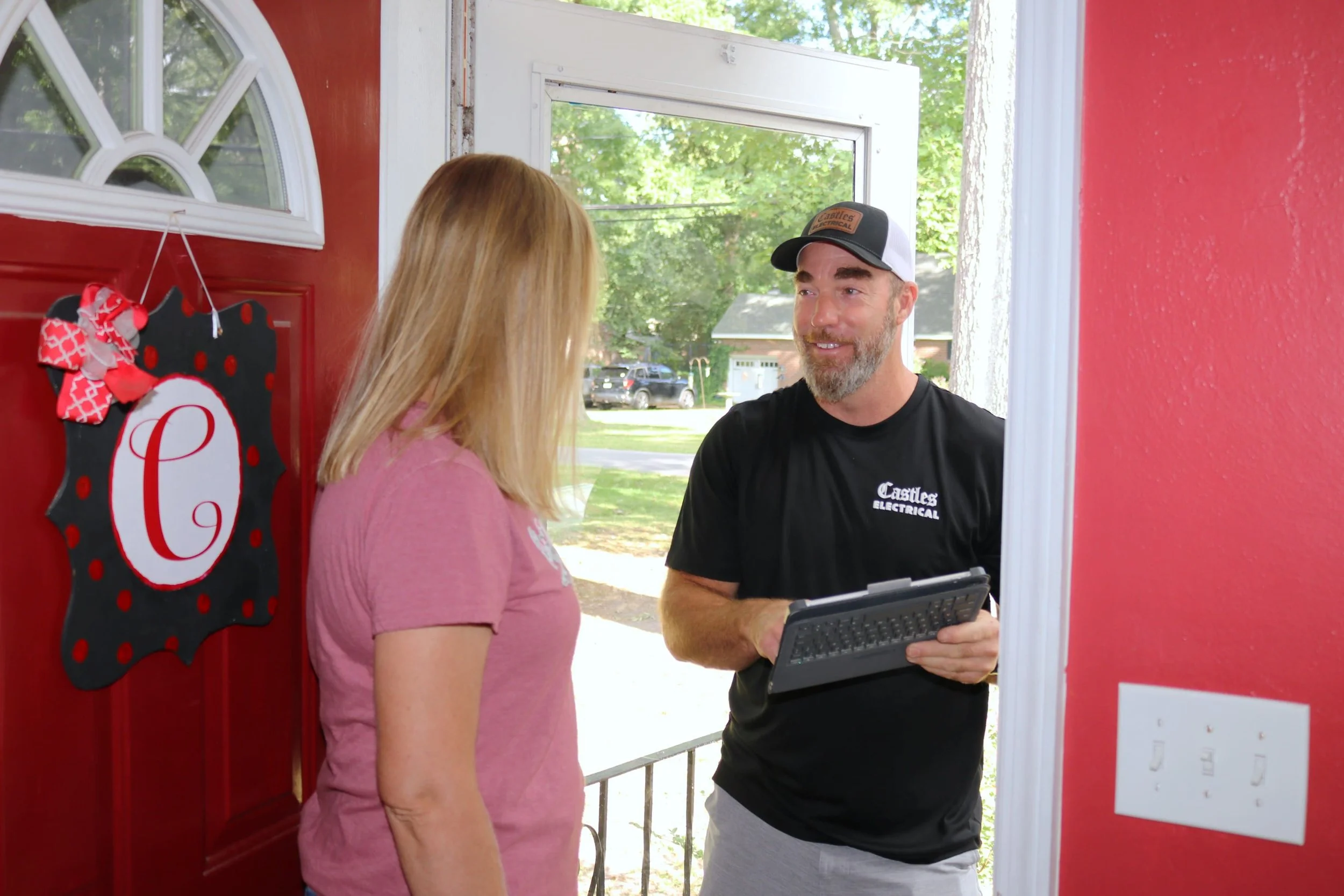
One customer wrote that their family has had great service from our team on multiple occasions and singled out the customer service.
From our five-star Google reviews
Google 5.0 Rated by Hampton Roads Customers
Castles Electrical maintains a 5.0 rating on Google. The reviews below load as a live widget, so this page shows current feedback from real Castles Electrical customers.
08 — Why Castles
Managed Switches From Two Brands
Priorities Set With You
The order your loads return is planned with you before installation.
The Shop Counts as One Load
A detached shop on its own subpanel is managed as a single load, or held on lockout until the generator has room.
09 — FAQS