
Breaker Panel Buzzing in Virginia Beach? It Could Be a Serious Issue
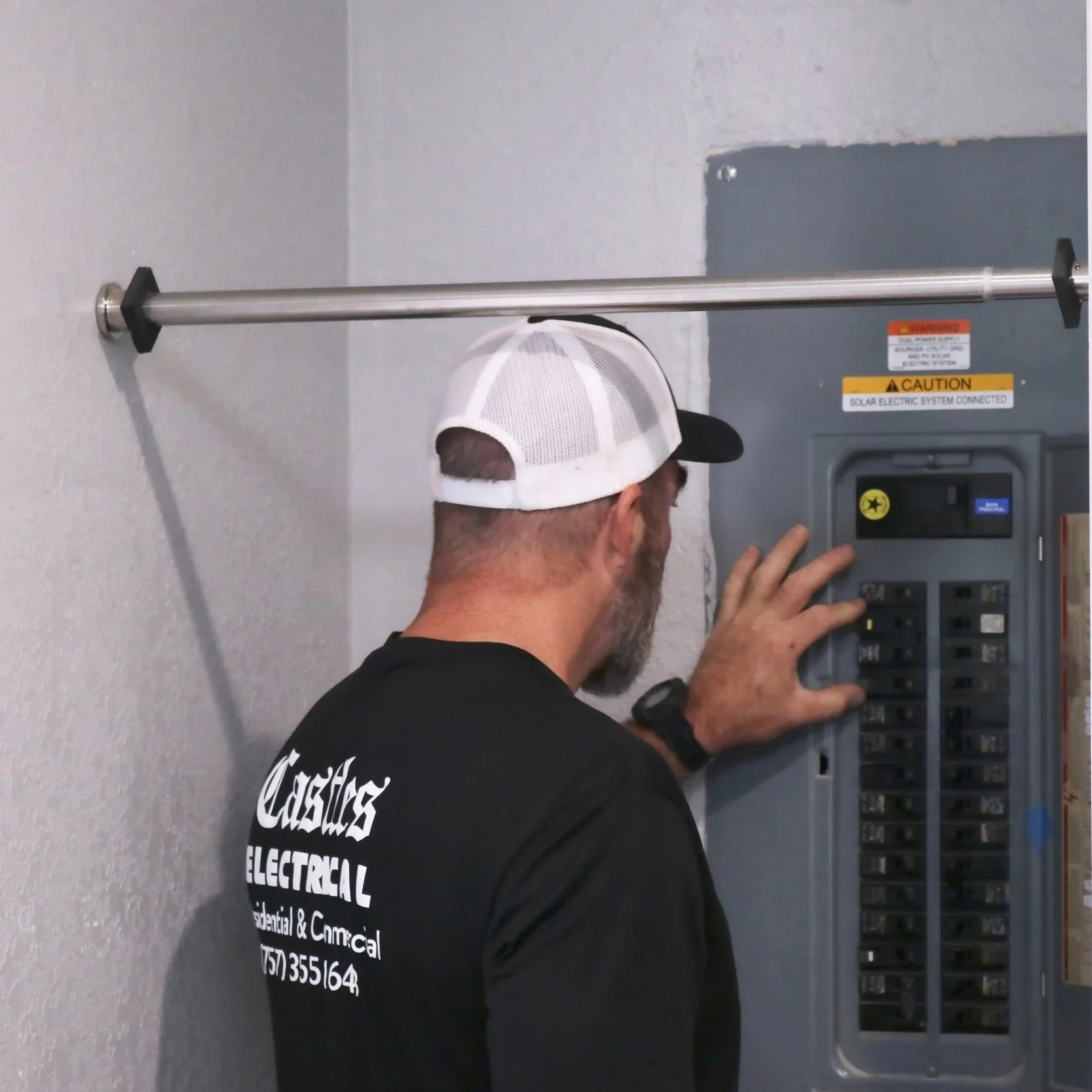
A buzzing electrical panel is a serious fire hazard. If you hear unusual noises, contact a licensed Virginia Beach electrician immediately.
Why a Buzzing Breaker Panel Should Never Be Ignored
A breaker panel that emits a buzzing sound is not behaving normally, even if power appears stable throughout the home. In Virginia Beach houses, buzzing panels often signal electrical resistance, loose connections, or internal component stress developing inside the service equipment. Electricity should move silently through breakers and bus bars. When sound enters the equation, it usually means electricity is struggling to pass cleanly through a connection. That struggle converts energy into heat and vibration, which becomes audible as a hum, buzz, or faint crackling noise.
Many homeowners notice the sound intermittently, often during heavy appliance use or humid weather, and assume it falls within normal operation. In practice, buzzing indicates a mechanical or electrical imbalance that worsens over time. Coastal humidity accelerates corrosion inside breaker panels, increasing resistance at contact points. As resistance grows, current flow becomes uneven, which intensifies vibration and heat. A buzzing panel represents a system already under stress rather than a harmless quirk, and continued operation without evaluation increases the likelihood of component failure.
How Electrical Load Imbalance Creates Audible Noise
Breaker panels distribute electrical load across multiple circuits through metal bus bars and breaker contacts. When load remains balanced, and connections stay tight, electricity flows smoothly without noise. Load imbalance occurs when certain circuits carry disproportionately high demand compared to others. Appliances such as HVAC systems, electric water heaters, or EV chargers can place sustained strain on specific breakers. That strain creates magnetic vibration inside breakers and bus connections, which produces audible buzzing.
Virginia Beach homes frequently experience load imbalance after renovations or appliance upgrades. New equipment often gets added to existing panels without redistributing circuits or increasing capacity. Over time, stressed breakers vibrate more under load, especially during peak usage periods. Buzzing may intensify when air conditioning cycles on during humid summers or when multiple appliances run simultaneously. The sound reflects physical movement inside the panel, not simply electrical flow, and indicates that components are operating beyond comfortable limits.
Loose Breaker Connections and Their Long-Term Impact
Loose connections inside breaker panels rank among the most common causes of buzzing. Breakers rely on firm contact with the bus bar to transfer electricity safely. As panels age, repeated heating and cooling cycles cause metal components to expand and contract. Screws loosen slightly, breaker clips lose tension, and contact surfaces degrade. Once contact pressure weakens, electricity encounters resistance at the connection point.
That resistance generates heat and vibration as current passes through a compromised interface. Buzzing becomes more noticeable as the load increases, especially on affected circuits. Over time, heat accelerates metal fatigue and insulation breakdown, further loosening connections. Left unaddressed, loose breakers can arc against the bus bar, damaging the panel itself. In coastal environments like Virginia Beach, corrosion compounds the problem by reducing conductive surface area, increasing both noise and risk.
The Role of Aging Breakers in Panel Noise
Breakers have mechanical components designed to trip under specific conditions. Springs, contacts, and thermal elements wear with age and use. As these components degrade, breakers may vibrate or hum during normal operation. Aging breakers often struggle to maintain consistent contact pressure, especially under sustained load. Buzzing becomes a symptom of mechanical fatigue rather than immediate overload.
Older Virginia Beach homes often contain original breaker panels that have exceeded their intended service life. Even when panels appear intact, internal components may no longer operate as designed. Humidity accelerates the deterioration of springs and contacts, making older breakers more susceptible to vibration. Replacing individual breakers without evaluating the overall panel condition may provide temporary relief, but it often leaves underlying issues unresolved. Buzzing serves as an audible indicator that the panel has moved beyond optimal operating conditions.
Moisture Intrusion Inside Breaker Panels
Moisture plays a significant role in breaker panel issues along the coast. High humidity allows condensation to form inside panels, especially during temperature fluctuations. Moisture settles on metal components, encouraging corrosion on breaker contacts and bus bars. Corroded surfaces increase electrical resistance, which leads to localized heating and vibration under load.
Virginia Beach breaker panels installed in garages, exterior walls, or utility rooms face elevated exposure. Salt carried inland by coastal air worsens corrosion, even when panels remain indoors. Moisture also affects insulating materials, reducing their ability to dampen vibration. Buzzing may intensify during humid weather or after storms, reflecting environmental influence rather than sudden electrical change. Recognizing moisture-related factors helps explain why buzzing panels often worsen seasonally.
Why Buzzing Does Not Always Trip a Breaker
Homeowners often expect breakers to trip when something goes wrong. Breakers respond to overcurrent conditions, not resistance or vibration. A breaker panel can buzz loudly while current remains within acceptable limits. Resistance at a loose or corroded connection creates heat without necessarily increasing amperage enough to trigger a trip.
This distinction explains why buzzing often persists without obvious power loss. Breakers may continue supplying electricity while internal temperatures rise. Over time, heat damages insulation and weakens mechanical components, increasing the likelihood of arcing or breaker failure. Relying on breaker trips as a safety indicator overlooks subtle but dangerous conditions developing inside the panel. Audible noise provides an early warning that should prompt evaluation.
How Panel Design and Capacity Influence Noise
Breaker panel design influences how it responds to modern electrical demand. Older panels were built for lower household loads and fewer circuits. As homes add appliances, capacity margins shrink. Panels operating near their limit experience higher internal temperatures and stronger electromagnetic forces, which increase vibration and noise.
Virginia Beach homes that have expanded over time often rely on panels that were never upgraded to match new demand. Buzzing may occur even when individual breakers appear properly sized. The panel as a whole struggles to manage cumulative load. In such cases, noise reflects systemic stress rather than isolated component failure. Evaluating panel capacity relative to household demand provides insight into whether buzzing stems from design limitations.
The Difference Between Normal Hum and Problematic Buzz
Electrical equipment sometimes emits faint sounds under normal operation. Distinguishing between benign hum and problematic buzz requires context. A steady, low-level hum that remains constant regardless of load may relate to transformer vibration within the utility supply. In contrast, buzzing that changes with appliance use, grows louder over time, or appears suddenly often points to internal panel issues.
Problematic buzzing frequently coincides with heat buildup, flickering lights, or warm breakers. These accompanying signs suggest resistance and mechanical stress rather than harmless background noise. Virginia Beach homeowners should pay attention to changes in sound character and frequency. Escalating noise typically reflects worsening conditions that require professional assessment rather than observation.
What an Electrical Inspection Reveals About Buzzing Panels
Professional electrical inspection focuses on identifying the source of vibration and resistance. Electricians remove panel covers to examine breaker seating, bus bar condition, and connection torque. Thermal imaging highlights hotspots invisible to the naked eye, revealing areas of abnormal heat associated with buzzing.
In many Virginia Beach homes, inspections uncover multiple contributing factors rather than a single cause. Loose breakers, corroded bus bars, and overloaded circuits often coexist. Addressing only one issue may reduce noise temporarily while leaving other stress points active. Comprehensive evaluation allows for corrective action that restores stable operation and reduces long-term risk.
Why Overloaded Circuits Increase Panel Vibration
Overloaded circuits place continuous stress on breaker panels even when breakers do not trip. When circuits operate close to their maximum capacity for extended periods, electromagnetic forces inside breakers intensify. Those forces cause internal components to vibrate, especially when demand fluctuates rapidly as appliances cycle on and off. Buzzing becomes more noticeable during these transitions, reflecting physical movement inside the breaker rather than a simple electrical anomaly.
Virginia Beach homes often develop overloaded circuits gradually. Additional appliances, home offices, and modern HVAC systems increase demand without corresponding circuit expansion. Panels that once operated comfortably now run near their limits during peak usage. Heat generated by sustained load reduces metal stiffness and weakens breaker components, allowing vibration to travel through the panel enclosure. Buzzing under these conditions indicates cumulative stress that worsens with time rather than a sudden malfunction.
Arcing Inside the Panel and Audible Warning Signs
Arcing occurs when electricity jumps across gaps created by loose connections or damaged contact surfaces. Inside a breaker panel, arcing produces both heat and sound. The sound may resemble buzzing, crackling, or sizzling, depending on severity. Unlike a steady hum, an arcing noise often fluctuates and may intensify under load. Even low-level arcing damages metal surfaces, increasing resistance and making future arcing more likely.
Arcing inside panels poses a serious risk because it can ignite surrounding materials or damage the bus bar beyond repair. Virginia Beach’s humid environment increases the likelihood of corrosion-related gaps where arcing can occur. Buzzing linked to arcing often accompanies faint burning odors or discoloration near breakers. Ignoring these signs allows damage to compound, turning a manageable repair into a full panel replacement scenario.
The Impact of Corroded Bus Bars on Panel Noise
Bus bars serve as the backbone of a breaker panel, distributing electricity to individual breakers. Corrosion on bus bars reduces conductive surface area, forcing electricity through smaller contact points. Reduced contact increases resistance and generates heat. As current passes through these compromised interfaces, vibration develops, producing audible buzzing.
Corrosion progresses quietly in coastal regions. Salt-laden air accelerates oxidation even inside enclosed panels. Once corrosion begins, it spreads along the bus bar, affecting multiple breakers. Buzzing may appear to come from several locations within the panel rather than a single breaker. Addressing corroded bus bars requires careful evaluation, as cleaning alone may not restore safe conductivity. Buzzing serves as an early indicator that the panel’s core distribution components are under threat.
Why DIY Panel Work Often Makes Buzzing Worse
Homeowners sometimes attempt to silence buzzing by tightening breakers or replacing components without proper diagnostics. While tightening connections may temporarily reduce noise, improper torque can damage breaker clips or bus bars. Over-tightening distorts metal components, increasing resistance rather than reducing it. In other cases, mismatched breakers get installed that do not seat correctly, creating new vibration points.
Electricians frequently encounter panels where DIY work introduced additional hazards. Buzzing returns after a brief improvement because underlying issues remain unresolved. Without proper testing equipment and experience, identifying the true source of vibration proves difficult. Professional evaluation considers mechanical fit, electrical load, and environmental factors together, reducing the risk of repeated failure.
How Panel Location Influences Long-Term Performance
Panel location affects exposure to environmental stress. Panels installed in garages, utility rooms, or exterior walls experience greater temperature swings and humidity fluctuations. These conditions accelerate metal expansion and contraction, loosening connections over time. Buzzing may appear sooner in panels exposed to these stresses compared to panels located in conditioned interior spaces.
Virginia Beach homes often place panels in garages where moisture intrusion remains common. Vehicles introduce humidity, and coastal air circulates freely. Over time, vibration from loose connections becomes audible. Relocating panels rarely proves practical, but understanding location-related stress helps explain why certain panels develop noise issues faster. Mitigating moisture and addressing connection integrity reduces ongoing deterioration.
FAQs
Buzzing indicates abnormal electrical behavior that warrants prompt inspection. While not every case represents immediate danger, delaying evaluation allows heat and resistance to worsen, increasing fire risk over time.
Humidity contributes to corrosion and reduced contact quality, which can lead to buzzing. Moisture typically acts as a compounding factor rather than the sole cause, accelerating existing weaknesses inside the panel.
Appliances increase electrical load, which intensifies vibration at stressed connections. Louder buzzing during appliance use points toward load-related resistance or loose components inside the panel.
Tightening breakers without proper tools and experience risks damaging components or worsening resistance. Professional inspection determines the correct torque and identifies the underlying causes safely.
Coastal homes benefit from inspection every few years or after major electrical changes. Humidity and salt exposure accelerate wear, making regular evaluation important for long-term safety.