
EV Charger Installation in Chesapeake, VA: What Homeowners Need to Know
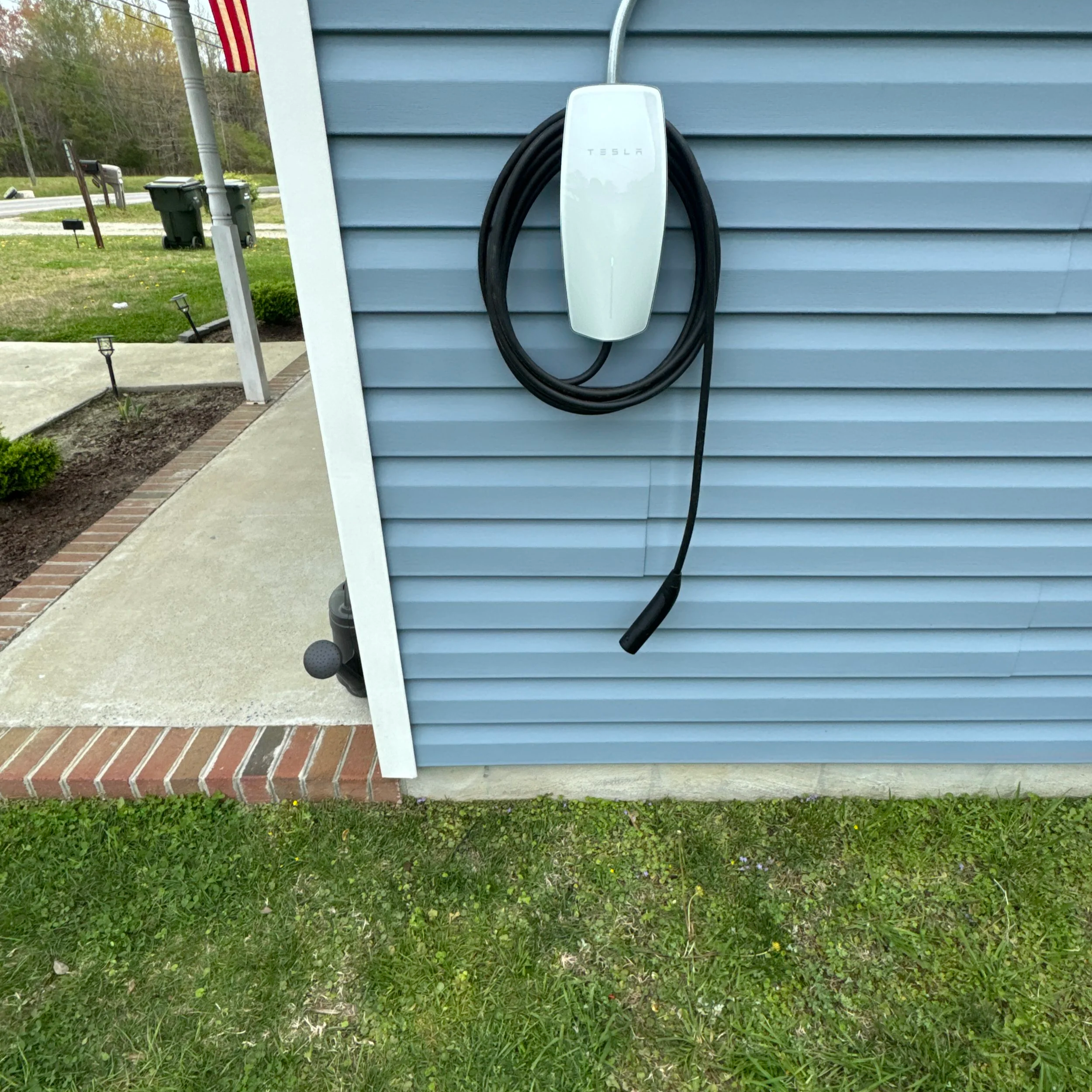
Understanding what your home's electrical system needs to support a Level 2 charging installation before you buy the charger unit or schedule an installation is the single most useful step you can take to ensure the process goes smoothly.
You bought the electric vehicle, parked it in the garage, and plugged it into the standard wall outlet. Then you checked the app in the morning and realized you added about 30 miles of range overnight. Your commute is 40 miles each way. That is when most new EV owners in Chesapeake, VA, start searching for Level 2 charger installation, because the math on a standard outlet does not work for most people's actual lives. What comes next in the research process is where many homeowners run into assumptions that cost them time and money. The charger itself is the visible part of the project. The electrical infrastructure that supports it determines what the project actually involves.
Castles Electrical handles EV charger installations throughout the Chesapeake, VA, area regularly enough to have a clear picture of what homeowners expect going in versus what the project actually requires. The gap is usually not dramatic, but it matters for budgeting and scheduling. Understanding what your home's electrical system needs to support a Level 2 charging installation before you buy the charger unit or schedule an installation is the single most useful step you can take to ensure the process goes smoothly. What follows covers the questions that consistently come up, including those that homeowners do not know to ask until they are already midway through the project.
What Level 2 Charging Actually Means and Why It Matters
Level 2 charging uses 240-volt power, the same voltage your electric dryer or range uses, to deliver significantly more power to your vehicle's battery than a standard 120-volt household outlet can provide. A standard outlet, which the industry calls Level 1 charging, adds roughly three to five miles of range per hour. A Level 2 charger adds 15-40 miles of range per hour, depending on your vehicle's onboard charger capacity and the amperage rating of your charging circuit. For most real-world driving patterns in Chesapeake, VA, Level 2 charging means your vehicle is reliably ready every morning without requiring you to track how much range you have left or manage your plug-in schedule carefully. It removes the daily anxiety that Level 1 charging creates for anyone who drives more than a short loop.
The charging speed also affects how you use your vehicle. With Level 1 charging, an EV depleted to a low state of charge may not recover fully overnight, which can create genuine range anxiety on longer trips or unexpected high-mileage days when the next day's charge has not had enough time to compensate. Level 2 charging eliminates most of that planning burden because even a vehicle depleted to near-empty will be fully charged within a few hours on a 40-amp circuit. For Chesapeake, VA, homeowners with two vehicles, households where multiple people share a single EV, or anyone whose daily driving is on the higher end, Level 2 charging is not an upgrade over adequate Level 1 charging. It is the difference between a charging solution that works reliably and one that requires constant management.
Your Panel Is the First Question — Not the Charger
The most common mistake Chesapeake, VA, homeowners make when approaching an EV charger installation is choosing the charger before evaluating the electrical panel. The charger is the consumer-facing part of the project and attracts marketing attention. The panel is the infrastructure layer that determines whether the charger can be installed as planned, whether a panel upgrade is needed first, and the project's realistic total cost. A 50-amp Level 2 charging circuit draws meaningful power continuously over the course of a multi-hour charge session, and that draw has to come from panel capacity that is available after accounting for everything else your home is already running.
When Castles Electrical evaluates an EV charger installation request in Chesapeake, VA, the first step is always a panel assessment. A 200-amp service panel with several open slots and a manageable existing load can accommodate a 50-amp EV charging circuit without panel work. A 100-amp panel in a home with central HVAC, an electric water heater, and a dryer may already be running close to its capacity. Adding a 50-amp charging circuit to a heavily loaded 100-amp panel can cause nuisance tripping and reliability problems across the whole system, not just on the charging circuit. The right answer in that situation is to upgrade the panel before or alongside the charger installation, which changes both the project scope and the cost. Knowing that going in is considerably better than discovering it when the installation is already underway.
What the Run From Your Panel to the Garage Actually Involves
The physical distance and path between your electrical panel and your intended charger location affect the cost and complexity of the installation more than most homeowners anticipate. In the simplest scenario, your panel is in the garage or on the garage wall, and the charger is mounted there as well. The wiring run is short, conduit requirements are minimal, and the installation is straightforward. In a more typical Chesapeake, VA, home where the panel is in a utility room, basement, or hallway on the opposite side of the house from the attached garage, the wiring run involves routing cable through finished spaces or along exterior walls, which adds both material costs and labor time to the project.
For homes with a detached garage or a carport that is not directly attached to the living structure, the wiring run may require burying conduit underground to bridge the distance between the main panel and the charging location. A trench run for underground conduit is a meaningful addition to the project scope that significantly affects the total cost. Some homeowners with detached garages in Chesapeake, VA, find that installing a sub-panel in the garage is a more practical approach than running a long home run for a single charging circuit, particularly if the garage has, or is planned to have, other electrical loads. Castles Electrical evaluates the full physical path of the installation before quoting the project, because the difference between a short run and a long run with significant routing complexity is a real cost difference that the homeowner needs to understand before making decisions.
Hardwired vs. NEMA 14-50 Outlet: What Makes Sense for Your Situation
Level 2 home EV chargers can be installed in two configurations. The charger can be hardwired directly to a dedicated circuit, meaning the unit is permanently connected to the wiring with no outlet in between. Alternatively, the circuit can terminate in a NEMA 14-50 outlet, the large four-prong 240-volt receptacle that the charger's cord plugs into. The choice between these two approaches depends on factors specific to your situation, rather than one being universally better than the other. Hardwiring creates a cleaner installation and is required by some charger manufacturers for warranty compliance. A NEMA 14-50 outlet installation keeps the charger unit portable, which matters if you plan to move, rent the property, or want the option to use a portable Level 2 adapter in addition to your home charging unit.
Military families and renters in Chesapeake, VA, consistently prefer the NEMA 14-50 approach because it allows the charger to move with them. Homeowners who are settled in a property and want a finished, integrated installation often prefer hardwiring because it eliminates the visible cord between the outlet and the charger unit and provides a slightly more secure physical installation. From a purely electrical standpoint, both approaches are code-compliant for residential EV charging in Virginia. The decision is practical rather than technical. Castles Electrical installs both configurations and will walk you through the considerations specific to your home and situation, rather than defaulting to a single approach for every job.
Permits and Why Skipping Them Is a Problem
EV charger installation in Chesapeake, VA, requires a city permit for 240-volt circuit work. The permit requirement is not optional, and a reputable, licensed electrician will not skip it to save time or reduce the apparent cost of the project. The permit process for an EV charger installation is typically straightforward, involves minimal delays, and results in a city inspection record documenting that the installation was completed correctly. That documentation matters when you sell the home, when you file an insurance claim for anything related to the electrical system, and when you want to know with confidence that the circuit supplying power to your vehicle's charging system was installed properly.
Homeowners who are quoted lower prices by contractors who plan to skip the permit should understand what that saves and what it costs. The permit fee itself is not large. What the contractor is actually skipping is the inspection, which is the independent verification step that confirms the wiring is sized correctly, the connections are made properly, and the installation meets code. A DIY or unpermitted installation of a 240-volt charging circuit that has undersized wiring creates a fire risk that develops slowly and invisibly inside the wall. Castles Electrical pulls permits for every EV charger installation in Chesapeake, VA, as a standard part of the project, and the inspection process is included in the project management from the start.
Installing an EV Charger? Get the Right Setup Before You Waste Time or Money
What size circuit do I need for an EV charger at home?
The most common residential EV charging circuit is a 50-amp, 240-volt dedicated circuit, which supports a 40-amp continuous charging load. Most Level 2 home chargers operate at 32 or 48 amps, and the circuit needs to be sized at 125 percent of the charger's continuous load rating per electrical code. A 40-amp charger requires a 50-amp circuit; a 48-amp charger requires a 60-amp circuit. Castles Electrical will confirm the correct circuit size based on your specific charger's requirements when scoping the installation.
Can I install the charger myself and have an electrician do the circuit?
Circuit installation requires a licensed electrician and a permit. The charger unit itself, if it is a plug-in model connecting to a NEMA 14-50 outlet, can be mounted by the homeowner after the electrician installs the outlet. If the charger is a hardwired model, the connection between the circuit and the charger is part of the electrical work and should be done by a licensed electrician as part of the permitted project. Splitting the work to save money on charger mounting generally yields only minor savings and introduces coordination complexity.
How long does an EV charger installation take?
For a straightforward installation in Chesapeake, VA, where the panel has capacity, and the charger location is close to the panel, the installation typically takes 2 to 4 hours. Installations with longer wiring runs, panel upgrades, or trenching for a detached garage run longer. The full project timeline from permit application to inspection completion is typically one to two weeks. Castles Electrical provides a realistic timeline at the start of the project based on current permit processing and scheduling.
Will my electric bill increase significantly with an EV charger?
Yes, charging an electric vehicle at home adds to your electricity consumption, and your bill will increase. The amount depends on how much you drive, your vehicle's efficiency, and your local electricity rate. Dominion Energy serves most of Chesapeake, VA and offers time-of-use rate options that can reduce the per-kilowatt-hour cost of overnight charging significantly compared to charging during peak evening hours. Most EV owners find that the fuel cost savings relative to gasoline more than offset the increased electricity bill, but the specific numbers depend on your driving habits and vehicle.
Does the charger need to be installed inside the garage, or can it be outside?
Level 2 EV chargers rated for outdoor installation can be mounted on an exterior wall, a post, or a carport structure, provided they are appropriately weatherproofed. Not all charger models are rated for outdoor exposure, so the choice of charger matters if outdoor installation is your preference. In Chesapeake, VA, where humidity and coastal air are factors, selecting a charger with appropriate outdoor and weather ratings is worthwhile. Castles Electrical will confirm that your intended installation location and charger model are compatible before the project begins.
The licensed electricians at Castles Electrical in Virginia Beach offer electrical safety inspections & code compliance, EV charging station installation, and commercial electrician services. We are committed to delivering excellence at straightforward pricing. We offer prompt services to quickly restore your electrical system functioning. Call now!