Generator Installation in Chesapeake: Preparing for Power Outages in Hampton Roads
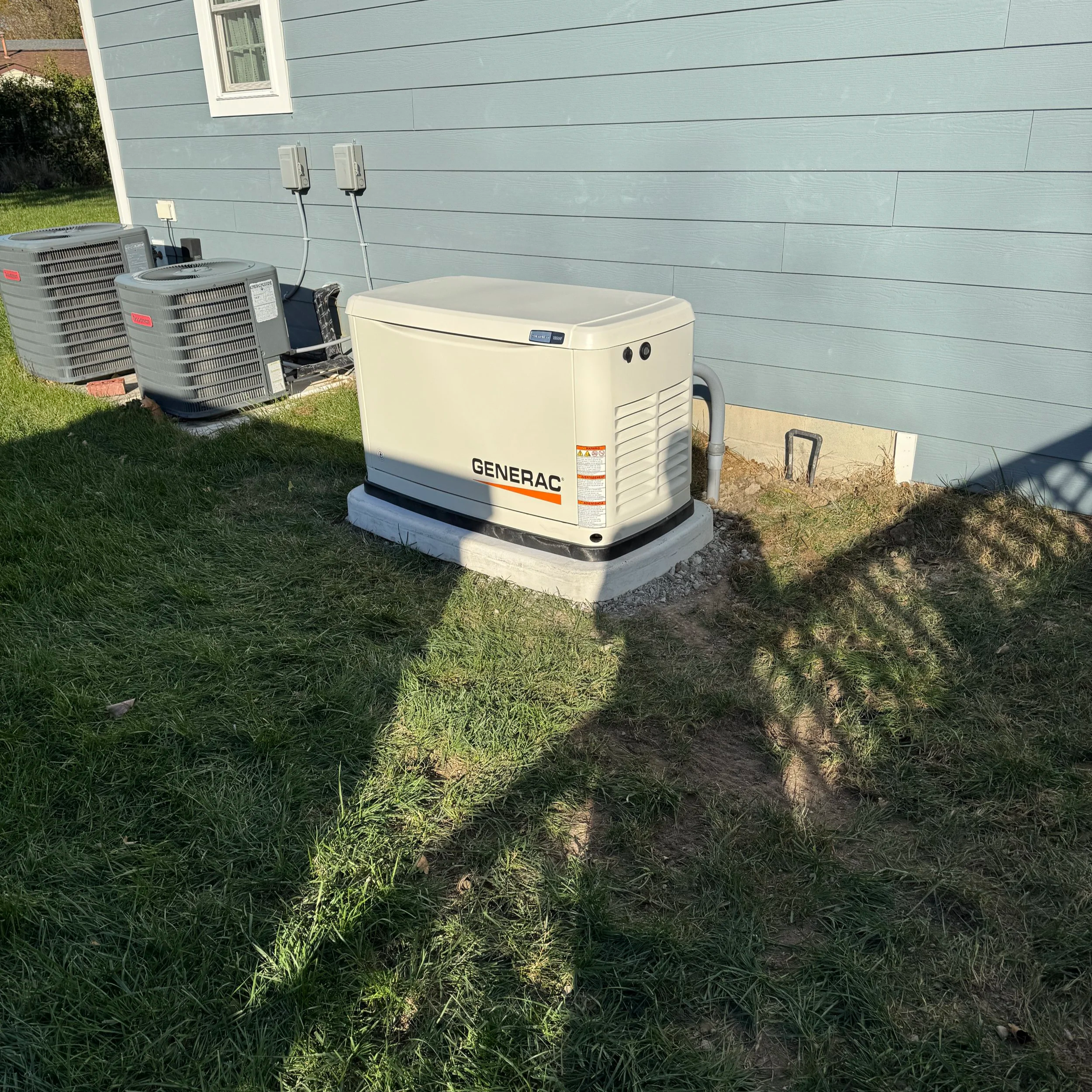
Castles Electric installs generators throughout Chesapeake, VA, and the Hampton Roads area regularly, and the conversations we have with homeowners who are finally ready to act are remarkably consistent.
You sat in the dark for 36 hours after the last major storm hit Chesapeake, VA, and you said the same thing you said the time before: you are going to look into a generator. And then the power came back, the refrigerator started humming again, and the urgency faded. Here you are. If that cycle sounds familiar, you already know what the problem is. Hampton Roads does not give much warning before it tests your home's resilience, and the outages it produces range from brief and inconvenient to extended and genuinely disruptive in ways that affect your food supply, your home's climate control, your medical equipment, and your family's basic comfort for days at a time. A generator is not a luxury for Chesapeake homeowners. It is infrastructure.
Castles Electric installs generators throughout Chesapeake, VA, and the Hampton Roads area regularly, and the conversations we have with homeowners who are finally ready to act are remarkably consistent. Most people have spent more time thinking about getting a generator than they spent on any single appliance purchase, and they come to the conversation with a mix of partial information and genuine uncertainty about what the right solution for their home actually looks like. The goal of what follows is to replace that uncertainty with a clear picture of the options, what they actually cost, what the installation process involves, and how to make a decision you will still be satisfied with when the next storm rolls through.
Portable Generators vs. Standby Generators: The Actual Difference
Portable generators are the familiar units you see at hardware stores and that many Chesapeake, VA, homeowners already own or have used during storm season. They run on gasoline; they need to be stored, fueled, started manually, and positioned outside at a safe distance from the house before you can use them. They connect to the home either via an extension cord run to specific appliances or via a manual transfer switch, if one is installed. A quality portable generator in the 5,000 to 8,000-watt range can power a window unit, a refrigerator, some lights, and a few other essential loads simultaneously, which is genuinely useful for a short to medium-length outage. The limitations are equally genuine: they require a supply of stored gasoline, they need to be maintained to start reliably after months of sitting unused, they are loud, they require someone to be home and physically capable of setting them up, and they do not power your home's central HVAC or well pump unless you have a substantial unit.
Standby generators are permanent installations connected directly to your home's wiring through an automatic transfer switch and fueled by natural gas or propane. When your utility power fails, the standby generator detects the outage within seconds and starts automatically, restoring power to your home without any action required on your part. When utility power returns, the system automatically transfers back, and the generator shuts down. The automatic operation is not just a convenience feature. It is what makes a standby generator meaningful for households where the occupants may not be home when an outage occurs, where elderly or disabled family members cannot manage a portable setup, or where extended outages in summer heat or winter cold make climate control a genuine health concern rather than a comfort concern. A properly sized standby generator powers your entire home as if the power never went out.
Sizing a Generator for a Chesapeake Home: What It Actually Takes
Generator sizing is where more homeowners make expensive mistakes than anywhere else in the generator selection process. The intuitive approach is to add up the wattage of the appliances you want to power, then buy a generator that can handle that total. The problem is that motor-driven loads — HVAC compressors, well pumps, sump pumps, refrigerators — have a starting wattage that is significantly higher than their running wattage, sometimes three to five times higher for a fraction of a second when the motor starts. A generator sized for running loads but not for starting loads will trip under motor-start conditions, defeating the purpose of having backup power when your HVAC is the most critical load during a Hampton Roads summer outage.
For a whole-home standby generator in Chesapeake, VA, the typical residential range runs from 11 kilowatts for a smaller home with modest electrical loads to 20 kilowatts or more for a larger home with multiple HVAC zones, an electric water heater, or other high-demand loads. Castles Electric performs a load calculation before recommending a generator size, because the right size for your specific home depends on what's in it, not on a general rule of thumb. A generator that is too small cannot reliably handle your actual loads. A generator that is dramatically oversized runs inefficiently and costs more than necessary. The load calculation is the step that gets skipped when homeowners size a generator based on marketing materials or general internet guidance, and it is consistently the step that produces the best outcomes when done correctly.
The Transfer Switch: Why It's Not Optional and What the Options Are
A transfer switch is the device that connects a generator to your home's wiring in a way that is safe for utility line workers and code-compliant. Without a transfer switch, power from a generator cannot be fed into your home's panel in a safe way — the generator power can backfeed through your meter onto the utility lines, creating a lethal hazard for Dominion Energy crews working to restore power in your neighborhood. A transfer switch physically disconnects your home's wiring from the utility before connecting the generator, which prevents backfeed. In Virginia, connecting a generator to your home's wiring without an appropriate transfer switch is both illegal and genuinely dangerous, and no licensed electrician will perform the connection without one.
There are two main types of transfer switches for residential installations in Chesapeake, VA. A manual transfer switch requires someone to physically switch the home from utility power to generator power during an outage. It is less expensive than an automatic option and works well for homeowners who are consistently home during storm events and are comfortable with the manual operation. An automatic transfer switch, standard for standby generator installations, continuously monitors utility power and switches the home to generator power within seconds of an outage, without any human action. For most standby generator installations, the automatic transfer switch is paired with the generator as a system, and the combination is installed and commissioned together. Castles Electric installs both types of transfer switches during generator installation projects in Chesapeake, VA.
Fuel Options: Natural Gas vs. Propane for Chesapeake Homeowners
Standby generators run on either natural gas or propane, and the right choice for your home in Chesapeake, VA, depends primarily on what fuel infrastructure you already have or are willing to install. Natural gas is the simpler option for homes that already have natural gas service — the generator connects to the existing gas line with a dedicated supply line installed by a licensed plumber, and there is no fuel storage or delivery to manage. During a storm, your generator runs continuously as long as the gas supply remains operational. For homeowners near the Chesapeake gas service area with existing natural gas appliances, this is typically the most convenient fuel option.
Propane is the appropriate option for homes without natural gas service, which includes a significant portion of Chesapeake, VA, given the area's geography and neighborhood distribution. Propane requires a dedicated storage tank, which can range from a small above-ground tank to a larger buried tank, depending on your generator's fuel consumption and how long you want to run without a propane delivery. The tank size and fuel capacity are part of the planning conversation for propane generator installations, because a generator that runs out of fuel during an extended outage provides exactly as much protection as no generator at all. Castles Electric works with propane suppliers familiar with the Hampton Roads area to coordinate the fuel infrastructure side of propane generator installations alongside the electrical installation work.
Permits, Inspections, and What Installation Actually Involves
Generator installation in Chesapeake, VA, requires permits from both the city electrical department and, for gas-connected generators, coordination with the appropriate licensed plumber for gas line work. The electrical permit covers the transfer switch installation and the connection from the panel to the generator. The city inspection confirms that the installation meets code requirements for transfer switch operation, generator placement, and wiring. For standby generators, the generator manufacturer's startup and commissioning process is also part of the installation, during which the system is tested through a full operational cycle, and the automatic transfer function is verified to be functioning correctly.
Generator placement is governed by code requirements related to clearances from windows, doors, vents, and property lines. A standby generator cannot be installed directly against the house, directly under a window, or in a location that directs exhaust toward a living space opening. Chesapeake, VA, has specific setback requirements, and the right installation location balances code compliance with practical access for maintenance and fueling. Castles Electric handles the permit application, coordinates the inspection, manages the placement planning, and walks you through what the finished installation looks like and how to operate and maintain it before leaving the site. A generator installation that is permitted, inspected, and commissioned correctly functions reliably when you need it and creates no liability for the homeowner.
Power Outage Risk? Get Generator Answers Before the Next Storm Hits
How much does a whole-home standby generator installation cost in Chesapeake?
The total installed cost for a whole-home standby generator in Chesapeake, VA, typically ranges from $5,000 to $15,000 or more, depending on the generator size, fuel type, propane tank size (for propane installations), electrical panel configuration, and the complexity of the installation location. Larger generators with higher kilowatt ratings and propane tank installations fall toward the higher end of that range. The generator unit itself accounts for a significant portion of the cost, with installation labor, transfer switch, permits, and fuel infrastructure making up the remainder. Castles Electric provides a detailed cost breakdown specific to your home's requirements before any commitment is made.
How often does a standby generator need maintenance?
Most standby generators are designed to run a weekly self-test cycle automatically, which exercises the engine and keeps the battery charged between outage events. Beyond the automatic self-test, standby generators require annual maintenance that typically includes an oil and filter change, spark plug inspection, air filter replacement, and a check of all electrical connections and battery condition. Some manufacturers specify maintenance intervals by hours of operation rather than calendar time. Castles Electric recommends establishing a maintenance agreement with a qualified service provider when the generator is installed rather than waiting until something goes wrong.
What happens to the generator when utility power comes back on?
In a standby generator installation with an automatic transfer switch, the system continuously monitors utility power. When utility power returns and stabilizes, the transfer switch automatically transfers the home back to utility power and signals the generator to begin its cooldown and shutdown sequence. The transition from generator power back to utility power occurs automatically, with no action required. Some systems have a brief delay built into the transfer back to utility power to confirm that the utility voltage is stable before making the switch.
Can a generator run my central air conditioning?
Yes, a properly sized standby generator can run central air conditioning. The HVAC system is often the largest single electrical load in a home and one of the most critical during a summer power outage in Hampton Roads. Sizing the generator to handle the HVAC system's starting wattage is part of the load calculation performed before specifying a generator. A generator that is too small for the HVAC system will trip when the compressor starts, leaving families without cooling during outages when they need it most.
Is a permit required for generator installation in Chesapeake, VA?
Yes, both the electrical work and the gas line work associated with a standby generator installation in Chesapeake, VA, require permits. The city electrical permit covers the transfer switch and wiring installation. Gas line work requires its own permit and must be performed by a licensed plumber. The installation also requires a final inspection from the city before it is considered complete. Castles Electric manages the electrical permit process and coordinates with licensed plumbers for gas line work as part of a complete generator installation project.
Castles Electrical offers electrical panel installation, electrical panel replacement, whole home rewiring, new construction wiring, generator installation, and backup power solutions to home and business owners in the Virginia Beach area. As a family-owned business, safety and quality are our top priorities. Call today to schedule an appointment.