
Military Family Moving to Norfolk? Here's What to Check Electrically Before You Settle In
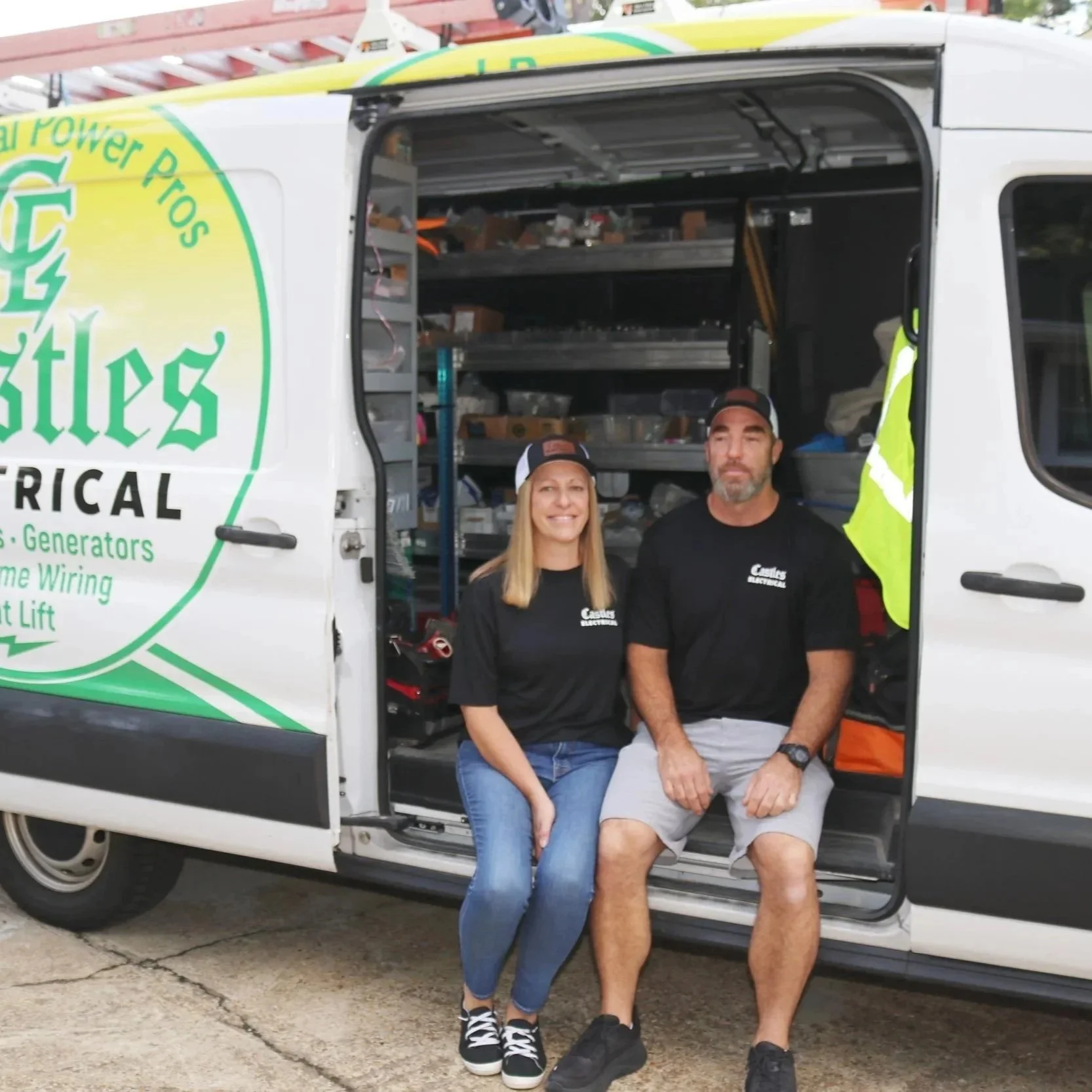
Knowing what to look for before you fully commit to a property, or knowing what to prioritize as soon as you move in, makes a real difference in how quickly your new place actually feels like home.
Military families know how PCS moves work. You get orders, you pack, you move, you unpack, and somewhere in there, you try to evaluate a house in a market you may never have visited before. The electrical system is rarely on the checklist, because what are you going to do about it between signing the lease or closing on the home and the week you have to get the kids registered for school? But here is the thing about Norfolk, VA, specifically: it has an older housing stock, a coastal humidity problem that accelerates electrical wear, and neighborhoods where homes change hands quickly because of the transient military population. Those three factors together mean that electrical issues that might be caught and disclosed in a slower market sometimes get missed. Castles Electrical works with military families throughout the area regularly, and the questions that come up most often are the ones nobody thought to ask before move-in.
The frustration is real and specific. You are in a new city, you do not know who to call, and something in the electrical system is not working properly. Maybe the circuit in the master bedroom keeps tripping when you run a space heater and your laptop at the same time. The outlet in the garage where you want to store your EV may not have enough juice to charge it overnight. The lights in two rooms may flicker when the HVAC kicks on. These are not catastrophic failures, but they are daily annoyances that pile up during an already stressful relocation. Knowing what to look for before you fully commit to a property, or knowing what to prioritize as soon as you move in, makes a real difference in how quickly your new place actually feels like home.
What the Home Inspection Did Not Cover
A standard home inspection evaluates the visible and accessible portions of the electrical system, which is useful but limited. The inspector will note obvious deficiencies: an open junction box, a missing cover plate, and a Federal Pacific or Zinsco panel known to have reliability issues. What a standard inspection does not typically include is a detailed assessment of circuit capacity, a check of the actual grounding integrity at outlets versus just whether the outlets have three prongs, or an evaluation of the interior of the panel for corrosion, which matters specifically in Norfolk, VA, given the coastal humidity conditions. A home inspector also does not test every circuit under load, so a circuit that reliably trips when you run two appliances simultaneously may have passed the inspection without issue.
For military families buying or renting in Norfolk, VA, this gap between what was inspected and what actually exists in the home is worth taking seriously. If you have the opportunity to schedule a more detailed electrical inspection before move-in, or as soon as possible after, that inspection will tell you what you are actually dealing with. Castles Electrical offers inspections specifically designed to identify capacity limitations, code deficiencies, and safety concerns that standard home inspections may not uncover. The goal is not to find everything wrong with the house — it is to give you a clear, prioritized picture of what needs attention now versus what can wait.
The Panel: What to Look For and Why It Matters
The electrical panel is the place to start any evaluation of a home's electrical system. When you move into a property in Norfolk, VA, locate the panel and take a close look at a few specific things. First, identify the brand. Certain panel manufacturers from previous decades, including Federal Pacific Electric and Zinsco, have documented reliability and safety concerns with their breakers. If you see either of those brands on the panel, that is something to discuss with a licensed electrician promptly, not because it guarantees a problem, but because it is a risk factor worth understanding. Second, look at the amperage rating of the main breaker, typically listed on the largest breaker at the top of the panel. A 100-amp service is undersized for most modern households, and a 60-amp service is undersized for essentially any modern household.
Third, look at whether the panel has physical space for additional circuits. If every slot is occupied and some breakers have been doubled up using tandem breakers, there may be no capacity to add circuits without a panel upgrade. Fourth, if you can see inside the panel, look for any signs of moisture, corrosion, or discoloration on the conductors and bus bars. In a coastal environment like Norfolk, VA, interior panel corrosion is a real concern, and what appears to be a cosmetic issue can pose a safety hazard. You do not need to be an electrician to identify obvious problems, but if anything looks off, scheduling a professional evaluation is the right move before plugging your household into the system fully.
Outlet Issues and What They Actually Mean
Two-prong outlets in a home you are moving into tell you something important: the branch circuit wiring in that part of the house likely does not have a ground conductor. This matters for two reasons. First, your electronics and appliances that have three-prong plugs need an adapter to work in those outlets, which is inconvenient. Second, and more importantly, the absence of a ground means your equipment lacks an important layer of protection against power surges and fault currents. Using a three-prong adapter in an ungrounded two-prong outlet does not create a ground — it just makes the plug fit. A military family relocating with a home office setup, gaming equipment, or any number of modern devices has a real interest in understanding the grounding status of the home's circuits.
GFCI outlets are a separate concern. In kitchens, bathrooms, garages, exterior outlets, and older homes, any outlet within six feet of a water source requires GFCI protection by current code. Homes that have not been updated may lack GFCI outlets in some or all of these locations. The absence of GFCI protection is a code deficiency and a real safety risk, particularly if you have young children. Testing existing GFCI outlets by pressing the test button and verifying that the outlet loses power is something you can do yourself. If the outlet does not respond to the test button, the GFCI device may be faulty. If the outlet lacks a test button and is in a location where GFCI protection should be present, that is something to flag for an electrician. Castles Electrical addresses GFCI deficiencies as part of routine electrical service calls in Norfolk, VA.
Circuits That Cannot Keep Up With Modern Life
One of the most common electrical complaints from military families in new-to-them homes is that circuits trip under what should be normal loads. You are not running an arc welder in the living room. You are running a television, a gaming console, and a lamp, and the circuit trips. This situation usually reflects one of two things: either the circuit is actually overloaded because too many devices are sharing the same circuit, which was common in homes built before the proliferation of electronics, or there is a problem with the breaker or wiring that is causing nuisance tripping under normal conditions. Distinguishing between these two is important because the solutions are different.
In older homes in Norfolk, VA, it is common to find a single 15-amp circuit serving an entire large room, or kitchen circuits that were not dedicated to appliances the way they are in modern homes. Adding circuits to distribute the load more reasonably is the cleanest solution to chronic tripping in those rooms. In other cases, the tripping is not about load distribution but about a failing breaker, which is inexpensive to replace once it has been correctly identified. What homeowners should not do is reset the breaker repeatedly and assume everything is fine. A breaker that trips repeatedly under normal use is telling you something, and ignoring the message is how small electrical problems become expensive electrical emergencies.
EV Charging and Your New Norfolk Home
A significant and growing segment of military families relocating to Norfolk, VA, arrive with or plan to acquire an electric vehicle. The area has seen a noticeable increase in EV adoption, and the infrastructure in many homes has not kept pace. A standard 120-volt outlet in your garage, often called Level 1 charging, will add roughly four to five miles of range per hour of charging. If you are commuting to Naval Station Norfolk or JEB Little Creek, that charging rate may not keep up with your daily driving without leaving the car plugged in for most of the night. A dedicated Level 2 charging circuit, which operates at 240 volts and requires a 50- or 40-amp circuit, depending on the charger, will typically deliver 20 to 30 miles of range per hour of charging, which is more than adequate for most daily driving patterns.
Adding an EV charging circuit is a project that requires evaluating the existing panel capacity, running appropriate wiring to the garage or carport, and installing a proper outlet or a hardwired charging station. Whether your new home in Norfolk, VA, can support this addition without a panel upgrade depends on what is already drawing from the panel. Castles Electrical evaluates EV charging installation requests by first looking at the full panel load picture, because adding a 50-amp circuit to a panel already stressed can create reliability problems for the whole system. If the panel has capacity, the installation is generally straightforward. If it does not, the conversation shifts to panel upgrades as a prerequisite, which is a more significant project but still manageable with the right planning timeline.
Urgent Electrical Questions Every Norfolk Homeowner Should Resolve Before It Becomes a Problem
The licensed electricians at Castles Electrical in Virginia Beach offer electrical safety inspections & code compliance, EV charging station installation, and commercial electrician services. We are committed to delivering excellence at straightforward pricing. We offer prompt services to quickly restore your electrical system functioning. Call now!