
Why Your Breaker Might Be Warm in Your Virginia Beach Home
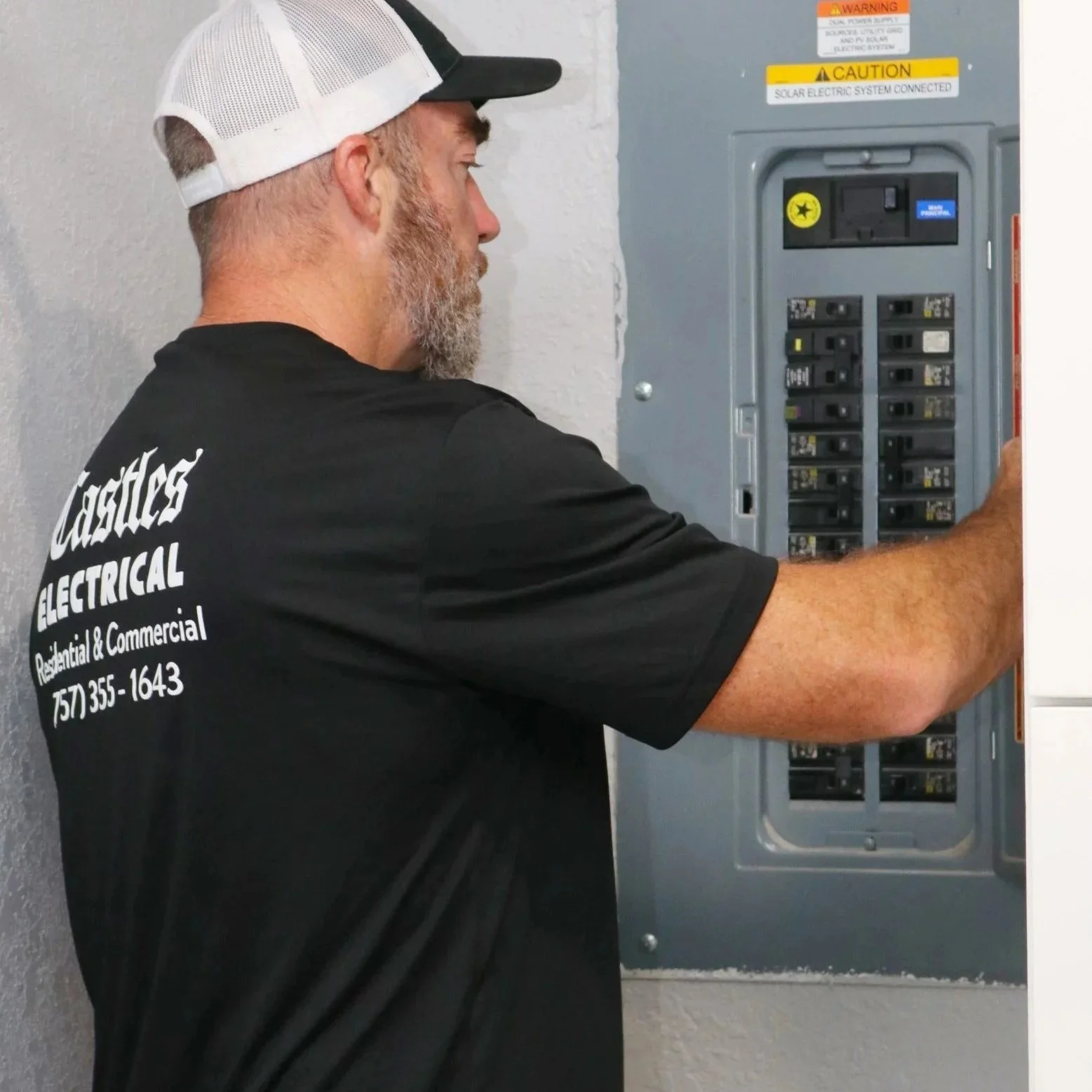
While slight warmth is normal, a hot circuit breaker in your Virginia Beach home may indicate overloading or loose wiring.
What A Warm Breaker Is Telling You About Electrical Load
A circuit breaker that feels warm to the touch often surprises homeowners because breakers rarely draw attention unless they trip. Warmth, however, represents one of the earliest warning signs an electrical system can provide. Breakers are designed to carry current safely while dissipating a small amount of heat during normal operation. When a breaker becomes noticeably warm, it signals that electrical energy is converting into heat at a higher rate than intended. That excess heat does not appear randomly. It develops due to sustained electrical load, resistance within the circuit, or degradation of internal components.
In Virginia Beach homes, warm breakers frequently appear during periods of higher electrical demand, even if no breaker trips occur. Air conditioning, dehumidifiers, pool equipment, and extended appliances place prolonged stress on circuits. A breaker may remain below its trip threshold while still operating in a temperature range that accelerates wear. Homeowners often overlook this stage because power remains uninterrupted. Understanding why warmth develops helps prevent escalation into tripping, equipment damage, or fire risk hidden inside the panel.
Normal Heat Versus Problematic Heat In Breakers
Every breaker generates some heat during operation, especially under moderate load. That heat should remain minimal and evenly distributed across the panel. Breakers that feel slightly warm compared to room temperature may fall within acceptable limits. Concern arises when a specific breaker feels noticeably warmer than adjacent breakers or warm enough to be uncomfortable when touched briefly. Uneven heat distribution points to localized stress rather than general panel temperature.
Problematic heat often builds gradually and persists even when loads fluctuate. Breakers that remain warm after devices turn off or during periods of light usage suggest resistance or internal wear. In coastal environments like Virginia Beach, elevated ambient temperatures can raise baseline panel heat, reducing tolerance for additional load. Recognizing the difference between normal operational warmth and abnormal heat accumulation allows homeowners to address issues before visible damage occurs.
Sustained Load From High-Demand Circuits
One of the most common reasons breakers feel warm involves sustained electrical load rather than sudden overload. Circuits serving air conditioning systems, refrigeration, or home offices often operate for extended periods without interruption. Continuous current flow generates steady heat within the breaker. Even when operating within rated capacity, long runtime reduces cooling opportunities, especially in enclosed panels.
Virginia Beach summers amplify this effect as cooling systems run longer to manage heat and humidity. Breakers supplying these circuits may never fully cool between cycles. Over time, that constant warmth accelerates internal component aging. While the breaker may not trip, it operates closer to its thermal limit. Identifying sustained load patterns helps electricians determine whether circuit redistribution or upgrades would reduce long-term stress.
Loose Connections At Breaker Terminals
Loose electrical connections create resistance, and resistance produces heat. Breaker terminals rely on tight mechanical contact to transfer current efficiently. Over years of thermal expansion, contraction, and vibration, terminal screws can loosen slightly. Even small reductions in contact pressure significantly increase resistance at the connection point. That localized resistance generates heat concentrated at the breaker rather than distributed along the conductor.
Warm breakers caused by loose terminals often feel hotter near the wire entry point. Heat may increase gradually as current flows, then decrease slowly after load removal. Homeowners resetting breakers or cycling power may temporarily mask the issue without resolving it. Electricians frequently discover loose terminals during panel inspections prompted by warm breaker complaints, confirming that early warmth warnings prevented more serious failures.
Aging Breakers And Internal Component Degradation
Breakers contain mechanical and thermal elements that wear with age. Springs lose tension, bimetallic strips fatigue, and contact surfaces degrade. As components age, internal resistance rises slightly, producing more heat during normal operation. That change occurs gradually, often unnoticed until warmth becomes apparent.
In older Virginia Beach homes, original breakers may remain in service decades beyond their ideal lifespan. Environmental factors such as humidity and salt air accelerate corrosion within panels, even indoors. Aging breakers may continue functioning while operating hotter than designed. Warmth becomes an early indicator that replacement would restore efficiency and safety before nuisance tripping or failure occurs.
Panel Location And Heat Retention Effects
Electrical panel placement influences breaker temperature significantly. Panels installed in garages, utility rooms, or exterior walls experience higher ambient temperatures and reduced airflow. During summer, these spaces trap heat, raising baseline panel temperature. Breakers operating under normal load reach higher internal temperatures simply due to environmental conditions.
Virginia Beach homes often place panels in garages exposed to outdoor heat and humidity. Lack of ventilation compounds the issue. When multiple breakers carry a moderate load simultaneously, heat accumulates inside the enclosure. Warm breakers in these scenarios may not indicate a single circuit problem but rather insufficient heat dissipation. Electricians consider panel location when evaluating breaker temperature to distinguish environmental influence from circuit-specific issues.
Corrosion And Coastal Environmental Impact
Coastal air carries salt particles that accelerate corrosion on metal components. Even inside homes, salt air infiltrates electrical panels over time. Corrosion increases surface resistance at contacts and terminals, leading to heat buildup under load. Breakers affected by corrosion may feel warm despite carrying a moderate current.
Virginia Beach residents living closer to the shoreline face higher exposure. Corrosion often develops unevenly, affecting some breakers more than others. Warmth in specific breakers can indicate localized corrosion rather than system-wide overload. Addressing corrosion early prevents progressive damage to panel components that would otherwise require more extensive repairs later.
Shared Circuits And Load Interaction
Breakers serving circuits with multiple loads may experience uneven stress. When several devices operate simultaneously, the current fluctuates based on usage patterns. Those fluctuations create thermal cycling within the breaker, heating and cooling components repeatedly. Over time, cycling accelerates wear and raises the average operating temperature.
Shared circuits often power lighting, outlets, and appliances together. In summer, additional devices increase usage frequency. Homeowners may not associate a warm breaker with multiple small loads combining rather than a single large appliance. Electricians analyze circuit composition to identify load interactions contributing to heat buildup.
Improper Breaker Sizing Or Type
Using an incorrect breaker size or type for a circuit increases heat risk. Breakers rated too small for the actual load operate closer to their limits during normal usage. Conversely, oversized breakers may fail to trip while wiring overheats, shifting heat generation elsewhere. Specialty circuits may require specific breaker types to handle load characteristics safely.
In homes with prior electrical modifications, mismatched breakers occasionally appear. Warmth serves as an early clue that breaker selection does not align with circuit demands. Electricians verify breaker ratings and compatibility as part of diagnosing warm breaker complaints.
Heat Buildup From Wiring Insulation Degradation
Wiring insulation plays a quiet but critical role in how heat dissipates along a circuit. As insulation ages, its ability to tolerate and shed heat declines. Older insulation materials common in many Virginia Beach homes stiffen over time and lose flexibility. That change restricts how conductors release heat into the surrounding air space. When insulation traps heat along the wire, more thermal energy travels back toward the breaker, contributing to elevated breaker temperature even when the current remains stable.
Degraded insulation also increases resistance slightly along the conductor length. That resistance may not trigger immediate breaker trips, but it does raise operating temperatures gradually. Warm breakers linked to insulation aging often appear alongside subtle symptoms such as faint electrical odors, minor discoloration near terminals, or inconsistent performance during peak usage. Electricians identifying insulation-related heat issues focus on long-term system stability rather than surface-level symptoms.
Breaker Bus Bar Contact And Panel Wear
Each breaker connects to a bus bar that distributes power throughout the panel. That connection relies on firm mechanical contact between metal surfaces. Over time, repeated heating cycles, corrosion, and minor arcing wear down contact surfaces. Reduced contact area increases resistance at the breaker to bus interface, generating heat that concentrates inside the breaker body.
Panel wear often develops unevenly. One breaker may feel warm while others remain cool because the bus bar condition varies along its length. Virginia Beach panels exposed to humidity experience accelerated oxidation that worsens contact quality. Warm breakers caused by bus bar wear require professional evaluation because replacing the breaker alone may not address underlying panel degradation. Electricians assess both breaker condition and bus integrity to determine appropriate corrective action.
Multiple Warm Breakers And System-Wide Stress
When several breakers feel warm simultaneously, the issue often extends beyond individual circuits. System-wide stress occurs when the overall electrical demand approaches the panel capacity. Summer conditions increase total household load through cooling equipment, extended appliance usage, and additional electronics. Panels designed for lower demand struggle to dissipate cumulative heat.
Warmth across multiple breakers suggests the panel operates near its thermal limit. That condition accelerates the aging of all components inside the enclosure. Homeowners may not experience immediate failures, but long-term reliability declines steadily. Electricians evaluating system-wide warmth consider load calculations, panel capacity, and potential upgrade paths to reduce stress and extend service life.
Why Touch Testing Alone Can Be Misleading
Homeowners often assess breaker warmth by touch, but that method lacks precision. Human perception varies, and ambient temperature influences how warmth feels. A breaker that feels warm during summer may fall within an acceptable operating range, while another that feels similar may exceed safe limits under different conditions.
Professional electricians use infrared imaging and temperature measurement tools to identify true hotspots. These tools reveal temperature differences invisible to the touch and locate resistance points accurately. In Virginia Beach, where high humidity affects thermal perception, professional assessment provides clarity. Touch testing serves as an initial indicator, not a definitive diagnostic method.
Resetting Breakers Does Not Reduce Heat Causes
Resetting a warm breaker may temporarily interrupt current flow, allowing components to cool briefly. Once power returns, heat buildup resumes if underlying causes remain. Repeated resets do nothing to correct loose connections, corrosion, or load imbalance. In fact, cycling breakers accelerate mechanical wear and can worsen heat issues over time.
Homeowners sometimes reset breakers proactively to manage warmth, believing it reduces risk. That approach masks symptoms without addressing root causes. Electricians focus on correcting resistance points, redistributing loads, or upgrading components rather than relying on repeated cycling as a management strategy.
How Electricians Evaluate Warm Breakers Safely
Electricians approach warm breaker evaluations methodically. They measure load under normal operating conditions, inspect terminal tightness, and assess breaker age and type. Infrared scanning identifies hotspots at terminals, bus connections, and wiring junctions. Environmental factors such as panel location and ventilation receive equal consideration.
In Virginia Beach homes, electricians also account for coastal corrosion patterns and seasonal load variations. Corrective actions may involve tightening connections, replacing aging breakers, addressing corrosion, redistributing circuits, or upgrading panels when capacity limits appear. Each recommendation targets long-term stability rather than short-term symptom relief.
FAQs
Breakers generate some heat under load, especially during summer when electrical demand increases. Slight warmth can be normal, but noticeable heat compared to adjacent breakers indicates elevated stress that warrants evaluation.
Excessive heat reflects resistance or overload conditions that degrade insulation and connections. Left unaddressed, those conditions increase fire risk inside the electrical panel and surrounding wiring.
Replacement depends on the cause of the heat. Warmth may result from loose connections, load imbalance, or panel issues rather than breaker failure alone. Professional inspection identifies the correct solution.
Localized warmth often points to circuit-specific load, loose terminals, corrosion, or worn internal components affecting that breaker alone. Uneven conditions within panels are common, especially in older systems.
Humidity and salt air accelerate corrosion on metal components, increasing resistance and heat generation. Coastal environments like Virginia Beach often experience faster electrical component aging due to these conditions.
Castles Electrical is the one-stop destination for electrical panel installation, electrical panel replacement, whole home rewiring, new construction wiring, electrical safety inspections & code compliance and commercial electrician services in the Virginia Beach area. Serving residential and commercial customers, our licensed electricians always put customers first. Call today for a free estimate.