
Signs of a Bad Breaker in Your Virginia Beach Home
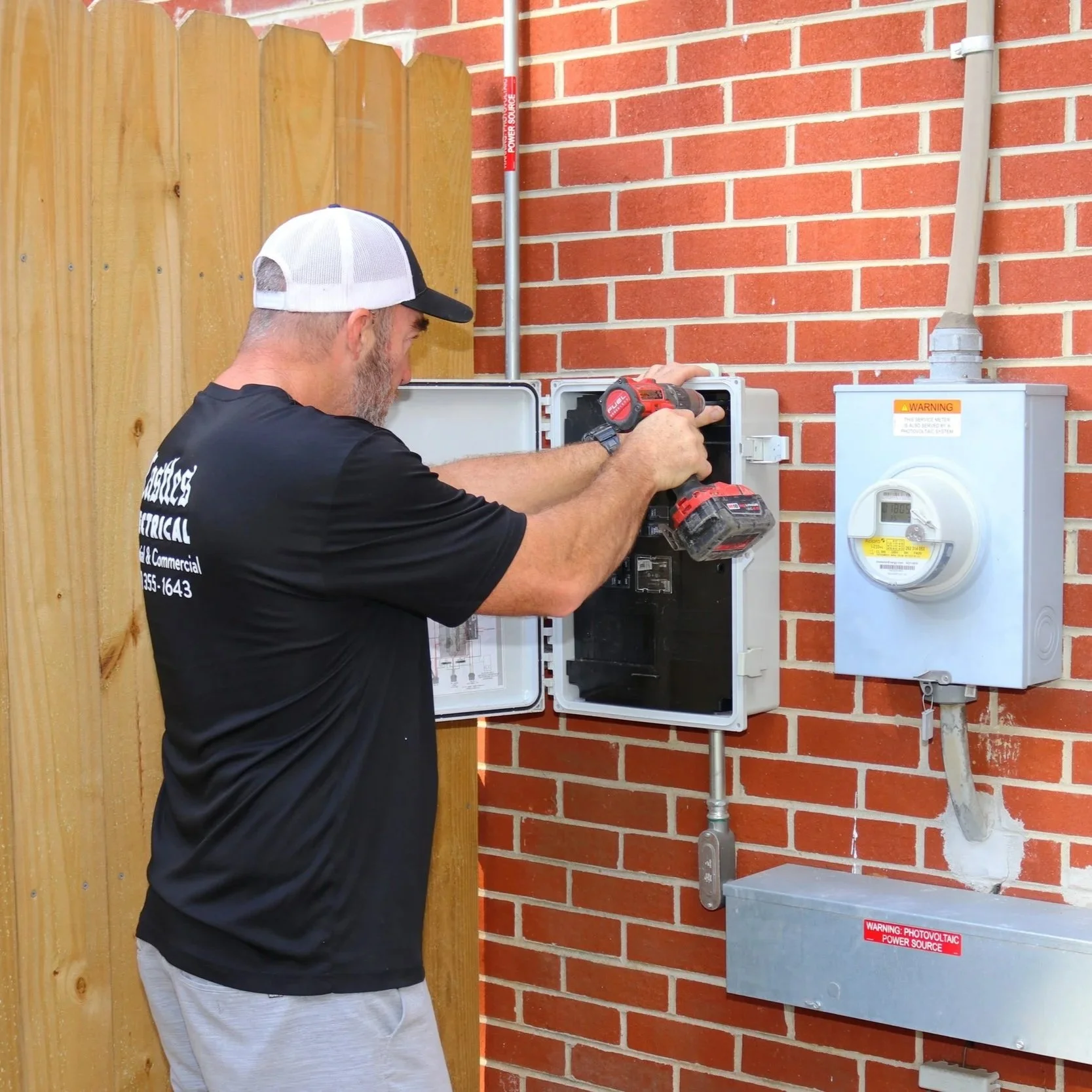
Signs of a faulty breaker include scorch marks, a burning smell, or switches that feel hot and won't stay reset.
Why Circuit Breakers Fail Over Time
Circuit breakers are mechanical devices, not permanent fixtures, and they experience wear every time they interrupt electrical flow. In Virginia Beach homes, wear accelerates due to environmental conditions layered on top of normal electrical stress. Heat cycles caused by seasonal temperature changes, humidity exposure, and salt air all influence how breaker components age. Internal springs lose tension, contact surfaces pit or corrode, and thermal elements become less precise. Breakers rarely fail all at once. Instead, performance degrades gradually, creating subtle warning signs long before a complete failure occurs.
Older homes are particularly vulnerable because many breaker panels were installed decades ago under very different electrical demand assumptions. Modern households place heavier and more continuous loads on circuits, pushing breakers closer to their limits more often. Over time, that repeated stress affects how accurately a breaker senses current and heat. A breaker that once tripped only under clear overload conditions may begin reacting unpredictably. Understanding that breakers have a service life helps explain why symptoms often appear without any obvious change in household behavior or appliance use.
Breakers That Trip Too Easily Or Not Easily Enough
One of the clearest indicators of a failing breaker involves inconsistent tripping behavior. Some bad breakers trip with minimal load, shutting down circuits even when only a few devices are in use. Others fail in the opposite direction, allowing circuits to carry excessive current without interruption. Both scenarios indicate internal degradation that compromises protective function. A breaker that trips too easily disrupts daily life, while one that does not trip when needed exposes wiring and connected devices to overheating.
In Virginia Beach homes, corrosion often plays a role in this inconsistency. Moisture and salt air accelerate oxidation on internal contact points, increasing resistance and heat generation inside the breaker. That heat can trigger nuisance trips even when the circuit itself remains within normal load limits. Conversely, worn thermal elements may lose sensitivity, delaying response during genuine overloads. Either pattern reflects a breaker that no longer performs its intended role reliably, which shifts risk downstream into wiring and outlets throughout the home.
Breakers That Feel Warm Or Hot To The Touch
A breaker that feels warm during normal operation raises immediate concerns about internal resistance. Breakers generate some heat as current flows through them, but excessive warmth suggests that internal components struggle to pass electricity efficiently. Heat often results from corroded contacts, loose connections, or deteriorated internal mechanisms. Over time, that heat compounds wear and increase the likelihood of further degradation.
Panels located in garages or exterior walls are common in Virginia Beach and experience greater temperature swings and humidity exposure. These conditions amplify heat-related issues inside breakers. A warm breaker may also signal problems at the bus bar connection, where the breaker interfaces with the panel. Heat at that junction can spread to adjacent breakers, creating broader instability across multiple circuits. Ignoring warmth allows internal temperatures to rise further, accelerating failure and increasing the risk of damage within the panel enclosure.
Burning Smells Or Discoloration Inside The Panel
Odors provide another strong clue that a breaker has begun to fail. A faint burning or metallic smell near the panel often precedes visible damage. These smells typically result from overheating insulation or deteriorating internal components. Discoloration on the breaker casing or surrounding panel surfaces reinforces that heat has reached unsafe levels. In coastal environments, corrosion can interact with heat to produce distinctive odors that homeowners may initially dismiss as environmental rather than electrical.
Discoloration inside the panel indicates prolonged exposure to elevated temperatures rather than a brief event. Plastic components may darken, labels fade unevenly, or metal surfaces show signs of heat stress. Breakers showing these symptoms no longer operate within design parameters. Continued use allows heat to migrate into panel wiring and bus bars, potentially affecting circuits beyond the original problem area. Early detection matters because panel damage can escalate repair complexity significantly if left unchecked.
Breakers That Will Not Stay Reset
A breaker that trips repeatedly and refuses to reset often draws attention quickly. While frequent tripping may point to circuit issues, a breaker that immediately trips even with minimal load may itself be compromised. Internal springs or latching mechanisms can wear out, preventing the breaker from maintaining its closed position. Heat damage and corrosion further weaken these components, especially in panels exposed to humidity.
In Virginia Beach homes, repeated reset attempts often worsen the situation. Each attempt reintroduces current into a stressed breaker, generating additional heat. Over time, internal damage compounds until the breaker cannot maintain continuity at all. Homeowners sometimes replace appliances or reduce usage without improvement, assuming the circuit remains overloaded. A breaker that refuses to stay reset under light conditions strongly suggests internal failure rather than external demand.
Flickering Lights And Inconsistent Power On A Single Circuit
Inconsistent power behavior limited to one circuit often traces back to breaker or panel issues rather than individual outlets. Flickering lights, intermittent power loss, or devices shutting off without tripping the breaker indicate unstable electrical flow. Internal breaker contacts that no longer maintain solid pressure can interrupt current momentarily as heat causes expansion or vibration affects alignment.
Environmental factors again influence these symptoms in Virginia Beach homes. Humidity and corrosion reduce contact quality over time, allowing micro interruptions that do not always trigger a full trip. These interruptions stress connected electronics and appliances, shortening their lifespan. While loose wiring can cause similar symptoms, a failing breaker remains a common and often overlooked contributor when problems isolate to a single circuit without clear outlet-level issues.
Age And Panel Compatibility Issues
Breaker age matters, particularly in homes with original or legacy electrical panels. Some older panels use breaker designs no longer manufactured or supported. Replacement breakers may fit physically but lack proper compatibility with aging bus bars. Over time, this mismatch creates poor contact surfaces that generate heat and instability.
In Virginia Beach, older panels often show corrosion at the bus connection points due to environmental exposure. A breaker installed into a compromised bus slot may fail prematurely regardless of its own condition. Signs of a bad breaker sometimes point to broader panel health concerns. Evaluating breaker issues within the context of panel age and condition provides a clearer picture of system reliability rather than treating each breaker as an isolated component.
Noise Coming From The Electrical Panel
Buzzing, crackling, or faint popping sounds from the panel area signal abnormal electrical activity. These noises often accompany arcing or vibration caused by loose internal contacts. A failing breaker may allow current to jump across deteriorated contact points, producing audible sounds under load changes. Noise intensity may vary depending on appliance usage or time of day.
In humid coastal climates, moisture lowers resistance thresholds, making arcing more likely at degraded contacts. Sounds that appear only during heavy appliance operation often indicate internal stress rather than external wiring issues. Electrical noise rarely resolves on its own and tends to worsen as components degrade. Identifying noise early prevents escalation into visible damage or complete breaker failure.
Breakers That Trip Without Any Clear Trigger
A breaker that trips seemingly at random often signals internal failure rather than an obvious external problem. Homeowners may notice power loss when no appliances are running, or during light usage that historically caused no issues. These trips tend to feel unpredictable because the underlying cause lives inside the breaker itself. As internal components degrade, sensitivity becomes erratic. Thermal elements may respond to heat that would not have triggered a trip when the breaker was newer, while worn contacts may react to minor current fluctuations as if they were major faults.
Virginia Beach homes experience environmental conditions that accelerate this type of degradation. High humidity and salt exposure can affect internal breaker components even when the panel appears clean and intact. Corrosion increases resistance, resistance creates heat, and heat triggers trips that seem disconnected from household behavior. Over time, these random trips often become more frequent or begin affecting adjacent breakers as heat spreads through the panel. Treating these events as nuisance issues delays recognition that the breaker no longer interprets electrical conditions accurately.
Visible Corrosion Or Rust On Breaker Components
Corrosion represents one of the most telling visual signs of breaker deterioration, especially in coastal areas. Rust, white powdery residue, or dark oxidation on breaker housings or terminal screws indicates moisture exposure and chemical reaction. While some corrosion appears superficial, it often reflects deeper material breakdown affecting internal contacts. Corroded metal conducts electricity less efficiently, which increases resistance and heat during normal operation.
In Virginia Beach, corrosion frequently develops in panels installed in garages, laundry rooms, or exterior-adjacent walls where humidity fluctuates daily. Breakers exposed to these conditions degrade faster than those in climate-controlled interiors. Corrosion also compromises mechanical movement, affecting how reliably a breaker trips and resets. Once corrosion becomes visible, internal damage has often progressed further than the surface suggests. Continued operation allows resistance and heat to intensify, stressing both the breaker and the panel connection it relies on.
Breakers That Feel Loose Or Do Not Seat Firmly
A breaker should sit firmly in the panel with no noticeable movement. Breakers that wobble, rock slightly, or fail to seat tightly against the bus bar indicate mechanical wear or panel compatibility issues. Over time, repeated heating and cooling cycles weaken the breaker’s grip on the bus connection. In some cases, corrosion on the bus bar reduces contact quality even when the breaker appears fully installed.
Loose seating creates inconsistent electrical contact, which promotes arcing and localized heat buildup. Arcing damages both the breaker and the bus bar, compounding instability. In Virginia Beach homes with older panels, this issue may affect multiple breakers as the bus bar ages unevenly. A loose breaker does not simply pose an inconvenience. It represents a breakdown in one of the most critical safety interfaces in the electrical system, allowing unpredictable current flow and accelerating failure across connected components.
Frequent Issues Are Isolated To One Circuit Area
When electrical problems consistently affect outlets, lights, or devices in a specific area of the home, the breaker serving that circuit deserves scrutiny. While wiring issues can cause localized problems, a failing breaker often contributes by delivering unstable power or reacting inconsistently to load changes. Symptoms may include dimming lights, intermittent outlet function, or devices that shut off unexpectedly without a visible trip.
Environmental exposure again plays a role in Virginia Beach properties, where wiring routes may pass through humid crawl spaces or exterior walls. Breakers supplying those circuits face compounded stress from both internal degradation and downstream conditions. Over time, the breaker may struggle to maintain steady output, causing symptoms that mimic wiring faults. Evaluating breaker health alongside circuit condition provides clearer insight than addressing outlets or fixtures in isolation.
FAQs
Breakers degrade due to repeated tripping, heat cycles, mechanical wear, corrosion, and environmental exposure. Coastal humidity and salt air, common in Virginia Beach, accelerate internal deterioration even when electrical usage remains consistent.
Yes, failing breakers often create unstable electrical flow. Worn internal contacts may interrupt current briefly without fully tripping, leading to flickering lights or inconsistent power on the affected circuit.
Some warmth is normal, but excessive heat indicates internal resistance or poor panel contact. A breaker that feels hot during routine use deserves evaluation to prevent escalation into panel or wiring damage.
The answer depends on the overall panel condition. A single bad breaker may be replaced safely in a healthy panel, while widespread corrosion or compatibility issues may point toward broader upgrades.
Intermittent operation signals unreliable protection. Continued use exposes wiring and devices to unmanaged heat and fault risk, making professional assessment the safer next step.