02 — Where It Goes
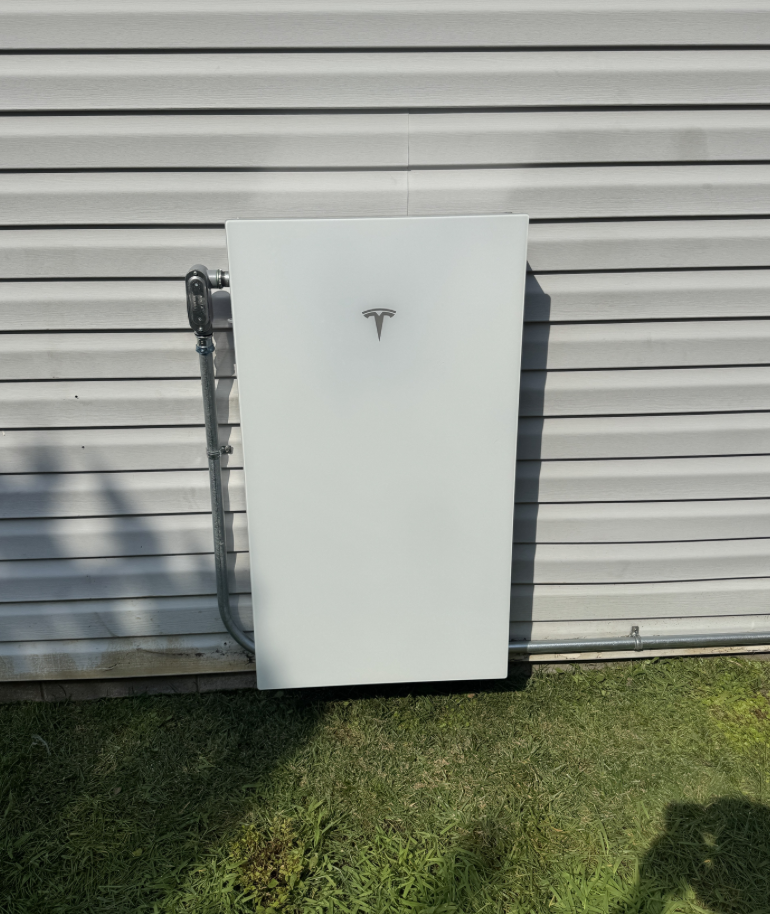
Chesapeake Powerwall Locations Compared

03 — Flood Insurance
Flood Insurance and a Home Battery
FEMA’s commentary on the standard flood insurance policy says a solar battery in a basement, or below the lowest floor of certain post-FIRM elevated buildings in high-risk flood zones, is covered when it is integrated into the home’s electrical system, supports day-to-day use of the home, and solar panels serve as the primary power source.
A home battery that works as a backup power source, like a generator, or powers only certain parts of the home, is excluded in those locations.
Coverage depends on the policy and the building, so ask your flood insurance agent how yours treats a battery in the spot you are considering. We plan the location, and your agent answers the coverage question.
04 — Warranty
What Tesla’s Powerwall Warranty Covers
Tesla’s limited warranty covers Powerwall against defects for ten years from its initial installation date. When the battery is used for backup, solar self-consumption, or time-based control, Tesla also warrants that it will retain 70% of its 13.5 kWh energy capacity at ten years, with unlimited cycles.
The full term depends on staying connected. If a Powerwall is offline for an extended period or has not been registered, Tesla may be unable to deliver firmware updates, and in that case it will honor the warranty for at least four years from installation. Tesla says the certified installer should offer registration during commissioning, and the system should stay connected to your home internet afterward.
The warranty excludes repairs or modifications by anyone other than Tesla or a Tesla Certified Installer, opening the Powerwall’s casing, and moving the unit to another location without Tesla’s written consent. Warranty claims start with the Tesla Certified Installer who sold the product.
It also does not apply to defects or capacity loss caused by force majeure events, and it names flood among them. Placing the battery above the flood height covered above is the practical protection.
05 — City Zoning
Chesapeake’s Battery Storage Rules Target Stand-Alone Facilities
Chesapeake’s zoning ordinance treats a battery energy storage system as a stand-alone facility use. The city’s 2023 amendment defined it as storage that is the property’s primary use, and those facilities are not allowed in residential districts.
Storage facilities have drawn attention in the city. In 2026, a proposed facility on Centerville Turnpike South was withdrawn, and City Council voted to begin updating its rules for solar and battery storage facilities.
As we read that definition, a Powerwall that backs up a house serves the home and is not the lot’s primary use. We pull the electrical permit for it, as described below, and we check with the city whether a particular site raises a zoning question.
Permitting is changing at the state level too. A 2026 Virginia law requires localities, by July 1, 2028, to allow permit applications for residential solar energy systems, including batteries installed as part of them, through the state’s automated solar permitting platform or an equivalent one, and it leaves localities their authority to issue those permits.
06 — Process
Where It Goes, Then How Many
Site and flood zone
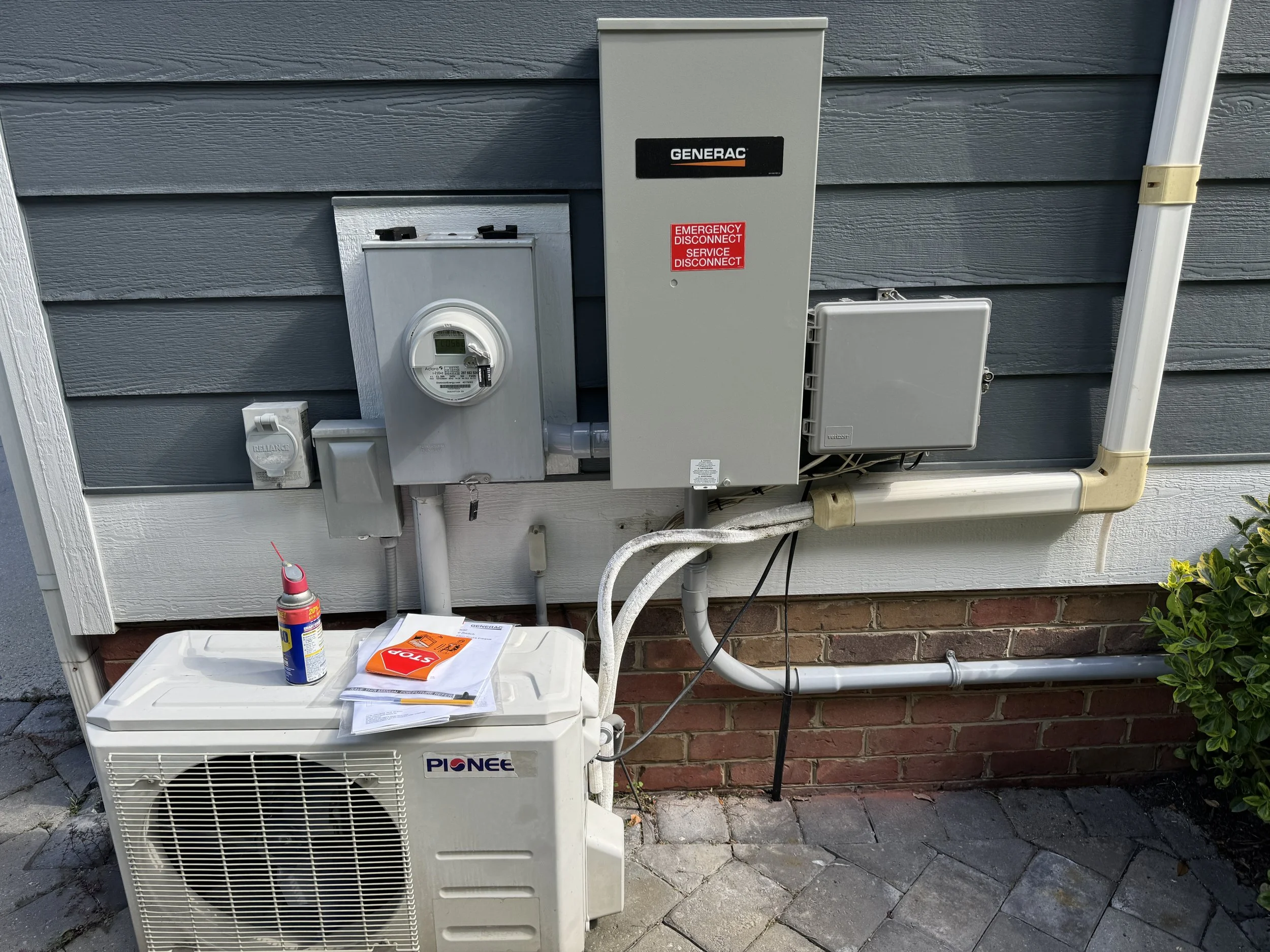
We look at the service, the panel, and candidate locations, and check the flood zone.
System design
The number of units and the backup circuits are sized to the loads you want covered.
Permit and paperwork
We pull the permit, and where the battery is paired with solar, we handle the net-metering interconnection notice.
Install and test
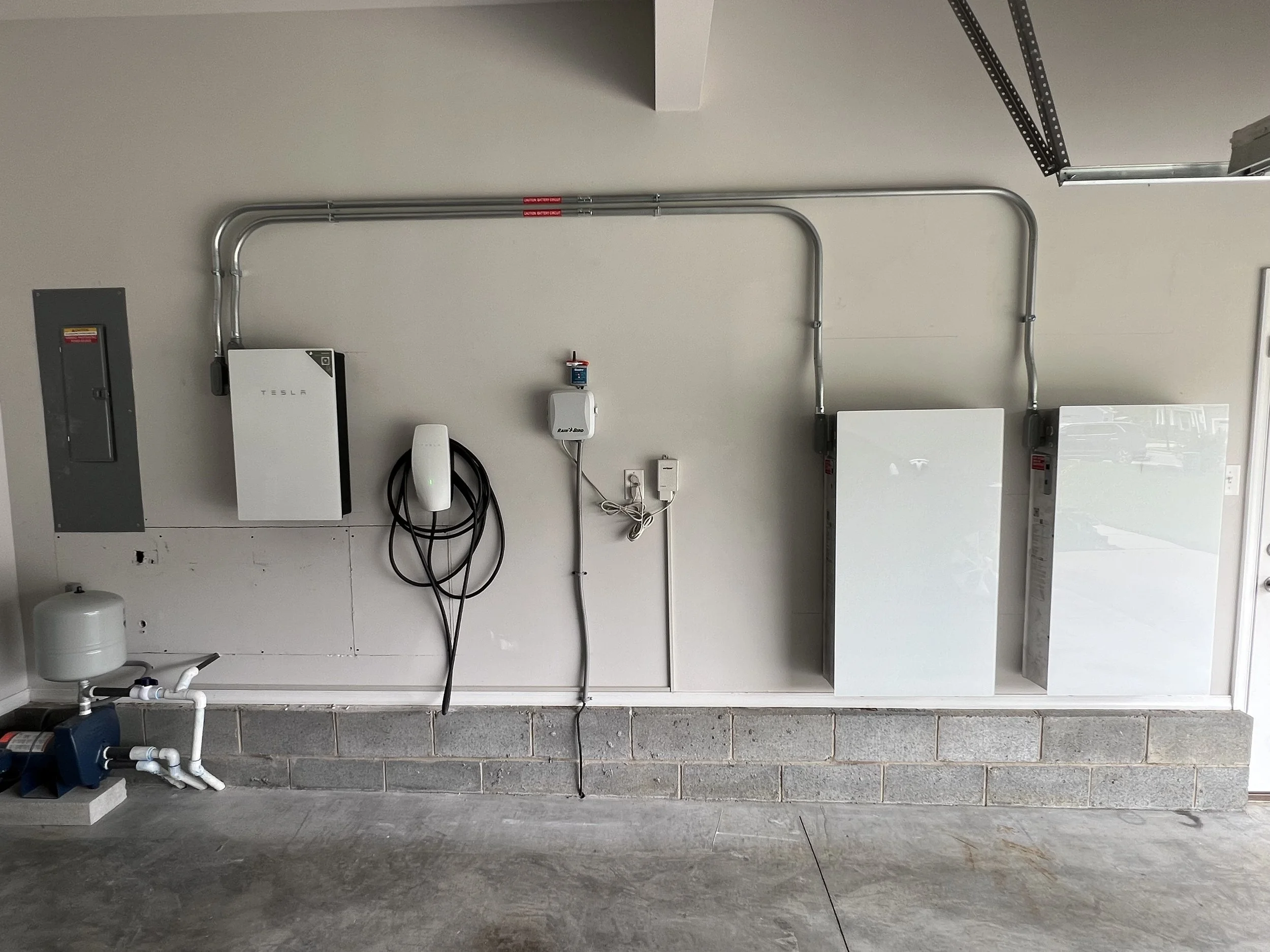
The Powerwall and gateway are installed, and we will test a switchover with you before we leave.
07 — Why Castles
Why Chesapeake Homeowners Choose Castles for Powerwall
An array already on the roof is not a problem
Batteries get added to existing solar, and we file the net-metering paperwork that goes with it.
Our workmanship is warranted on top of Tesla’s
The product warranty is Tesla’s; the installation behind it is ours.
08 — FAQs
Chesapeake Powerwall FAQs
09 — Proof
When Another Installer’s Powerwall Needed Help
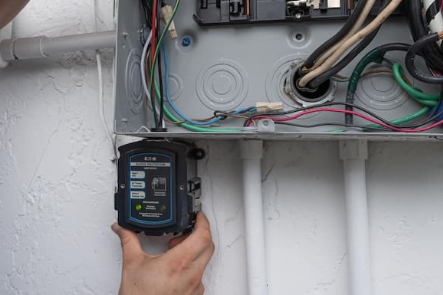
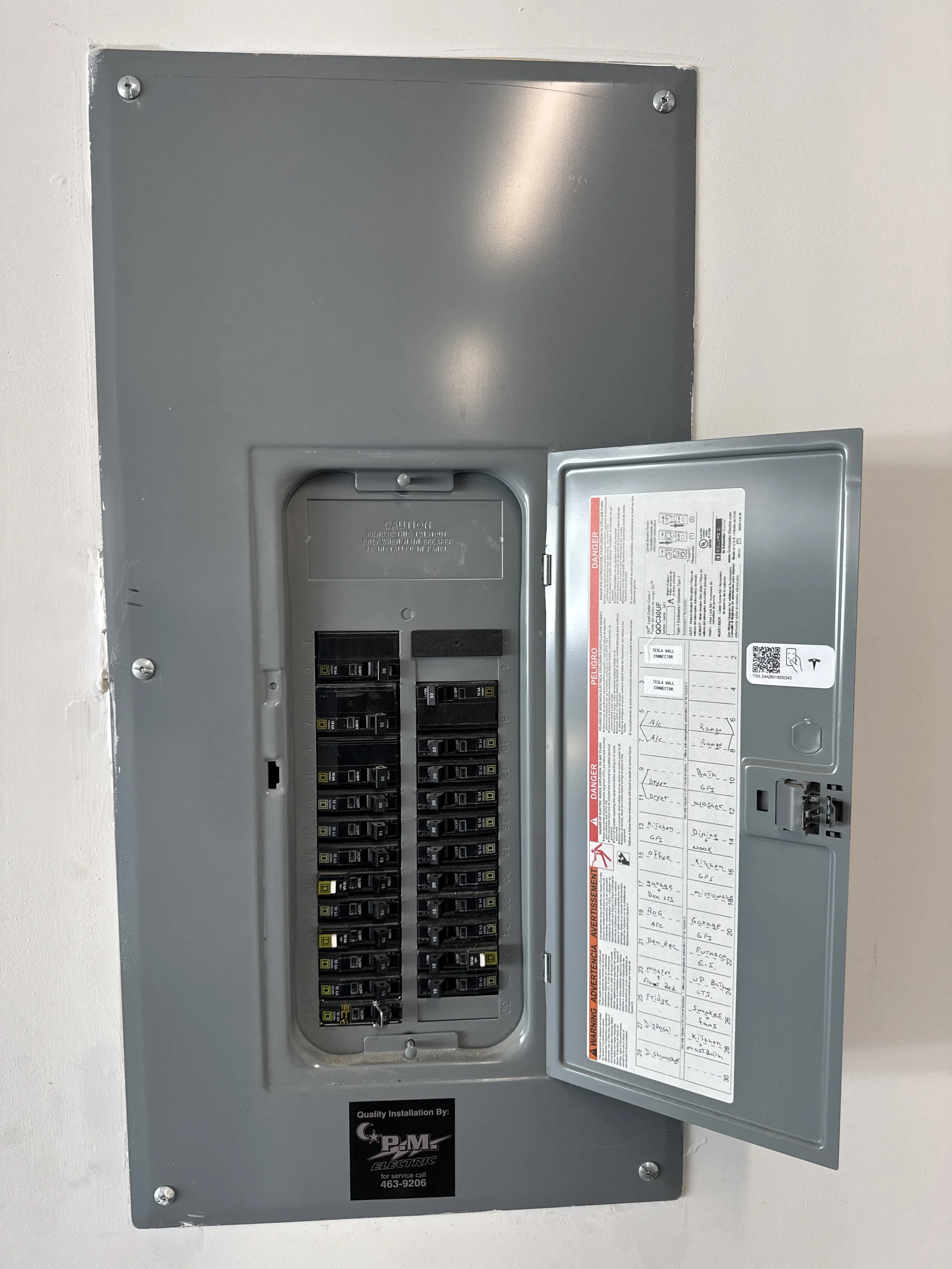
A customer’s review describes a Powerwall another company had installed incorrectly, which our electrician diagnosed and corrected.
From our five-star Google reviews
Google 5.0 Rated by Hampton Roads Customers
Castles Electrical maintains a 5.0 rating on Google. The reviews below load as a live widget, so this page shows current feedback from real Castles Electrical customers.