02 — Comparison
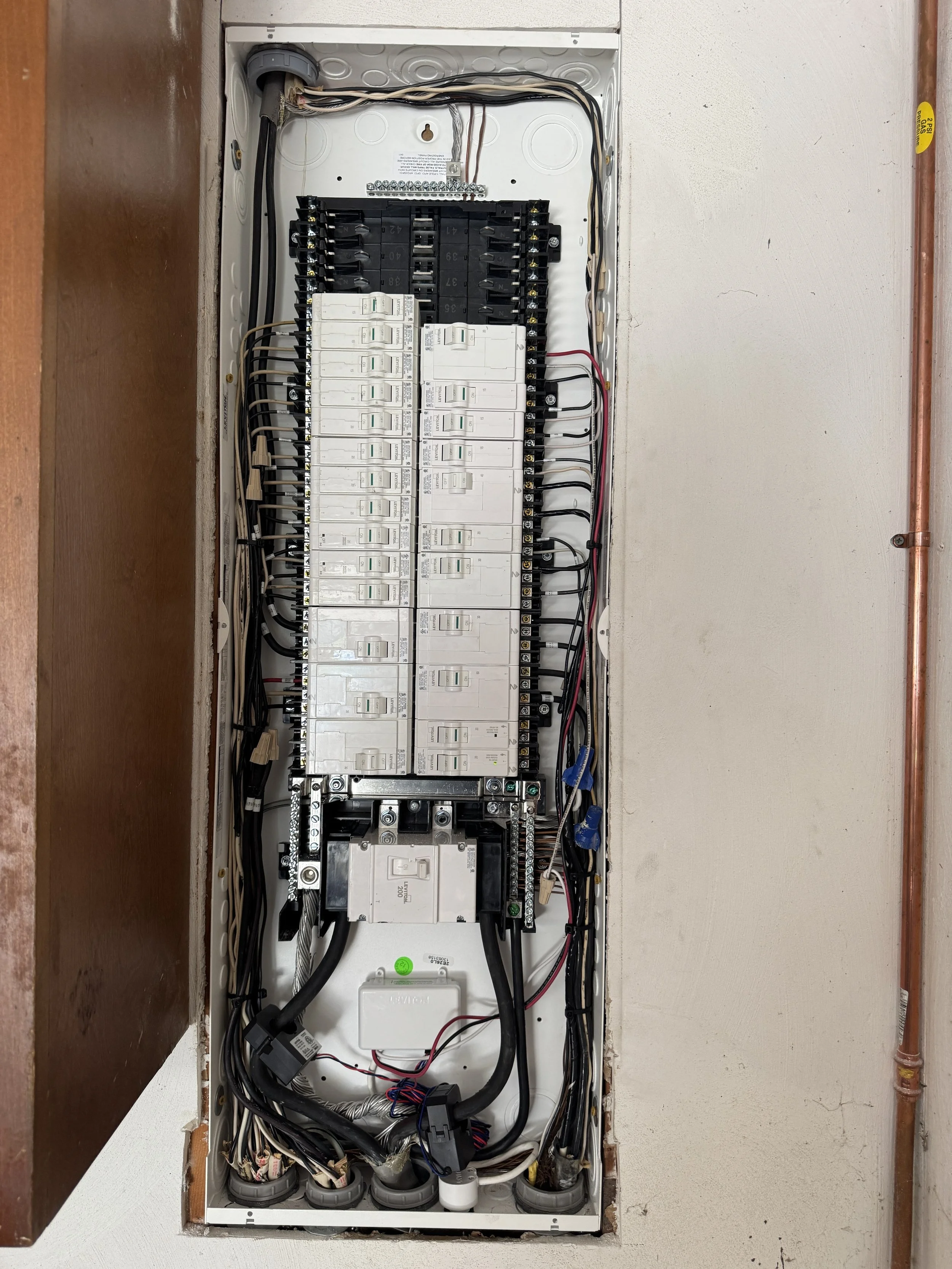
Add It Now or With the Panel Replacement?
03 — Label
Reading the Label on a Whole-Home Surge Device
The NEMA Surge Protection Institute says AC surge protective devices should be listed or recognized to UL 1449 and installed in accordance with the manufacturer’s instructions, and that non-listed devices may pose a fire or personal safety hazard. Beyond the listing, a few markings on the label tell you what the device is built to do.
A recognized component, as opposed to a listed device, may carry conditions of acceptability that the installer has to follow. We go over these markings on the device we recommend for your panel.
04 — Sizing
How Surge Ratings Relate to Lightning
A 2014 report prepared for the Fire Protection Research Foundation on residential surge protection offered a useful benchmark. For homes, it said a surge current rating above 30 kA likely is adequate for 80% to 90% of lightning strokes, and a rating above 60 kA for virtually all of them. In lightning-prone areas, it added, a higher rating can also extend device life when surges recur.
That surge current rating is a different figure from the nominal discharge rating on the UL label. The same report noted that no industry guidance for residential surge protection existed at the time, so the choice of device is a judgment we explain on the estimate.
A panel device limits surges that enter the wires. It is not protection against a direct strike on the house, and a National Institute of Standards and Technology guide on home surges says protecting a house from the direct effects of lightning is done with properly grounded lightning rods installed by professionals.
05 — Appliances
Same 1980s House, Different Appliances Inside
A Chesapeake house built in 1988 may still have its original wiring, but it rarely has its original appliances. Washers, ranges, and heating and cooling equipment that once ran on mechanical dials now run on keypads, displays, and control boards.
That NIST guide draws the line between appliances. It says appliances with mechanical controls are generally insensitive to surges, while appliances with electronic controls can be more susceptible to damage.
Some surges arrive from outside, from lightning away from the house or power returning after an interruption. Others come from switching, as motors and large loads cycle on and off.
NEMA’s institute says switching surges occur far more frequently than larger outside surges and can damage equipment over time, and the Fire Protection Research Foundation report notes that these surges often do not cause immediate failure, because the damage occurs as a cumulative effect. A panel device handles surges arriving on the service for every circuit it feeds.
06 — Newer Equipment
Solar, Powerwall, and EV Charger Electronics
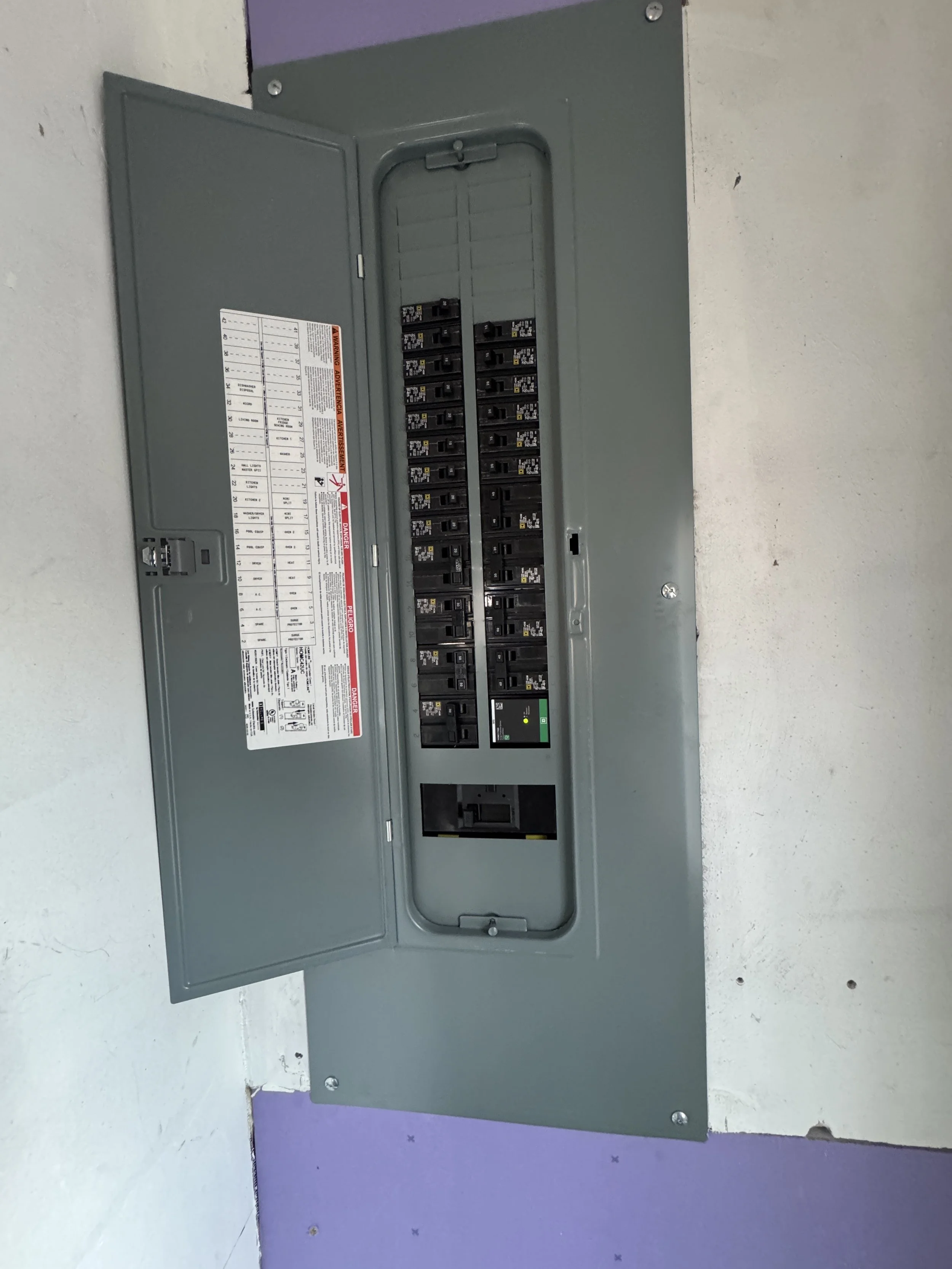
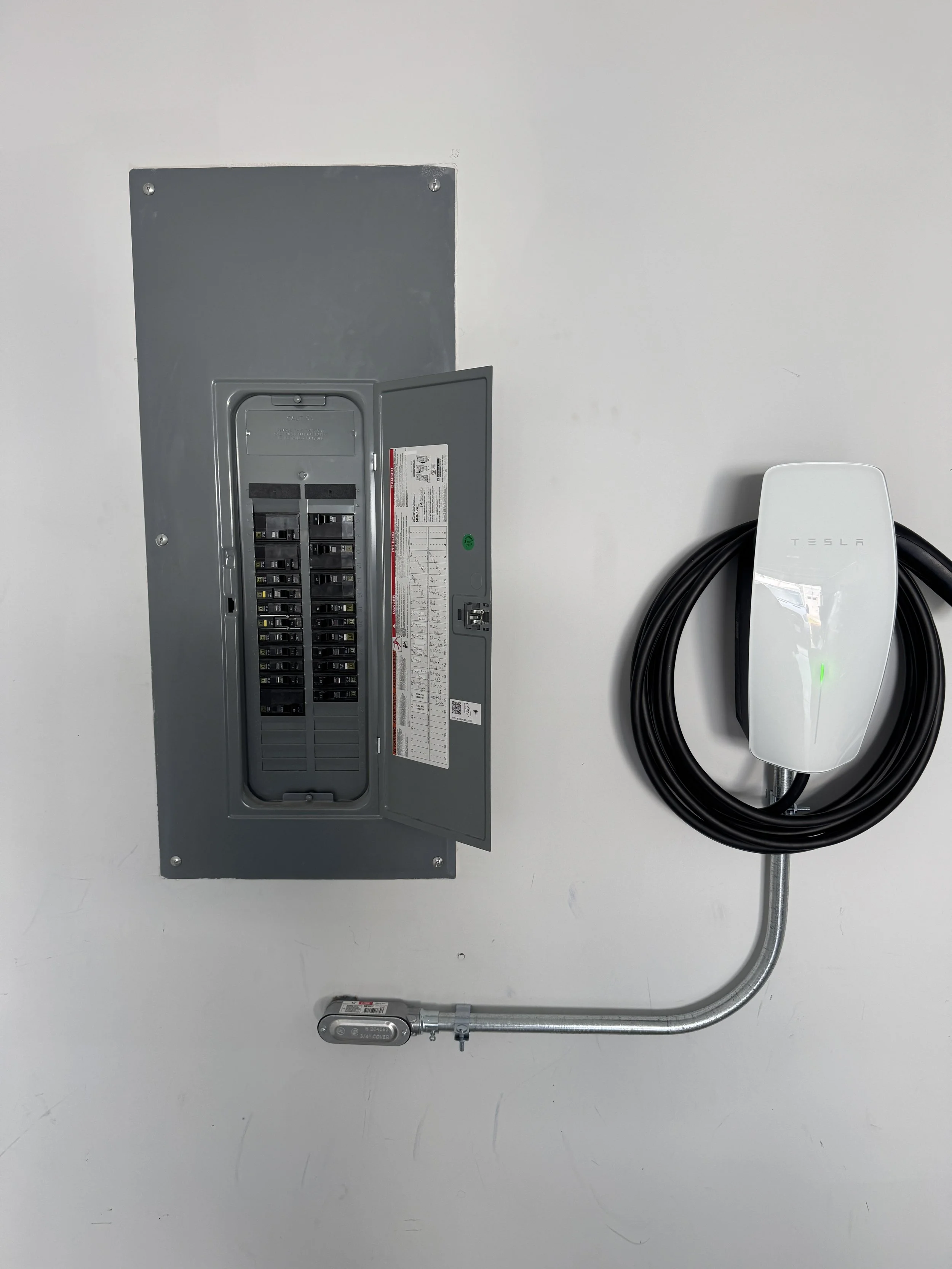
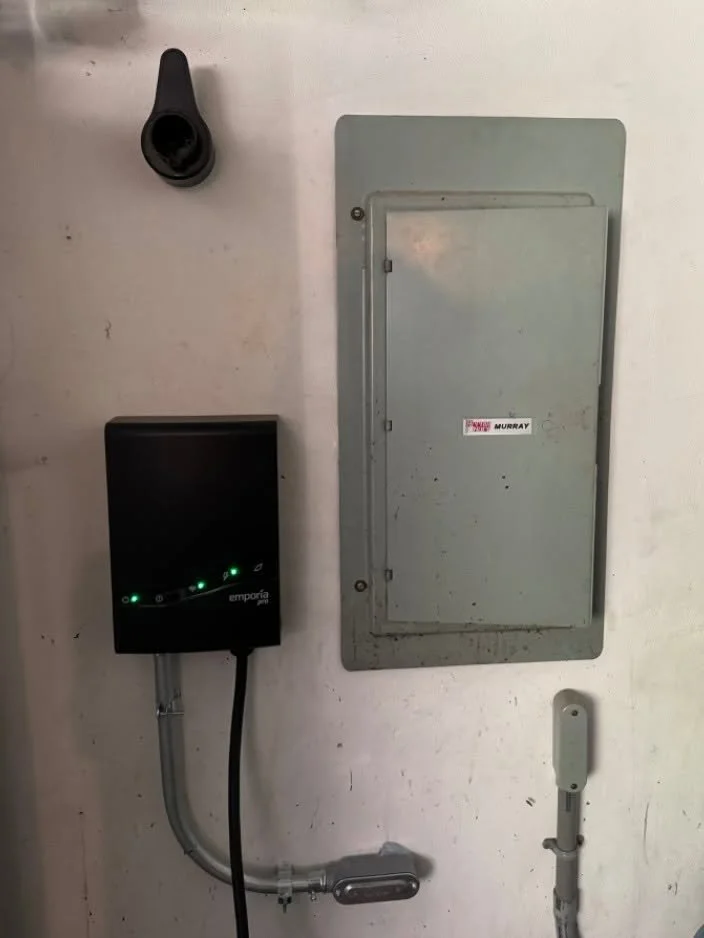
Many Chesapeake houses from the 1980s and 1990s now carry equipment their panels were never planned around: rooftop solar, a home battery, or a Level 2 EV charger. A panel surge device protects the AC circuits it feeds, including the circuit to a charger or battery.
A solar array’s DC wiring is a separate matter. NEMA’s institute notes that the fourth edition of UL 1449 added photovoltaic DC surge devices to its scope, and industry guidance says devices on the DC side must be designed for DC. Whether an array has DC-side protection is part of the solar system’s design, so ask the company that installed the solar array what was included.
As Tesla-certified installers who also install EV chargers, we can plan the panel surge device alongside a Powerwall or charger installation.
07 — Why Castles
Surge Protection Timed to the Panel You Have
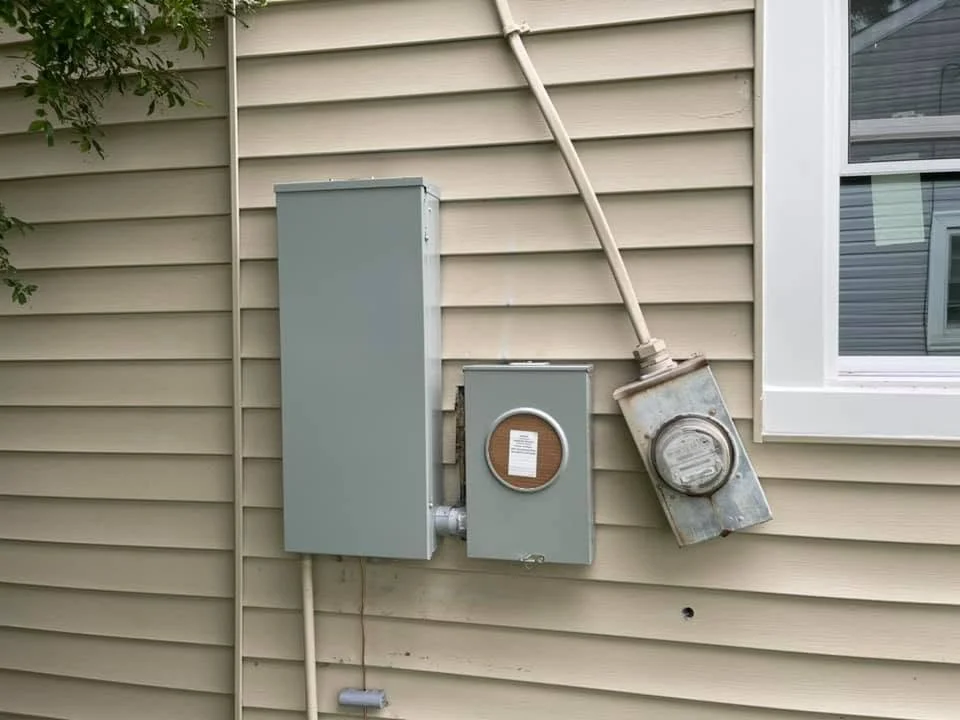
The device can ride along with panel work you are already doing
When a service change is planned, the surge device goes in as part of it.
We handle the permit and the Dominion coordination
A service change brings paperwork on both sides, and that is ours to carry.
08 — Process
How We Add Surge Protection to a Chesapeake Home
Look at the panel and the service
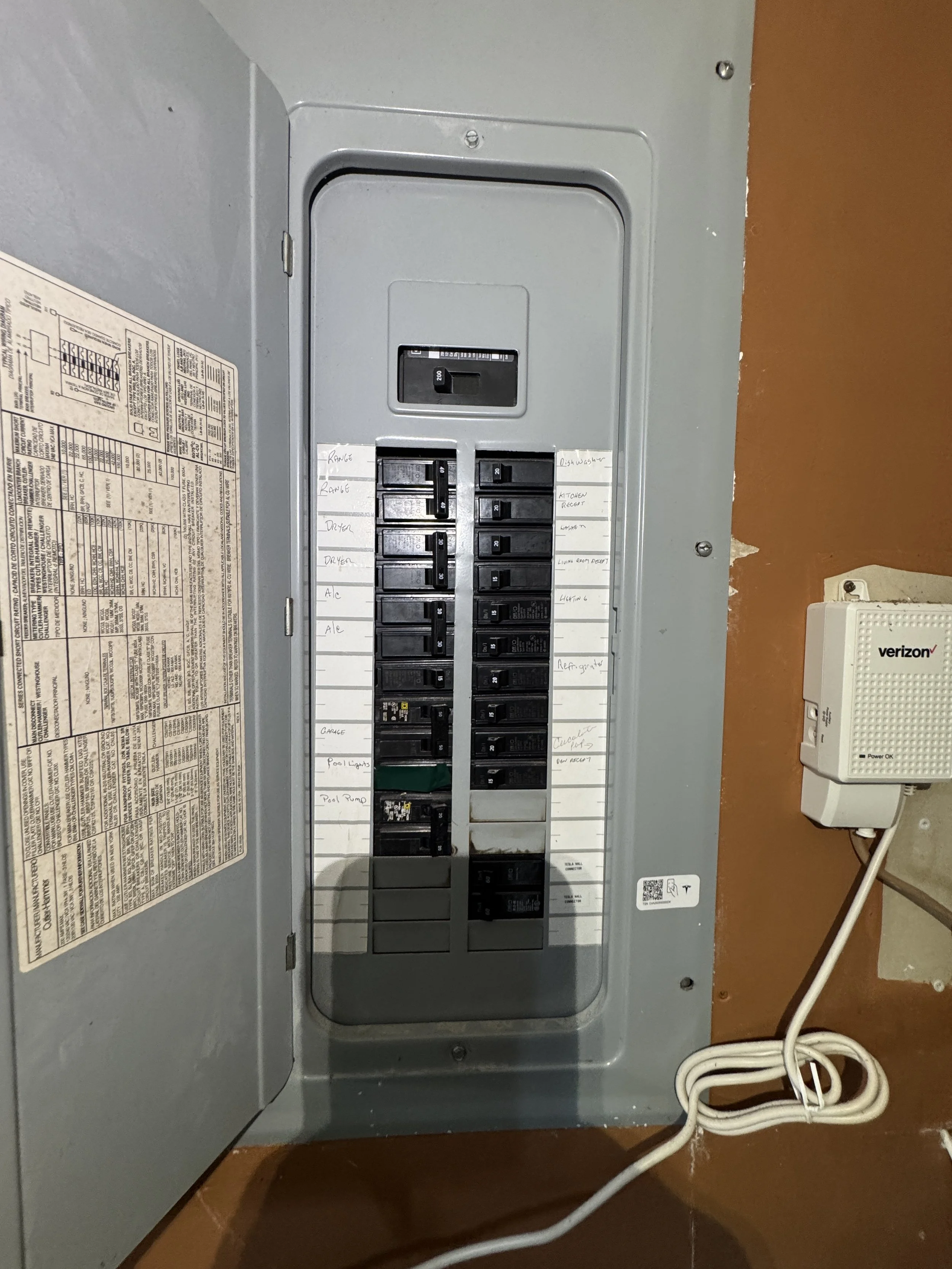
We check the panel’s age, condition, and open spaces, and ask whether an upgrade is already planned.
Check grounding and bonding
A surge device diverts surge current to ground, so we verify the grounding electrode connection and bonding before installing.
Written estimate with options
If both paths make sense, the estimate shows the standalone device and the version included with a panel replacement.
Install with short leads
The device goes on its own breaker as close to the main lugs as the panel allows, since longer leads reduce its effectiveness.
Confirm and label
We confirm the device is energized, show you what the indicator should look like, and label it in the panel.
09 — Proof
A Surge Protector Customer on Google
One customer’s review describes a whole-home surge protector installed along with some fixture work, and calls the result clean and good looking.
From our five-star Google reviews
Google 5.0 Rated by Hampton Roads Customers
Castles Electrical maintains a 5.0 rating on Google. The reviews below load as a live widget, so this page shows current feedback from real Castles Electrical customers.
10 — FAQS