Are 2-Prong Adapters Safe to Use in Virginia Beach Homes?
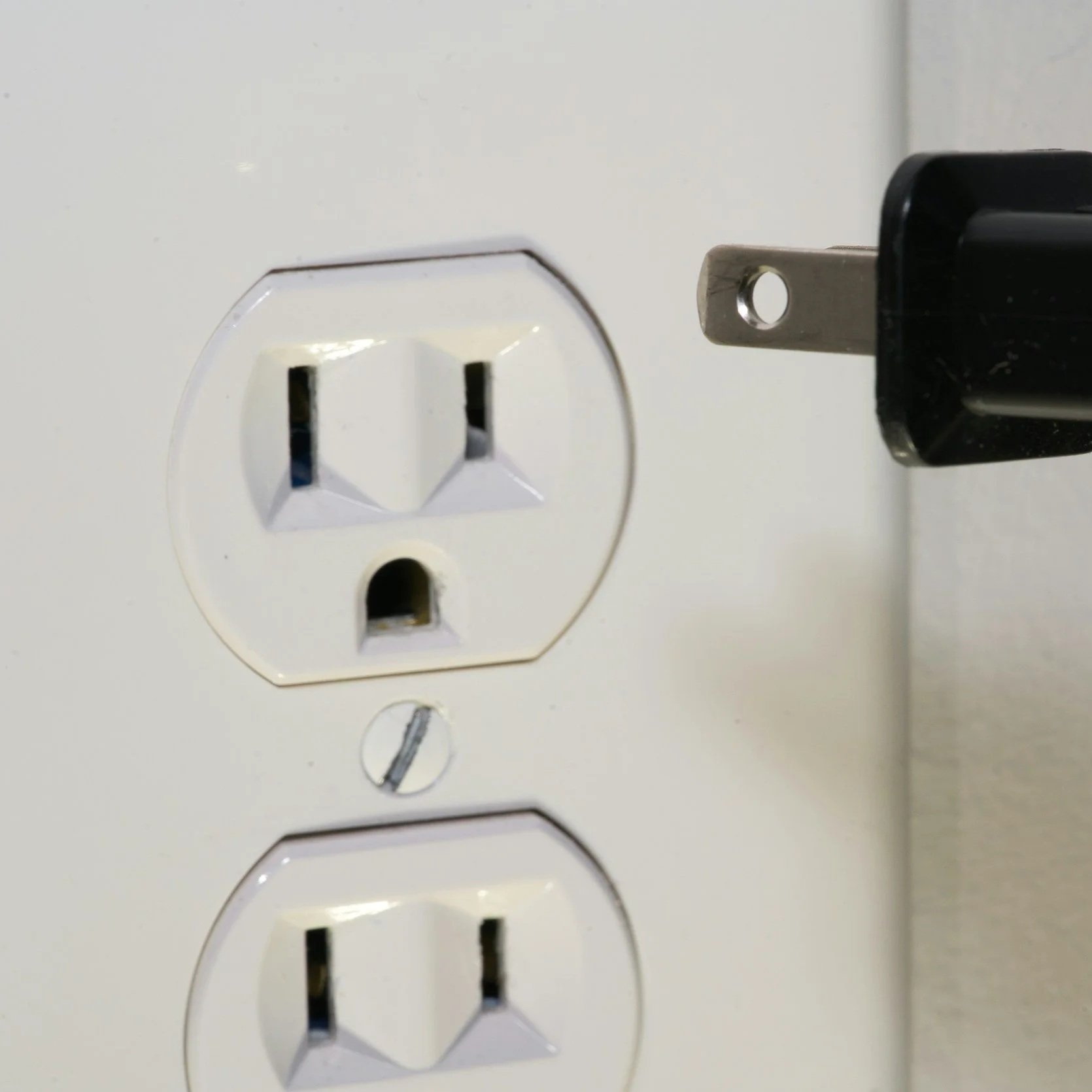
Using 2-prong adapters in older Virginia Beach homes can bypass essential grounding, significantly increasing risks of electrical shock and fire.
Understanding Why 2-Prong Outlets Still Exist In Virginia Beach Homes
Many homes across Virginia Beach, Virginia, still rely on older electrical systems that date back several decades, especially in neighborhoods built before grounding became standard practice. In those homes, two-prong outlets were common, not because they were considered ideal, but because electrical codes at the time did not require a dedicated grounding conductor. Homeowners today often discover these outlets when renovating, adding electronics, or simply trying to plug in modern appliances that come with three-prong cords. The presence of two-prong outlets usually signals an older wiring method behind the walls, often using cloth-sheathed cable or early non-metallic wiring that lacks a ground wire entirely.
Living with those older systems creates a practical problem rather than an immediate crisis. Modern devices expect a grounded connection to safely redirect stray electrical current, reduce shock risk, and protect sensitive internal components. When a homeowner reaches for a 2-prong adapter, often called a cheater plug, the intention is convenience, not cutting corners. In real homes, adapters are frequently used behind entertainment centers, in bedrooms, or near kitchen counters where only two-prong receptacles exist. The issue is not just whether the adapter fits, but whether the system behind it can safely handle modern electrical demands without creating hidden risks that may not show up until years later.
How 2-Prong Adapters Are Designed To Work
A 2-prong adapter works by converting a three-prong plug into a form that can physically fit into a two-slot receptacle. The third prong, which normally connects to ground, is bypassed unless the adapter includes a grounding tab or wire that is properly connected to a grounded outlet screw or metal box. In theory, if the outlet box itself is grounded and the adapter is installed correctly, the device plugged into it can still access a grounding path. That theory depends heavily on conditions that are rarely verified in older Virginia Beach homes.
In practice, many older outlet boxes are not grounded at all, even if they are metal. Salt air, humidity, and years of corrosion common to coastal environments can further compromise any grounding path that might exist. When a homeowner plugs an adapter into an ungrounded system, the equipment loses its designed safety feature without providing any obvious warning. Lamps may work fine, chargers may still power phones, and televisions may turn on normally. The absence of immediate failure often gives a false sense of security, masking the fact that fault current now has nowhere safe to go if something inside the device malfunctions.
What Happens Electrically When Grounding Is Missing
Grounding exists to give electricity a safe escape route when something goes wrong. Inside appliances and electronics, internal components are insulated from the outer casing. Over time, insulation can degrade due to heat, vibration, or manufacturing defects. When that insulation fails, electrical current may energize metal parts that people can touch. With a proper ground, the current travels harmlessly back to the panel and trips a breaker. Without a ground, the current waits until a person provides a path, often through contact with skin and flooring.
In Virginia Beach homes, moisture adds another layer of complexity. High humidity increases conductivity, which raises the likelihood that stray current finds an unintended path. Bathrooms, kitchens, garages, and laundry rooms are particularly vulnerable. Using 2-prong adapters in these areas increases the chance that a minor internal fault becomes a shock hazard. Over time, repeated low-level faults can also stress wiring connections, loosening terminals and creating heat buildup inside walls, a condition that rarely announces itself before damage occurs.
Why Modern Electronics Are Especially Vulnerable
Older appliances were often simpler, drawing steady loads and using fewer sensitive components. Modern electronics are different. Computers, televisions, gaming systems, and smart home devices rely on circuit boards that are highly sensitive to voltage fluctuations and electrical noise. Grounding helps stabilize voltage levels and dissipate transient surges that occur during storms, grid switching, or nearby lightning strikes. In coastal Virginia Beach, storm activity and utility fluctuations are part of normal life, not rare events.
When these devices are used with 2-prong adapters, they lose a layer of protection that manufacturers assume is present. Damage may not happen immediately. Instead, components degrade gradually, leading to premature failure that feels mysterious to homeowners. A television that lasts three years instead of ten, or a computer power supply that fails without warning, often traces back to poor grounding conditions rather than product defects. Adapters can keep devices running, but they do not recreate the electrical environment those devices were designed to operate within.
Common Misconceptions Homeowners Have About Adapter Safety
One of the most common misconceptions is that a 2-prong adapter is safe as long as nothing sparks or shocks immediately. Electrical safety rarely works that way. Many hazards develop silently, accumulating risk rather than producing instant feedback. Another widespread belief is that adapters are approved solutions simply because they are sold in hardware stores. Retail availability does not equal suitability for every home or situation, especially when underlying wiring conditions vary so widely.
Some homeowners assume that using an adapter temporarily carries little risk. Temporary solutions often become permanent fixtures once they appear to work. Adapters left in place behind furniture or appliances can remain unnoticed for years, even as connected devices change and loads increase. Over time, additional power strips, extension cords, and higher-draw equipment may be added, stacking stress onto wiring systems that were never upgraded. What began as a simple workaround quietly became part of the electrical infrastructure of the home.
How Electrical Codes View 2-Prong Adapters In Virginia Beach
Current electrical codes do not endorse 2-prong adapters as a long-term solution for modern electrical use. Codes recognize existing two-prong outlets as acceptable in older homes under certain conditions, but they do not treat adapters as a substitute for proper grounding. When electrical work is performed, codes typically require that any new or replaced outlets meet current grounding and safety standards, which often means installing grounded receptacles or GFCI protection where grounding is not feasible.
In Virginia Beach, code enforcement and inspection practices reflect a balance between preserving older housing stock and promoting safety. Homeowners are not usually cited simply for having two-prong outlets, but problems arise during renovations, home sales, or insurance inspections. Adapters can raise red flags during these moments, especially when inspectors see them used in kitchens, bathrooms, or near major appliances. Addressing grounding properly often becomes less expensive and less disruptive than homeowners expect once the underlying options are clearly explained.
Risks That Increase Over Time With Continued Adapter Use
Using 2-prong adapters in Virginia Beach homes often starts as a practical response to an inconvenient outlet, but the real concern lies in how risks compound quietly over time. Electrical systems age whether homeowners actively modify them or not. Connections loosen, insulation becomes brittle, and corrosion slowly works its way into metal components, especially in coastal climates. When adapters are added into that environment, they introduce additional points of contact where heat can build up, resistance can increase, and failures can begin at a microscopic level before becoming visible damage.
As years pass, homeowners tend to add more electronics rather than fewer. What once powered a table lamp may now support a power strip feeding chargers, speakers, streaming devices, and a television. Each added load draws current through wiring that may never have been designed for modern usage patterns. Without a ground path to stabilize faults, minor issues remain undetected until a breaker trips repeatedly, an outlet feels warm, or a device suddenly fails. At that point, damage has already occurred somewhere in the system, and tracing it becomes more complex than addressing grounding earlier.
The Role Of GFCI Outlets As An Alternative
Ground fault circuit interrupter outlets are often presented as an alternative when upgrading older wiring systems that lack grounding conductors. In many Virginia Beach homes, installing GFCI outlets in place of two-prong receptacles can bring a level of shock protection without opening walls to add new wiring. GFCIs monitor the balance of current flowing through a circuit and shut off power quickly when they detect an imbalance, which usually indicates current leaking somewhere unintended.
While GFCI outlets improve personal safety, they do not replace grounding in terms of equipment protection. Electronics plugged into GFCI-protected but ungrounded outlets still lack a proper path for fault current related to internal device failures or surges. Homeowners often misunderstand this distinction, assuming that GFCI installation fully modernizes the outlet. In reality, GFCIs address one category of risk while leaving others unchanged. Understanding what problems GFCIs solve and what they do not help homeowners make informed decisions rather than assuming one upgrade covers all scenarios.
When Adapters Become A Red Flag For Larger Electrical Issues
Electricians frequently view widespread adapter use as a symptom rather than the core problem. When a home relies heavily on 2-prong adapters, it often indicates that the electrical system has not evolved alongside the household’s needs. In Virginia Beach, where many homes transition from vacation properties to full-time residences, electrical demand often increases significantly over time. Kitchens add countertop appliances, garages gain freezers or tools, and home offices appear where spare bedrooms once existed.
Adapters can mask these transitions by making outdated outlets compatible with modern plugs without addressing capacity, grounding, or circuit distribution. During service calls, electricians often find that homes using multiple adapters also show signs of overloaded circuits, improper extension cord use, or outdated panels struggling to handle current loads. Addressing adapters in isolation misses the opportunity to improve overall system safety and reliability, especially in homes where electrical upgrades have been deferred for decades.
Insurance And Liability Considerations For Homeowners
Insurance companies increasingly pay attention to electrical conditions when underwriting policies or evaluating claims. While a single adapter may not trigger immediate concern, patterns matter. Multiple adapters, particularly in kitchens, bathrooms, or near large appliances, can raise questions about compliance with modern safety practices. In the event of an electrical fire or shock-related injury, investigators may scrutinize the role of ungrounded connections and improvised solutions.
For homeowners in Virginia Beach, liability concerns extend beyond insurance paperwork. Rental properties, short-term vacation homes, and homes with frequent guests face higher exposure when electrical conditions deviate from expected standards. Visitors reasonably assume that outlets supporting modern plugs offer modern safety. When adapters are used, that assumption no longer holds. Clear documentation, professional evaluations, and proactive upgrades reduce uncertainty and help homeowners protect both occupants and themselves from avoidable complications.
FAQs
2-prong adapters are not illegal to own or use, but they are not recognized as a permanent or code-compliant solution for modern electrical needs. Electrical codes allow existing two-prong outlets in older homes, but adapters do not upgrade the outlet’s safety features.
Most 2-prong adapters do not provide grounding unless the grounding tab or wire is correctly connected to a grounded outlet box. In many older Virginia Beach homes, outlet boxes are not grounded, meaning the adapter offers no grounding benefit even if installed properly.
GFCI outlets improve shock protection by shutting off power when current leaks occur, making them safer than standard two-prong outlets for personal safety. However, they do not provide equipment grounding, so sensitive electronics remain vulnerable to certain faults and surges.
Replacing a two-prong outlet with a three-prong outlet is not permitted unless specific conditions are met, such as installing a GFCI outlet and labeling it correctly. Simply swapping the outlet does not create grounding and may create a false sense of safety.
Electricians discourage long-term adapter use because adapters bypass grounding, hide underlying wiring limitations, and increase the risk of shock, equipment damage, and hidden electrical stress. Permanent solutions provide reliability and safety that adapters cannot match.