
Does Your Breaker Smell Like Burning? Time to Call a Virginia Beach Electrician
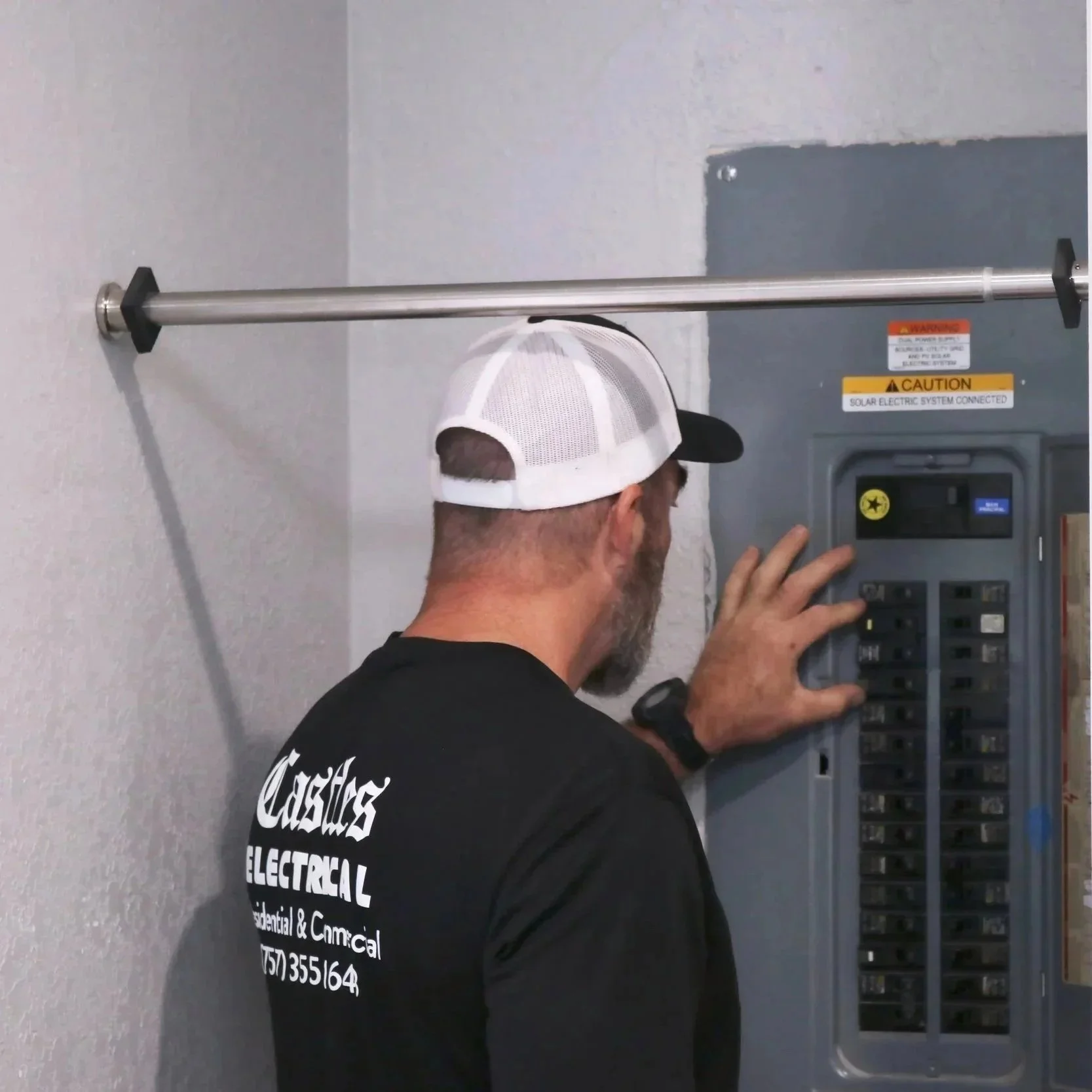
A burning smell from your electrical panel is a critical warning sign of faulty wiring that needs immediate professional repair.
Why A Burning Smell From A Breaker Signals Electrical Stress
A breaker panel should never produce a burning smell under normal conditions. Electrical panels operate silently and without odor when current flows as designed. A burning or acrid smell indicates heat buildup caused by resistance, arcing, or component failure inside the panel. That heat often originates at breaker contacts, bus bars, or wire terminations where electricity struggles to pass cleanly. Odor becomes noticeable once materials begin to overheat, soften, or chemically break down.
In Virginia Beach homes, environmental factors intensify this problem. Humidity, salt air, and seasonal temperature changes accelerate corrosion inside panels. Corroded metal surfaces increase resistance, which generates heat even at normal current levels. A breaker can smell like burning long before it trips or fails outright. Treating the odor as an early warning rather than waiting for power loss prevents damage from spreading deeper into the electrical system.
How Breakers Generate Heat Without Tripping
Breakers protect against excessive current, not against resistance caused by poor connections. A breaker may carry normal amperage while still overheating if internal contacts degrade or connections loosen. Resistance at those points converts electrical energy into heat rather than usable power. That heat accumulates inside the breaker and surrounding panel components, eventually producing a burning smell.
Older breaker designs found in many Virginia Beach homes respond more slowly to subtle thermal changes. Even newer breakers rely on mechanical and thermal elements that degrade over time. A breaker can operate within its rated current while reaching unsafe temperatures internally. The absence of a trip often reassures homeowners falsely, allowing damage to progress unnoticed while odors grow stronger.
Why Loose Panel Connections Cause Burning Smells
Loose connections inside breaker panels remain one of the most common causes of burning odors. Conductors secured under lugs must maintain firm contact to transfer current efficiently. Over years of heating and cooling cycles, those connections can loosen slightly. Once loosened, electricity encounters resistance at the connection point, generating localized heat that worsens loosening further.
In coastal Virginia Beach environments, corrosion compounds the problem. Salt exposure roughens conductor surfaces and lugs, reducing contact area. Heat concentrates at those irregular surfaces, sometimes hot enough to discolor insulation or metal. A burning smell may drift from the panel even when breakers appear intact and functional. That odor often reflects damage already underway rather than a minor nuisance.
How Arcing Inside A Panel Creates Fire Risk
Arcing occurs when electricity jumps across small gaps instead of flowing through solid contact. Inside breaker panels, arcing can develop between breaker contacts and bus bars or at loose terminations. Each arc produces intense heat and light that damages nearby materials. Repeated arcing chars insulation, pits metal surfaces, and creates carbonized paths that conduct electricity unpredictably.
Because panels contain concentrated electrical energy, arcing here escalates rapidly. Fires that originate in panels spread quickly into walls and ceilings. In Virginia Beach homes, where panels may sit in garages or utility rooms near stored items, ignition risk increases further. A burning smell often marks the stage where arcing has begun but has not yet caused visible damage.
Why Overloaded Circuits Stress Breakers
Overloaded circuits place sustained demand on breakers, raising their operating temperature. Even when loads remain within rated limits, prolonged near-capacity operation accelerates wear on internal components. Breakers respond by heating more during each cycle, drying internal materials and weakening contact surfaces.
Many Virginia Beach homes experience gradual load increases over time. Added appliances, EV chargers, pool equipment, or home offices push circuits harder than originally intended. Breakers serving those circuits become heat-stressed long before nuisance trips occur. A burning smell reflects chronic stress rather than a sudden fault, indicating the system struggles to support current demand safely.
How Moisture And Corrosion Affect Breaker Panels
Moisture infiltration dramatically affects breaker performance. Humid air enters panels through conduit openings, service penetrations, or poorly sealed enclosures. Moisture condenses on metal components, promoting corrosion that increases resistance and heat. Corrosion also interferes with breaker mechanisms, reducing their ability to dissipate heat effectively.
Virginia Beach’s coastal climate exposes panels to persistent humidity and salt. Outdoor and garage-mounted panels face higher exposure levels. Over time, corrosion spreads across bus bars and breaker contacts, creating multiple heat points inside the enclosure. Burning smells often intensify during humid weather or after storms, reflecting moisture’s role in accelerating thermal breakdown.
Why Burning Smells Sometimes Appear Intermittent
Burning odors from breakers may come and go, creating confusion. Heat production varies with electrical load. When high-demand devices operate, breaker temperatures rise and odors become noticeable. Once demand drops, panels cool slightly and smells fade. That pattern leads homeowners to dismiss the issue as temporary.
Intermittent odors indicate unstable conditions rather than resolution. Each heating cycle worsens component degradation. Over time, smells linger longer and appear at lower loads. In Virginia Beach homes, environmental heat and humidity extend cooling times, making intermittent odors more persistent. Treating the first occurrence seriously prevents progression toward permanent damage.
How Breaker Smells Can Indicate Panel-Wide Issues
A burning smell from one breaker often signals broader panel stress. Heat spreads through bus bars and adjacent breakers, affecting multiple circuits. What seems localized may reflect systemic problems such as undersized service, aging equipment, or widespread corrosion.
Panels installed decades ago may no longer meet modern electrical demand. In Virginia Beach neighborhoods with older infrastructure, panels frequently operate near capacity. Burning smells serve as early indicators that the panel as a whole struggles to handle current safely. Addressing only the affected breaker may not resolve underlying capacity or condition issues.
Why DIY Fixes Increase Risk In Breaker Panels
Breaker panels present higher risk than most electrical components due to concentrated energy. DIY attempts to tighten connections or replace breakers often worsen conditions. Improper torque, mismatched breakers, or disturbed bus connections increase resistance and arcing risk.
Even experienced homeowners underestimate how sensitive breaker interfaces are to installation quality. In Virginia Beach environments, corrosion complicates repairs further. Professional evaluation uses proper tools and procedures to restore safe contact without introducing new faults. Burning smells from panels demand caution rather than experimentation.
Why Burning Smells Should Trigger Immediate Action
A burning smell represents active overheating rather than historical damage. Electrical systems rarely stabilize once heat damage begins. Continued operation accelerates insulation breakdown, metal fatigue, and arcing potential. Fire risk increases with each heating cycle.
Virginia Beach homeowners face additional urgency due to environmental stressors that shorten the time between warning and failure. Prompt action preserves panel integrity and prevents escalation into fire or widespread system damage.
How Burning Breaker Smells Escalate Into Panel Failure
A burning smell from a breaker often marks the early stage of panel failure rather than an isolated incident. Once heat damages a breaker or bus connection, that damage rarely stays confined. Heat transfers into adjacent breakers, bus bars, and conductor insulation, gradually weakening multiple components. Each heating cycle expands damaged metal and degrades insulation further, creating new resistance points that compound the problem. What begins as one stressed breaker can evolve into widespread panel instability.
In Virginia Beach homes, this escalation happens faster due to ambient humidity and salt exposure. Corroded metal surfaces respond poorly to heat, warping and pitting more aggressively than clean contacts. As damage spreads, breakers may lose proper seating against the bus, increasing arcing risk across the panel. Burning smells that intensify or spread indicate that panel components no longer dissipate heat effectively, signaling a system trending toward failure rather than a single replaceable part.
Why Breaker Odors Often Coincide With Flickering Or Dimming Lights
Burning smells from a breaker frequently appear alongside flickering or dimming lights. Those symptoms share a common cause: unstable electrical connections. When breakers or bus bars overheat, voltage delivery becomes inconsistent. Lights respond quickly to voltage fluctuations, dimming or flickering as current struggles to pass through degraded contacts.
In many Virginia Beach homes, homeowners notice lighting issues only after detecting an odor. That sequence occurs because smell registers once heat reaches certain thresholds, while voltage irregularities may remain subtle initially. Flickering combined with a burning smell often indicates resistance inside the panel rather than at individual circuits. Addressing lighting symptoms alone without panel evaluation leaves the root cause unresolved.
How Neutral And Ground Problems Create Burning Smells
Neutral and grounding conductors play a critical role in panel stability. A loose or corroded neutral connection causes voltage imbalance across circuits, forcing breakers and conductors to carry uneven loads. That imbalance generates excess heat at breaker terminals and bus connections, sometimes producing a burning odor without immediate breaker failure.
In coastal Virginia Beach environments, grounding systems suffer corrosion from soil moisture and salt exposure. Poor grounding allows stray current to travel through unintended paths, heating metal components inside the panel. Burning smells tied to neutral or ground issues often accompany odd appliance behavior or uneven lighting brightness. Identifying these conditions requires evaluating more than breaker amperage ratings, focusing instead on connection integrity throughout the panel.
Why Burning Smells Appear After Electrical Upgrades
Electrical upgrades sometimes precede burning breaker smells. Adding new loads such as HVAC equipment, EV chargers, or kitchen appliances increases demand on existing panels. Even when breakers are sized correctly, older panels may lack the capacity or condition to handle new stress. Heat accumulates at weak points already compromised by age or corrosion.
Virginia Beach homes undergoing modernization often retain original panels while adding modern electrical loads. Burning smells following upgrades indicate that the panel no longer supports system demands safely. Rather than signaling faulty new equipment, the odor reveals that older infrastructure has reached its limit. Evaluating panel capacity becomes essential when smells appear after upgrades.
How Breaker Smells Reflect Long-Term Maintenance Gaps
Breaker panels require periodic inspection and maintenance, though many homeowners overlook them. Dust accumulation, corrosion, and minor loosening go unnoticed until heat and odor develop. Burning smells often represent years of gradual deterioration rather than sudden failure.
In Virginia Beach, panels exposed to garages, exterior walls, or utility rooms accumulate moisture and airborne contaminants more readily. Lack of maintenance accelerates degradation. Burning smells serve as overdue reminders that electrical systems age and require attention just like HVAC or roofing systems. Addressing issues early prevents the need for extensive replacement later.
Why Ignoring Breaker Smells Increases Fire Risk Exponentially
Fire risk does not increase linearly once overheating begins. Each heating cycle multiplies damage by weakening insulation, altering metal properties, and increasing arcing probability. Carbonized insulation becomes conductive, allowing electricity to travel unpredictably across damaged surfaces. That behavior raises ignition risk dramatically compared to undamaged wiring.
Breaker panels concentrate electrical energy, so fires originating there spread rapidly. In Virginia Beach homes, panels often sit near combustible materials stored in garages or closets. Ignoring burning smells allows conditions to reach ignition thresholds silently. Early action interrupts that progression while damage remains manageable.
How Professional Evaluation Addresses Burning Breaker Smells
Professional evaluation focuses on identifying heat sources, resistance points, and environmental contributors inside the panel. Electricians inspect breaker seating, bus bar condition, conductor terminations, and grounding continuity. Thermal imaging reveals hotspots invisible to the naked eye. Voltage testing confirms whether imbalance or instability exists.
In Virginia Beach homes, evaluation also includes assessing moisture intrusion and corrosion patterns. Professionals determine whether targeted repairs restore safety or whether panel replacement becomes the safer option. That decision depends on overall condition rather than the presence of a single faulty breaker.
Why Burning Smells Demand Urgent Response
A burning smell from a breaker represents active electrical distress rather than cosmetic inconvenience. Conditions that produce odor rarely stabilize without intervention. Continued operation accelerates degradation and increases the chance of arcing or ignition.
Virginia Beach homeowners benefit from treating burning breaker smells as urgent warnings. Prompt response restores safe operation, protects property, and reduces the likelihood of fire developing behind the panel door.
FAQs
Burning smells come from overheating due to loose connections, corrosion, arcing, or sustained electrical stress inside the panel.
Yes. Breakers respond to excess current, not resistance or overheating caused by poor connections, so smells can appear without a trip.
Yes. It indicates heat buildup that increases fire risk over time, even if power remains on.
Reducing load or shutting off affected circuits can limit further heating temporarily, but professional inspection remains necessary.
Yes. Humidity and salt air accelerate corrosion and heat-related degradation inside panels, increasing the likelihood of burning smells.