
Crackling in the Wall? Signs of Electrical Trouble in Virginia Beach Homes
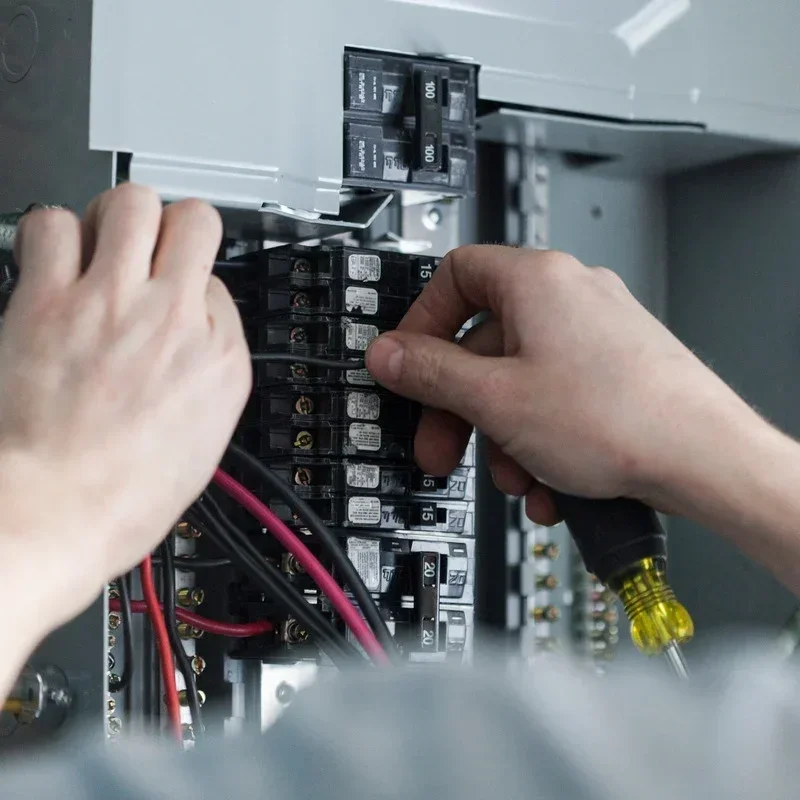
Strange crackling or buzzing sounds in your walls are often signs of arcing electricity, a serious fire hazard for homes.
Why Crackling Sounds Inside Walls Point To Electrical Activity
Crackling coming from inside a wall almost never relates to harmless house noises. Electrical systems operate silently when functioning properly, so audible sounds indicate electricity behaving in unintended ways. Crackling often comes from arcing, which occurs when current jumps across small gaps instead of traveling smoothly through conductors. Those gaps form due to loose connections, deteriorated insulation, corrosion, or physical movement in wiring. Each crackle represents a burst of energy escaping its intended path, producing localized heat inside the wall cavity.
In Virginia Beach homes, environmental conditions intensify these issues. Humidity, salt air, and seasonal temperature changes accelerate corrosion and material breakdown. Wiring expands and contracts repeatedly, loosening connections over time. Crackling may start faint and sporadically, then grow more frequent as resistance increases. Because walls conceal wiring, homeowners often hear crackling long before seeing any visible signs of damage. Treating these sounds as early warnings rather than background noise allows intervention before conditions escalate.
How Loose Wiring Develops Behind Finished Walls
Loose wiring behind walls develops gradually, often without any single triggering event. Over years of use, electrical conductors heat up under load and cool down afterward. That cycle causes metal to expand and contract, slowly loosening terminal screws and wire connections. Once tension decreases, electricity encounters resistance at the contact point. Resistance generates heat, which worsens the loosening and leads to arcing. Crackling becomes audible as electricity jumps across those unstable connections.
Many Virginia Beach homes contain wiring installed decades ago under standards that differ from modern practices. Backstabbed outlets, aging junction boxes, and splices buried behind drywall remain common. Renovations sometimes leave old connections in place while adding a new load, accelerating deterioration. Crackling may appear after years of quiet operation because the underlying process takes time. The sound marks a point where wear has progressed far enough to produce an audible electrical discharge.
Why Arcing Inside Walls Creates Serious Fire Risk
Arcing inside walls poses greater danger than arcing at visible outlets or fixtures. Each arc produces intense heat capable of charring insulation, melting wire jackets, and igniting nearby materials. Inside walls, heat dissipates poorly, allowing temperatures to rise unnoticed. Wood framing and insulation dry out with repeated exposure, lowering ignition thresholds over time.
In coastal Virginia Beach environments, moisture complicates this process. Damp materials may initially resist ignition while accelerating corrosion and insulation breakdown. Over time, the balance shifts as heat dries surrounding materials, creating ideal conditions for fire. Crackling often represents the transition phase where damage accelerates but remains hidden. Fires that originate this way rarely provide additional warning beyond the sound itself.
How Circuit Load Changes Trigger Crackling Sounds
Crackling often coincides with changes in electrical load. When appliances start, current demand increases rapidly, stressing weak connections and damaged conductors. Those stress points respond by arcing, producing crackling sounds that appear only during certain activities. Once the load drops, the sound may stop, misleading homeowners into thinking the issue resolved itself.
In many Virginia Beach homes, circuits now serve more devices than originally intended. Lighting circuits may have power outlets, ceiling fans, or smart devices added over time. Increased baseline load raises operating temperatures throughout the circuit. Crackling emerges at the weakest point, which may be inside a wall rather than at a visible outlet. Recognizing the connection between load changes and sound helps identify why crackling appears intermittently.
Why Crackling Does Not Always Trip Breakers
A common misconception involves breakers preventing all dangerous electrical behavior. Breakers protect against excess current, not resistance or arcing that occurs within normal current ranges. Loose connections can arc repeatedly without drawing enough current to trigger protection. Crackling persists while breakers remain engaged, allowing damage to continue unchecked.
Older panels found in many Virginia Beach homes may respond even more slowly due to age or outdated design. Crackling without breaker trips often confuses homeowners because the system appears operational. Understanding breaker limitations explains why crackling demands attention even when no power interruptions occur.
How Moisture And Corrosion Amplify Crackling
Moisture plays a significant role in crackling sounds inside walls. Humid air enters wall cavities and electrical boxes, creating conductive paths across insulation and metal surfaces. That conductivity increases leakage and arcing, especially at already weakened connections. Corrosion roughens metal surfaces, producing uneven contact points that spark under load.
Virginia Beach’s coastal climate accelerates corrosion through salt exposure. Crackling may worsen during humid weather or after storms, then diminish temporarily during dry periods. Those fluctuations often mislead homeowners into delaying inspection. In reality, each moisture cycle advances corrosion and insulation breakdown, increasing long-term fire risk even when sounds fade temporarily.
What Crackling Reveals About Hidden Junctions And Splices
Crackling often originates at hidden junctions rather than at outlets or switches. Junction boxes buried behind drywall contain splices that may loosen or corrode over time. Because these locations remain inaccessible, problems develop unnoticed until sounds travel through framing and wall materials.
Older homes in Virginia Beach frequently contain junctions left from past renovations. Those splices may join different wire types or sizes without modern connectors. Crackling reflects instability at those hidden points rather than failure at visible devices. Accurate diagnosis requires tracing circuits rather than replacing outlets alone.
Why Sounds Travel Through Walls And Appear Misleading
Sound transmission complicates identification. Crackling heard in one area may originate several feet away. Electrical boxes, studs, and conduit carry vibrations efficiently, especially metal components. Homeowners may hear crackling near one outlet while the actual arcing occurs elsewhere on the circuit.
This effect leads to repeated but ineffective repairs when attention focuses on the wrong location. Virginia Beach homes with metal boxes or conduit experience this issue more often. Understanding sound transmission prevents misdirected repairs and emphasizes the need for circuit-level evaluation rather than spot fixes.
Why Crackling Often Appears Before Visual Damage
Electrical systems degrade quietly until damage reaches a critical point. Crackling stands out because it engages hearing rather than sight or smell. Insulation may char internally without visible marks on walls or outlets. By the time discoloration or odors appear, damage has already progressed significantly.
Crackling represents an early failure stage where intervention limits damage scope. In Virginia Beach environments, where corrosion and moisture accelerate deterioration, early detection proves especially valuable. Addressing crackling promptly reduces the likelihood of invasive repairs or fire damage later.
Why Crackling Should Prompt Immediate Investigation
Crackling inside walls indicates active electrical stress rather than static wear. Each sound reflects energy release that damages components incrementally. Electrical systems rarely stabilize without intervention once arcing begins. Continued use allows heat and damage to the compound, increasing the risk rapidly.
Treating crackling as an actionable warning rather than an inconvenience improves safety outcomes. Early investigation restores predictable electrical behavior and prevents escalation into more dangerous conditions hidden behind finished walls.
How Crackling Inside Walls Escalates Over Time
Crackling inside walls rarely stays static. Once arcing begins, each electrical discharge alters the surfaces it touches. Metal contacts pit and roughen, insulation chars and carbonizes, and those changes lower resistance at the arc point while raising resistance in the surrounding connection. That imbalance causes future arcs to occur more easily and with greater intensity. Heat output increases, expanding the damaged area beyond the original fault location. What began as a faint, occasional crackle often becomes louder and more frequent as the process feeds itself.
In Virginia Beach homes, environmental conditions accelerate this progression. Humidity and salt exposure speed corrosion at damaged points, making arcing more aggressive. Seasonal temperature swings add mechanical stress as materials expand and contract around already weakened connections. Crackling may seem unchanged for months, then worsen suddenly after a heat wave, cold snap, or storm. That apparent unpredictability reflects cumulative damage finally reaching a tipping point rather than a new, unrelated issue.
Why Crackling Indicates More Than A Single Fault
Crackling inside a wall often signals multiple contributing factors rather than one isolated defect. Loose connections, aging insulation, corrosion, and circuit loading interact with each other. Fixing one issue without addressing the others may reduce sound temporarily, but leave conditions that allow arcing to resume elsewhere. Electrical systems behave as networks, not independent components, so stress redistributes when one weak point is repaired.
In many Virginia Beach homes, past renovations introduce layered complexity. Older wiring methods coexist with newer materials, sometimes joined without proper transition techniques. Crackling reflects how those mismatches respond under load. A thorough evaluation considers the entire circuit path, from panel to device, rather than focusing only on the area where sound is heard.
How Crackling Can Indicate Neutral Or Ground Problems
Not all crackling originates from hot conductors alone. Neutral and grounding issues also produce arcing and noise. A loose neutral creates unstable voltage that causes conductors to arc unpredictably under load changes. Grounding deficiencies allow stray current to seek alternate paths, sometimes through metal boxes or nearby materials.
In coastal Virginia Beach environments, grounding components often suffer corrosion due to moisture and soil conditions. Crackling may accompany flickering lights or inconsistent appliance behavior, pointing toward neutral or ground instability rather than a simple loose wire. Addressing these issues requires evaluating bonding, grounding continuity, and service connections in addition to branch wiring.
Why Crackling Sometimes Appears After Renovations
Crackling that begins after renovations often traces back to disturbed wiring. Construction vibrations loosen old connections. Adding devices increases circuit load. New insulation alters heat dissipation around wiring. Even well-intentioned upgrades can expose weaknesses that remained quiet under previous conditions.
Virginia Beach renovations frequently involve adding lighting, outlets, or ceiling fans to existing circuits. Those additions change how electricity flows through aging wiring. Crackling may appear weeks or months later as connections respond to new stress patterns. Understanding renovation impact prevents misattributing the sound to unrelated causes.
How Electrical Boxes Influence Fire Development
Electrical boxes play a critical role in how crackling-related damage progresses. Plastic boxes soften under heat, allowing conductors to shift and worsen arcing. Metal boxes contain heat better but transmit it to the surrounding framing. Poorly secured boxes allow movement when devices are used, stressing connections repeatedly.
Older Virginia Beach homes often contain undersized or loosely mounted boxes that amplify these effects. Crackling inside the walls may originate from a box that no longer holds conductors firmly in place. Addressing box stability becomes just as important as repairing wiring when resolving crackling issues.
Why Crackling Rarely Resolves Without Intervention
Electrical systems do not self-heal. Once arcing begins, damage accumulates rather than reverses. Crackling may fade temporarily due to environmental changes or load reduction, but underlying defects remain. Continued operation eventually restores conditions that produce noise again, often with greater severity.
Homeowners sometimes report crackling that disappears after unplugging a device, then returns later under different circumstances. That pattern reflects shifting stress rather than resolution. Treating silence as safety allows damage to progress unnoticed until more severe symptoms appear.
How Professional Evaluation Identifies Hidden Risk
Professional evaluation goes beyond listening for sound. Electricians assess connection integrity, conductor condition, box security, grounding continuity, and circuit load behavior. Thermal imaging, voltage testing, and physical inspection reveal issues invisible to homeowners. That comprehensive approach identifies not only where crackling occurs, but why it occurs.
In Virginia Beach homes, professionals also evaluate moisture intrusion and corrosion patterns that influence long-term reliability. Identifying these factors early allows targeted repairs that restore system stability rather than chasing symptoms as they move.
FAQs
Crackling usually comes from arcing caused by loose connections, deteriorated insulation, corrosion, or unstable wiring under load.
Yes. Crackling often originates at hidden junctions or wiring behind walls rather than at visible outlets or switches.
Crackling indicates increased fire risk but does not guarantee immediate ignition. Continued operation without repair allows risk to escalate over time.
Yes. Humidity promotes corrosion and conductive paths that increase arcing, especially in coastal environments.
Yes. Early inspection limits damage and reduces the likelihood of invasive repairs or electrical fire development.