
Electrical Fire & Outlet Safety – Virginia Beach Focused
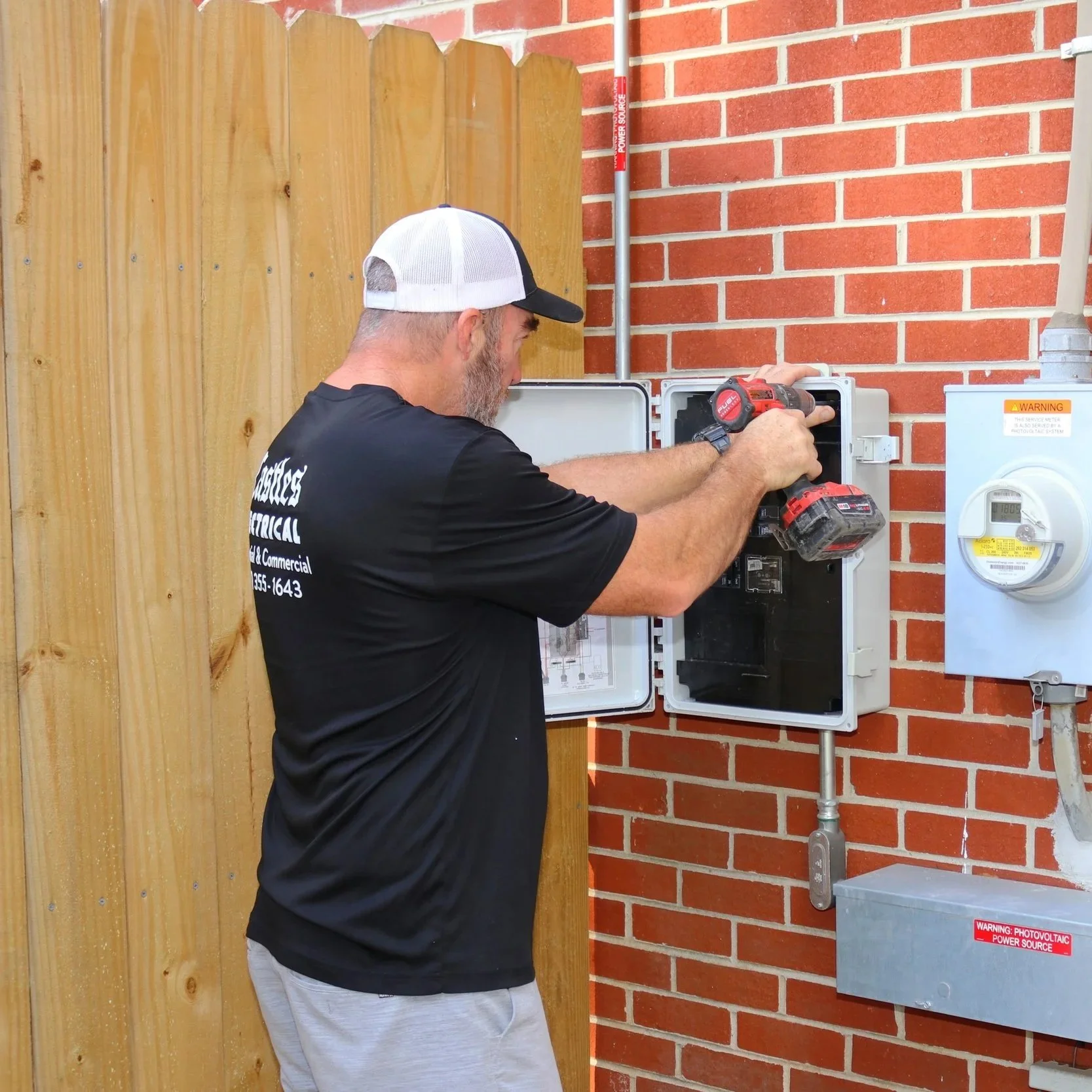
Ensuring your home meets Virginia Beach electrical codes by installing GFCI outlets can significantly reduce the risk of electrical fires.
Why Electrical Fires Often Start At The Outlet Level
Electrical fires in residential homes rarely begin with dramatic events. Most originate quietly at outlets where everyday use places constant stress on wiring and connections. Outlets act as transition points between fixed wiring and movable devices, making them natural weak spots over time. In Virginia Beach, Virginia, environmental conditions accelerate that wear. Humidity, salt carried through the air, and temperature swings affect metal contacts and insulation inside outlet boxes. As connections degrade, resistance builds, and resistance converts electrical energy into heat in areas not designed to dissipate it.
Outlets also tend to accumulate subtle damage that homeowners overlook. Loose plug fit, intermittent power, or warm faceplates often feel like inconveniences rather than warning signs. Behind the cover plate, spring contacts may lose tension, terminal screws may loosen, or insulation may thin from repeated heating cycles. Each change compounds the next. Electrical current concentrates at smaller contact points, raising temperatures locally. Over time, that heat carbonizes materials inside the box, lowering resistance further and creating a pathway toward ignition. Fires linked to outlets frequently smolder unseen before escalating, especially when outlets sit behind furniture or appliances that restrict airflow and hide early symptoms.
How Coastal Conditions Affect Outlet Longevity In Virginia Beach Homes
Virginia Beach homes face environmental stressors that differ significantly from inland properties. Salt air accelerates corrosion on exposed and concealed metal components alike. Moisture permeates wall cavities during storms, humid days, and seasonal weather shifts, raising baseline humidity levels around electrical boxes. Even homes with modern construction experience these influences, though older homes often show more pronounced effects due to materials and installation practices common at the time of construction.
Outlet components rely on clean, tight metal-to-metal contact for safe operation. Corrosion disrupts that contact by roughening surfaces and increasing electrical resistance. Higher resistance generates heat under normal loads, not just during overload conditions. As outlets age in coastal environments, internal springs lose elasticity faster, and terminal screws become more susceptible to oxidation. Homeowners may replace faceplates or visible components without realizing that internal deterioration continues. Over the years, coastal exposure shortens the effective lifespan of outlets and increases fire risk unless periodic evaluation and replacement occur based on condition rather than appearance alone.
Overloaded Outlets And Improvised Power Solutions
Many electrical fires trace back to outlets carrying loads beyond what their wiring and connections were designed to handle. Modern households rely on far more electronics than homes built decades ago anticipated. Power strips, extension cords, and multi-plug adapters allow homeowners to connect multiple devices to a single outlet. While convenient, those setups concentrate current draw at one point in the system. In Virginia Beach, VA, that concentration combines with environmental wear to push outlets closer to failure thresholds.
Overloading does not always trip breakers immediately. Outlets may heat gradually as current flows continuously through stressed connections. Heat cycles expand and contract metal parts, loosening them incrementally. Insulation around conductors softens, reducing its protective capacity. Over time, what began as a practical workaround evolves into a persistent fire hazard hidden behind furniture or entertainment centers. Homeowners often assume breakers protect against all overload risks, yet outlet-level failures can develop below breaker trip thresholds while still producing enough heat to ignite surrounding materials.
Loose Connections And Heat Buildup Inside Outlet Boxes
Every outlet depends on secure connections between wires and terminals. Loose connections increase resistance, which produces heat even under modest loads. In everyday living spaces, vibration from doors closing, foot traffic, or nearby appliances gradually works against connection tightness. Thermal cycling adds another layer of stress as outlets warm during use and cool afterward. Each cycle introduces microscopic movement that compounds over years of operation.
In Virginia Beach homes, moisture accelerates this process by encouraging corrosion at connection points. Corroded surfaces require greater pressure to maintain conductivity, yet pressure decreases as screws loosen or springs fatigue. Heat builds unevenly at compromised connections, often without outward signs until damage progresses. Insulation inside the box darkens and stiffens, losing flexibility and protective properties. Once insulation degrades, heat spreads more easily to surrounding materials, increasing fire risk even during routine use of lamps, chargers, or small appliances connected to the outlet.
Why Older Homes Face Elevated Outlet Fire Risk
Many neighborhoods in Virginia Beach, VA, include homes built before current electrical standards addressed modern load demands and moisture management. Older wiring methods often relied on materials and installation practices that degrade differently over time. Cloth-insulated wiring, aluminum conductors, and shallow outlet boxes appear frequently in aging homes. Each introduces unique risks when combined with decades of use and environmental exposure.
Older outlets may lack the contact strength and insulation quality of modern devices. Shallow boxes crowd wires tightly, restricting airflow and trapping heat. Aluminum wiring expands and contracts more than copper, loosening connections unless specific mitigation methods are applied. Homeowners may update visible fixtures while leaving original wiring untouched, creating mismatches between new devices and aging infrastructure. Electrical fires in older homes often result from cumulative factors rather than a single failure, making outlet safety evaluation a critical component of long-term home ownership in coastal regions.
GFCI Protection And Its Role In Fire Prevention
Ground fault protection plays an important role in reducing shock hazards, but it also influences outlet fire safety when moisture becomes a factor. GFCI outlets monitor current flow and interrupt power when imbalances appear. In Virginia Beach homes, GFCI devices commonly serve bathrooms, kitchens, garages, and exterior areas where moisture exposure remains likely. By shutting power off quickly, these devices reduce sustained heating at compromised outlets caused by moisture intrusion.
However, GFCI protection does not address all fire risks. Loose connections, corrosion, and overload conditions may develop without creating ground fault conditions severe enough to trigger interruption. Homeowners sometimes reset tripped devices repeatedly without investigating the underlying causes. That pattern allows internal damage to continue unnoticed. GFCI outlets form part of a broader safety strategy rather than a complete solution, highlighting the importance of mechanical integrity and environmental protection alongside electronic safeguards.
Arc Fault Protection and Outlet-Related Fire Behavior
Arc fault circuit interrupters detect patterns associated with hazardous arcing, a common precursor to electrical fires. Arcing often occurs at outlets where contacts degrade, plugs fit loosely, or internal damage develops. In Virginia Beach, VA, arc fault protection helps mitigate risks associated with aging outlets exposed to humidity and corrosion. These devices monitor electrical signatures and interrupt power when irregular patterns appear.
Despite their value, arc fault devices respond to symptoms rather than causes. Intermittent arcing may occur below detection thresholds while still degrading outlet components. Environmental conditions may influence how quickly patterns become detectable. Homeowners may experience nuisance trips that mask deeper issues rather than resolve them. Arc fault protection reduces fire likelihood but works best when paired with proactive outlet inspection, proper installation, and timely replacement of worn components that contribute to arcing behavior in the first place.
Moisture Intrusion And How It Transforms Outlet Behavior
Moisture intrusion changes how outlets behave in subtle but dangerous ways, especially in coastal environments like Virginia Beach, VA. Water does not need to drip directly into an outlet box to create problems. Humid air, wind-driven rain, and condensation inside exterior walls introduce moisture that lingers around electrical components. Once moisture enters an outlet box, it lowers resistance across surfaces that normally remain insulating. Dust, debris, and corrosion residue absorb that moisture, creating conductive pathways that alter current flow and heat distribution.
Over time, repeated moisture exposure accelerates corrosion on terminals and contact springs. Corroded metal surfaces increase resistance, which converts electrical energy into heat during normal operation. Heat dries moisture temporarily, then humidity returns, creating repeated wet dry cycles that worsen material degradation. Insulation becomes brittle and discolored, losing its ability to contain heat. Homeowners may notice outlets that feel warm only during certain weather conditions, a pattern often linked to moisture-related changes rather than load alone. Ignoring moisture intrusion allows outlet damage to the compound quietly until ignition becomes possible under routine use.
Outlet Placement And Environmental Stress Zones Inside Homes
Where outlets sit within a home influences how quickly fire risk develops. Outlets installed on exterior walls, near kitchens, laundry areas, or garages experience greater environmental stress than those located in interior living spaces. In Virginia Beach homes, exterior wall outlets often sit adjacent to insulation that absorbs moisture during storms. Garages introduce humidity from vehicles, lawn equipment, and open doors, while kitchens and laundry rooms generate steam and condensation during daily use.
Environmental stress zones expose outlets to fluctuating temperatures and humidity levels that accelerate wear. Metal components expand and contract repeatedly, loosening connections over time. Moisture settles inside boxes and evaporates slowly, leaving behind corrosion-promoting residues. Homeowners often focus on high-use outlets while overlooking those placed in less visible but harsher environments. Over the years, outlets in stress zones degrade faster, increasing fire risk even when connected loads remain modest. Strategic evaluation of outlet placement helps identify areas where replacement or protective measures may reduce long-term hazards.
The Role Of Plug Fit And Device Wear
Plug fit plays a critical role in outlet safety that often goes unrecognized. Outlets rely on internal spring tension to grip plug blades firmly, maintaining consistent contact. As outlets age, spring tension weakens, allowing plugs to sit loosely. Loose fit increases resistance at contact points, producing localized heating during operation. In Virginia Beach, VA, humidity and corrosion accelerate the loss of spring strength, making a loose fit a common issue in older outlets.
Devices plugged into loose outlets may wobble or fall out partially, increasing the chance of arcing as current jumps across small gaps. Heat generated at these points damages both the outlet and the device plug, worsening contact quality further. Homeowners may swap chargers or appliances without realizing that the outlet itself drives the issue. Over time, repeated heating and cooling cycles at loose contacts create carbonized surfaces that conduct electricity unpredictably. Plug fit issues represent an early warning sign of outlet degradation that, when ignored, can progress toward fire risk even under light electrical loads.
Why Breakers Do Not Always Prevent Outlet Fires
Circuit breakers protect wiring from overload and short circuit conditions, but they do not monitor temperature at individual outlets. Many outlet-related fires develop without exceeding breaker trip thresholds. Loose connections, corrosion, and degraded insulation produce heat at localized points while total circuit current remains within acceptable limits. In Virginia Beach homes, environmental factors magnify this effect by increasing resistance at outlets rather than increasing overall load.
Breakers respond to current levels and fault conditions, not gradual heat buildup caused by resistance. An outlet can reach ignition temperatures while the breaker remains engaged because current flow appears normal. That reality often surprises homeowners who assume breakers act as universal safeguards. Understanding the limits of breaker protection highlights the importance of outlet condition, installation quality, and environmental exposure in fire prevention strategies.
FAQs
Common signs include warm outlet faceplates, loose plug fit, discoloration around outlets, intermittent power, and faint burning odors. These symptoms often indicate internal heat buildup caused by loose connections, corrosion, or insulation damage.
Replacing worn outlets can significantly reduce fire risk by restoring proper contact pressure and insulation integrity. In older homes, outlet replacement often addresses degradation that developed over decades of use and environmental exposure.
Power strips increase load concentration at outlets, which can be risky when outlets already show signs of wear. Older outlets with loose contacts or corrosion may overheat under continuous multi-device use.
Coastal homes benefit from periodic outlet evaluation based on condition rather than age alone. Environmental exposure accelerates wear, making routine inspection important even when outlets appear functional.
Protective outlets reduce certain hazards but do not eliminate fire risk entirely. Mechanical integrity, proper installation, and environmental protection remain essential for preventing heat buildup and ignition at outlets.