
How to Fix a Loose Outlet Safely in Your Virginia Beach Home
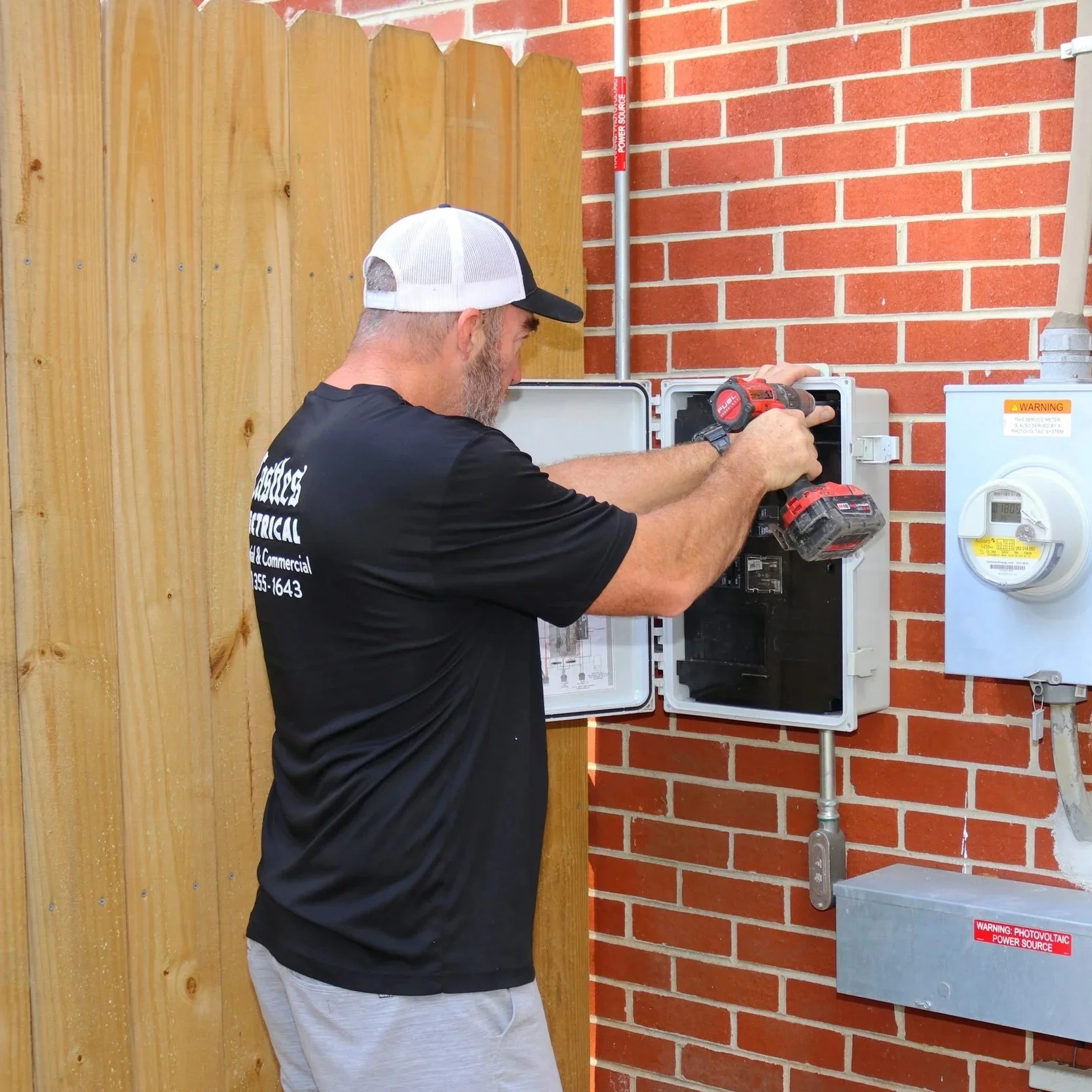
Ensuring your outlets are securely mounted prevents wire damage and improves electrical safety within your Virginia Beach home’s electrical system.
Why Loose Outlets Are More Than A Minor Annoyance
A loose outlet often feels like a cosmetic or convenience issue. Plugs fall out easily, chargers disconnect if bumped, and cords never seem to stay seated properly. In reality, outlet looseness represents a mechanical and electrical problem happening behind the wall. Outlets rely on internal spring tension and secure mounting to maintain consistent contact between plug blades and energized conductors. When that contact weakens, electricity no longer flows smoothly. Instead, resistance increases at the contact points, and resistance produces heat. Heat at an outlet does not dissipate well, especially when trapped inside a wall box surrounded by insulation or framing.
In Virginia Beach, Virginia, loose outlets appear more frequently due to environmental stress. Humidity, salt air, and temperature swings accelerate metal fatigue and corrosion inside outlet mechanisms. Over time, even outlets that were installed correctly can lose tension faster than expected. What begins as a plug slipping slightly can evolve into intermittent power, arcing inside the outlet, or discoloration of surrounding materials. Treating looseness early prevents those risks from compounding quietly behind the wall.
Understanding What Actually Makes An Outlet Loose
Outlet looseness usually comes from two distinct issues that sometimes occur together. The first involves the internal contacts that grip the plug blades. These contacts are spring-loaded and designed to apply consistent pressure. Repeated plugging and unplugging gradually weakens that spring tension. Once tension drops, the plug no longer sits firmly, and microscopic gaps form during normal use. Electricity bridges those gaps through heat and arcing rather than direct contact, increasing wear with each cycle.
The second issue involves the outlet’s physical mounting. Outlets are secured to electrical boxes with mounting screws. Over time, vibration, thermal cycling, and minor movement from plug insertion loosen those screws. In coastal homes like those in Virginia Beach, moisture contributes to corroding threads and reducing friction. A loosely mounted outlet shifts inside the wall box, worsening internal contact issues. Understanding which type of looseness exists matters because addressing only one often leaves the other unresolved.
Why Loose Outlets Pose A Fire Risk
Loose outlets create ideal conditions for heat buildup and arcing, two primary drivers of electrical fires. When plug blades do not maintain firm contact, current concentrates at smaller surface areas, and concentrated current raises the temperature rapidly. That heat damages the outlet’s internal components, further reducing contact quality and accelerating degradation. Over time, carbonized residue forms inside the outlet, creating conductive paths that worsen arcing behavior.
In Virginia Beach homes, moisture compounds this risk. Humid air and salt residue lower resistance across surfaces that should remain insulating. Heat generated by loose contacts dries moisture temporarily, but humidity returns once the outlet cools, creating repeated wet-dry cycles that promote corrosion. Fires linked to loose outlets rarely start suddenly. Most smolder behind walls or inside boxes long before smoke becomes visible, making early correction essential for long-term safety.
Outlet Boxes And Their Role In Stability
The electrical box behind the outlet plays a critical role in how secure the device remains over time. Boxes must remain rigidly attached to framing and sized appropriately for the wiring inside. Older homes in Virginia Beach often feature shallow metal boxes that crowd conductors tightly. Crowding increases internal pressure, which pushes outlets forward over time and loosens mounting screws.
Plastic boxes, common in newer construction, resist corrosion but can flex under repeated stress. If the box itself loosens from the stud, tightening the outlet screws alone will not restore stability. The outlet may feel firm temporarily, but shift again after repeated use. Evaluating box condition matters just as much as replacing the outlet itself. A stable box allows the outlet to maintain proper alignment and contact pressure, reducing future looseness.
When A Loose Outlet Is Safe To Address And When It Is Not
Some loose outlets can be addressed safely when conditions remain simple and controlled. Outlets that rock slightly but show no signs of heat damage, discoloration, buzzing, or burning odor often indicate mounting issues rather than internal failure. In these cases, restoring secure mounting and replacing worn outlets may resolve the issue effectively.
Certain signs indicate that an outlet should not be handled casually. Warm faceplates, visible scorch marks, flickering power, or crackling sounds suggest internal damage that goes beyond simple looseness. In Virginia Beach’s humid environment, these symptoms escalate faster due to corrosion and moisture influence. Outlets displaying these signs represent active electrical stress rather than mechanical inconvenience. Addressing them improperly risks worsening internal damage or creating shock hazards during handling.
Preparing To Address A Loose Outlet Safely
Safe outlet repair begins with proper preparation. Cutting power at the breaker protects against shock during inspection and repair. Identifying the correct breaker sometimes proves challenging in older panels with inconsistent labeling. Verifying power loss using a reliable tester adds an extra layer of safety before touching any components.
Work area conditions matter as well. Dry hands, insulated footwear, and adequate lighting reduce risk. In Virginia Beach homes, humidity often lingers indoors, especially near kitchens, bathrooms, and exterior walls. Avoiding repair during damp conditions lowers shock risk. Preparing the workspace thoughtfully reduces reliance on rushed movements that increase the chance of mistakes when working with electrical components.
Why Simply Tightening Screws Is Often Not Enough
Many homeowners attempt to fix loose outlets by tightening the visible screws on the faceplate or outlet body. While this may reduce movement temporarily, it rarely addresses the root cause. If internal contacts have lost tension, tightening screws does nothing to restore proper electrical grip. The outlet may feel secure while still generating heat internally during use.
In cases where the outlet box sits recessed behind drywall, tightening screws may pull the outlet forward unevenly, stressing conductors connected to the terminals. Over time, that stress loosens wire connections at the terminals themselves. In coastal environments like Virginia Beach, terminal corrosion increases the risk of connection failure under this added strain. Proper repair involves evaluating outlet condition and box alignment together rather than relying on surface adjustments alone.
Outlet Replacement As A Preventive Measure
Replacing a loose outlet often represents the most reliable long-term solution, especially when internal wear exists. New outlets restore full spring tension and clean contact surfaces. Modern outlets also offer improved materials that resist corrosion better than older designs. In Virginia Beach homes, replacing outlets proactively in high-use areas reduces the frequency of recurring issues tied to humidity and wear.
Replacement also provides an opportunity to inspect the wiring condition. Removing the outlet reveals whether insulation remains intact, terminals show corrosion, or conductors appear overheated. Addressing these observations during replacement prevents future issues that tightening alone would not reveal. Outlet replacement focuses on restoring both mechanical stability and electrical integrity rather than masking symptoms temporarily.
Using Spacers And Shims Correctly
When outlets sit recessed due to drywall thickness or box placement, spacers help bring the outlet flush with the wall surface. Proper alignment reduces stress on the outlet body and improves plug engagement. Spacers distribute pressure evenly across the mounting ears rather than concentrating it on the screws.
Improper spacer use introduces new problems. Stacking mismatched materials or uneven shims can twist the outlet, pulling conductors sideways and loosening terminal connections. In Virginia Beach homes, where materials expand and contract with humidity, uneven spacing worsens over time. Using purpose-designed spacers and aligning outlets squarely reduces movement and prolongs outlet life.
The Interaction Between Loose Outlets And GFCI Protection
Many loose outlets in Virginia Beach appear in kitchens, bathrooms, garages, and exterior walls where GFCI protection exists. GFCI outlets contain additional internal components that increase complexity. Internal wear affects not only plug tension but also sensing mechanisms. Loose internal components may cause nuisance trips or inconsistent reset behavior.
Replacing a loose GFCI outlet restores both mechanical and protective functions. Attempting to repair internal looseness without replacement rarely produces reliable results. Because these devices respond to subtle current imbalances, internal degradation compromises both safety and convenience. Treating GFCI looseness as a replacement scenario rather than a tightening exercise improves long-term reliability in moisture-exposed areas.
Environmental Factors That Accelerate Outlet Loosening
Virginia Beach’s coastal climate shortens the lifespan of many electrical components. Salt air accelerates corrosion even indoors, especially in homes with frequent ventilation or open windows. Humidity softens certain plastics and weakens metal springs over time. Seasonal temperature changes cause materials to expand and contract repeatedly, loosening fasteners incrementally.
Outlets near exterior walls face additional stress from insulation, moisture, and temperature swings. Even properly installed outlets may loosen faster than expected due to these conditions. Recognizing environmental influence helps homeowners understand that loose outlets do not necessarily indicate poor workmanship. They often reflect predictable material response to local conditions that require proactive maintenance rather than reactive fixes.
Why Addressing Loose Outlets Improves Overall System Health
Loose outlets do not exist in isolation. They stress branch circuits, increase heat at connection points, and contribute to panel load imbalance through intermittent resistance changes. Addressing looseness early reduces cumulative stress across the electrical system. Stable outlets allow current to flow evenly, reducing wear on breakers and upstream connections.
In Virginia Beach homes, proactive outlet maintenance improves system resilience against environmental stress. Each secure outlet removes a potential ignition point and reduces the chance of cascading electrical issues. Treating outlet looseness as part of broader electrical care shifts focus from symptom management to long-term reliability, especially in coastal environments where degradation occurs faster than average.
How Loose Outlets Affect Plugged-In Devices Over Time
Loose outlets do more than inconvenience daily use. They actively shorten the lifespan of devices plugged into them. When contact between plug blades and outlet contacts fluctuates, electricity flows unevenly. That uneven flow causes microsurges and brief interruptions that sensitive electronics feel immediately. Chargers, power adapters, and appliances compensate by drawing additional current, which increases internal heat within the device. Over time, components inside chargers and electronics degrade faster under these unstable conditions.
In Virginia Beach, Virginia, humidity adds another layer of stress. Moisture lowers resistance around outlet contacts, which worsens arcing behavior when plugs move slightly. Devices plugged into loose outlets often feel warmer than normal, even when not under heavy load. Homeowners may replace chargers repeatedly without realizing that the outlet causes the failures. Addressing outlet stability protects not just the wiring but also the equipment connected to it, reducing replacement costs and unexpected device failures.
Why Loose Outlets Often Reappear In The Same Locations
Certain outlet locations loosen repeatedly even after repair. High-use areas such as kitchens, living rooms, and bedrooms near nightstands experience constant plug movement. Each insertion and removal weakens internal contacts incrementally. Outlets behind furniture or near walkways face additional stress when cords are bumped or tugged unintentionally.
In Virginia Beach homes, outlets on exterior walls experience more temperature fluctuation and moisture migration. Those environmental forces loosen mounting hardware faster than interior wall locations. Without addressing box alignment, environmental sealing, and outlet quality together, looseness returns over time. Recognizing repeat locations helps homeowners identify where proactive replacement and reinforcement matter most, rather than addressing symptoms repeatedly.
FAQs
Continued use increases heat and arcing inside the outlet. Even if the outlet still works, looseness indicates degraded contact that raises fire risk over time.
Tightening may help temporarily if the mounting screws loosen, but it does not restore worn internal contacts. Most loose outlets benefit from replacement rather than adjustment alone.
Humidity and salt air accelerate corrosion and weaken metal springs. Temperature changes also loosen fasteners faster than in drier climates.
If multiple outlets show similar age and wear, replacing them together improves system reliability. High-use areas benefit most from proactive replacement.
Insurance typically covers damage from resulting fires, not preventive maintenance. Addressing looseness early reduces the chance of costly claims later.