
Lights Brightening and Dimming in Virginia Beach? Here's What It Means
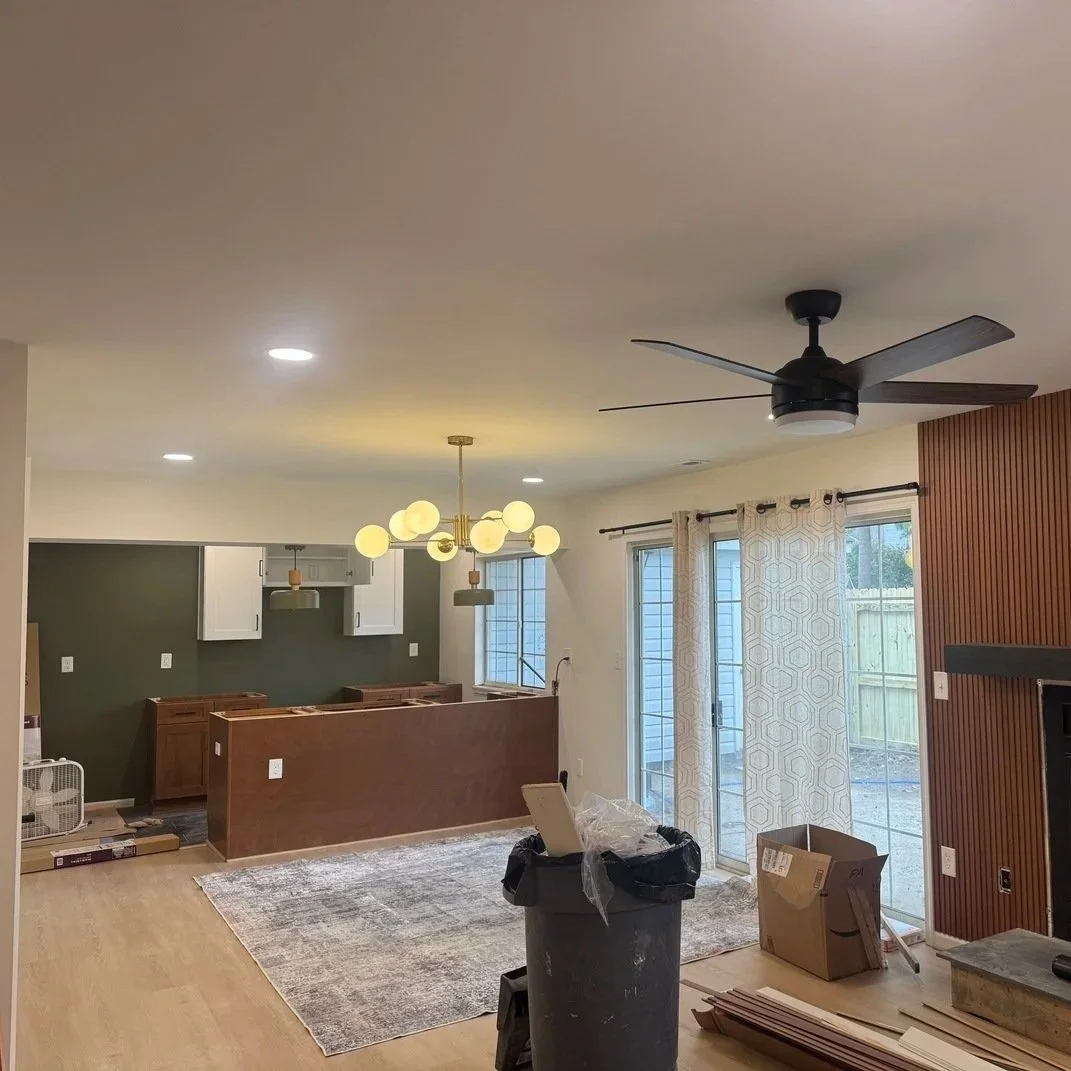
Dimming or brightening lights often signal electrical overloads, loose connections, or power grid issues that require professional inspection for safety.
Why Light Fluctuations Are A Serious Electrical Signal
Lights that brighten and dim on their own often get brushed off as a utility issue or an annoying quirk of an older home. Homeowners in Virginia Beach, Virginia, frequently notice these fluctuations when appliances cycle on, air conditioning starts, or multiple devices run at once. While occasional, very slight changes can occur under heavy load, noticeable or recurring light variation points to instability somewhere in the electrical system. Electricity should arrive at fixtures at a steady voltage. When that balance shifts, lighting becomes the most visible indicator that something deeper is happening.
Brightness changes reflect uneven voltage delivery. When the voltage rises, the lights brighten. When it drops, they dim. Those swings place stress on bulbs, fixtures, wiring, and appliances simultaneously. Over time, that stress compounds. Bulbs burn out prematurely, electronics suffer internal damage, and wiring connections heat and loosen. Dimming and brightening rarely resolve on their own. They signal conditions that tend to worsen as components degrade, especially in homes where wiring and service equipment have aged alongside growing electrical demand.
How Voltage Imbalance Develops Inside A Home
Voltage imbalance occurs when electrical current does not distribute evenly across circuits. In a properly functioning system, incoming power splits predictably, supplying consistent voltage to each branch. Problems arise when resistance increases at connection points, neutral paths weaken, or loads overwhelm available capacity. When one part of the system struggles, voltage shifts elsewhere to compensate, creating visible changes at light fixtures.
In Virginia Beach homes, imbalance often develops gradually. Loose connections at the panel, meter base, or service entrance introduce resistance that interferes with smooth voltage delivery. As resistance increases, electricity seeks alternate paths, causing some circuits to receive higher voltage while others drop. Lighting responds immediately to those changes. Brightening and dimming serve as early warnings that voltage is no longer being regulated evenly throughout the home.
The Role Of Loose Neutral Connections
Loose neutral connections represent one of the most common and most dangerous causes of flickering or fluctuating lights. The neutral wire serves as the return path for electrical current, stabilizing voltage across circuits. When that connection weakens, voltage becomes unpredictable. Lights may brighten dramatically on one circuit while dimming on another, sometimes at the same time.
Neutral issues often originate at the main panel, meter socket, or utility connection rather than within individual rooms. In coastal environments like Virginia Beach, corrosion from humidity and salt air accelerates the degradation of neutral connections. As contact deteriorates, voltage imbalance grows more severe. Appliances and electronics connected to affected circuits experience stress far beyond normal operating conditions. Over time, that stress damages internal components and increases fire risk as wiring overheats under fluctuating load.
Overloaded Circuits And Modern Electrical Demand
Electrical systems designed decades ago were not built to support today's appliance density. Homes once powered basic lighting and a handful of devices. Modern households rely on computers, entertainment systems, chargers, kitchen appliances, and climate control equipment running simultaneously. When circuits operate near or beyond intended capacity, voltage drops occur whenever demand spikes.
In Virginia Beach homes, lighting often shares circuits with outlets serving multiple rooms. When a vacuum, microwave, or air conditioner starts, the current demand suddenly increases. Voltage dips momentarily, causing lights to dim. As appliances cycle off, voltage rebounds and lights brighten. Repeated fluctuations indicate circuits stretched thin. Over time, sustained overload weakens wiring insulation and loosens connections, making voltage instability more frequent and more pronounced.
Panel And Breaker Issues That Affect Lighting
Electrical panels play a critical role in distributing voltage evenly. Problems within the panel often manifest as lighting fluctuations throughout the home. Worn breaker contacts, loose bus bar connections, or corrosion inside the panel introduce resistance that disrupts current flow. Breakers may still deliver power while failing to maintain consistent voltage under load.
Older panels common in many Virginia Beach neighborhoods lack the capacity and design features needed for modern electrical usage. Heat buildup inside panels accelerates wear on connections, increasing resistance further. As internal components degrade, voltage delivery becomes less stable across multiple circuits. Lights respond visibly long before breakers trip or complete failures occur, making brightness changes an early indicator of panel-related issues.
Service Entrance And Utility Connection Problems
Not all causes of brightening and dimming originate inside the home. The service entrance, where utility power connects to the house, plays a major role in voltage stability. Loose or corroded connections at the meter base or service drop interfere with consistent power delivery. When demand changes, voltage fluctuates before reaching the panel, affecting lighting throughout the house.
In Virginia Beach, coastal conditions accelerate corrosion at outdoor connections. Salt air and moisture degrade metal contacts, especially in older meter enclosures. Wind and storms introduce movement that loosens already compromised connections. Homeowners may notice lights flicker during storms or when neighbors experience heavy electrical use. While utility providers address some issues, problems on the homeowner side of the connection require professional evaluation to restore stability.
Why Flickering Often Worsens Over Time
Light fluctuations rarely remain static. Early symptoms may appear subtle, occurring only during peak usage. As resistance increases and connections deteriorate, voltage swings become more dramatic and more frequent. Components stressed by fluctuating voltage degrade faster, accelerating the cycle of instability.
Bulbs burn out faster, prompting replacements that do not address the underlying issue. Fixtures and switches experience increased heat as voltage rises unexpectedly. Wiring insulation weakens under repeated thermal stress. In Virginia Beach homes exposed to humidity and temperature swings, this progression often accelerates. What begins as occasional dimming can evolve into widespread flickering and appliance malfunction if the root cause remains uncorrected.
The Impact On Appliances And Electronics
Lighting changes represent only one visible symptom of voltage instability. Appliances and electronics suffer silently in the background. Motors in refrigerators, HVAC systems, and pumps experience additional strain when voltage fluctuates. Electronic devices rely on a stable voltage for proper operation. Repeated spikes and drops shorten their lifespan and increase the likelihood of sudden failure.
Homeowners may notice appliances behaving erratically, clocks resetting, or electronics overheating. These issues often coincide with lighting fluctuations, pointing toward a shared electrical cause. Addressing the problem protects not only lighting but also the broader investment in household equipment that depends on stable power.
Environmental Factors In Coastal Virginia Beach Homes
Environmental conditions in Virginia Beach contribute significantly to voltage instability. High humidity infiltrates panels, meter bases, and junctions, promoting corrosion. Salt carried inland accelerates oxidation on exposed connections. Temperature swings cause expansion and contraction that loosen terminals gradually over time.
These factors compound normal aging, making electrical systems in coastal homes more vulnerable to instability. Connections that might remain serviceable elsewhere degrade faster in this environment. Lighting fluctuations often serve as the earliest visible clue that environmental stress has begun affecting the electrical infrastructure of the home.
Why Lighting Fluctuations Can Signal Hidden Fire Risk
Voltage instability does more than annoy occupants or shorten bulb life. Fluctuating voltage places uneven stress on wiring and connection points, causing them to heat unpredictably. When voltage rises above normal levels, conductors carry more energy than intended, increasing temperature along the circuit. When the voltage drops, appliances draw higher current to compensate, which also generates heat. That constant push and pull accelerates insulation breakdown and loosens connections further.
Inside walls and ceilings, these conditions remain invisible. Wiring warms, cools, and warms again as voltage shifts throughout the day. Over time, insulation becomes brittle and cracks, exposing conductors. Loose connections begin to arc intermittently, producing intense localized heat. In Virginia Beach homes with wood framing and insulated cavities, those arcs create real ignition potential. Lighting fluctuations often appear long before smoke or burning odors develop, making them an early warning sign that heat-related damage may already be underway.
Shared Neutrals And Multi-Wire Branch Circuits
Some homes rely on multi-wire branch circuits where two hot wires share a single neutral. When functioning correctly, these circuits balance load efficiently. When the shared neutral connection loosens or degrades, voltage imbalance becomes severe. Lights may brighten dramatically on one circuit while dimming on another, especially when appliances operate simultaneously.
In Virginia Beach neighborhoods with older construction, shared neutrals were installed under standards that assumed lighter electrical usage. Modern demand pushes these systems harder. A compromised neutral in this setup allows voltage to fluctuate widely, stressing fixtures and appliances across multiple rooms at once. Homeowners often misinterpret the issue as multiple unrelated problems, yet the underlying cause traces back to a single unstable neutral connection that requires professional correction.
Why DIY Fixes Rarely Solve Dimming And Brightening
Homeowners sometimes attempt quick fixes by replacing bulbs, tightening visible screws, or swapping switches. While these steps may temporarily reduce symptoms, they rarely address the root cause of voltage instability. Brightening and dimming usually originate upstream at connections, wiring paths, or service equipment rather than at the fixture itself.
In Virginia Beach homes, partial fixes can even worsen conditions by disturbing already compromised connections. Moving wiring without correcting corrosion or load imbalance may introduce new resistance points. Electrical systems behave as a whole. Treating one visible symptom without evaluating the full system allows instability to persist and progress, often resurfacing later with greater intensity.
When To Involve An Electrician
Calling an electrician becomes important when lighting fluctuations occur regularly, affect multiple rooms, or coincide with appliance operation. Sudden brightening, frequent dimming, or lights reacting dramatically to load changes suggest voltage instability that requires professional assessment. These conditions rarely improve without intervention.
Electricians evaluate panel connections, neutral integrity, circuit loading, and service entrance condition together. In Virginia Beach homes, assessments often include checking for corrosion, moisture intrusion, and aging components affected by coastal conditions. Corrective actions may involve tightening or replacing connections, upgrading panels, redistributing loads, or coordinating with utility providers when external issues contribute. Professional evaluation restores predictable voltage delivery and reduces long-term risk to wiring, fixtures, and appliances.
FAQs
Air conditioners draw significant current when starting. If circuits are overloaded or connections are loose, voltage drops briefly, causing lights to dim. Repeated dimming indicates the system struggles to handle load changes smoothly.
Yes. Voltage spikes that cause lights to brighten can stress electronic components and motors. Over time, repeated exposure shortens appliance lifespan and increases failure risk.
Flickering often relates to loose connections or faulty components, while dimming and brightening usually reflect voltage changes tied to load or neutral issues. Both signals indicate electrical instability that warrants evaluation.
Utility supply issues can contribute, especially during storms or heavy demand. Problems on the homeowner side of the service entrance also cause similar symptoms, which is why professional assessment matters.
Regular or noticeable fluctuations should be addressed promptly. Early correction prevents progressive damage to wiring, fixtures, and appliances that becomes more costly and hazardous over time.