
Resetting a Tripping Breaker Often? Virginia Beach Electricians Warn Against It
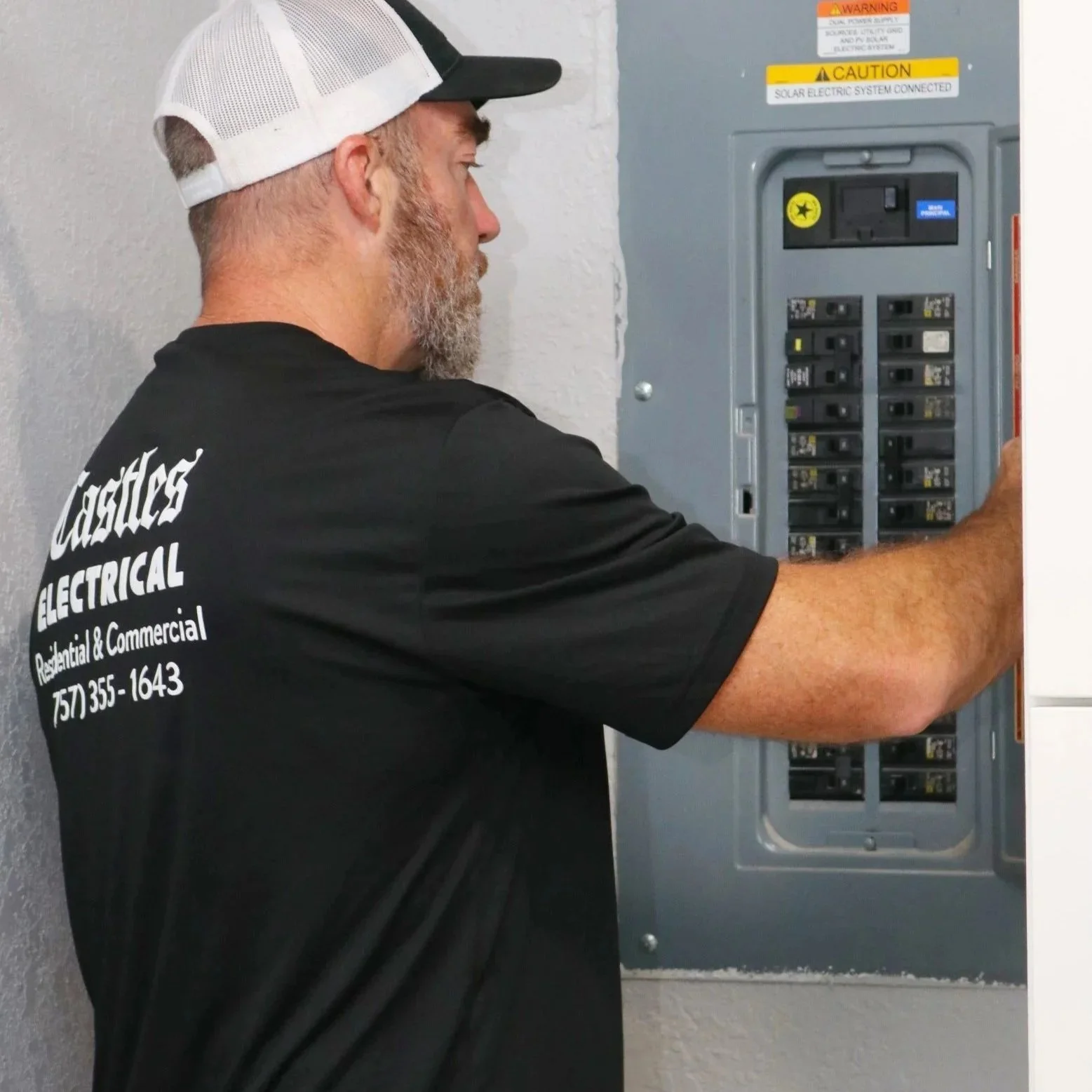
Virginia Beach electricians warn that repeatedly resetting a tripping breaker can cause electrical fires; always seek professional inspection for safety.
Resetting A Tripping Breaker Feels Like A Simple Fix
Resetting a tripped breaker often feels like restoring order. Lights come back on, appliances restart, and daily routines resume with minimal disruption. That immediate relief creates the impression that the breaker itself was the problem rather than a protective response to something happening elsewhere in the system. In many Virginia Beach homes, that assumption leads to repeated resets without investigation, allowing the underlying issue to worsen quietly. Breakers trip to interrupt unsafe conditions, not to inconvenience homeowners. Treating the reset as the solution misunderstands the role the breaker plays inside the electrical system.
Electricians regularly see damage that began with harmless-looking resets. Heat builds at loose connections, insulation slowly degrades, and metal components fatigue under repeated stress. Each reset allows current to flow again through compromised wiring. Over time, the margin between normal operation and failure narrows. What began as an occasional trip can evolve into scorched conductors, melted insulation, or arc faults hidden behind walls. The breaker did its job early. Repeated resets silence the warning while allowing deterioration to continue out of sight.
Why Breakers Trip More Than Once
A breaker that trips repeatedly signals persistence, not coincidence. Electrical loads fluctuate constantly, yet properly designed and maintained systems tolerate those changes without interruption. When a breaker trips again after being reset, it indicates a condition that has not resolved itself. Overloads, short circuits, ground faults, and heat-related resistance problems rarely disappear on their own. They remain present until corrected.
In Virginia Beach, repeated trips often correlate with environmental stress. Salt air accelerates corrosion. Humidity affects insulation and connections. Seasonal temperature swings cause expansion and contraction that loosen terminations over time. A breaker may hold temporarily after a reset because conditions have momentarily shifted, not because the problem is gone. That temporary stability can mislead homeowners into thinking the issue was random. Electricians recognize repeated trips as a pattern that requires evaluation, not patience.
How Heat Builds Without Immediate Failure
One of the most dangerous aspects of repeated breaker resets involves gradual heat accumulation. Electrical heat does not always announce itself with smoke or odor. Conductors warm incrementally as resistance increases. That resistance may come from loose terminals, aging wiring, or corrosion inside junction boxes. Each time the breaker resets, current flows through those same weak points.
Heat accelerates material breakdown. Insulation becomes brittle. Metal oxidizes faster. Contact surfaces pit and deform. Over weeks or months, temperatures reach levels that compromise surrounding materials. Wood framing dries and becomes more combustible. Plastic components lose structural integrity. The breaker eventually trips faster as conditions deteriorate, but by then, damage may already be significant. Resetting delays resolution while allowing heat-related degradation to advance quietly.
Load Changes Inside Modern Homes
Many Virginia Beach homes were wired long before current usage patterns existed. Electrical systems originally designed for lighting and basic appliances now support home offices, entertainment systems, chargers, and kitchen equipment that draw power continuously. Breakers trip when circuits operate beyond their intended capacity, even if that capacity was adequate decades ago.
Homeowners often respond by resetting breakers rather than reassessing load distribution. Overloaded circuits do not correct themselves. Each reset restores power to a circuit that remains overburdened. Over time, wires heat more quickly, and breakers trip more frequently. Electricians address these issues by redistributing loads, adding circuits, or upgrading panels rather than relying on resets. Ignoring load evolution leads to repeated interruptions and escalating wear on system components.
Why Breaker Wear Matters
Breakers themselves experience wear. Mechanical components weaken. Internal contacts erode slightly each time they interrupt current. While breakers are designed to trip multiple times, frequent operation shortens their effective lifespan. A breaker that trips often may begin responding inconsistently, either tripping too easily or failing to trip when it should.
Replacing a worn breaker without addressing the cause of repeated trips only treats a symptom. Electricians evaluate breaker conditions as part of a broader diagnostic process. In Virginia Beach homes, corrosion inside panels can also affect breaker performance. Moisture intrusion and salt exposure accelerate internal wear. Resetting a stressed breaker repeatedly compounds both mechanical fatigue and underlying electrical issues elsewhere in the system.
Hidden Faults Behind Walls And Ceilings
Repeated resets often mask faults that remain invisible to homeowners. Loose splices, damaged cables, and compromised junction boxes hide behind finished surfaces. These faults may only present under specific conditions, such as high humidity or increased load. When a breaker trips, it interrupts power before damage becomes obvious.
Resetting restores the current to those hidden faults. Each cycle increases stress on already weakened components. Electricians frequently discover charred wiring or melted insulation in areas homeowners never suspected. By the time visual symptoms appear, repairs become more extensive. Early investigation following repeated trips allows targeted correction before damage spreads.
The False Comfort Of Temporary Stability
After several resets, homeowners sometimes notice the breaker stops tripping for a while. That lull creates false confidence. Electrical systems fluctuate constantly based on usage and environmental factors. A temporary absence of trips does not indicate resolution. It reflects a brief period when conditions did not cross the breaker’s threshold.
In coastal environments like Virginia Beach, conditions change quickly. Humidity rises, appliances cycle, and loads shift throughout the day. The same fault that stayed quiet for weeks may resurface suddenly. Electricians caution against assuming stability equals safety. Patterns of repeated trips deserve attention regardless of timing gaps.
How Professional Diagnosis Differs From Trial And Error
Professional electricians approach repeated breaker trips systematically. They measure load, inspect connections, evaluate panel condition, and consider environmental influences. Rather than resetting and waiting, they identify why the breaker responded in the first place. That process reveals whether the issue involves overload, wiring damage, moisture intrusion, or component failure.
Trial-and-error resets rely on coincidence. Professional diagnostics rely on evidence. In Virginia Beach homes, that distinction matters because environmental stressors accelerate deterioration. Early professional evaluation prevents cumulative damage and reduces the likelihood of emergency repairs later.
Why Repeated Resets Increase Long-Term Repair Costs
Every reset that restores power without correcting the cause allows damage to progress incrementally. Small electrical problems rarely remain small. Loose connections become heat-damaged terminals. Minor corrosion spreads across bus bars and breaker contacts. Insulation that once tolerated normal temperatures begins to crack and flake. These changes raise resistance, which increases heat, creating a feedback loop that accelerates failure. What could have been addressed with targeted repairs often expands into multi-circuit rewiring or panel replacement once deterioration advances far enough.
In Virginia Beach homes, delayed repairs often intersect with environmental wear. Salt air and humidity already tax electrical components. Repeated breaker resets compound stress. Electricians frequently see situations where early intervention would have limited work to a single circuit, yet repeated resets allowed damage to reach shared neutrals or panel connections. At that point, the repair scope and cost increase significantly. Addressing trips early protects both the system and the homeowner’s budget.
Why Breakers Trip Faster Over Time
Homeowners often notice that breakers begin tripping more quickly as months pass. That change reflects evolving conditions, not worsening luck. As wiring heats repeatedly, insulation loses efficiency and conductors expand and contract more aggressively. Connection points loosen further. Breakers respond sooner because unsafe conditions develop faster with each cycle.
Repeated resets contribute to this progression. Each restoration of power pushes stressed components closer to failure. Breakers do not reset the system’s health. They only re-enable current flow. Over time, the threshold for tripping drops because resistance and heat rise more quickly. Electricians recognize faster trips as a sign that damage has moved beyond the early stages and requires prompt correction.
The Risk Of Arc Faults From Repeated Resets
Arc faults develop when electrical current jumps across gaps created by loose or damaged connections. These arcs generate intense localized heat that can ignite surrounding materials without drawing enough current to trip traditional breakers immediately. Repeated resets allow arc conditions to persist and worsen.
In Virginia Beach homes, arc faults often develop in areas exposed to vibration, moisture, or corrosion. Each reset restores current to unstable connections. Over time, arcs become more frequent and energetic. Modern electrical codes address these risks through arc fault protection, but older systems remain vulnerable. Electricians warn that repeated breaker resets increase the likelihood of arc development, especially in aging or environmentally stressed wiring.
Why Waiting For A Clear Failure Is Dangerous
Some homeowners delay action until a breaker trips constantly or fails to reset. That approach assumes problems announce themselves clearly before becoming serious. Electrical failures rarely follow that pattern. Systems often fail silently until damage reaches a critical point. Fires, shock hazards, and extensive outages frequently occur without prolonged warning.
Repeated resets normalize abnormal behavior. Breakers that trip weekly or monthly become part of routine life rather than a signal for investigation. Electricians emphasize that waiting for unmistakable failure removes opportunities for controlled repair. Addressing issues while systems still function limits disruption and improves safety outcomes.
When Resetting Becomes Habitual
Habitual resetting often develops unintentionally. Homeowners grow accustomed to walking to the panel, flipping a breaker, and moving on. Over time, that habit masks escalating risk. Each reset becomes less concerning, even as underlying conditions deteriorate.
Electricians in Virginia Beach frequently encounter homes where occupants cannot remember when the first trip occurred because resets became routine. By the time a professional evaluation happens, multiple circuits may show damage. Breaking the reset habit early preserves both safety and system longevity.
How Electricians Decide When A Reset Is Acceptable
Not every breaker trip indicates serious danger. Electricians recognize situations where a single, explainable trip occurs, such as a temporary overload during unusual usage. The difference lies in repetition and context. A breaker that trips once under clear circumstances may not warrant concern. A breaker that trips repeatedly without explanation always does.
Professional assessment focuses on frequency, conditions, and system history. Electricians evaluate whether trips correlate with load, environment, or time. That analysis guides corrective action. Resetting without analysis removes the opportunity to understand those patterns.
FAQs
Resetting a breaker once after a clear overload can be acceptable, but repeated resets without identifying the cause create risk. Frequency and lack of explanation signal the need for evaluation.
Humidity increases corrosion and moisture intrusion in electrical systems. These conditions raise resistance and heat, making breakers trip sooner under normal loads.
Yes. Loose connections, damaged wiring, or internal breaker wear can cause trips without obvious overloads. Hidden faults often behave intermittently.
Replacing the breaker may address wear, but it rarely resolves underlying wiring, load, or environmental issues. Comprehensive diagnosis remains necessary.
Any breaker that trips more than once without a clear cause deserves professional evaluation. Early intervention reduces safety risk and repair scope.