
Why Norfolk's Coastal Humidity Is Hard on Your Electrical System — And What to Do About It
Coastal Humidity Is Quietly Wrecking Your Electrical System in Norfolk
That oxidation raises resistance, generating heat that accelerates wear. The cascade is predictable once you understand it, and it is preventable with the right approach.
Your breakers are fine, nothing has tripped, and there is no burning smell in the house. So why does your electrician keep mentioning corrosion? Because in Norfolk, VA, the damage coastal humidity does to an electrical system moves slowly and silently, right up until it doesn't. Salt air is not just uncomfortable on humid summer days. It is a corrosive agent working around the clock on every metal connection, every wire terminal, and every piece of exposed metal inside your electrical panel and outdoor fixtures. By the time you notice a problem, it has usually been developing for years. The homeowners who feel this most acutely are the ones who moved from an inland city, bought a home in Norfolk, and never thought to factor the ocean into their electrical maintenance plan.
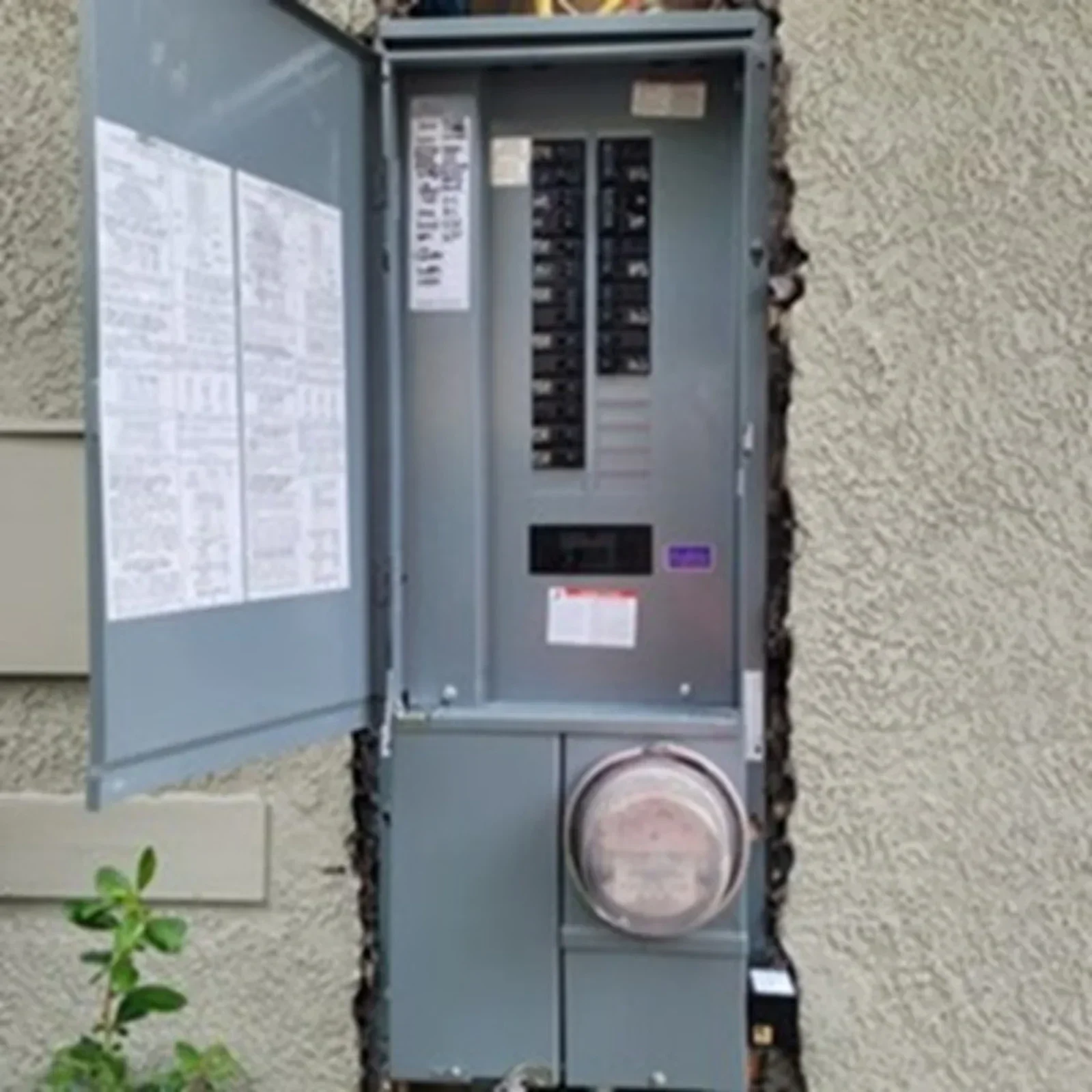
What makes coastal electrical degradation particularly sneaky is that the damage tends to accumulate in places you cannot see without opening things up. The service panel on your exterior wall, the outlets on your deck or porch, the wiring running through unconditioned attics or crawl spaces, and the connections at your HVAC disconnect are all exposed to the elevated humidity and salt particulates that define coastal living. The visible corrosion on your outdoor light fixtures is the tip of the iceberg. Castles Electrical has opened panels in Norfolk, VA, homes where the exteriors looked relatively normal, but the interiors showed significant oxidation on bus bars, terminal screws, and breaker contacts. That oxidation raises resistance, generating heat that accelerates wear. The cascade is predictable once you understand it, and it is preventable with the right approach.
How Salt Air Gets Into Your Electrical System
Salt air does not need an opening to get inside your electrical system. It travels with humidity, and humidity moves through every building material, every conduit penetration, and every gap around a weather head or exterior panel cover. Norfolk, VA, sits on the Chesapeake Bay and within miles of the Atlantic, which means airborne salt particulates are a consistent part of the local atmosphere. This is not the same corrosive environment as a beachfront property with direct ocean spray, but it is meaningfully different from what you would experience in Richmond or Roanoke. The cumulative effect over five, ten, or twenty years of living with that ambient salt load shows up inside electrical equipment as a white or grayish film on metal contacts, pitting on terminal screws, and oxidation on copper conductors at their connection points.
The humidity itself amplifies everything. High relative humidity accelerates electrochemical corrosion on metal surfaces, and inside an electrical panel where multiple metals are in contact with each other, that process runs continuously. Aluminum wiring, common in homes built in the late 1960s through the 1970s, is especially vulnerable because aluminum oxidizes faster than copper, and the oxide layer it forms is not conductive, unlike copper oxide. If your Norfolk, VA, home has aluminum branch-circuit wiring and has not had its terminal connections inspected and treated in the past several years, coastal humidity may already be degrading the reliability of those connections. This is not a hypothetical risk. It is the kind of finding that comes up repeatedly when electricians work in homes throughout the area.
What Corrosion Inside a Panel Actually Looks Like
Most homeowners picture corrosion as the thick green or brown buildup you see on old copper pipes or on outdoor metal furniture left out in the weather. Electrical corrosion is subtler, and that subtlety is part of what makes it so easy to overlook during a casual inspection. Inside a residential panel, the early signs of corrosion include a slight discoloration on terminal screws where conductors attach to breakers, a powdery residue along the bus bar, and a dull appearance to copper conductors that should look bright and shiny at their termination points. By the time you see obvious pitting or heavy buildup, the connection quality has already been compromised for some time.
A connection degraded by corrosion introduces resistance where none should be. Electrical resistance at a connection point generates heat, and sustained heat at a connection inside a panel is a fire risk. This is not a dramatic or sudden failure mode in most cases — it is a slow accumulation of heat cycles that eventually compromises the breaker's ability to function correctly, damages insulation on nearby conductors, or creates a hot spot that can ignite surrounding materials. Castles Electrical approaches panel inspections in Norfolk, VA, homes with this understanding: what looks like a routine breaker issue on the surface can be a symptom of widespread corrosion that has been developing for years and needs to be addressed comprehensively, not just at the obvious failure point.
Outdoor Electrical Equipment and Coastal Exposure
Every piece of electrical equipment on the exterior of your home in Norfolk, VA, is fighting the same battle against salt air and humidity, and not all of it is winning. Weatherproof outlet covers, exterior light fixture housings, conduit fittings, and the cover on your electrical meter base are all rated for outdoor exposure, but most residential-grade outdoor electrical equipment is not rated for the sustained salt air exposure that coastal Virginia delivers. The difference between equipment rated for basic outdoor use and equipment rated for marine or coastal environments is meaningful, and most homes are equipped with the former. Over time, standard outdoor-rated covers become brittle, gaskets deteriorate, and moisture begins entering enclosures that were initially sealed.
The HVAC disconnect and any exterior junction boxes related to your cooling system are particularly vulnerable because they tend to remain in the same location for decades, unopened and uninspected. Homeowners rarely think to have these checked unless something fails, but inside a corroded disconnect box, the fuses or contacts that interrupt power to your air conditioner during service may be deteriorated to the point where they no longer make reliable contact or may not interrupt current cleanly in a fault situation. Replacing standard outdoor electrical enclosures and hardware with corrosion-resistant alternatives, applying appropriate anti-oxidant compounds at connections, and adding weatherproof bubble covers to outlets that only have flat covers are practical steps that make a real difference in coastal homes. Castles Electrical recommends these as part of a routine maintenance assessment for homeowners in Norfolk, VA.
The Crawl Space Problem
Many homes in Norfolk, VA, are built on crawl spaces. Unlike a fully conditioned basement, a vented crawl space pulls in ambient exterior air continuously, which in coastal Virginia means it pulls in humid, salt-laden air. Wiring that runs through a vented crawl space is exposed to far more aggressive conditions than wiring inside a conditioned living space, and over decades, that exposure matters. Junction boxes in crawl spaces that are not properly sealed can collect moisture. Wire connections at junction points can corrode. In homes where the electrical system has been modified over the years, there may be buried or abandoned splices in the crawl space that were improperly made and have been deteriorating in a humid environment ever since.
A crawl space encapsulation project, in which a vented crawl space is sealed and conditioned, dramatically reduces the humidity exposure of any wiring or mechanical equipment located there. While encapsulation is primarily marketed as a moisture and mold control measure, the secondary benefit for your electrical system is significant. If encapsulation is not in your near-term plans, having an electrician inspect the wiring in your crawl space for deteriorated insulation, improper splices, and corroded connections is a meaningful maintenance step. Castles Electrical regularly identifies wiring concerns in crawl spaces during inspections in Norfolk, VA, homes that would not have been caught any other way, because those spaces are rarely inspected until something goes wrong.
Signs That Coastal Humidity Has Already Affected Your Electrical System
Recognizing the signs of humidity-related electrical degradation before it becomes an emergency lets you address problems on your schedule rather than in response to a failure. Breakers that trip without obvious overload, flickering lights that are not explained by a loose bulb, outlets that feel warm to the touch, or a panel that hums more than usual can all point to connection-level degradation. Exterior fixtures that stop working prematurely, GFCI outlets that trip without any water nearby, and outdoor circuits that become unreliable during humid weather are more specific indicators that the exterior or exposed portions of your electrical system have been compromised.
What most homeowners in Norfolk, VA, get wrong about these symptoms is attributing them to their home's age without investigating what specifically is causing them. Age is a factor, but humidity-driven corrosion significantly shortens the deterioration timeline for coastal properties. A 20-year-old home in Norfolk, VA, may show the electrical wear you would expect from a 30- or 35-year-old home in a dry inland climate. Recognizing this from the start and building in a regular inspection cadence with a licensed electrician who understands coastal conditions is the most practical way to stay ahead of the problem.
Coastal Electrical Risks? Get Answers Before Small Issues Turn Into Expensive Failures
How often should a homeowner in Norfolk have their electrical system inspected?
For homes in coastal Virginia, an inspection every three to five years is a reasonable baseline for a system that has not had significant known issues. Homes with older wiring, aluminum branch circuits, or a history of tripping breakers should be inspected more frequently. The goal of a routine inspection in a coastal environment is to detect corrosion and connection degradation before they create a safety hazard or cause equipment failure. Castles Electrical can help you determine the appropriate inspection interval based on the age and condition of your system.
Is there anything a homeowner can do to slow corrosion in their electrical panel?
The panel itself should be opened and worked on only by a licensed electrician, so direct homeowner intervention inside the panel is neither appropriate nor safe. What homeowners can do is control indoor humidity levels through proper ventilation and dehumidification, reducing the moisture load on the entire structure, including the panel. Making sure the panel cover is properly sealed and that no openings exist around conduit entries into the panel is also worthwhile. For outdoor electrical equipment, applying weatherproof covers and promptly replacing corroded hardware are the most practical steps homeowners can take.
Can coastal corrosion cause my breakers to fail?
Yes, corrosion at the breaker terminal, on the bus bar connection, or on the breaker contact itself can degrade the breaker's ability to function correctly. A corroded breaker may trip too easily, fail to trip when it should, or fail to interrupt power cleanly during a fault. These are safety-critical failures, which is why an inspection of the panel's interior for signs of corrosion is valuable rather than just checking whether breakers are tripping.
What is the difference between weatherproof and marine-grade electrical equipment?
Standard weatherproof electrical equipment is rated for rain and moisture exposure, but is not specifically engineered for sustained exposure to salt air. Marine-grade equipment uses materials such as stainless steel hardware, corrosion-resistant coatings, and sealed enclosures designed to withstand the aggressive electrochemical environment of coastal and marine settings. For homes in Norfolk, VA, particularly those close to the water, upgrading exterior electrical equipment to marine-grade or coastal-rated alternatives meaningfully extends the service life of those components.
How do I know if my home has aluminum branch circuit wiring?
A licensed electrician can identify aluminum branch circuit wiring during an inspection. Visual clues inside the panel include silver-colored wire conductors rather than the orange-copper color of copper wire, and wiring labeled AL or CU-AL on the jacket. Homes built between approximately 1965 and 1973 are the most likely candidates for aluminum branch wiring in Norfolk, VA. If your home was built during that period and has not been evaluated for aluminum wiring concerns, scheduling an inspection is a practical first step.
Castles Electrical offers electrical panel installation, electrical panel replacement, whole home rewiring, new construction wiring, generator installation, and backup power solutions to home and business owners in the Virginia Beach area. As a family-owned business, safety and quality are our top priorities. Call today to schedule an appointment.