
Why Do Plugs Fall Out of Outlets? Virginia Beach Electrical Fixes
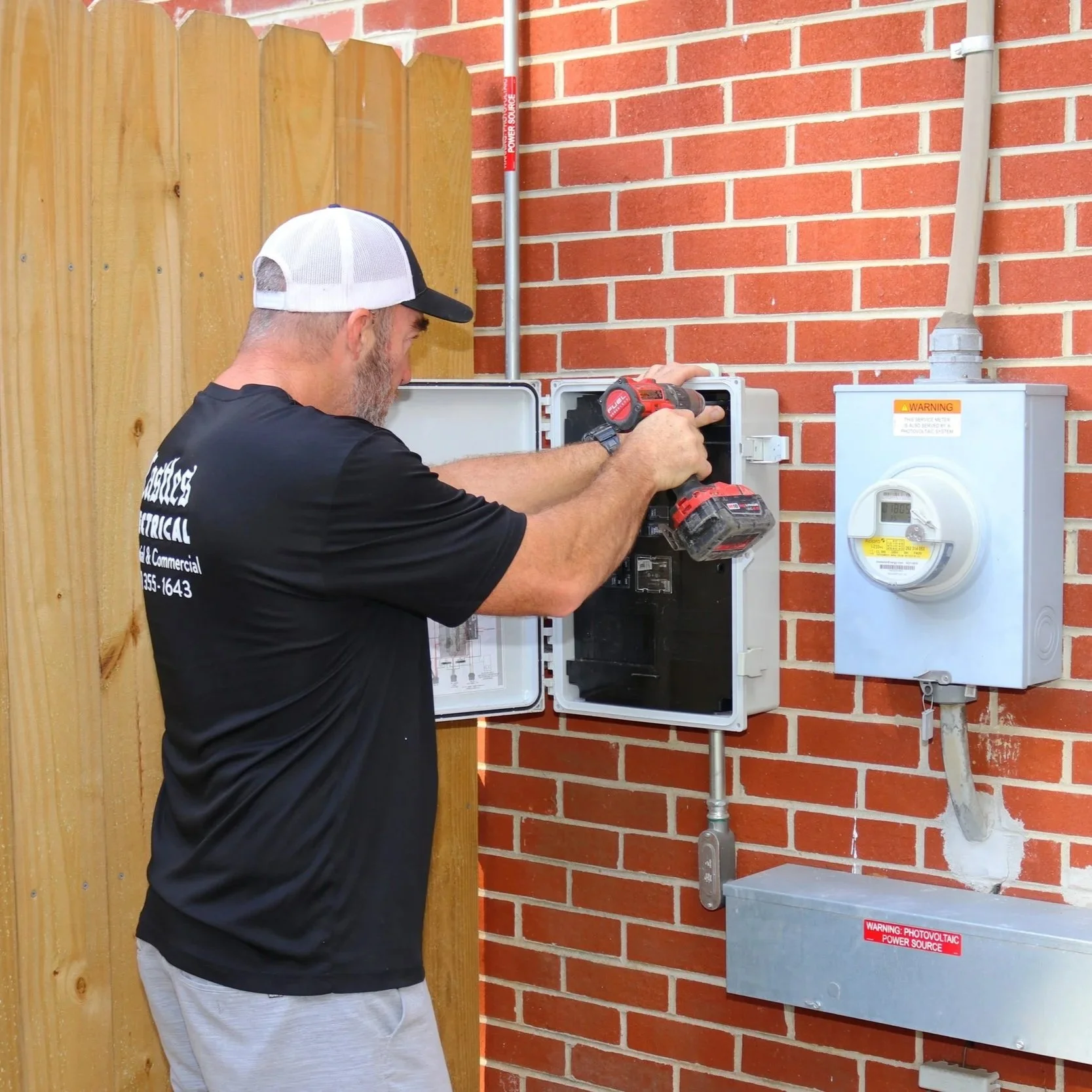
Tired of plugs sliding out? Worn internal contacts are a common fire hazard that requires professional electrical repair and replacement.
Loose Outlets As A Symptom, Not A Minor Annoyance
Homeowners around Virginia Beach often notice plugs slipping halfway out of outlets, chargers losing power overnight, or lamps flickering when nothing appears to be moving. Many people treat that behavior as an inconvenience caused by cheap cords or bulky adapters, but in practice, loose plug retention almost always points to wear inside the outlet itself. Electrical outlets rely on internal spring-loaded contacts to grip the metal prongs of a plug with consistent pressure. Over time, repeated insertions, heavier cords, and everyday vibration gradually weaken those contacts until they no longer hold securely. Once that internal tension drops, gravity and minor movement do the rest.
In coastal environments like Virginia Beach, humidity and salt-laden air can quietly accelerate that wear process. Corrosion may not be visible from the outside, but microscopic pitting on the contact surfaces reduces friction and electrical conductivity at the same time. That combination causes plugs to feel loose while also generating excess heat during normal use. Many homeowners miss the connection between a plug that will not stay seated and long-term electrical risk, especially when power still flows most of the time. Outlets are designed to maintain constant pressure and stable contact, not tolerate partial engagement or intermittent connections over months or years.
Outlet Wear From Everyday Household Use
Normal household activity places more strain on outlets than most people realize. Phone chargers, vacuum cleaners, hair dryers, space heaters, and kitchen appliances all contribute differently to internal outlet fatigue. Heavier plugs place downward force on the contacts, while frequent plug and unplug cycles slowly deform the metal springs inside. In older Virginia Beach homes built decades ago, original outlets may have experienced tens of thousands of insertion cycles without ever being replaced. Even in newer homes, outlets located in high-use areas like kitchens, living rooms, and home offices tend to wear out faster than those in spare bedrooms or closets.
Outlet design standards assume a certain lifespan, but real-world usage often exceeds those assumptions. Homeowners working remotely may unplug laptops daily, plug in monitors, chargers, and desk equipment, then rearrange setups repeatedly. Over time, internal retention force drops below safe thresholds. Once plugs begin slipping out under their own weight, arcing becomes more likely. Electrical arcing happens when current jumps across a small air gap, creating heat that damages both the outlet and the plug. That heat buildup remains hidden behind the wall, slowly increasing fire risk without obvious warning signs beyond loose plug behavior.
Why Loose Outlets Create Heat And Fire Risk
A plug that does not stay fully seated creates more than an inconvenience. Partial contact increases electrical resistance at the connection point. Higher resistance forces electricity to convert energy into heat instead of delivering it efficiently to the appliance. That heat concentrates at the outlet contacts, not the cord or device, which means homeowners rarely associate the warmth with the outlet itself. Over time, repeated heating and cooling cycles degrade insulation, dry out surrounding materials, and weaken the outlet body even further.
In Virginia Beach homes, where summer humidity and air conditioning loads already stress electrical systems, loose outlets compound existing strain. Appliances drawing higher current, such as window AC units or dehumidifiers, amplify the problem. As plugs slip and reconnect repeatedly, tiny arcs form, leaving carbon deposits on contact surfaces. Those deposits increase resistance even more, creating a feedback loop that steadily worsens conditions inside the outlet box. Many electrical fire investigations trace ignition points back to worn outlets that homeowners ignored because power still worked most of the time.
Differences Between Cheap Adapters And Actual Outlet Failure
Some homeowners blame large power adapters or bulky charging bricks for plugs falling out. While oversized adapters do place extra strain on outlets, properly functioning outlets are designed to support standard plug weight without losing grip. When a plug consistently slips out across multiple cords and devices, the outlet itself has already failed mechanically. Swapping adapters may mask the problem temporarily, but it does not restore internal contact pressure.
In homes with older two-prong outlets that have been retrofitted with three-prong adapters, the issue becomes more pronounced. Adapters add leverage and weight, accelerating internal wear. Modern electrical codes recognize this problem and specify outlet replacement rather than adaptation in many situations. Continuing to rely on adapters in worn outlets increases the chance of loose neutral or hot connections, which can damage sensitive electronics and create unpredictable performance issues throughout a circuit.
GFCI and Tamper-Resistant Outlets Wear Differently
Modern outlets, including GFCI and tamper-resistant types, contain additional internal components that affect how wear shows up over time. GFCI outlets rely on internal sensors and mechanical assemblies that can degrade alongside the contact springs. When plugs begin falling out of a GFCI outlet, homeowners may also notice nuisance tripping or inconsistent reset behavior. Those symptoms often share the same root cause: internal mechanical fatigue and corrosion.
Tamper-resistant outlets, now common in Virginia Beach homes, use internal shutters to block foreign objects. While those shutters improve safety, they also introduce more moving parts. When internal springs weaken, plugs may feel loose or require unusual pressure to insert. Homeowners sometimes assume tamper-resistant outlets are simply stiff by design, overlooking early signs of wear. Over time, uneven contact pressure from partially engaged shutters can create the same overheating and arcing risks seen in standard outlets.
Why Outlet Replacement Is A Preventive Repair
Replacing worn outlets is not an upgrade or cosmetic improvement. It is preventive maintenance that restores the designed contact pressure and electrical stability. New outlets grip plugs firmly, maintain consistent electrical flow, and reduce resistance at connection points. In homes with aluminum wiring or mixed wiring eras, proper outlet replacement becomes even more important. Incorrect outlet compatibility can worsen looseness and increase fire risk rather than solve it.
Professional electricians serving Virginia Beach often find multiple worn outlets on the same circuit, even if only one location shows obvious symptoms. Outlets age together, especially when installed during the same construction phase. Addressing only the most problematic outlet may leave other weak points untouched. Comprehensive evaluation allows electricians to identify systemic wear patterns rather than treating each loose outlet as an isolated issue.
How Environmental Conditions In Virginia Beach Accelerate Outlet Failure
Coastal environments present unique challenges for residential electrical systems. Salt air infiltration, elevated humidity, and temperature fluctuations affect metal components long before visible corrosion appears. Outlets installed near exterior walls, garages, sunrooms, or beachfront-facing rooms experience greater exposure. Over the years, microscopic corrosion weakens contact surfaces and spring tension, even if the outlet face looks clean and intact.
Storm season adds another layer of stress. Power fluctuations during storms, combined with moisture intrusion, can accelerate outlet degradation. Homeowners sometimes notice plugs falling out more frequently after storm-related power events without realizing internal components have already been compromised. Electrical systems rarely fail all at once. Instead, small mechanical weaknesses like loose outlets signal deeper system aging that deserves attention before more serious problems develop.
Outlet Box Installation And Wall Movement Effects
Outlet looseness is not always limited to internal contact wear. In many Virginia Beach homes, wall movement and installation quality play a significant role. Outlet boxes that were not firmly secured during original construction can shift slightly over time as homes settle, humidity fluctuates, or walls experience vibration from nearby doors and foot traffic. When an outlet moves within the wall cavity, even by a small amount, that motion transfers stress to the plug connection. Gravity pulls the cord downward while the outlet itself flexes, gradually encouraging plugs to slip free.
Drywall compression around outlet boxes adds another layer to the issue. Repeated pressure from plugs and cords can compress drywall, especially in older homes where materials have softened with age. As the outlet face sinks slightly into the wall, plug blades may no longer align squarely with internal contacts. Misalignment reduces effective contact area, weakening grip and increasing resistance. Homeowners often notice plugs sitting crooked or partially exposed without realizing the outlet box itself has shifted. Addressing the problem correctly requires stabilizing the box and restoring proper outlet positioning, not simply replacing the receptacle face.
Why Backstab Wiring Can Contribute To Loose Connections
Electrical outlets wired using backstab connections tend to develop problems earlier than those wired to side screws. Backstab wiring relies on spring clips to hold the conductor instead of a mechanically tightened screw terminal. While code-compliant in many cases, backstab connections are more sensitive to thermal cycling and vibration. Over time, the same factors that weaken outlet contact springs can also loosen internal wire connections, reducing overall stability.
In outlets where both plug contacts and internal wiring connections loosen simultaneously, symptoms multiply. Plugs may fall out more easily, lights may flicker when cords move, and outlets may feel warm to the touch. These combined issues often appear in homes built during periods when backstab wiring was common practice. Electricians evaluating loose outlet complaints frequently find that rewiring outlets to screw terminals restores both grip strength and electrical reliability, reducing long-term failure risk rather than offering a short-term fix.
High Load Devices Expose Weak Outlets Faster
Certain appliances accelerate outlet wear faster than everyday electronics. Space heaters, window air conditioners, treadmills, refrigerators, and commercial-grade kitchen appliances draw higher current and place sustained load on outlet contacts. In Virginia Beach homes where seasonal humidity drives increased appliance use, weak outlets reveal themselves quickly. Plugs fall out more often because heat softens internal metal components, reducing spring tension even further.
Repeated heating cycles from high-load devices also affect the outlet body and surrounding wiring insulation. As materials expand and contract, mechanical tolerances change. A plug that once felt snug may begin slipping after months of seasonal appliance use. Homeowners often misattribute the problem to the appliance itself rather than recognizing that the outlet has reached the end of its safe service life. Continuing to use high-load devices on worn outlets increases the chance of failure during peak demand periods.
DIY Outlet Replacement Mistakes That Worsen The Problem
Some homeowners attempt to solve loose outlet issues by replacing receptacles themselves without addressing the underlying factors. Improperly tightened terminals, incorrect outlet ratings, or misaligned installations can worsen plug retention rather than improve it. Installing low-quality outlets or failing to secure the outlet box firmly allows movement to persist. In some cases, homeowners overtighten mounting screws, cracking outlet bodies, or warping internal components.
Another common mistake involves reusing worn outlet boxes or damaged wiring without inspection. New outlets installed onto compromised wiring inherit existing weaknesses. Professional electricians evaluate both mechanical and electrical conditions during replacement, addressing box stability, wiring integrity, and outlet quality as part of a single corrective process. That holistic approach prevents recurring looseness and avoids introducing new hazards.
Why Professional Evaluation Matters For Electrical Fixes
Professional electricians bring experience that goes beyond replacing parts. They recognize subtle signs of contact overheating, wiring fatigue, and environmental corrosion that homeowners may overlook. In Virginia Beach, where coastal conditions accelerate material degradation, professional evaluation becomes especially valuable. Electricians assess outlet grip strength, internal contact condition, wiring connections, and box stability as interconnected factors rather than separate issues.
A properly completed outlet repair restores mechanical retention, electrical conductivity, and long-term reliability. It reduces nuisance behavior like flickering lights while lowering fire risk and protecting connected devices. Professional work also aligns repairs with current electrical codes, which evolve to address known failure patterns and safety concerns. Homeowners benefit from solutions that address root causes rather than repeating surface-level fixes every few years.
FAQs
Outlet wear occurs internally, where contact springs lose tension and surfaces corrode. Visual inspection rarely reveals these changes, but grip strength and electrical stability decline over time, allowing plugs to slip despite a clean exterior.
Loose outlets increase electrical resistance and heat at connection points, raising fire risk. Even minor looseness can lead to arcing and insulation damage over time, making the issue a safety concern rather than a cosmetic problem.
High humidity and salt air accelerate corrosion on internal metal components, weakening contact surfaces and spring tension. Coastal conditions often cause outlets to wear faster than those in drier inland environments.
Heavier plugs and adapters place downward force on outlet contacts, accelerating mechanical wear. Properly functioning outlets handle standard loads, but worn outlets lose grip more quickly under added weight.
Outlets installed during the same construction period often age together. Replacing only one outlet may leave other worn locations untouched, so electricians commonly evaluate nearby outlets on the same circuit for similar wear.
Get reliable and lasting EV charging station installation, interior lighting installation, exterior lighting installation, recessed lighting installation, security lighting installation, and outlet & switch installation & repairs with Castles Electrical in the Virginia Beach area. We ensure prompt response time during emergencies and complete projects on time and within budget. Call today to learn more about our services.