02 — Cold Holding
Cold Holding Is the Load the Plan Protects
Section 12VAC5-421-820 sets the temperatures for time and temperature control for safety food, known as TCS food. Cold food is held at 41°F or below, and hot food is held at 135°F or above. Every refrigerated unit holding TCS food is part of keeping that first number.
The Conference for Food Protection, a national food safety group, publishes an Emergency Action Plan for Retail Food Establishments (second edition, 2014) to guide operators. For a power outage, it tells operators to note the date and time the outage begins, then monitor and record the temperatures of equipment and TCS food. It points out that open upright display cases and small reach-in units lose temperature faster than other equipment and deserve more frequent checks.
The guide also includes a time and temperature chart for cold holding during an outage, which is covered in the questions below. For hot food, the guide sets a discard time after an outage unless the food is kept above 135°F, which is why electric hot-holding equipment belongs on the list when the plan keeps serving hot food.
03 — Kitchen Loads
Beyond Refrigeration: Hoods, Lights, and Dish Stations
Ventilation before cooking
The guide says that without ventilation on alternative power, there is no way to remove cooking smoke, steam, and grease-laden air, and cooking should stop. It also says cooking equipment can be connected to a generator, provided the operator fully assesses whether cooking can continue safely.
Lighting for food safety tasks
Without enough light, the guide notes, staff may be unable to prepare food, handle it, or clean equipment and the premises properly. Prep, dish, and storage-area lighting circuits are worth selecting individually.
Hot water and drains
The guide suggests using the three-compartment sink if hot water is still available and says operations should stop if sewage ejector pumps are inoperable. An electric water heater, booster heater, dish machine, or ejector pump, when present, may belong on the generator side.
04 — Circuit List
Turning the Outage Plan Into a Circuit List
The Conference for Food Protection guide cautions that generators may lack the capacity to operate critical equipment such as refrigeration and freezer units. That is why sizing for a food business starts from the equipment list in the plan. Floor area tells us little about what the kitchen needs to keep running.
We walk that list against your panel schedule. For each item, we confirm whether it runs on electricity or gas, which circuit feeds it, and whether it moves to the generator side. Compressor and fan motors are counted for their starting load in the calculation.
From there, the system is set up for whole-facility or critical-load transfer, with load management that helps prioritize essential circuits.
05 — Why Castles
Built for a Food Safety Plan
The circuit list comes out of your plan, not off a floor plan
Critical-load circuits are picked from the equipment named in the outage plan you already wrote.
Motors are counted for what they draw when they start
Refrigeration compressors, hood fans, and hot water go into the calculation at starting load.
06 — Proof
Questions Answered and the Site Left Clean
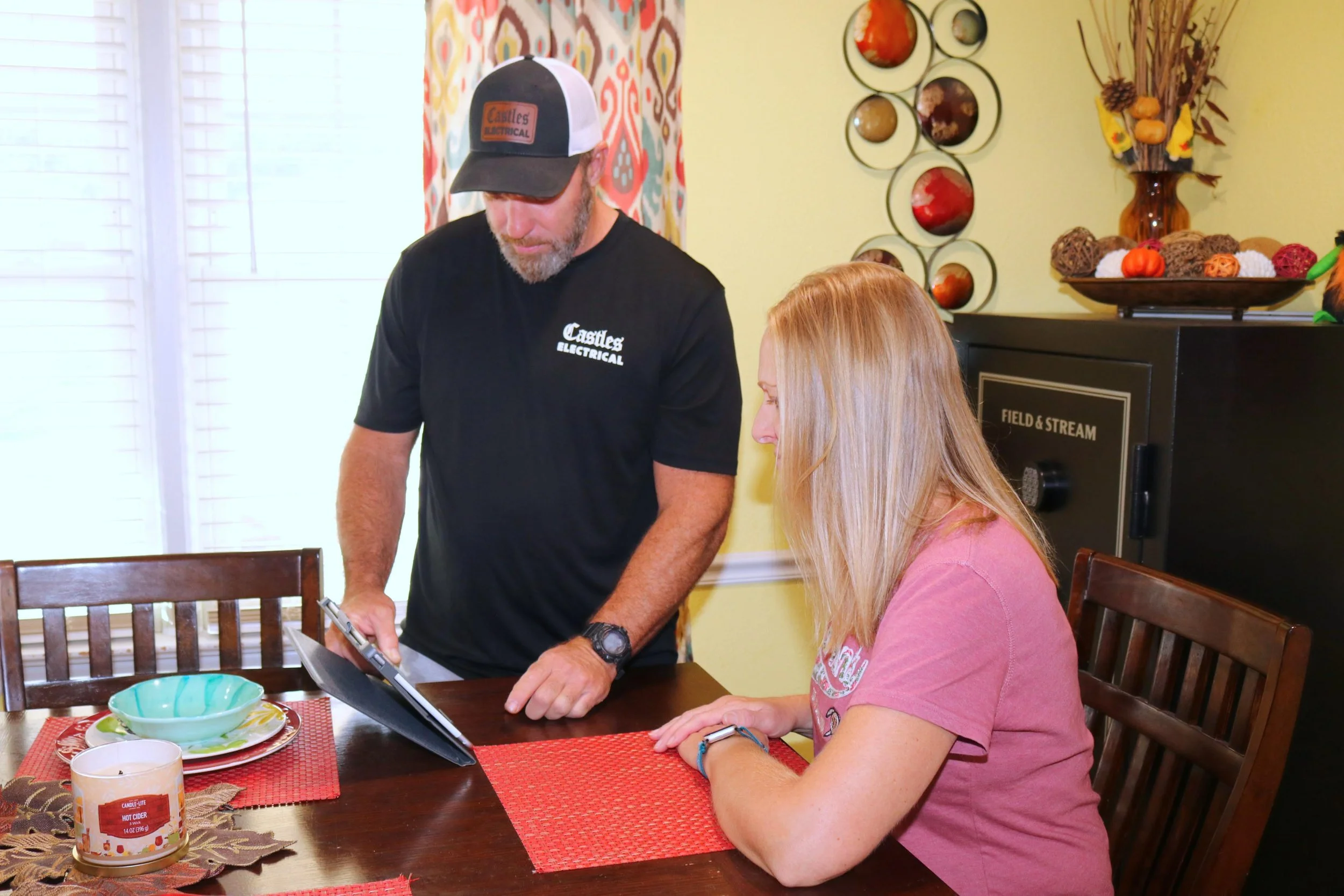
One customer’s review describes an electrician who kept them posted for both the estimate and the work, answered questions along the way, and cleaned up.
From our five-star Google reviews
Google 5.0 Rated by Hampton Roads Customers
Castles Electrical maintains a 5.0 rating on Google. The reviews below load as a live widget, so this page shows current feedback from real Castles Electrical customers.
07 — New Food Business
Planning a Generator With a New or Renovated Food Business
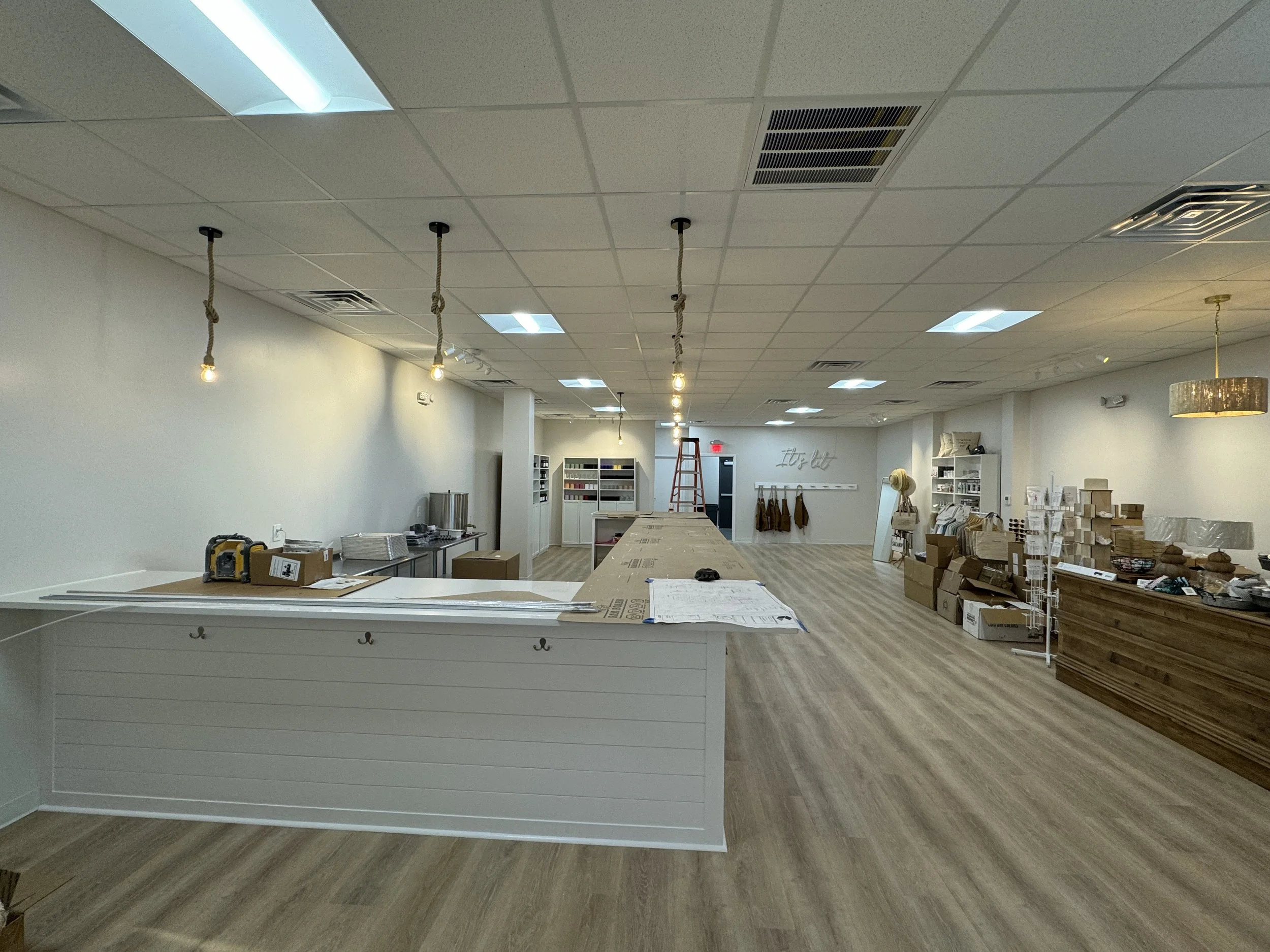
Before a pre-opening inspection, the Chesapeake Health District approves a set of documents that includes floor plans drawn to scale and equipment specifications. New or change-of-use establishments also need a Certificate of Occupancy.
Since those specifications and floor plans are being assembled anyway, it is a practical time to decide which equipment the generator covers and where the pad and transfer equipment go. The generator itself goes through the city’s permits.
That timing helps in Greenbrier, where Chesapeake Economic Development describes Summit Pointe as a walkable hub with shops and restaurants. In a mixed-use building, pad placement is easier to settle while the drawings are still open.
08 — Site
Placing the Generator on a Restaurant Site
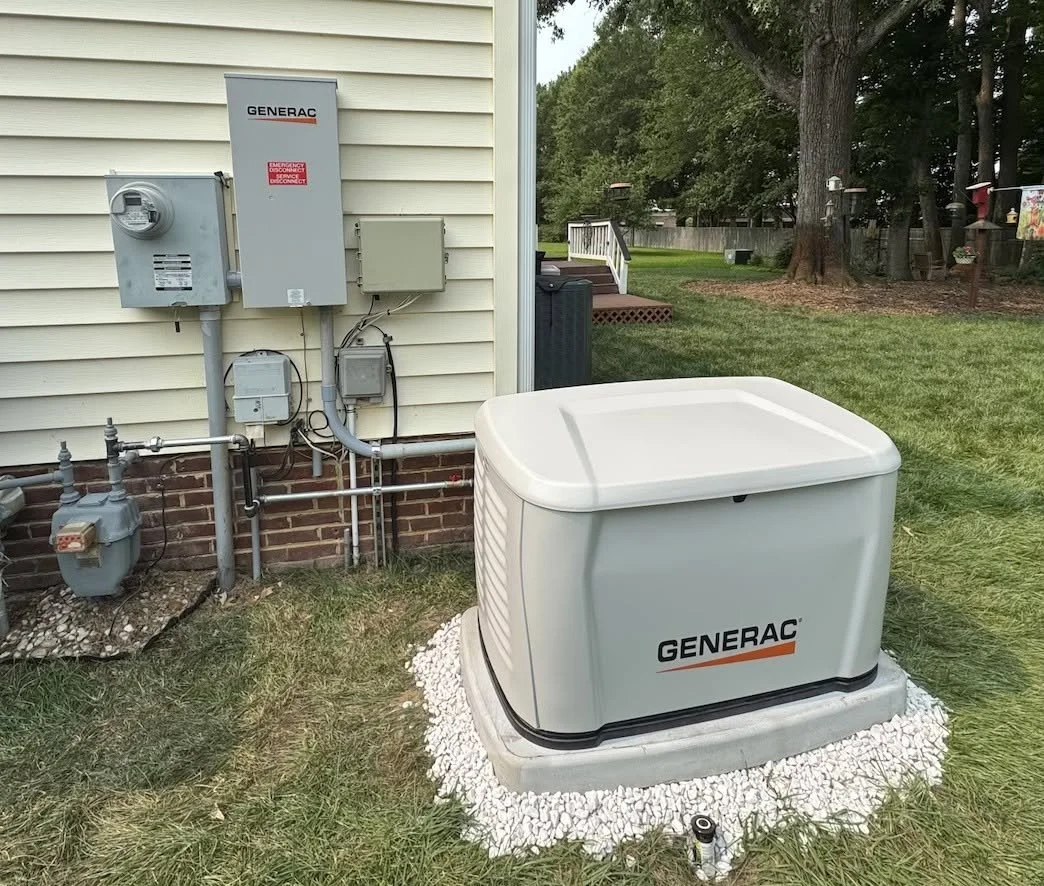
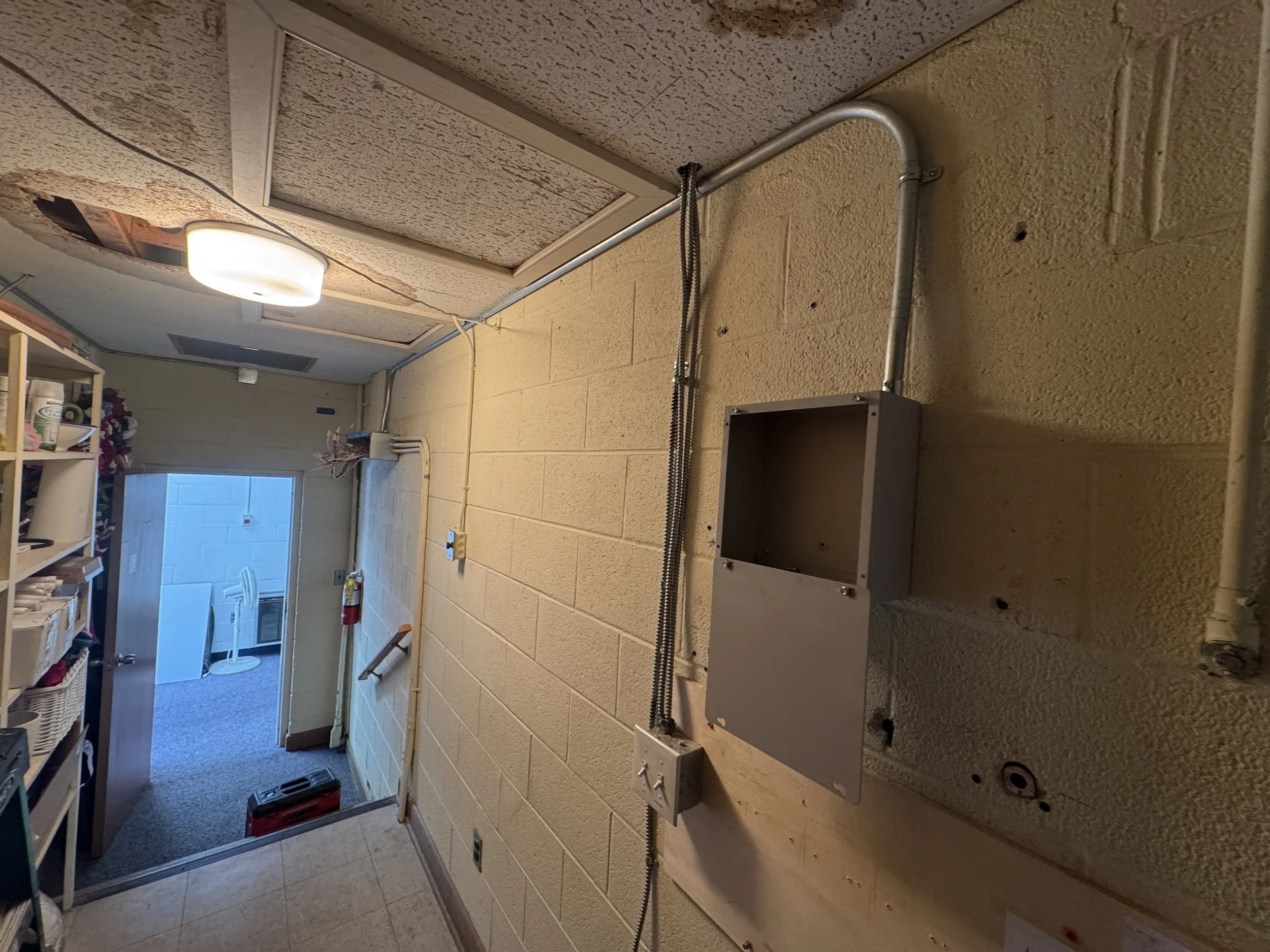
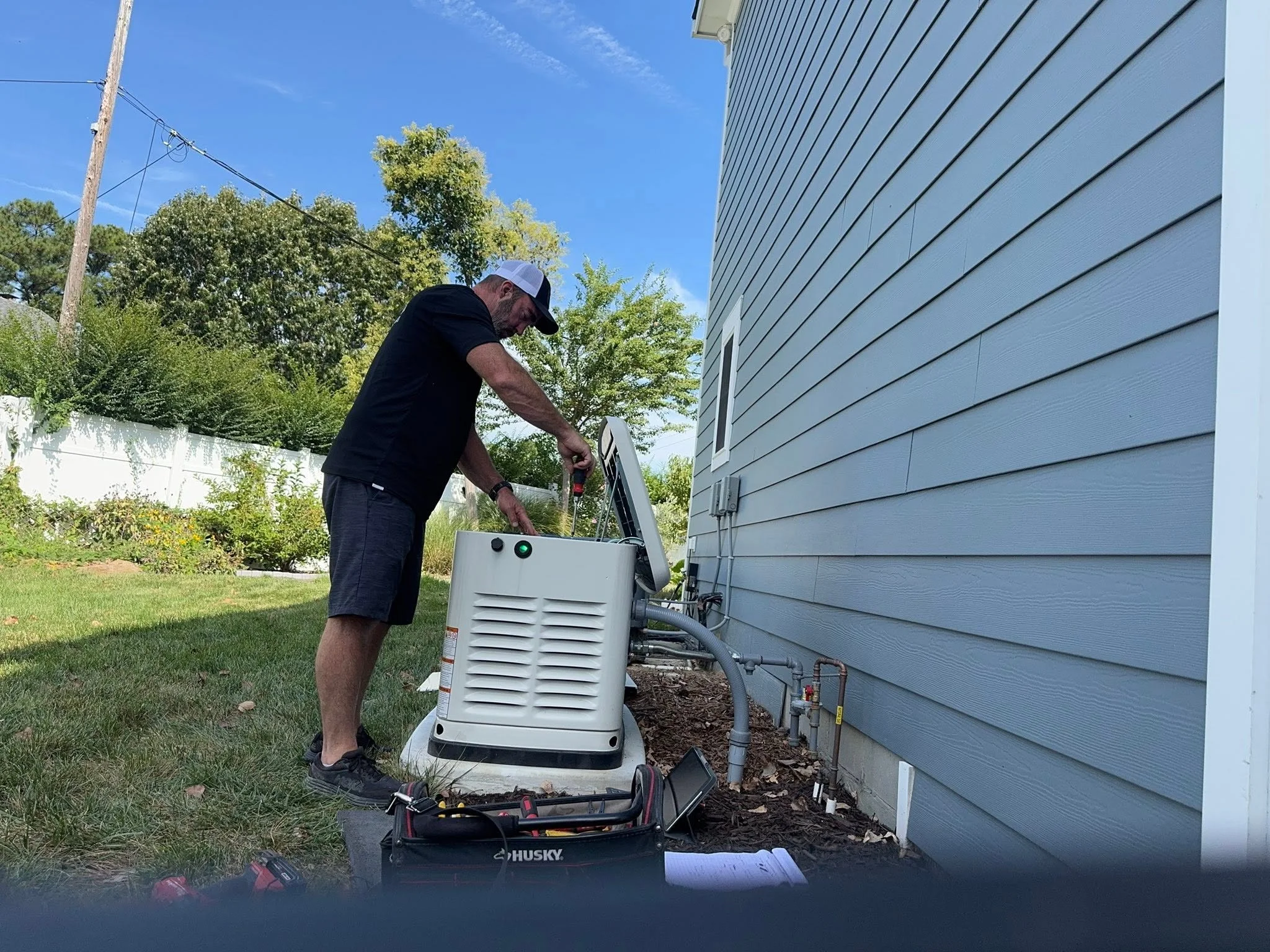
Generac’s installation drawings call for installation under current NFPA 37 and NFPA 70 standards, along with federal, state, and local codes. Based on NFPA 37, Generac’s clearance guidance calls for 5 feet between a standby generator and operable windows, doors, and vents, and each unit’s installation manual sets the clearances for that model. Local codes take precedence.
The units we install run on natural gas or propane. Our crew wires the generator and the transfer equipment, a licensed gas fitter from the plumbing company we work with runs and connects the fuel line, and we book that visit along with the permits, the utility work, and the inspection.
09 — Process
What Happens After You Share Your Outage Plan
Review your outage plan or equipment list
We go through the refrigeration, hood, lighting, and hot water equipment you want running.
Site assessment and load calculation
Panel schedule, electric and gas equipment, and a pad location that respects clearances from doors, vents, and fresh-air inlets.
Written itemized proposal
Generator, transfer configuration, and fuel connection are arranged through our partner plumber, with a free installation estimate.
Install between services
Electrical permit filed by us, the fuel-side paperwork by our partner plumbing company, the tie-in scheduled around your service hours where possible, then the city inspection.
Outage test with your staff
A simulated outage transfer test and a walkthrough of what the generator carries.
10 — FAQS