01 — The Capacity Rule
Manual or Automatic: What Each Asks of Your Generator
Most home generators count as optional standby systems under the 2020 National Electrical Code, which Virginia enforces through its 2021 building code. Section 702.4(B) sizes the generator by how the transfer happens.
Manual transfer
With manual transfer equipment, the code expects the generator to have enough capacity for the equipment meant to run at one time, and the user picks the connected load. In effect, you are the load manager. During an outage you decide whether the water heater or the air conditioning gets the generator’s capacity, and each circuit on the switch is identified so that call is easy to make.
Automatic transfer
An automatic switch acts with no one at the panel, so the code allows two approaches. Either the generator can carry everything the switch transfers, or a load management system limits what connects at once and the generator is sized to that limit.
Either way, the load is calculated first, so the circuit list comes before any equipment is ordered. That calculation follows the load methods in Article 220 of the code, or another method the local inspector approves, and it sets the generator size the switch has to match.
02 — Switch Setups
Full-Load Switch or Load-Managed Switch
In practice, that rule leaves four setups to choose from. Each one meets 702.4(B) in its own way, and each suits a different house and generator.
An essential-circuits automatic switch keeps the generator smaller by moving only the circuits you name, such as the refrigerator, a sump pump, lighting, and medical equipment. A whole-home automatic switch with a full-size generator moves everything. A whole-home switch with load management moves everything, within a limit the generator can carry, and the management equipment decides in what order.
How load management holds the generator inside its limit
Section 702.4(B)(2)(b) lets a generator paired with load management be sized to the maximum load that the management system will connect. The equipment monitors what is drawing power and holds back the large loads, so the air conditioning and the water heater take turns instead of starting together. The generator is then sized to that ceiling.
03 — Choosing the Loads
Deciding What the Switch Carries in a Chesapeake Home
Start with a list of what has to run during a long outage. The usual candidates are the heat pump or furnace blower, the water heater, the refrigerator and freezer, a sump pump, garage door openers, and any medical equipment. Then match that list to one of the four setups.
Newer, larger homes in Grassfield and Hickory often have larger heating, cooling, and kitchen loads, which can favor load management or a larger generator. Homes toward the rural south that rely on well water add a pump to the must-run list.
Your answer becomes the switch’s circuit list and the generator size on the permit application. If the panel itself needs attention first, an electrical panel upgrade can come before the switch.
04 — Listed Equipment
Listed Transfer Equipment, Never a Rebuilt Switch
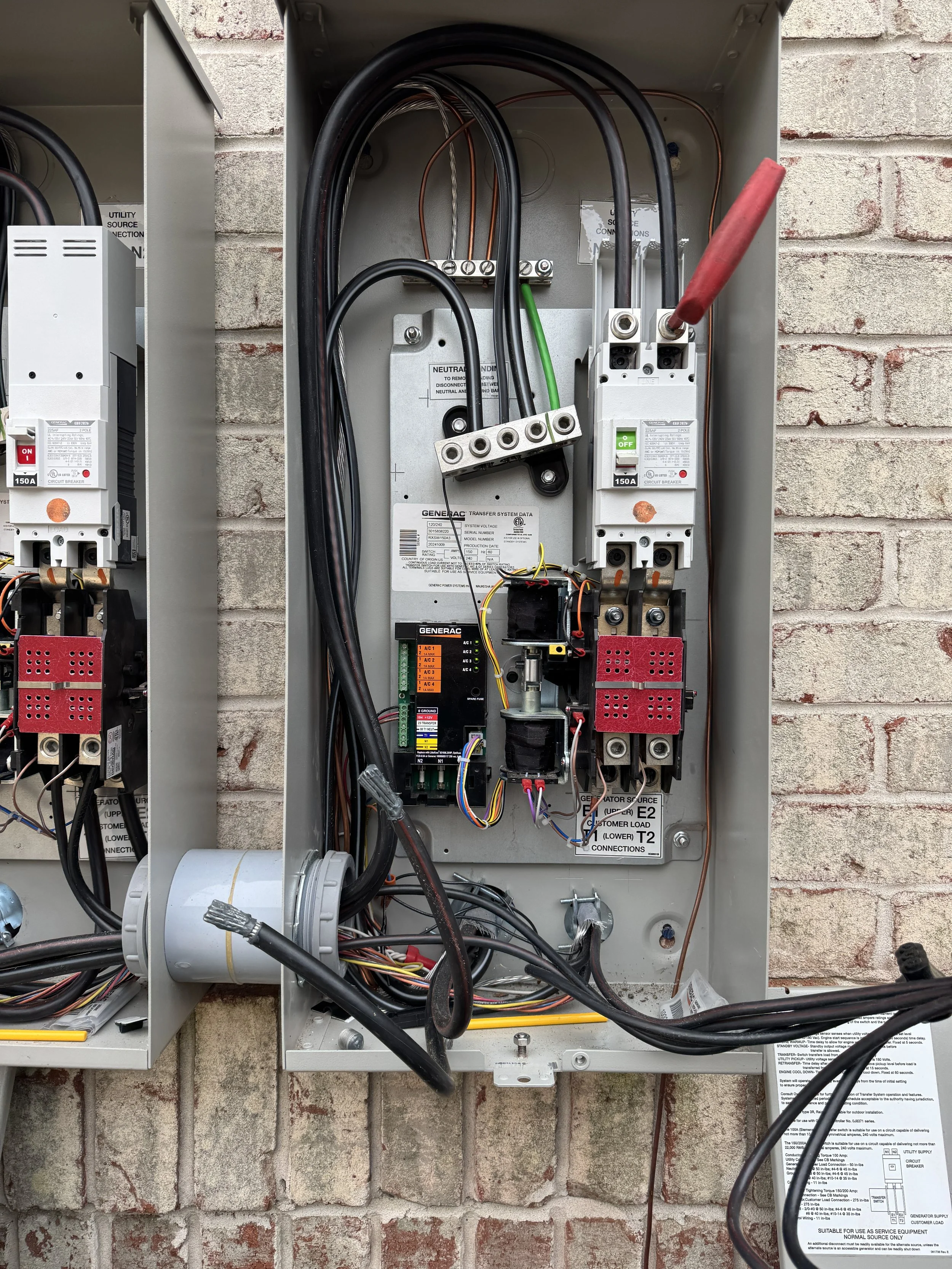
Section 702.5 of the 2020 code sets the ground rules for the switch itself. It requires listed transfer equipment suitable for use that can never connect the utility and the generator simultaneously at any switch position.
Listing means a recognized testing organization has evaluated the equipment for that job, and the listing travels with the product. When an interlock kit serves as the transfer equipment, it has to be listed for use with that panel.
Failed switches get replaced
The same section bars reconditioned transfer switches, meaning a rebuilt or remanufactured unit cannot go back in service. Whether a particular repair counts as reconditioning is a call for the inspector, so the right fix depends on what failed. When a switch with burned contacts or storm damage is replaced with new listed equipment, the replacement has to match today’s generator and loads, not the original ones.
05 — Standby Sign
The Sign at the Outdoor Disconnect
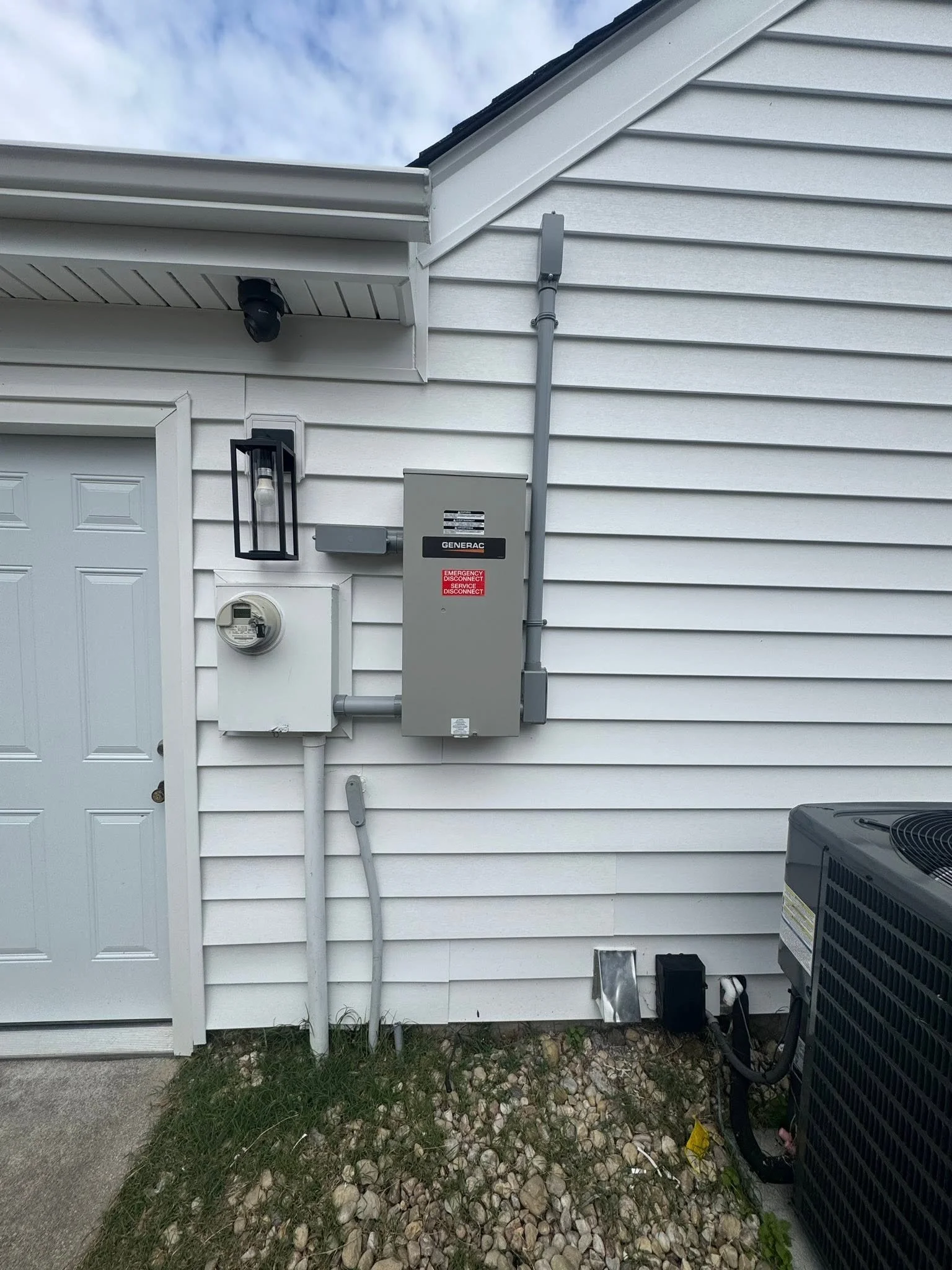
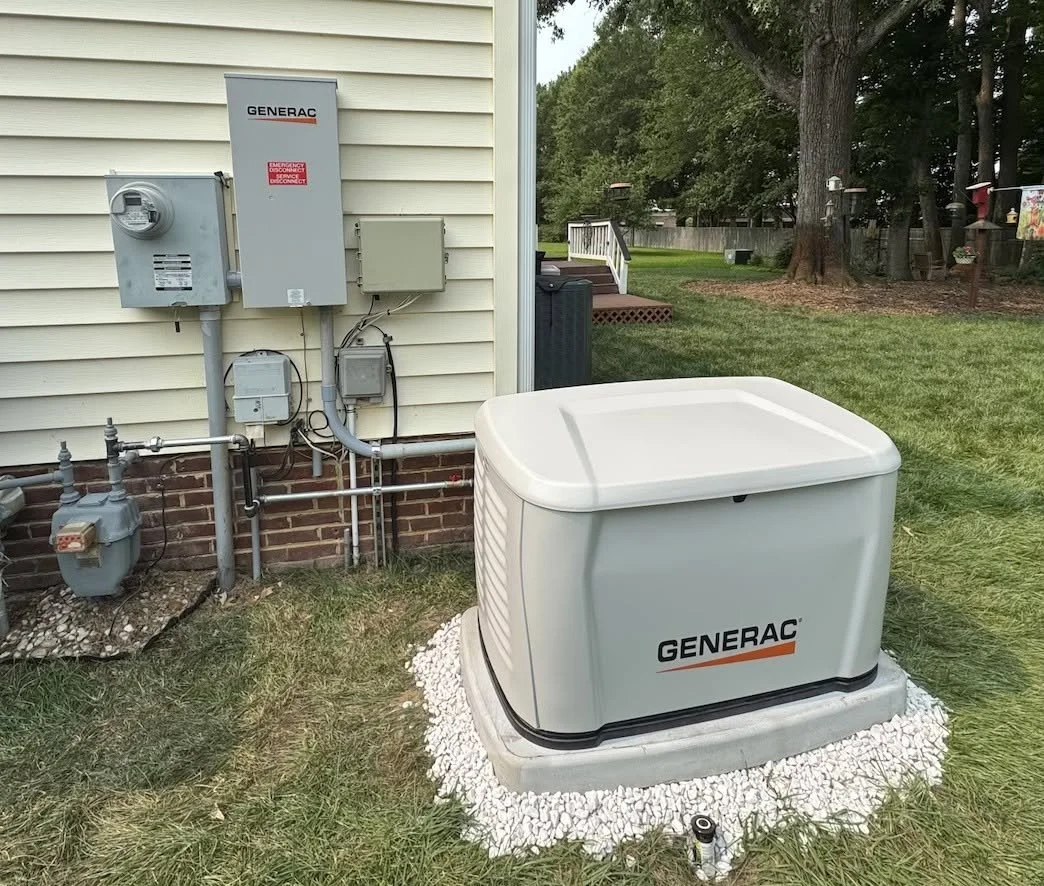
The 2020 code added a sign requirement for homes with a permanently installed standby generator. Under 702.7(A), one- and two-family dwellings get a sign at the outdoor emergency disconnecting means showing where each on-site standby source can be disconnected or shut down. The sign can point to the source’s own disconnect or to the means of shutting down its engine, and a home with more than one permanently installed standby source needs each one shown.
That outdoor emergency disconnect is itself a 2020 addition for one- and two-family homes, and the sign answers the next question anyone standing there would ask: where is the generator’s own shutdown? A future electrician, a home inspector, or a new owner reads it the same way.
On a permanently installed standby generator, we place the sign as part of the transfer switch installation.
07 — Process
Five Steps to a Permitted Chesapeake Switch
Load list and walk-through
We review the panel, the generator or planned generator spot, and what must run, then give you a free installation estimate.
Switch setup chosen
Manual, essential automatic, full-load automatic, or load-managed automatic, sized by calculation.
Permits
We file the electrical permit and coordinate with the gas, mechanical, and site plan paperwork for the fuel and outdoor equipment.
Installation
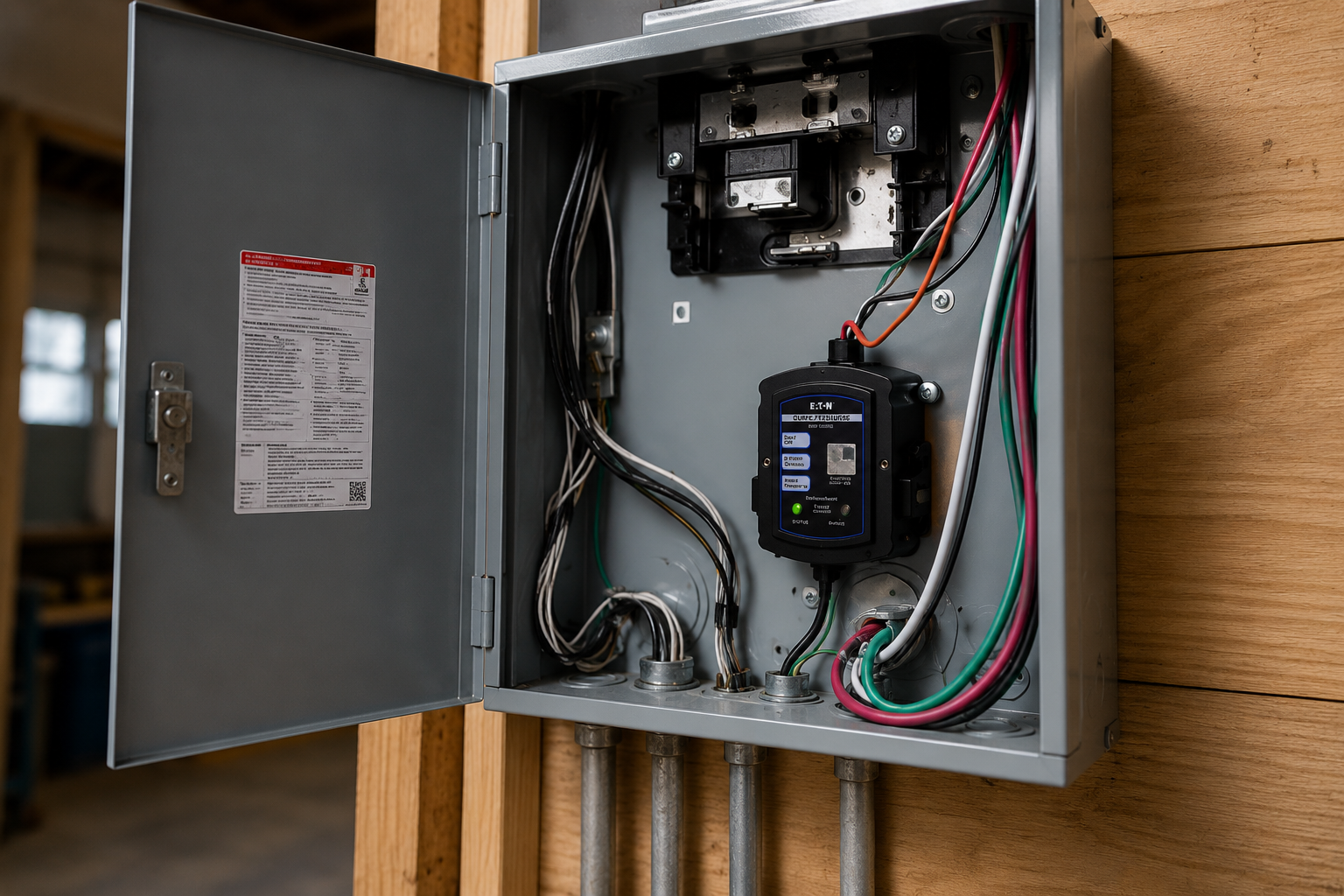
Listed transfer equipment is mounted and wired, each circuit is identified, and on a standby generator job, the sign goes up at the outdoor disconnect.
Final inspection and your first switchover
Once the city signs off, we walk you through how your switch operates, manual or automatic, and you keep the circuit list.
08 — Proof
A Transfer Switch Customer on Google
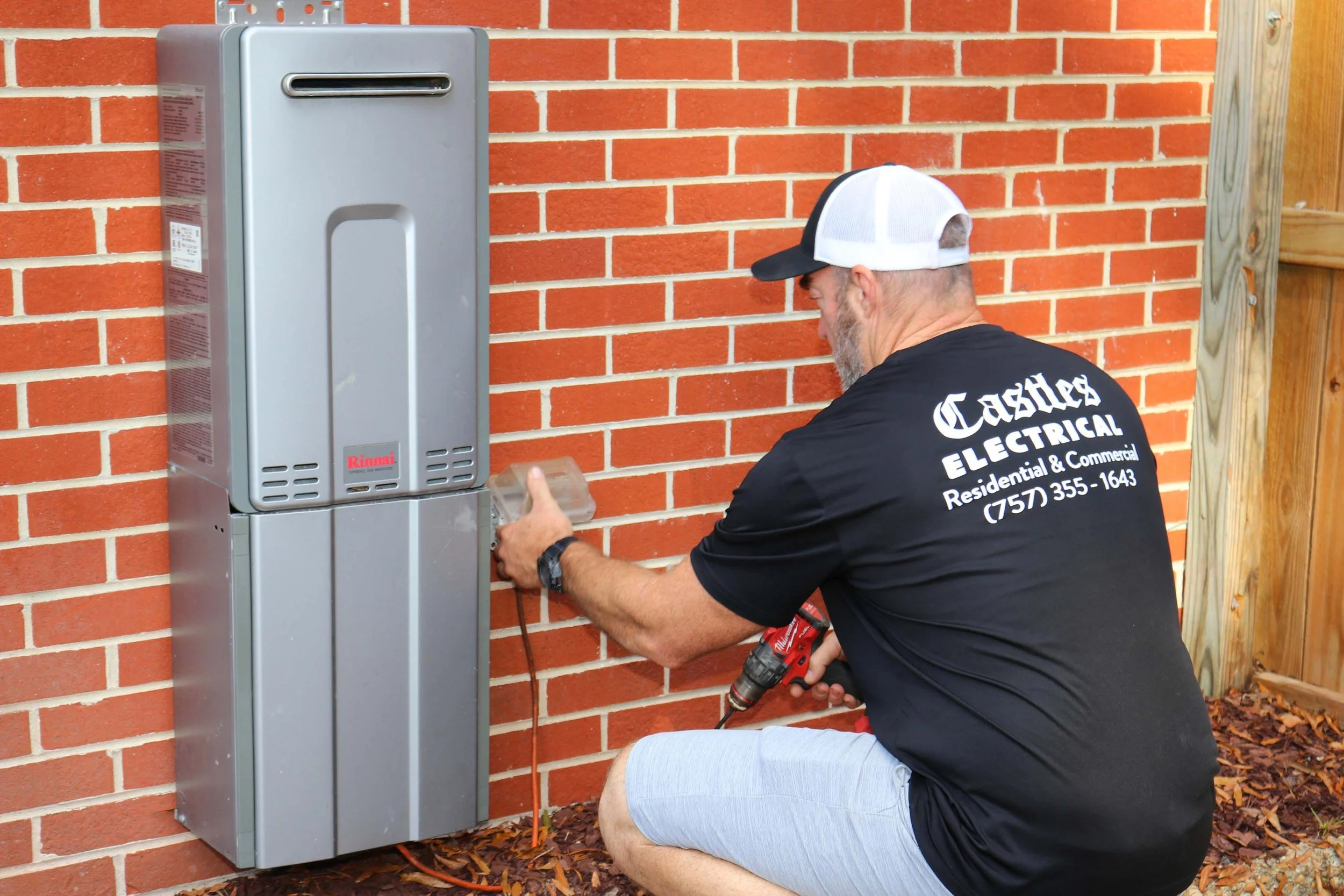
One customer’s review describes a generator transfer switch and outlet installed by an electrician the homeowner found knowledgeable and informative, on a property left as it was found.
From our five-star Google reviews

Google 5.0 Rated by Hampton Roads Customers
Castles Electrical maintains a 5.0 rating on Google. The reviews below load as a live widget, so this page shows current feedback from real Castles Electrical customers.
09 — Why Castles
Built to 702, Filed With the City
Sized to the Capacity Rule
Manual, automatic, or load-managed, matched to the generator.
Listed, Signed, and Permitted
New listed equipment, the standby sign, and the electrical permit.
10 — FAQS