
The power goes out, the generator is in the garage, and you are staring at an extension cord snaking through a window to keep the fridge alive. There is a better way to run your house on a generator, one that is safe and covers more than a single appliance, and it comes down to two options people constantly mix up: a transfer switch or an interlock kit.
Both solve the same core problem, and both do it safely when installed right. They just go about it differently, and the better choice depends on how hands-on you want to be and how much of the house you want to power.
The Problem Both of Them Solve
Before comparing them, it helps to know what they are protecting against. When you feed a generator into your home's wiring, you must never have the generator and the utility connected at the same time. If you do, your generator can push power back out onto the utility lines, which is called backfeed, and it can electrocute a lineworker trying to restore power and destroy your generator when the utility comes back on. Both a transfer switch and an interlock exist to make that dangerous overlap physically impossible. That safety job is non-negotiable, and it is exactly why plugging a generator into a regular outlet, sometimes called a suicide cord, is so dangerous and never acceptable.
Interlock Kit: Simple, Flexible, Hands-On
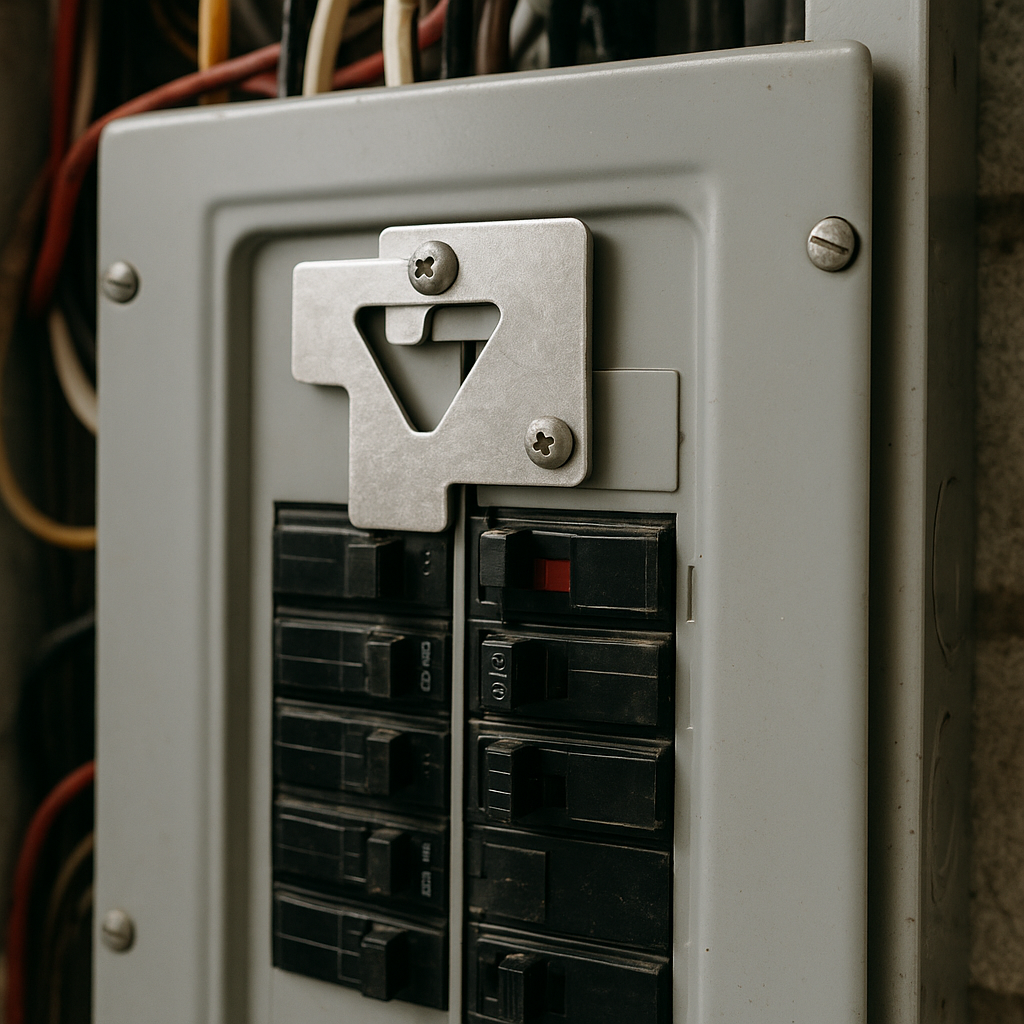
An interlock kit is a metal plate that mounts on your existing electrical panel. A generator breaker gets added to the panel, and the plate is shaped so that the main breaker and the generator breaker can never be switched on at the same time; one has to be off for the other to come on. That mechanical rule is what prevents backfeed.
Its strengths are flexibility and simplicity. Because it works through your existing panel, you can power any circuit in that panel during an outage, as long as you stay within what the generator can produce. You are not locked into a fixed set of circuits. The trade-off is that it is a manual, attentive process: during an outage, you go to the panel, shut the main off, turn on the generator breaker, and then manage your loads by hand, turning breakers on only up to the generator's capacity so you do not overload it. For someone comfortable doing that, an interlock is the affordable, versatile option.
Transfer Switch: Cleaner, More Automatic, More Fixed
A transfer switch is a separate device wired between your panel and a chosen set of circuits. It comes in two flavors. A manual transfer switch gives you a small sub-panel of pre-selected circuits with switches you flip to move those circuits from utility to generator. An automatic transfer switch senses the outage and does the switching for you, with no trip to the panel at all, which is the setup used with permanently installed standby generators.
The strengths are cleanliness and ease of use. The circuits are pre-chosen and cannot be overloaded beyond what the switch is designed for, so there is less to think about and less room for error during a stressful outage. The trade-offs are that you are limited to the circuits it was wired for, and it is a bigger, more involved installation, especially the automatic version. For someone who wants to flip a couple of switches, or nothing at all, and not manage loads by hand, a transfer switch is the more hands-off answer.
| Feature | Interlock kit | Manual transfer switch | Automatic transfer switch |
|---|---|---|---|
| Circuits you can power | Any in the panel, within generator limit | Only pre-wired circuits | Only pre-wired circuits |
| Operation | Manual, manage loads yourself | Flip switches by hand | Fully automatic |
| Install complexity | Lowest | Moderate | Highest |
| Best for | Flexibility on a budget | Set-and-flip simplicity | Hands-off standby power |
Which One Fits a Storm-Prone Area
Where outages come from major storms and can last for days, the choice leans on how you want to ride out a long outage. An interlock gives you the flexibility to shift power to whatever matters most at a given hour, the fridge now, the well pump later, on a modest budget. A transfer switch, especially an automatic one paired with a standby generator, keeps essentials running with little or no effort, which matters when a storm knocks power out while you are away from home. A damp or salt-air setting adds one more consideration: outdoor generator connections and equipment corrode faster in it, so weatherproof, corrosion-resistant hardware and a proper enclosure are worth insisting on whichever route you choose. An electrician sizing the setup to your generator and your must-have circuits is what makes either option safe and right.
Frequently Asked Questions
Yes, when it is the correct kit for your panel and installed properly. Both prevent the generator and utility from being connected at once, which is the whole safety point. The difference is not safety but how they operate: an interlock is manual and flexible, a transfer switch is more automatic and fixed.
Because a cord that backfeeds a generator into an outlet puts power on your home wiring with no protection against feeding the utility lines, which can kill a lineworker and destroy your generator. It also bypasses your breakers' protection. Both an interlock and a transfer switch exist specifically to make that dangerous connection impossible.
You can power any circuit in the panel, but not necessarily all of them at once, because your generator has a capacity limit. With an interlock, you manage that by turning on only the circuits you need up to what the generator can supply. Large loads like central air or an electric range may be more than a portable generator can run.
Yes. Both connect a generator to your home's main electrical system and must be done correctly and safely, with the right breaker, wiring, and hardware for your panel. This is not a plug-in accessory. A licensed electrician also ensures the setup matches your generator and priority circuits.
A manual transfer switch requires you to flip switches to move circuits to generator power, while an automatic one senses the outage and switches on its own, typically with a permanently installed standby generator. Automatic is the most hands-off and the most involved to install. Manual sits between an interlock and a full automatic system.
An interlock kit is generally the most economical because it uses your existing panel and is the simplest install, while transfer switches, especially automatic ones, involve more equipment and labor. Even so, the right choice depends on how you want to operate during an outage, not cost alone, so weigh flexibility and effort alongside the setup.
Match the Switch to How You Want to Ride Out an Outage
A transfer switch and an interlock kit both help keep generator power safe by preventing back feed, so the real decision is about operation. An interlock is the flexible, budget-friendly, hands-on choice that lets you power anything in the panel within your generator's limits. A transfer switch, manual or automatic, trades some flexibility for cleaner, easier operation and, in its automatic form, no effort at all. Pick the one that fits how you want to manage the next long outage, and have it sized and installed properly.
If you want your generator wired in safely before the next storm, an electrician can match the right setup to your home. Castles Electrical serves Virginia Beach, Chesapeake, and Norfolk. Call (757) 765-8222 for a consultation.