
100-Amp vs 200-Amp Service: Which One Your Home Needs
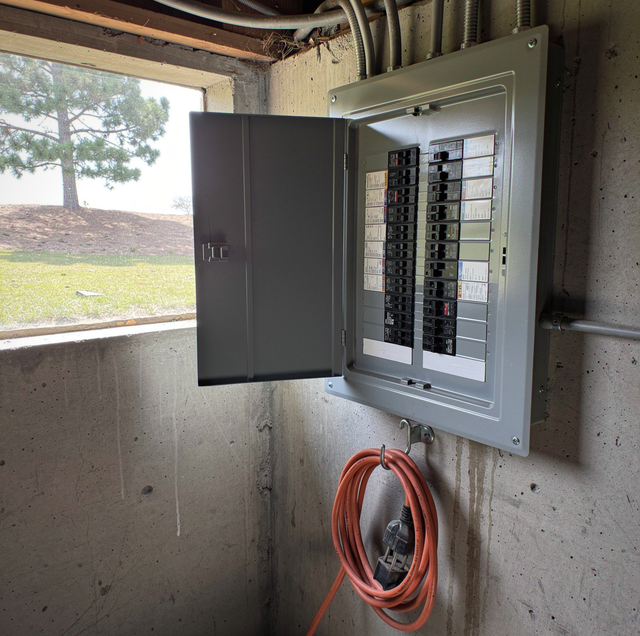
Quick Answer: Electrical service is the total amperage your utility feeds into the home through the meter and main panel. Older or smaller homes were often built with 100-amp service; 200-amp is standard on newer and larger homes because modern appliances draw far more. To know what you have, read the main breaker rating in your panel. Whether you need an upgrade depends on a load calculation an electrician performs, not a guess.
Every home has a ceiling on how much electricity it can pull at once, and most people never think about it until a project stalls. An electrician quotes an EV charger or a heat pump, then adds a line about "your service" not having enough capacity, and suddenly a simple install turns into a bigger conversation. Understanding what 100-amp and 200-amp service actually mean, and how to tell which one you have, saves you from that surprise.
What "Electrical Service" Actually Means
Your electrical service is the maximum amount of current, measured in amps, that the power company delivers to your home. It comes from the utility line to the meter, then into the main panel, where a single large breaker (the main) caps how much the whole house can draw at any one moment. Everything downstream, every outlet, light, and hardwired appliance, shares that ceiling.
Amperage is a measure of electrical flow. A garden hose is a fair comparison here: a wider hose moves more water per second than a narrow one, and a wider service moves more electricity to your panel. A 200-amp service does not force your home to use more power; it simply raises the ceiling so more things can run at the same time without overloading the main.
The number that matters is the service rating, not how many outlets you have. Two homes can both have 40 circuits, but if one is fed by a 100-amp main and the other by a 200-amp main, the second can safely run twice the simultaneous load.
Why 100-Amp Was Once Enough, and 200-Amp Is Now Common
Homes built or last rewired decades ago were sized for the loads of their era: lights, a refrigerator, a furnace fan, maybe window air conditioners, and a modest kitchen. A 100-amp service covered that comfortably.
Today's homes ask for much more, often all at once. Central air conditioning, an electric range, an electric clothes dryer, a heat pump, an EV charger, and a hot tub each pull heavy current, and several may run together on a summer evening. The single biggest draws in a typical home are usually the ones that make heat or move it: electric heating, central cooling, the range, and the dryer. Add EV charging, which can run for hours at a stretch, and a 100-amp service that was fine for years can start bumping its ceiling.
This is why 200-amp service has become the default on new construction and major renovations. It leaves headroom for the electric-heavy direction homes are moving, rather than sizing only for what a house uses today.
How to Tell What Service You Have
You can identify your service size without an electrician, as long as you only look and never touch the wiring.
To find your service size, open only the outer panel door, not the inner metal deadfront that exposes wiring, and read the number stamped on the single large double-width main breaker. If it is 100, 150, or 200, that is your service rating in amps. Look but do not touch any wiring.
Check the meter and panel labels. Some panels carry a rating label inside the door. The meter base and main conductors are also sized to the service, though those are not something to inspect yourself closely.
Count the age clues. A panel with screw-in fuses instead of breakers, or a small box with only a handful of circuits, often points to 100-amp service or less. A wide panel with two full columns of breakers is more likely 150 or 200.
If you cannot find a clear number, or the panel is old enough that the rating is illegible, an electrician can confirm it during any service call.
Signs You Are Maxed Out
A service does not announce that it is full; it shows symptoms. Watch for these:
• No open breaker slots: If every position in the panel is occupied, there is no room to add a dedicated circuit for a new appliance without rework.
• Tandem or piggyback breakers everywhere: These thin breakers fit two circuits into one slot. A few can be normal, but a panel packed with them usually means someone kept adding load to a box that ran out of space.
• Nuisance trips: A main or branch breaker that trips when several big appliances run together is telling you the demand is brushing the ceiling.
• A warm panel or a burning smell: Warmth on the panel cover, discoloration, or a buzzing sound points to connections working too hard. Treat this as urgent and call an electrician now.
• A new heavy load on the horizon: Planning an EV charger, a heat pump, or a hot tub is the most common reason a 100-amp home discovers it needs more service.
Not every symptom means the whole service is undersized; sometimes a single overloaded circuit is the problem. That distinction is exactly what a professional assessment sorts out.
The Real Answer Is a Load Calculation
Guessing from symptoms only gets you so far. The honest way to answer "do I need more service" is a load calculation, and an electrician performs it. The calculation adds up the fixed and variable demands in your home: heating and cooling equipment, the range, the dryer, water heating, general lighting and receptacle load, and any large discretionary loads like an EV charger or hot tub. Standard methods apply demand factors, since not everything runs at full tilt at the same instant.
The result is a realistic peak demand, which is then compared against your service rating. If your calculated demand sits comfortably under 100 amps, you may have room for that new circuit already. If it crowds or exceeds the rating, that is the objective case for upsizing. A calculation also catches the opposite situation: a home that feels full because the panel is physically out of slots, even though the actual service has capacity to spare.
This is why two homes with identical appliances can get different recommendations. The load calculation reflects your specific equipment and how it is used, not a rule of thumb.
Sub-Panel or Full Service Upgrade
When you need more, there are two different fixes, and they solve different problems.
A sub-panel adds circuit capacity, not service capacity. If your main service has room under its rating but your panel is out of physical slots, an electrician can feed a second smaller panel from the main. This gives you space for new circuits, such as a garage or an addition, without changing what the utility delivers. A sub-panel does nothing if the service itself is already maxed.
A full service upgrade raises the ceiling. Going from 100-amp to 200-amp service replaces the main panel, the main breaker, and often the meter base and service conductors, so the utility can feed the home more current. This is the fix when the load calculation shows the service rating itself is the limit, which is common when adding an EV charger and a heat pump to an older 100-amp home.
An electrician chooses between them based on the load calculation and the condition of your existing equipment, not on which sounds simpler.
What a Service Upgrade Involves
Upsizing service is not a swap you schedule like a light fixture. It is licensed-electrician work, and it touches parts of the system that carry lethal voltage at the meter and main even when your interior breakers are off. This is not DIY territory, and you should never open the panel or add breakers yourself.
The meter and main carry lethal voltage even when your interior breakers are off, so never open the panel, add breakers, or upsize service yourself. This is licensed-electrician work that also needs a utility disconnect, a permit, and an inspection. A panel that is warm to the touch, scorched, discolored, or buzzing means connections are failing under load, so call an electrician right away rather than waiting for a planned upgrade.
A service upgrade also involves outside parties. The utility has to disconnect and reconnect power at the meter, and the work requires a permit and an inspection before it is energized again. That coordination is part of why an upgrade is a scheduled project rather than a same-hour repair. The payoff is a service sized for the loads you actually plan to run, with headroom to spare.
If your panel is warm to the touch, scorched, or buzzing, do not wait for a planned upgrade. Those are signs of connections failing under load, and they call for an electrician right away.
Frequently Asked Questions
Sometimes, but it depends entirely on the load calculation. A Level 2 charger can be configured at lower amperage, and some models offer load management that pauses charging when the home's demand spikes, which can let a 100-amp service accommodate one. An electrician determines whether your calculated peak leaves room, or whether a service upgrade is the safer path.
No. Your bill reflects the energy you actually use, measured in kilowatt-hours, not the size of your service. A larger service only raises the ceiling on simultaneous draw; an empty 200-amp home and an empty 100-amp home cost the same to keep the lights on. Costs rise only if you add power-hungry equipment, regardless of service size.
Service is rated in amps at the home's supply voltage, nominally 240 volts for the main. That means a 100-amp service can deliver roughly 24,000 watts at peak, while a 200-amp service can deliver about 48,000 watts. That doubling in available wattage is the practical reason larger homes with electric heat and cooling need the bigger service.
Not inherently. Tandem breakers are UL-listed and safe when the panel is rated to accept them and the circuits behind them are within limits. The concern is when a panel is filled with them as a workaround for a box that ran out of room, sometimes in positions the manufacturer never intended, which can overload the bus the breakers clip onto.
The on-site electrical work is often completed in a day, but the full project runs longer because it depends on the utility scheduling a disconnect and reconnect, plus a permit and inspection sign-off before power is restored. Weather and utility availability, not the wiring itself, are usually what set the timeline.
It can. Some homes land at 150-amp service, which offers meaningful headroom over 100 amps at a smaller footprint than 200. The load calculation decides whether 150 covers your realistic peak; if you are adding both an EV charger and electric heating, an electrician often sizes to 200 so you are not back at the ceiling in a few years.
Wondering if your panel can handle what's next — get a load calculation and a clear answer before you buy the charger. Castles Electrical serves Virginia Beach, Chesapeake, and Norfolk. Call (757) 765-8222.
