
Do You Need a Subpanel for Your Garage or Shop? 5 Signs
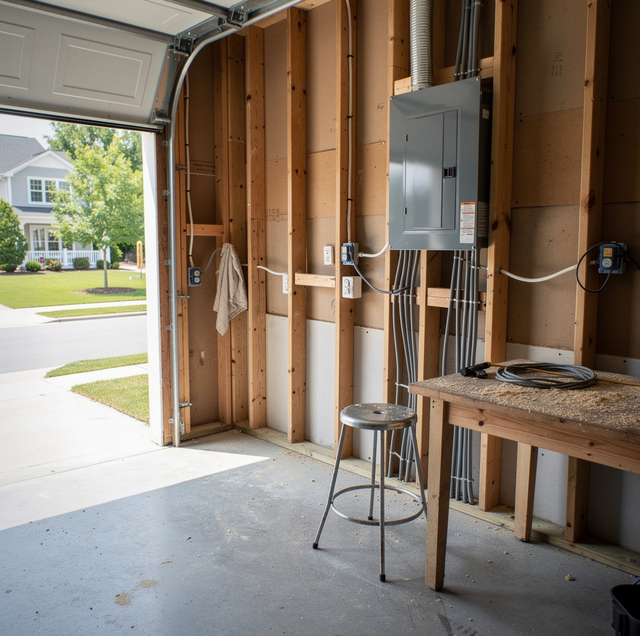
Quick Answer: A subpanel makes sense when a separate area (a detached garage, a shop, or a new addition) needs several dedicated circuits, when the main panel has no open breaker spaces left, or when a cluster of loads sits far from the main panel. It is not the same as upgrading the main service, and it only works if the main service has enough spare capacity to feed it. A licensed electrician confirms that with a load calculation.
You added a workbench with a dust collector, a compressor, and now a welder, and every time two of them run together a breaker in the house trips. Or you are finishing a room over the garage and the finish carpenter keeps asking where the new circuits will land, and the answer is a panel that already has no empty space. Somewhere in that stretch, a question shows up: is this a subpanel situation, or does the whole electrical system need rethinking?
What a Subpanel Actually Is
A subpanel is a smaller breaker panel that is fed from your main panel and distributes power to one part of the property. The main panel works like the hub of a bicycle wheel, and the subpanel is a second, smaller hub in the garage or addition: a single heavy feeder cable runs out to it, and from there, short branch circuits branch out to the outlets, lights, and equipment in that area. The subpanel does not create new power. It takes a share of what the main panel already receives from the utility and gives you a local place to land breakers where you need them.
That local place is the whole point. Instead of running a dozen long individual circuits back across the yard or across the house to the main panel, one feeder carries the load out to the subpanel, and the branch circuits stay short and close to the equipment they serve. In a detached garage or shop, that usually means a cleaner install and far less wire buried in a trench or run through the walls.
Signs a Subpanel Is the Right Move
A few situations point clearly toward a subpanel rather than piecemeal circuits or a full service change.
The main panel is full with no open slots: Every panel has a fixed number of breaker positions. Once those are used, there is no room to add the circuits a shop or addition needs. Tandem or half-height breakers stretch capacity in some panels, but many are already maxed or not rated for them. When the physical spaces are gone, a subpanel gives you a fresh bank of breaker positions fed from a single space (or a set of spaces) on the main.
You are building or finishing a detached structure: A detached garage, a backyard shop, or a studio over a garage is a natural fit for a subpanel. A new structure needs its own lighting, receptacles, and often dedicated equipment circuits, and feeding all of that with separate home runs back to the house is impractical. One feeder out to a subpanel in the structure handles it.
Several new circuits are going in at once: Finishing an addition or outfitting a shop rarely means one new circuit. It usually means many: general receptacles, dedicated tool circuits, lighting, maybe heating or cooling. When the count climbs past what a few open slots can hold, consolidating them at a subpanel is cleaner than scattering them across whatever the main panel has left.
The loads sit a long way from the main panel: Voltage drops over distance, and running many long branch circuits wastes copper and can leave equipment starved at the far end. When a cluster of loads (a workshop bench, an outbuilding, a garage EV charger) lives far from the main panel, a single properly sized feeder out to a nearby subpanel is more efficient than a fistful of long runs.
How a Subpanel Differs From a Main-Panel Upgrade
These two jobs get confused because both involve breaker panels, but they solve different problems.
A main-panel (service) upgrade increases the total amount of power the house can draw from the utility, for example going from a 100-amp service to 200-amp. It touches the meter, the main breaker, and the utility connection, and it is what you do when the house as a whole needs more capacity than it currently has.
A subpanel does not increase total capacity at all. It redistributes the capacity you already have, giving you more places to land breakers and a local hub in a specific area. If the main service is already comfortable and simply out of physical breaker room, a subpanel solves it. If the house is truly drawing near its service limit, a subpanel alone will not fix that, and the conversation shifts toward a service upgrade first, sometimes followed by a subpanel for the new area.
The Feeder and Grounding Idea, in Plain Terms
Two concepts make a subpanel behave safely, and both are worth understanding even though the work itself is not a homeowner job.
The feeder: The feeder is the heavy cable that carries power from the main panel out to the subpanel. It is sized for the total load the subpanel is expected to serve, and it lands on its own breaker back at the main panel. That breaker is the on/off and the protection for the whole subpanel. Undersizing the feeder is a common backyard-wiring mistake, which is one reason the sizing belongs with a professional and a load calculation.
Separated neutrals and grounds: In the main panel, the neutral (return) conductors and the ground conductors bond together at one point. In a subpanel, they are kept separate: the neutrals land on an isolated neutral bar that does not touch the metal enclosure, and the grounds land on their own bar bonded to the enclosure. Keeping them apart at the subpanel means normal return current has only one path back and does not travel on the grounding system. Getting this wrong is one of the most frequent and most dangerous subpanel errors, and it is invisible until something faults.
The Main Service Has to Have Room to Give
A subpanel borrows from the main service, so the main service has to have capacity to lend. Before anything is installed, an electrician runs a load calculation: adding up the existing demand on the house (heating and cooling, water heater, range, dryer, general lighting and receptacles), comparing it against the service rating, and checking whether the new subpanel's expected load fits inside what remains.
If the numbers show headroom, the subpanel is simple to feed. If the house is already near its limit, the calculation is what catches it, and it changes the plan before money is spent on a panel that the service cannot actually support. This step is easy to skip in a hurry and expensive to skip in practice, because an overloaded service is both a nuisance-tripping problem and a safety one.
Why This Is Licensed-Electrician Work
Everything downstream of the meter in a subpanel runs at voltages that injure or kill on contact, and the feeder is connected inside a live main panel, so a subpanel install is licensed-electrician work rather than a homeowner job. Getting the separated neutral and ground bars wrong is one of the most common and most dangerous subpanel mistakes, and it stays invisible until something faults.
As a homeowner, your part is recognizing the need and describing it clearly: how many circuits, what equipment, where the new area sits, and roughly what you expect to run at once. From there, a licensed electrician handles the load calculation, the sizing, and the install. That division keeps you on the safe side of the work while still driving the decision.
Frequently Asked Questions
Yes, when it is a panel rated for the location. Outdoor and damp-location subpanels use a weatherproof enclosure (commonly a NEMA 3R rated cabinet) with the knockouts and fittings arranged so water sheds away rather than collecting inside. An indoor-rated panel mounted outside is a defect that invites corrosion on the bus and breakers, so the enclosure rating is chosen for where it will actually live.
Plan for growth rather than the exact count you need today. A common approach is to choose a panel with several more spaces than the current circuit list, because adding a welder, a second EV charger, or a mini-split later is trivial with open spaces and a headache without them. The feeder and the panel's rating, not just the empty slots, set the real ceiling on what you can add.
Generally yes. A detached structure fed by a subpanel usually requires its own grounding electrode at that building, such as a driven ground rod (sometimes two) or a connection to a suitable metal underground element, tied to the subpanel's ground bar. This is separate from the ground conductor run in the feeder and is one reason detached-building subpanels differ from ones inside the same house.
Only if the tripping comes from too many circuits crowded onto too few, not from a genuine overload. Splitting loads across more breakers at a subpanel stops nuisance trips caused by sharing. If a single circuit trips because one machine draws more than its wire and breaker allow, a subpanel does not cure that; that circuit needs to be sized correctly for the machine.
It depends on the calculated load, but as an example, a 60 amp subpanel and a 100 amp subpanel call for different feeder conductor sizes and a differently rated feeder breaker at the main. The electrician sizes the feeder to the load and the distance, since a long run to a detached shop may be bumped up a size to hold voltage steady at the far end. That sizing is set by the load calculation, not guessed.
It is possible but usually avoided. Chaining a subpanel off another subpanel stacks the voltage drop and makes it harder to keep the load accounting clean, so most installs feed each subpanel directly from the main panel where the capacity picture is clearest. When a second area really needs its own hub, a dedicated feeder from the main is the tidier answer.
Weather cuts both ways on an outdoor panel: humidity and salt-laden air speed corrosion in warm months, while cold and repeated moisture cycling stress fittings and connections in cold ones, so an outdoor subpanel is chosen with a sealed, weather-rated enclosure built for year-round exposure rather than a single season.
Book a load calculation before you buy a panel — know exactly what your service can support. Castles Electrical serves Virginia Beach, Chesapeake, and Norfolk. Call (757) 765-8222.
