dock and boathouse electrical in Portsmouth, VA, Castles Electrical

Master Electrician & Class B Licensed

Dock & Boathouse Electrical in Portsmouth, VA

A new private pier on the Western Branch or the Elizabeth River goes through a water permit review before the first piling is set. Those application drawings are also the right place to settle where the dock power will run.

We wire from the house panel, across the bulkhead, to the end of the pier: lift circuit, shore power, and the lights over the slip. Licensed Castles electricians do the wiring, and we pull the city electrical permit for the work.

Master Electrical & Alternative Energy License #2710048784 Class B Contractors License #2705166194 Google 5.0 Rated Family-Owned & Operated Since 2012 Licensed Electricians, Never Subcontracted Free Installation Estimates
Licensed. Insured. Trusted. We treat your home like it’s our own.
Locally Owned in Virginia Beach Since 2012 Serving Virginia Beach & Nearby Cities
GENERAC
TESLA
KOHLER
NABCEP
BBBA+
SquareD
GENERAC
TESLA
KOHLER
NABCEP
BBBA+
SquareD
Home / Portsmouth, VA / Dock & Boathouse Electrical in Portsmouth

01 — Pier Permits

Putting the Power Route on Your Water Permit

The state allowance for private piers

Virginia Code section 28.2-1203 lets a waterfront owner place a noncommercial private pier opposite their land after an application is submitted for review. Subject to local ordinances, those piers may include an attached boat lift and an open-sided roof over a single slip or lift.

One application, four sets of reviewers

VMRC describes the process as a single joint application for local, state, and federal permits. Local wetlands boards, VMRC, the Virginia Department of Environmental Quality, and the U.S. Army Corps of Engineers each review it independently and simultaneously.

Since September 1, 2025, the Army Corps has replaced VMRC as the central point of receipt in Virginia, and its Regulatory Request System is the only way to submit the application and any revisions to all of those reviewers, including your local wetlands board.

The utility line on Portsmouth’s application

Portsmouth’s wetlands ordinance, Section 39-24, allows noncommercial catwalks, piers, boathouses, boat shelters, and observation decks in wetlands when built on pilings that let the tide flow reasonably unobstructed and preserve the natural contour of the wetlands. Where a wetlands permit application is required, the same ordinance asks for a detailed description of utility installations, including those on the adjacent uplands.

You or your marine contractor files the application. Share your pier drawings with us, and we plan the electrical route to fit them.

02 — Size Limits

Fitting Power on a Six-Foot Pier

The state allowance caps the walkway at 6 feet wide, and any L- or T-head platforms and floating docking platforms at 400 square feet combined. An open-sided roof over a single slip or lift larger than 700 square feet requires a full permit.

Those numbers shape the wiring layout. A six-foot walkway leaves limited room for a receptacle enclosure beside foot traffic, so the electrical plan is drawn to fit inside that footprint.

03 — Who Handles What

Your Contractor’s Job and Ours

Work
Rule
Handled by
Feeder, lift circuit, and shore power receptacle
2020 NEC Article 555, lift maker instructions, city electrical permit
Castles Electrical
Lift structure, motor mounting, and boat repairs
Lift maker instructions
Lift installer, marine contractor, or boat service

04 — Shore Power

Shore Power for the Boat at Your Pier

Article 555 of the 2020 National Electrical Code, the edition Virginia’s building code uses, applies to private residential docks as well as marinas. Its shore power rules go well beyond an ordinary outdoor outlet.

Receptacle ratings

Under the 2020 code, a shore power receptacle is located in a listed enclosure protected from the weather, is served by its own branch circuit rated to its rating, and is rated at least 30 amps. The 30- and 50-amp versions are locking, grounding types, and those rated 60 amps and up use pin-and-sleeve connectors.

Each shore power receptacle also needs its own ground-fault protection set to open at no more than 30 milliamperes.

We match the receptacle to the inlet on your boat, such as a 30-amp, 125-volt connection or a 50-amp, 125/250-volt connection.

A disconnect at the receptacle

The code also calls for a circuit breaker or switch for each shore power receptacle, marked for the receptacle it controls and readily accessible within 30 inches of it. It sits in the supply circuit ahead of the receptacle, and a breaker or switch built into a listed marina power outlet can serve that role. That puts the disconnect out on the pier, beside the boat.

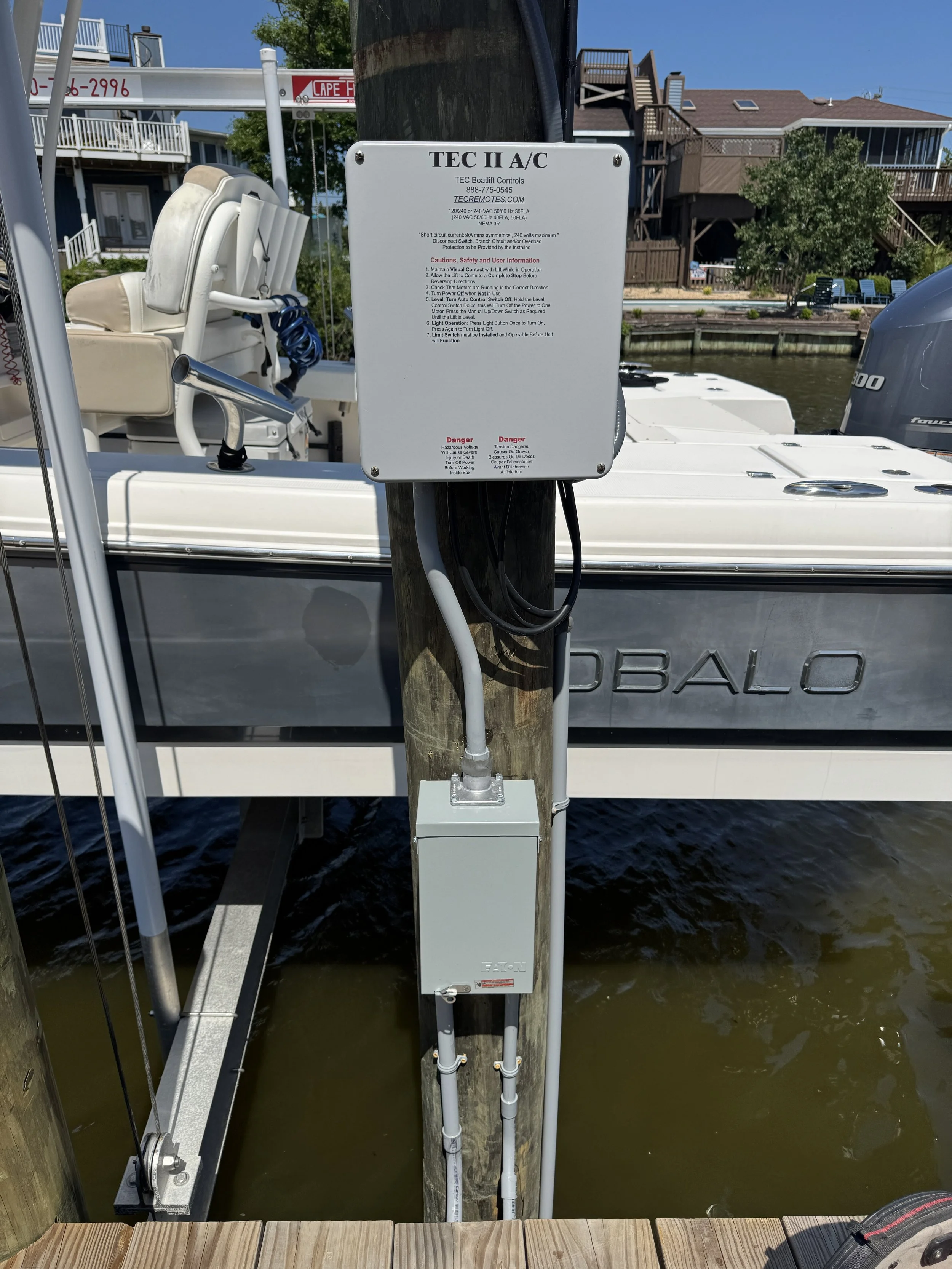
Boat lift control box mounted on a piling beside the lift drive at a Portsmouth, VA pier

05 — Boat Lift

Boat Lift Wiring and the Lift Maker’s Paperwork

Some lift makers set their own electrical conditions. Golden Boat Lifts requires its elevator lifts to have one of two features: a 4-pole disconnect switch left off whenever the lift is idle, or a removable power plug left unplugged.

Golden says the purpose is to prevent damage from electrolysis. Its notice warns that without one of those devices installed by a licensed electrician, the aluminum track I-beams may corrode or deteriorate and the warranty may be void.

Separately, the 2020 NEC requires GFCI protection at the outlet supplying a boat hoist rated 240 volts or less at a home dock, and many lift manuals say the same.

Before we wire a lift, we read its manual. The circuit is sized to the motor’s rating under the code’s motor rules, the switch or plug arrangement follows the maker’s instructions, and the control goes where you can reach it from the walkway.

06 — House to Pier

Getting Power From the House to the Pier

The run to the pier starts at your panel and crosses the yard, often past a bulkhead or the marsh edge, before it reaches the walkway.

The panel comes first. A lift motor and a shore power receptacle each require a circuit, and a 50-amp shore power circuit is a sizable load on its own. We check available space and service capacity before quoting, and a panel upgrade can be planned as part of the same project if needed.

07 — Boathouses

Boathouses, Roofs, and Lights Over the Water

Under a slip roof or inside a boathouse, we wire the lighting over the water, a sheltered spot for the lift switch, and weather-protected receptacles, using wet-rated fixtures throughout. Walkway lights are aimed down at the deck boards.

The structure itself is the marine side of the job. The state allowance names an open-sided roof, not a boathouse, and makes it subject to any applicable local ordinances, so whether an enclosed boathouse fits that allowance is a question for your marine contractor or VMRC. The wiring inside it is ours either way.

08 — Process

From Pier Sketch to Powered Lift

01

Read the pier drawing

Your pier plan and lift model are read against Article 555 and the lift maker’s instructions before any route is drawn.

02

Route and load check

We confirm panel capacity and lay out the circuits on your pier drawings.

03

Written estimate

You receive a free installation estimate in writing, honored for 30 days.

04

Permit and wiring

With the city electrical permit in place, we install the feeder, the lift circuit and disconnect, the shore power receptacle, and the lights.

05

Inspection and handoff

After the electrical inspection, we show you the lift switch and the shore power breaker and how each one is used.
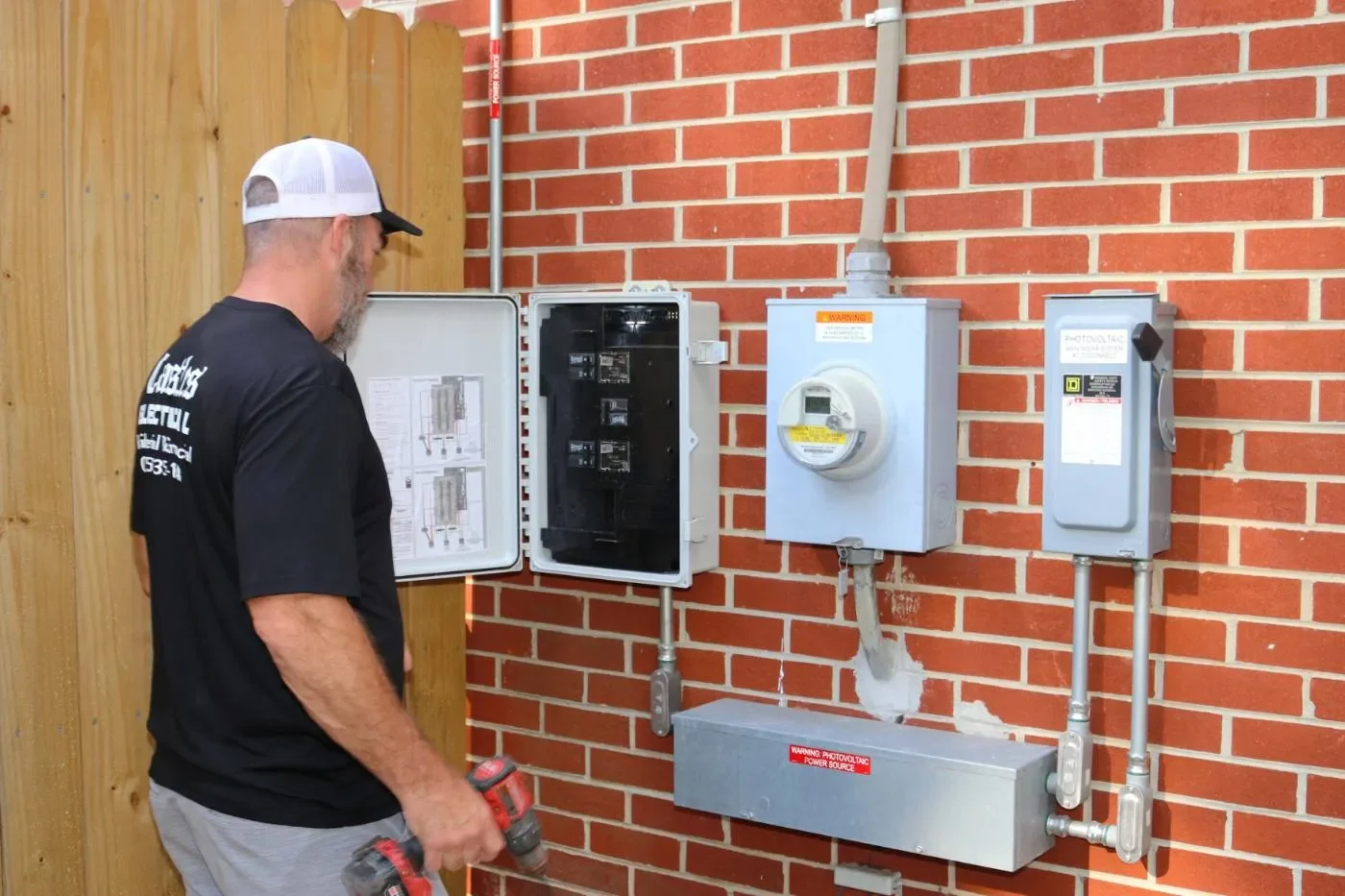
Castles Electrical electrician working at an outdoor disconnect and meter
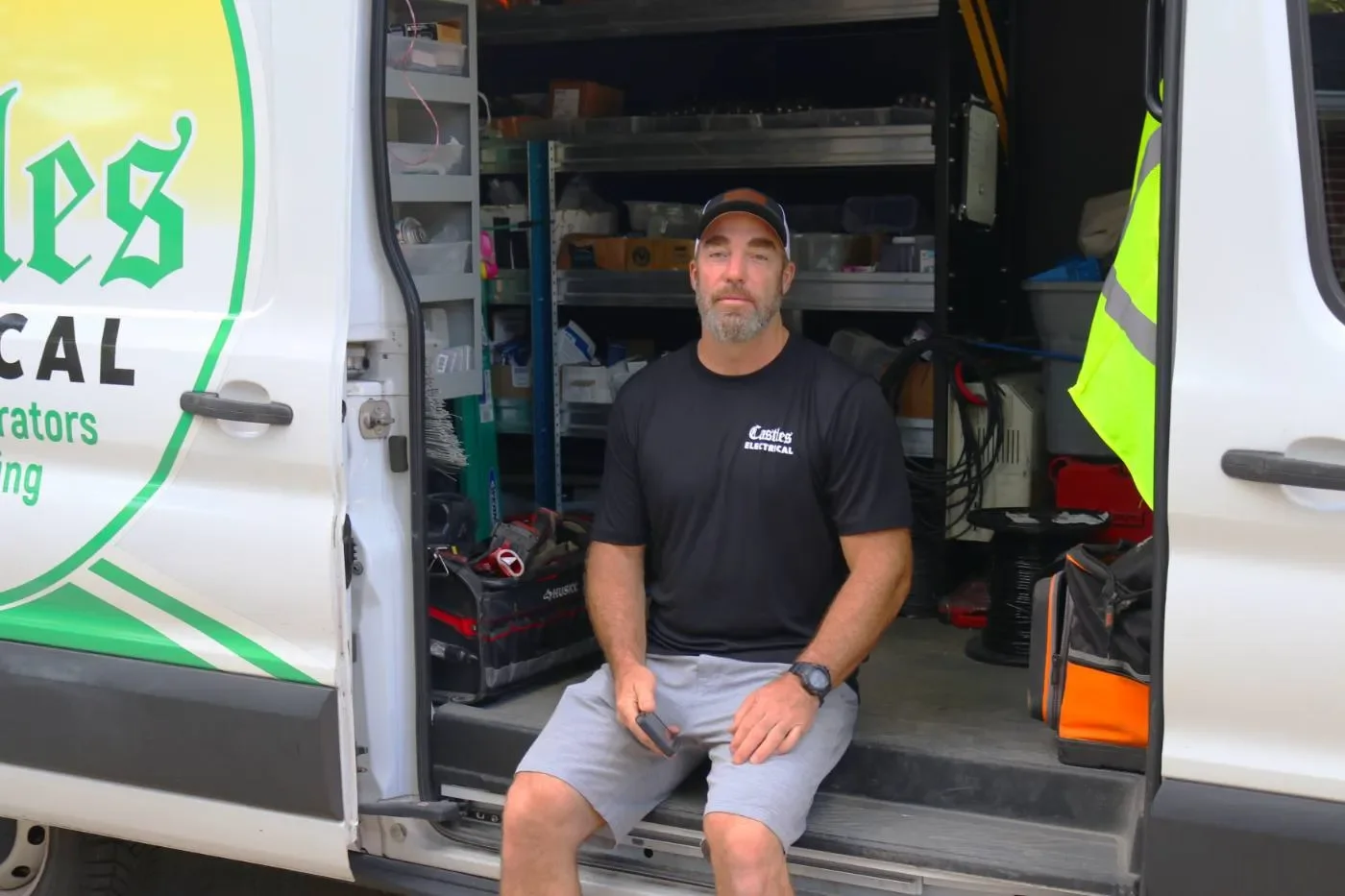
Castles Electrical electrician and van at a Portsmouth, VA job

Castles Electrical

Licensed, insured, and locally owned. The work is done by our own electricians, never subcontracted.

09 — Why Castles

Planned With the Pier, Wired to the Manual

Planned Before the Pilings

Circuits laid out on your pier drawings.

Wired to the Lift Manual

Circuit, disconnect, and protection set up as your lift maker specifies.

10 — FAQS

Portsmouth Dock & Boathouse FAQs

We are rebuilding a storm-damaged pier in the same spot. Does the state approval process start over?+

The same state law separately lists maintenance or replacement of a previously authorized pier that is rebuilt within the footprint of the existing one. New wiring on the rebuilt dock is installed to the 2020 code.

Can the boat lift and the shore power receptacle share one circuit?+

Plan on two. The shore power receptacle gets its own branch circuit sized to its rating, and the lift circuit is sized to its motor and wired with the disconnect its maker specifies.

Which receptacle fits a boat with a 30 amp inlet when the next boat may have 50?+

Match the receptacle to the boat you own now. If a bigger boat is likely, tell us at the estimate.

Our marine contractor changed the pier layout after the application went in. What happens to the electrical plan?+

Your marine contractor submits the revision through the same system. Send us the new layout, and we adjust the circuit plan.

Can power be added to a pier that was built without it?+

Yes. We trace a route from the panel to the pier and plan the lift circuit, receptacles, and lights for the pier you have, then size the feeder to carry them.

11 — Proof

A Boat Lift, Powered

“

A Google review left by a waterfront owner covers power installed for a boat lift. The full text loads in the live Google feed below.

From our five-star Google reviews
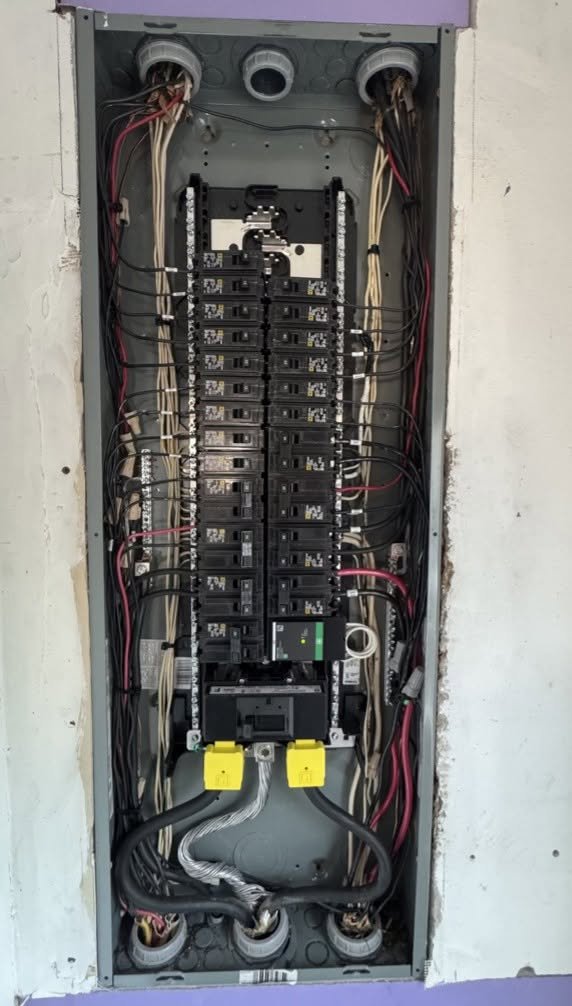
Breaker panel interior in a Portsmouth, VA home
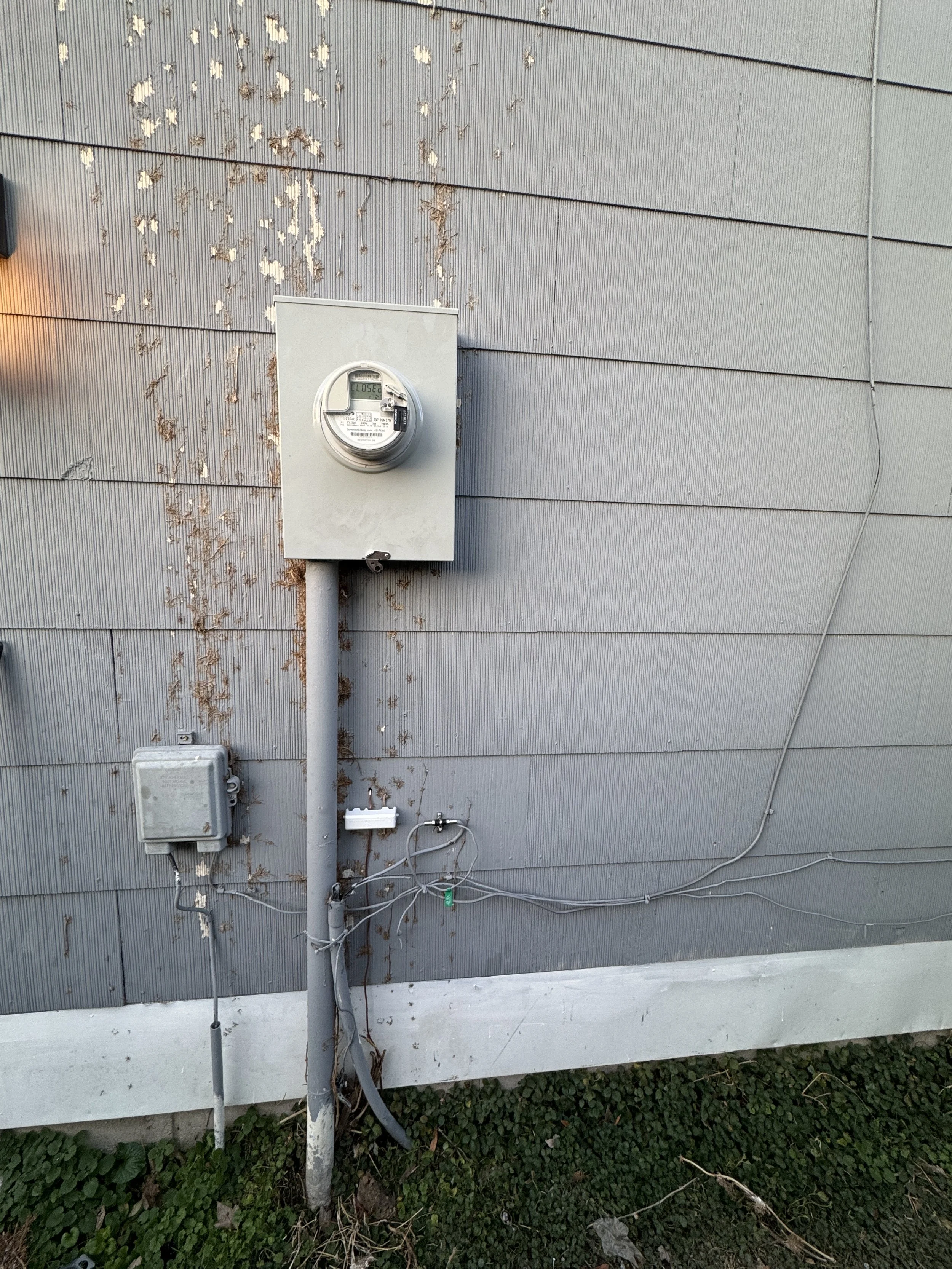
Meter base and a small outdoor enclosure with conduit on the wall of a Portsmouth, VA home

Google 5.0 Rated by Hampton Roads Customers

Castles Electrical maintains a 5.0 rating on Google. The reviews below load as a live widget, so this page shows current feedback from real Castles Electrical customers.
Leave Us a Google Review

Ready When You Need Us

Plan the Dock Power With Your Pier

Check the inlet on your boat for a 30- or 50-amp rating, then find the model plate on the lift. Send those with your pier plan or sketch, along with a photo of your panel, and the layout starts there.

Office and hours

Based at 2984 S Lynnhaven Road, Suite 104, Virginia Beach, VA 23452.

  • Monday to Friday: 7:00 AM to 10:00 PM
  • Saturday: 7:00 AM to 7:00 PM
  • Sunday: Closed
  • After-hours voice messages are checked, and we take emergency and after-hours calls when we can

The drawings, the code, and the lift manual must all agree before we pull any wire.

Castles Electrical electrician reviewing the job with a homeowner