02 — The Report
What a Virginia Home Inspection Report Looks At
Virginia’s rules for licensed home inspectors, 18VAC15-40-130, list the electrical items that a report must cover. Among them are service equipment and main disconnects, service grounding, interior components of service panels and subpanels, including feeders, conductors, and overcurrent protection devices such as breakers.
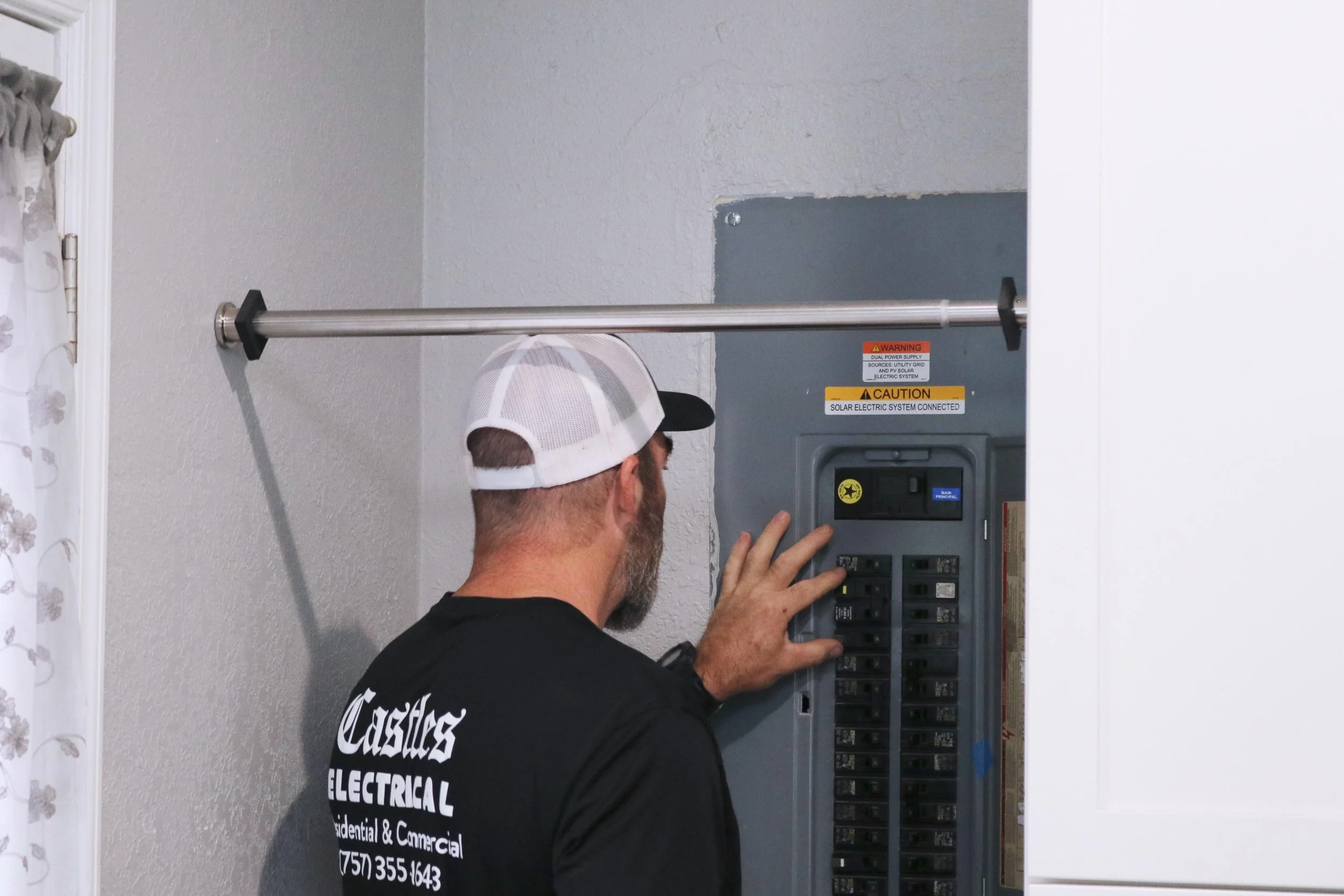
How far an inspector goes inside the panel can vary. InterNACHI, a home inspector trade association, says its own standards of practice do not require the inspector to remove the panelboard cover or dead front. So one report may describe what was seen behind the cover, and another may note a symptom and recommend an electrician. Either way, we open the panel and confirm what is there.
For a look at the wiring, devices, and alarms throughout the house, see our electrical safety inspection page.
03 — Why Castles
How Norfolk Panel Repairs Are Handled
Report Items Taken Line by Line
Each finding confirmed and repaired as its own item.
Heat Checked With the Cover Off
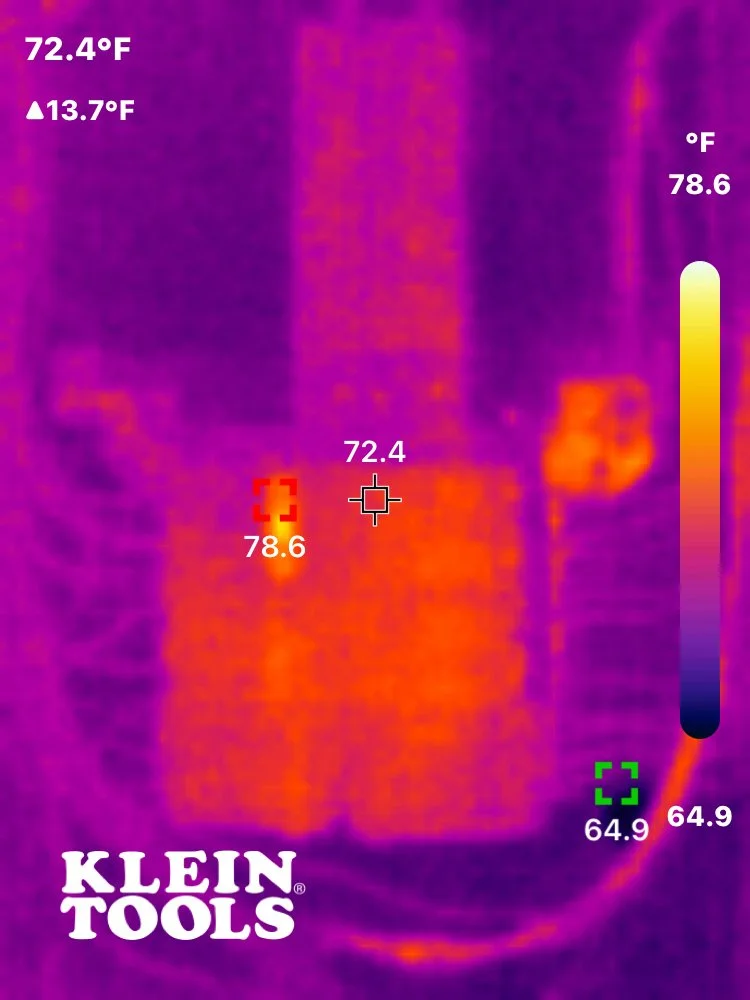
Breakers, bars, and connections checked for heat while the panel is open.
04 — Openings
Open Knockouts and Missing Breaker Blanks
Panels come with punch-out openings, called knockouts, in the cabinet walls and in the cover where breakers line up. When a cable is removed, or a breaker is taken out, the hole it used can be left open. Closing one is usually among the simpler items on a report.
The 2021 International Residential Code, on which the Virginia Residential Code is based, requires that unused openings be closed to provide protection equivalent to that of the cabinet wall itself. InterNACHI’s guidance on that section spells out what counts: concentric and eccentric knockouts in the cabinet and enclosure, and breaker knockouts in the panel cover. It also notes that listed knockout plugs are made for the job.
A missing blank is worth a question before it is closed. A breaker may have been pulled when a circuit was abandoned, or moved when something was added. Once that is clear, the usual fix is a filler plate or plug made for the panel.
05 — Double Taps
Two Wires Under One Breaker Terminal
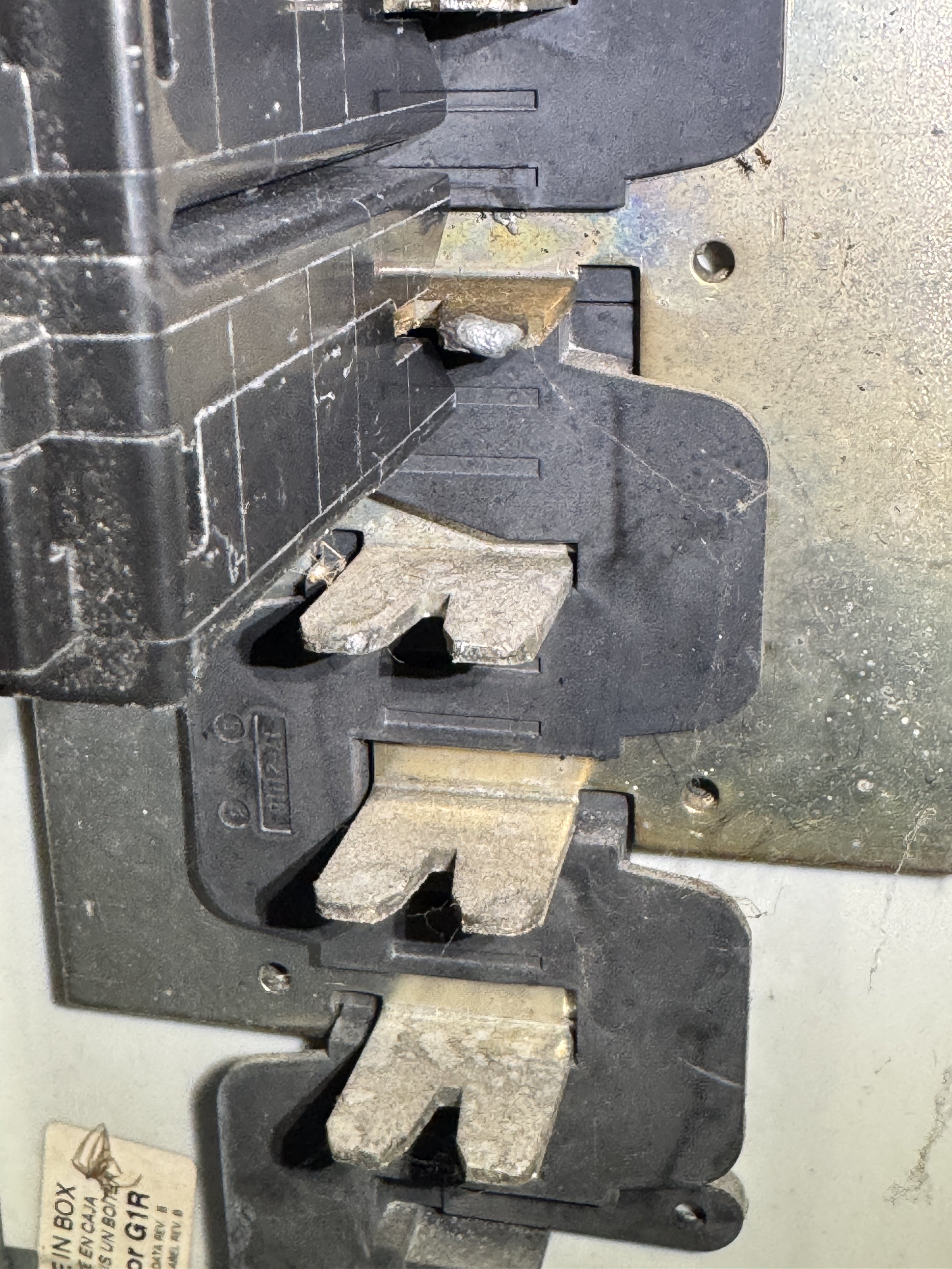
A double tap means two circuit wires under a breaker terminal built for one. Some breaker lines are marked to accept two conductors; most are not. Where that marking is present, the connection can be correct as installed, so we read the breaker label before calling it either way.
Where a fix is needed, Castles corrects the double tap. When both circuits can share that breaker’s load, we join the two wires into a short single wire, called a pigtail, that connects directly to the breaker. Otherwise, we move one circuit to its own breaker in an open space. Either way, the breaker size must still match the wire it protects.
06 — Covers
The Cover, Its Screws, and the Space Around It
The inner cover with cutouts for the breaker handles is the dead front. InterNACHI notes that it protects a person from the live parts inside the panel. Inspectors often mention missing cover screws, screws that do not belong to the panel, a cover that no longer sits flush, or a door that will not stay closed.
The repair is usually modest: matching cover hardware, a cover reseated so the breaker handles line up, and debris cleared from the enclosure, since InterNACHI’s guidance is that all types of foreign debris should be removed from equipment. With the cover off, we also check breakers and connections for heat.
07 — Report Wording
Reading the Panel Line on Your Inspection Report
08 — Buyers and Sellers
Sellers, Buyers, and the Repair List
Sellers often have panel items handled once a buyer’s request arrives. Buyers can have the same work done after closing. Each panel item is written as its own line, so it is easy to share with your agent.
Some findings are larger than a repair. A report may say a panel is past its service life, too small for the house, or a type that should be replaced. Once we see the panel, we explain whether a repair is still the right call, and any replacement gets its own written estimate. Our panel replacement in Norfolk page outlines what changes when the entire panel is replaced.
A directory the next owner can read
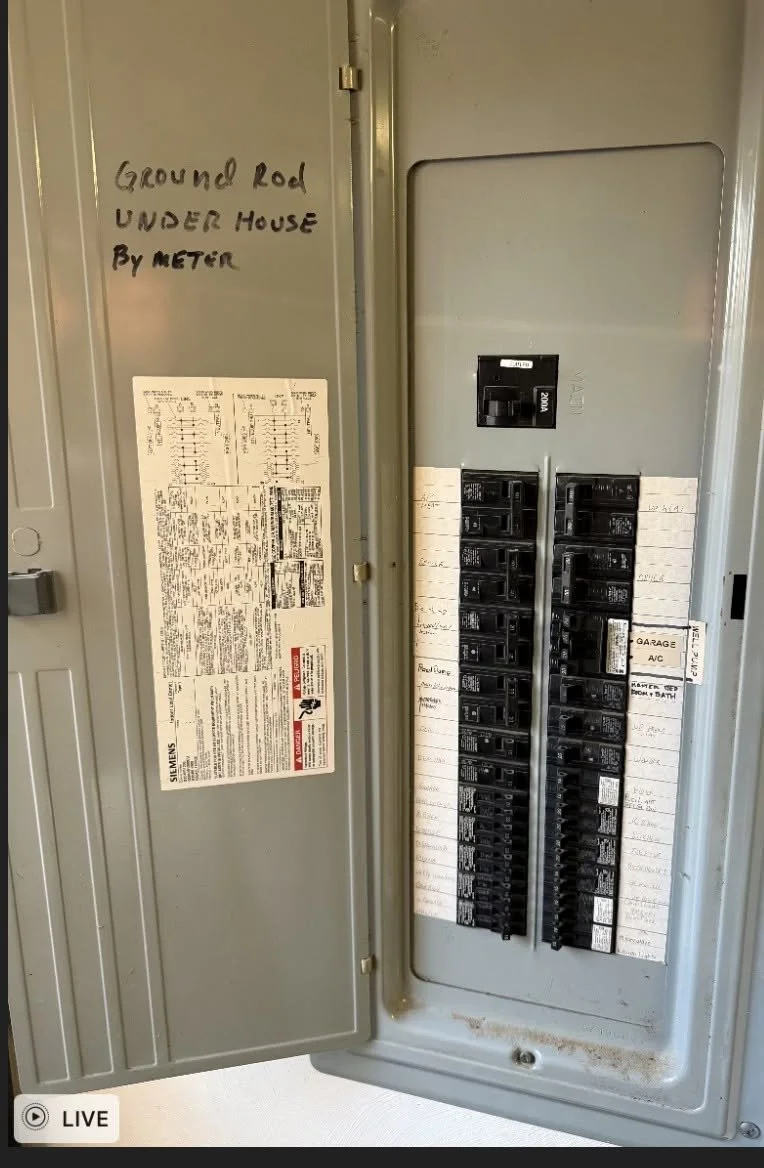
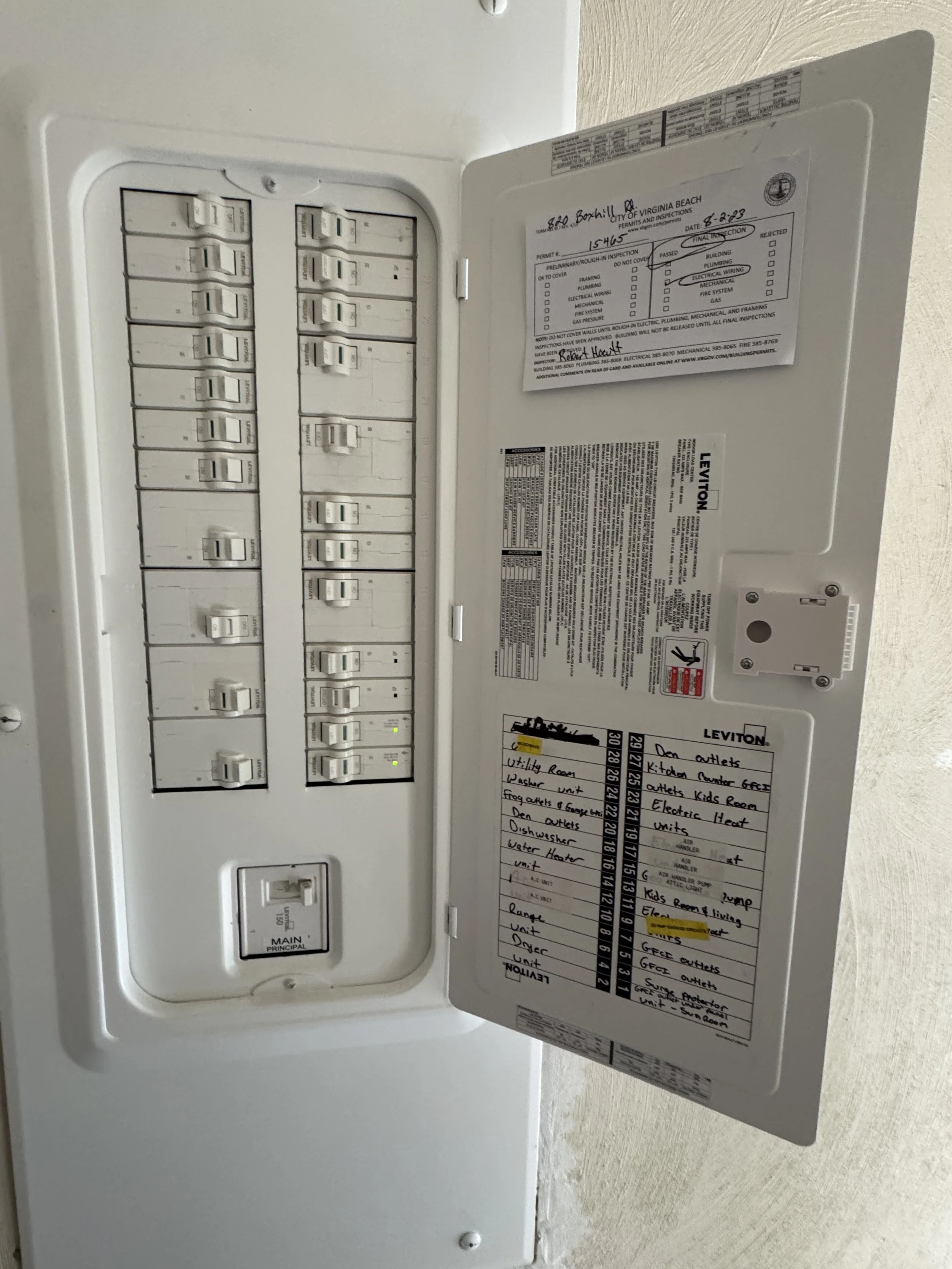
Many older Norfolk panels carry labels written by several owners, some crossed out and some naming rooms since remodeled. A directory that matches the circuits makes the panel easier to use for whoever lives there next. If your report flags the labels, mention it when you call, and we can talk through what relabeling would involve.
09 — Process
From Inspection Report to Repaired Panel
Send the panel section
Share the report page and photos, plus the settlement date if there is one.
Report reviewed first
We read the panel notes and photos before the visit.
Panel opened and checked
Each finding is confirmed, along with anything the report could not see.
Written quote, item by item
Repairs are listed separately from any replacement question.
Repairs and walk-through
You see each item that was fixed.
10 — Proof
An Original Panel, Updated and Checked
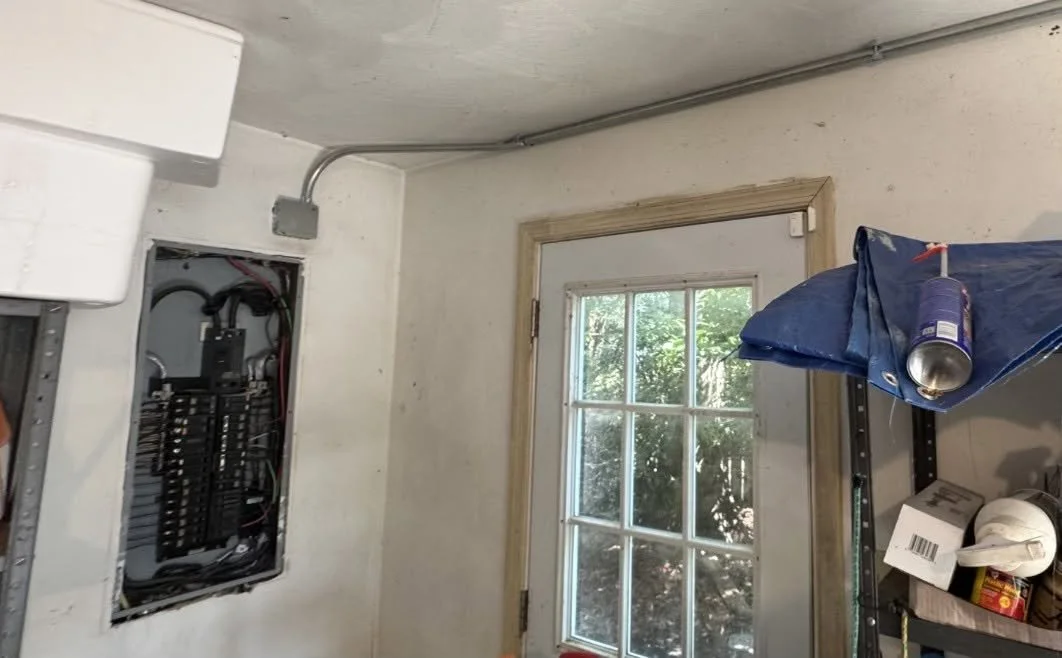
One customer’s review describes an old panel original to the house that our electrician updated, making sure everything worked before closing up.
From our five-star Google reviews
Google 5.0 Rated by Hampton Roads Customers
Castles Electrical maintains a 5.0 rating on Google. The reviews below load as a live widget, so this page shows current feedback from real Castles Electrical customers.
11 — FAQS