01 — Built-In Protection
Your Charger Already Watches for Ground Faults
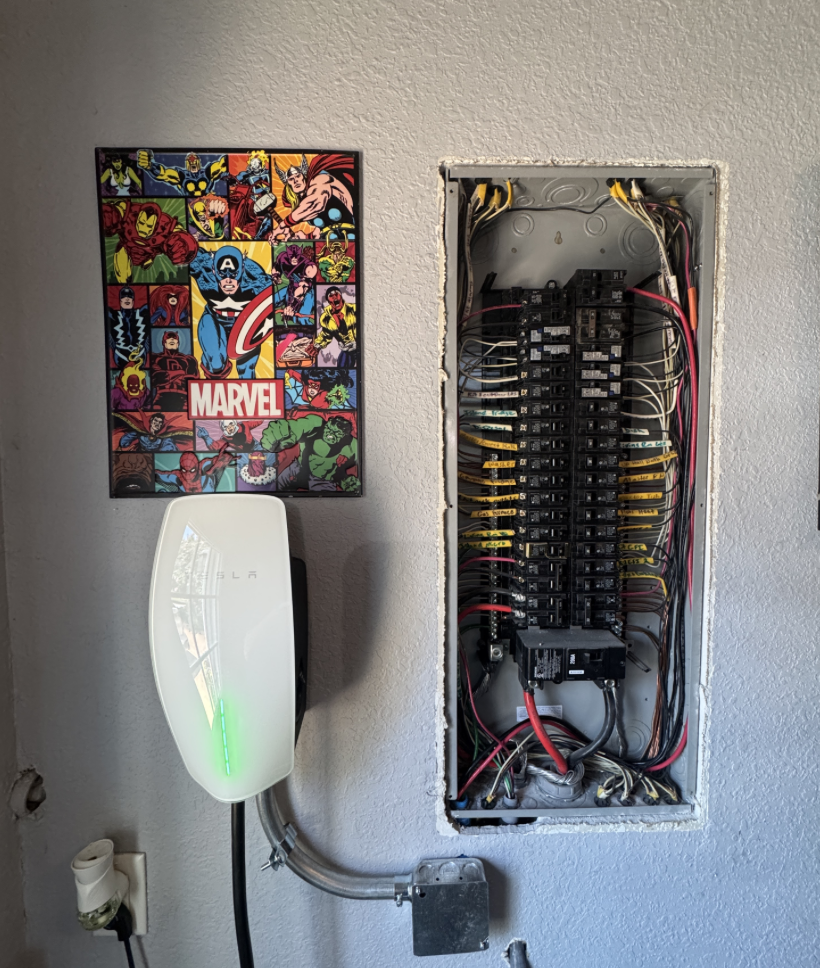
A listed Level 2 charger in the US has built-in ground-fault protection. UL 2594 requires a charging circuit interrupting device, or CCID, in AC Level 2 stations, and UL 2231 sets how it performs, as Bender, a maker of ground-fault monitoring equipment, explains in a white paper.
Depending on the design, a CCID trips at roughly 6 or 20 milliamps, and the 20-milliamp class applies when the charger also monitors ground continuity. Either way, the charger compares the current going out with the current coming back and shuts off when some of it leaks where it should not.
02 — Two Devices
When a GFCI Breaker and the Charger Both Trip
Trouble can start when a GFCI breaker in the panel sits ahead of a charger that already has its own protection. Two devices now watch the same current, each with its own sensitivity and timing, and one can act on a condition the other would ride through.
Some charger makers say so directly. One manufacturer does not recommend a GFCI breaker ahead of its plug-in unit, since the charger already has CCID protection, and says one can cause nuisance trips. Another tells installers of hardwired units to use a standard breaker, because redundant GFCI protection causes nuisance tripping that interrupts charging and requires a manual breaker reset.
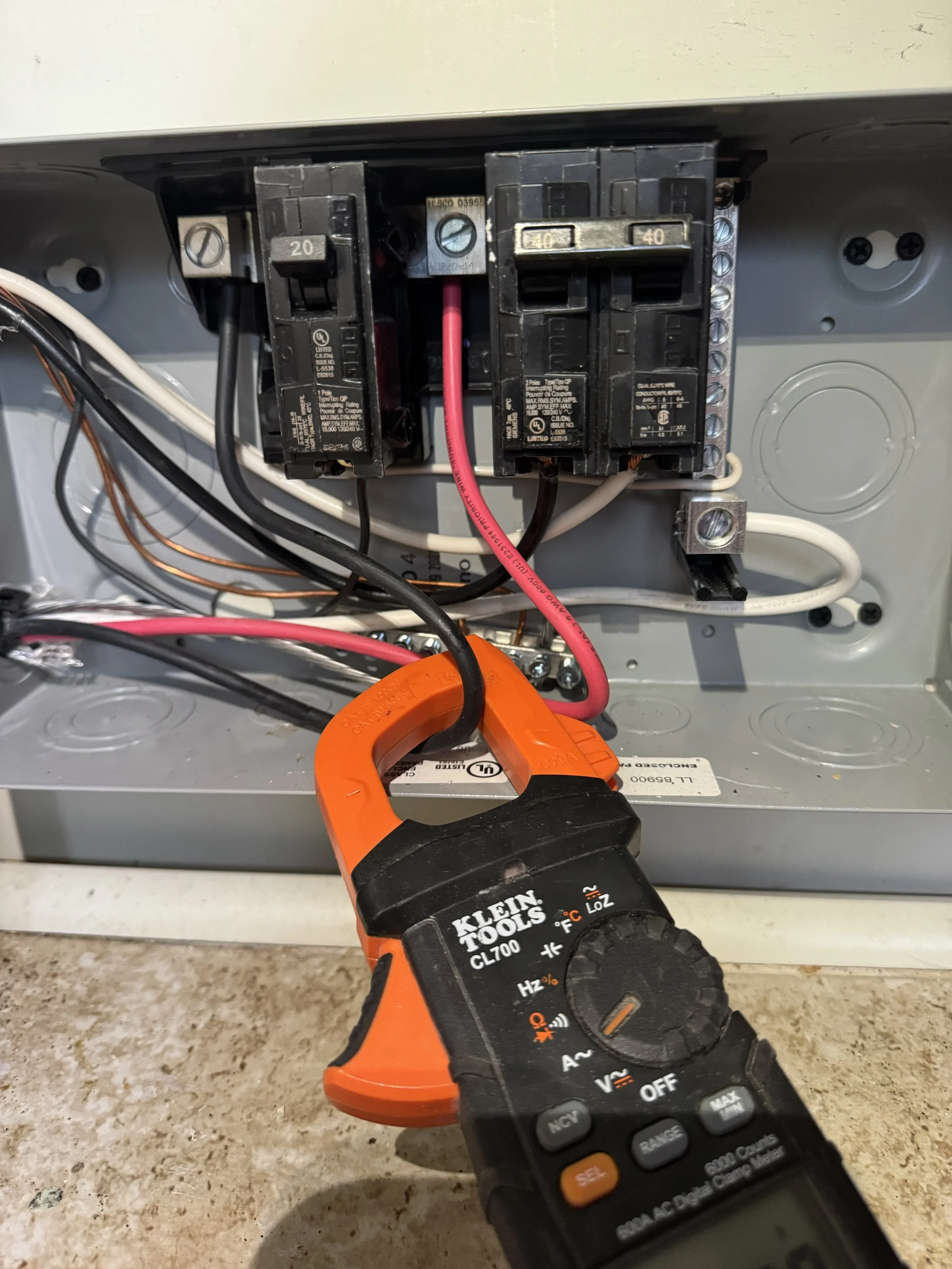
The pattern at your panel is the first clue. If the breaker is off but has tripped, it may be a ground-fault condition on a GFCI breaker or an overload. If the breaker is still on and the charger shows a fault light, the charger’s own protection acted. Those two situations lead to different repairs.
03 — Why Castles
What a Trip Visit Sorts Out
Two Layers, One Circuit
We look at whether a GFCI breaker and the charger’s protection are tripping each other.
Code and Manual Together
Repairs follow Virginia’s 2020-based code and the maker’s installation instructions.
04 — Virginia Code
Plug-In and Hardwired Chargers Follow Different Rules
Virginia’s 2021 building code, in effect since January 18, 2024, uses the 2020 National Electrical Code. Henrico County’s training material on the 2020 code summarizes section 625.54 this way: receptacle outlets used for EV charging need GFCI protection for personnel when the charging equipment is cord-and-plug connected.
So a charger that plugs into a 14-50 outlet keeps the GFCI protection on that outlet active. A charger wired directly to its circuit falls outside that receptacle rule, and the maker’s manual then guides the breaker choice. One maker directs owners to a hardwired installation when local code requires a GFCI breaker.
That difference shapes the repair. On a plug-in charger, the answer may be to find a real fault or to replace a worn device. On a hardwired charger, we check the breaker type against the charger’s installation instructions.
05 — Real Ground Fault
What a Real Ground Fault Looks Like
Some trips are the protection doing its job. A cracked handle, a crushed cable, or water at the charge port can let current leak, and the charger shuts the session down. Tesla’s Wall Connector manual, for one, has the owner inspect the handle, cable, charger, and vehicle charge port for damage or signs of water.
Each brand uses its own lights and codes, and the charger’s manual explains what yours mean. Damaged handles, cables, and plugs are repair work we handle. When a ground fault keeps coming back, the same manual requires an electrician to confirm that the ground wire is not connected directly to a current-carrying conductor in the branch circuit.
06 — Ground and Supply
Ground and Supply Problems Show Up Differently
A charger can also stop because of the ground itself. Many units test the ground path and lock out when it is weak or missing. Tesla’s Wall Connector, for one, runs that check on every North American installation, and its manual says the unit will fault during the test without a proper ground connection.
Checking a ground error means verifying that the ground is bonded back to the supply, checking the terminals at the charger, panels, and junction boxes, and, in a home, checking the ground-to-neutral bond at the main panel. That is work for an electrician.
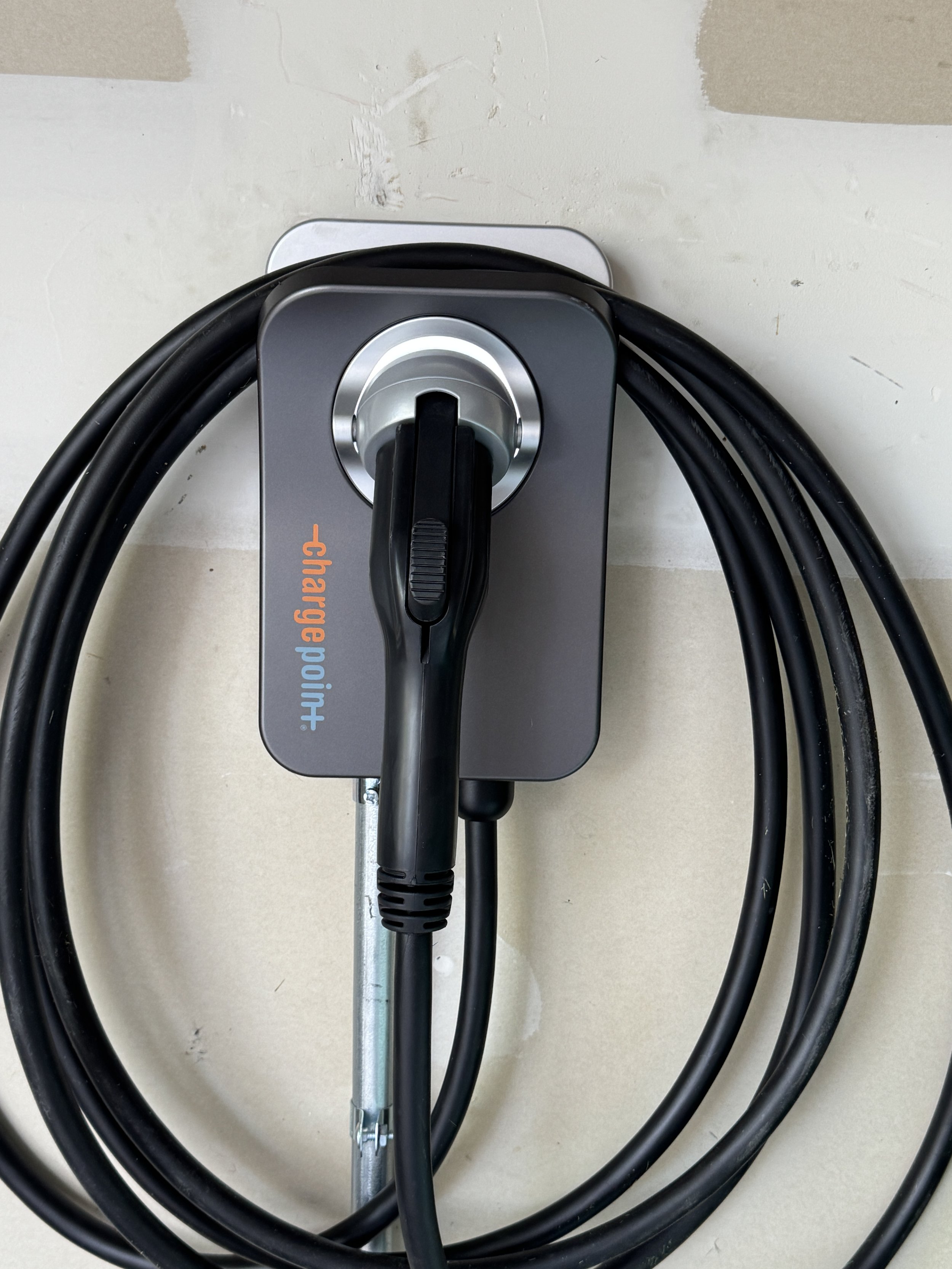
A charger with no lights at all points to the supply, starting with the breaker and the voltage at its terminals. On a 240-volt circuit, that means reading the voltage between the two hot legs and between each leg and ground.
08 — Proof
A Charger Owner on Google
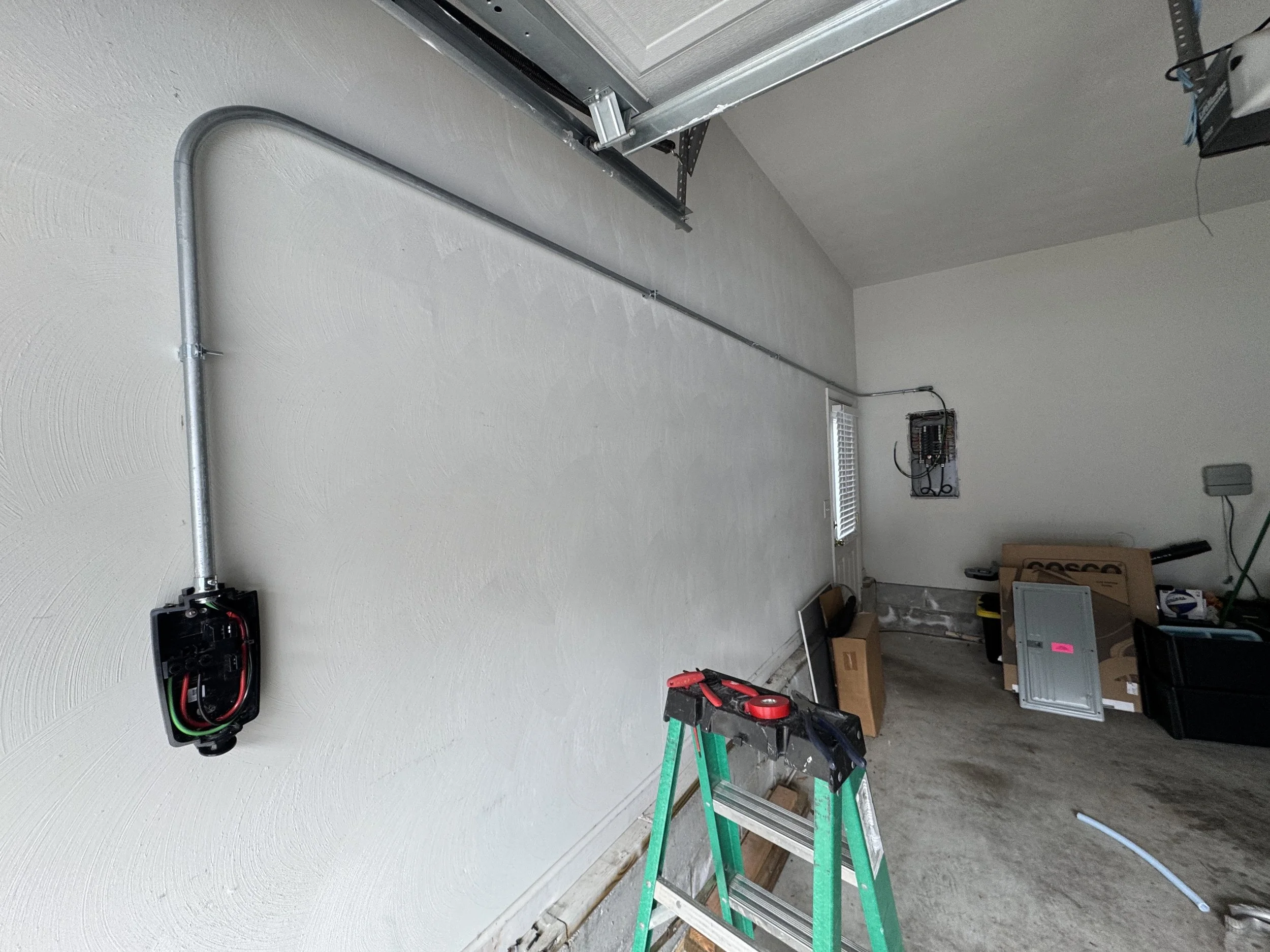
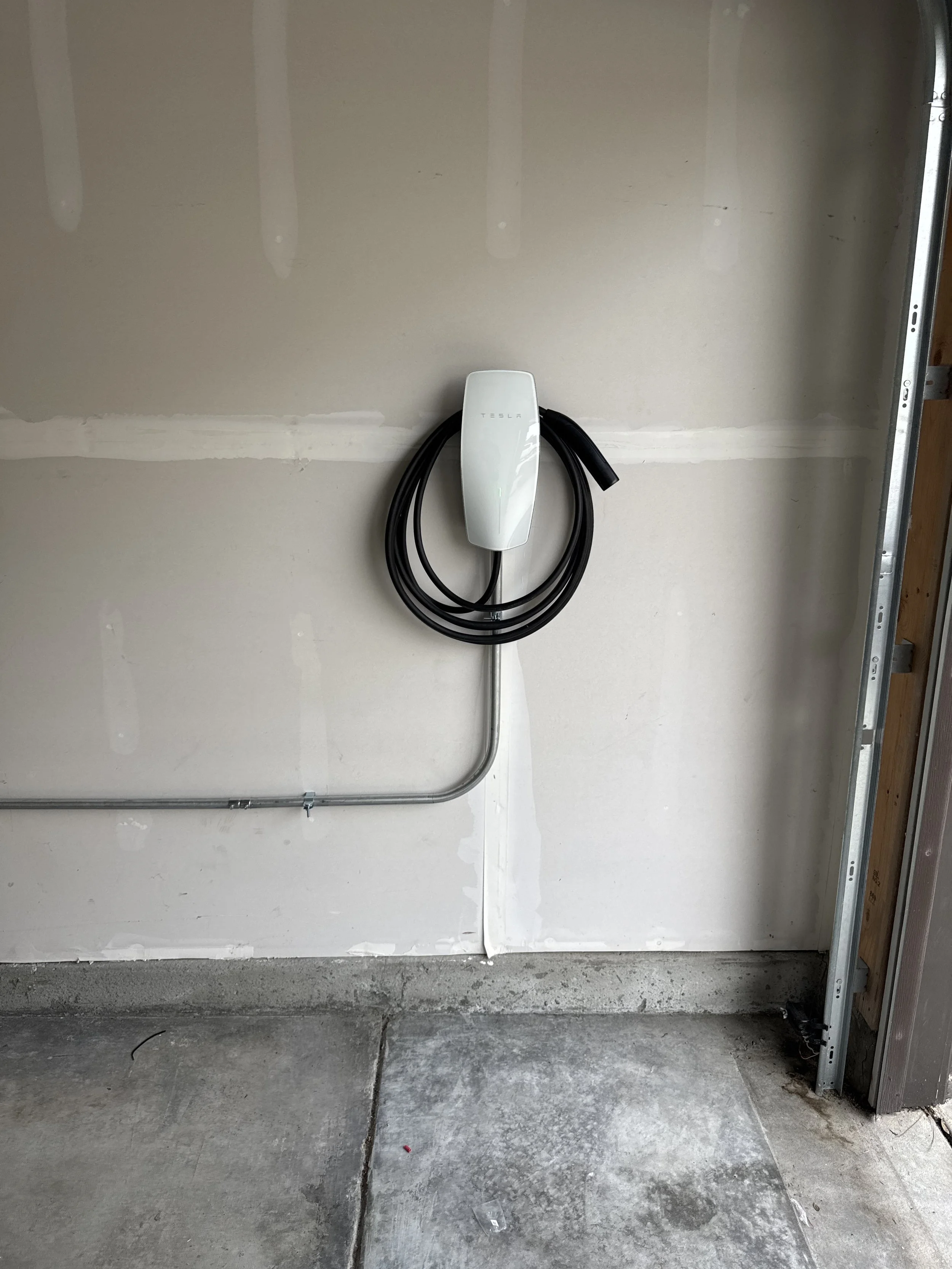
A customer’s review describes a wall connector our electrician set up and left working.
From our five-star Google reviews

Google 5.0 Rated by Hampton Roads Customers
Castles Electrical maintains a 5.0 rating on Google. The reviews below load as a live widget, so this page shows current feedback from real Castles Electrical customers.
09 — Process
How a Ground-Fault Repair Visit Goes
Describe what happened
Tell us which breaker tripped, what the charger lights showed, whether it plugs in or is hardwired, and the brand and model.
Find the device that tripped
We separate a panel breaker trip from the charger’s own protection.
Look for an actual fault
We check for damage, loose or corroded connections, and wiring problems that can cause a real ground fault.
Correct the circuit
Devices and connections are brought in line with the 2020 code and the charger’s installation instructions.
Charge and explain
We charge the car on the corrected circuit and show you what we found.
10 — FAQS