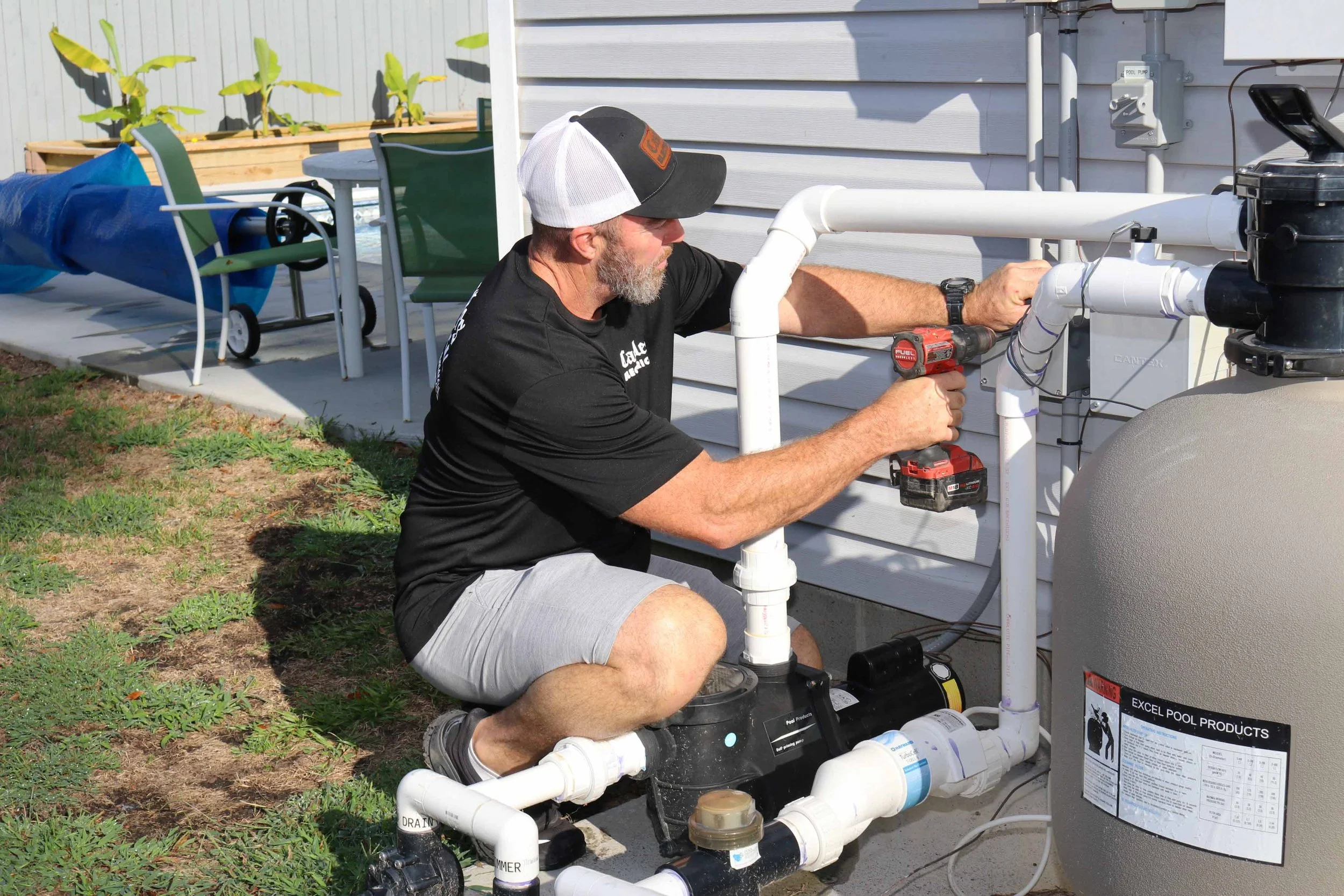
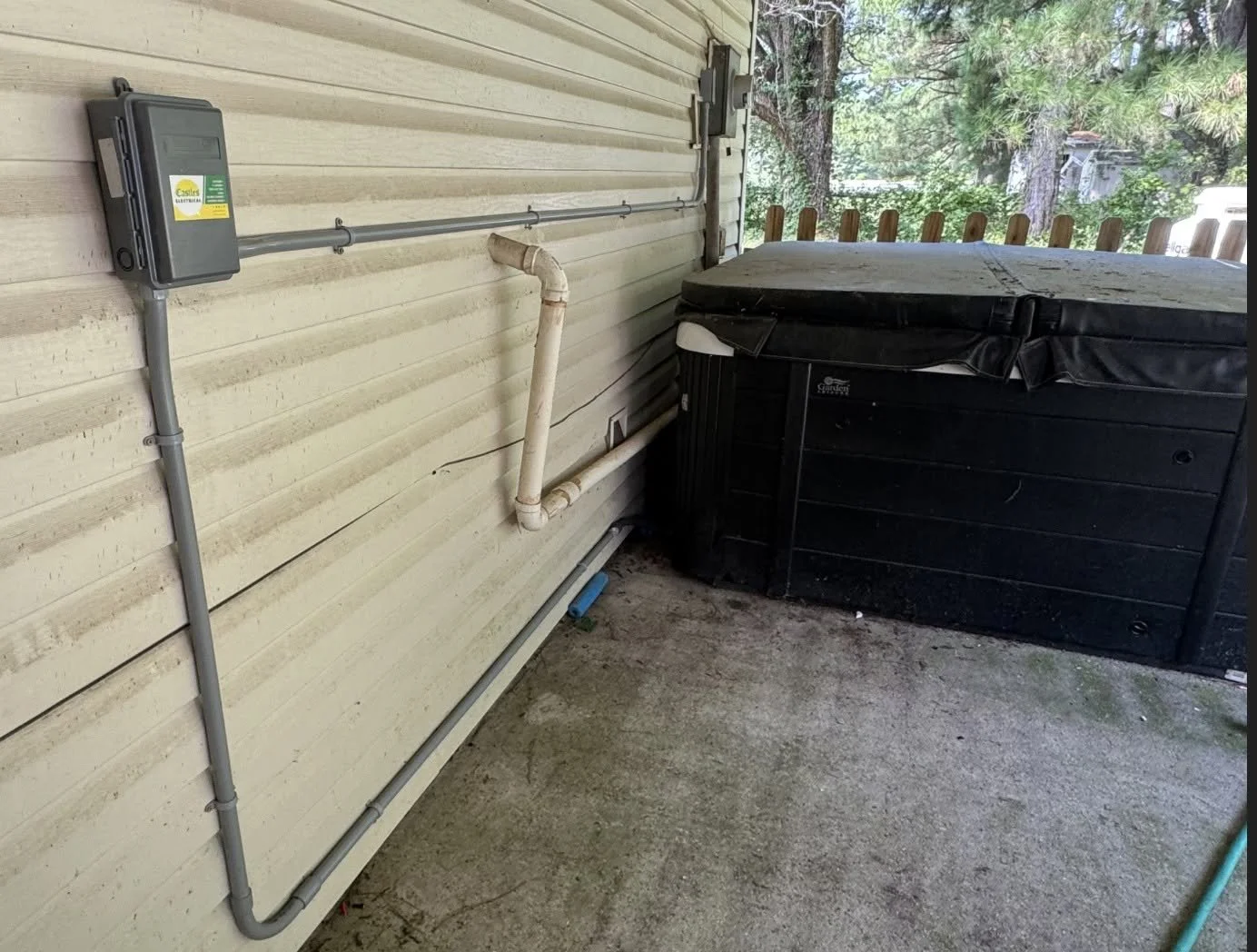
01 — Hot Tubs
In Chesapeake, a Hot Tub Counts as a Pool
The City of Chesapeake’s Building Code Guidelines for Residential Pools, citing City Code 14-141, define a private swimming pool as any structure that holds water over 24 inches deep and is used for swimming or recreational bathing by the homeowner’s family and guests. The handout adds that the definition includes in-ground and on-ground pools, spas, and hot tubs.
That covers a deep hot tub set on a patio behind a Great Bridge or Hickory house just as it covers a backyard in-ground pool. The wiring rules themselves still come from the electrical code, which treats spas and hot tubs in their own part of Article 680.
The handout ties all of this to the Virginia Uniform Statewide Building Code and calls for a building permit for every new pool, hot tub, and spa.
A spa can arrive before its paperwork is ready, so tell us the delivery date early, and we will file the electrical permit with that date in mind.
03 — Equipment Placement
Before Digging: Overhead Lines, Disconnects, and Equipment Pits
Virginia enforces the 2020 National Electrical Code through its 2021 building code. Article 680 of that code has several rules that are easiest to meet while the pool location is still on paper.
Overhead conductors
Under NEC 680.9, permanently installed pools, spas, and hot tubs cannot be placed within the overhead conductor clearances listed in Table 680.9(A). The same limit applies to permanently installed diving structures, observation stands, towers, and platforms. Where a service drop or other overhead line crosses the backyard, we look at it before the pool or spa spot is settled.
The maintenance disconnect
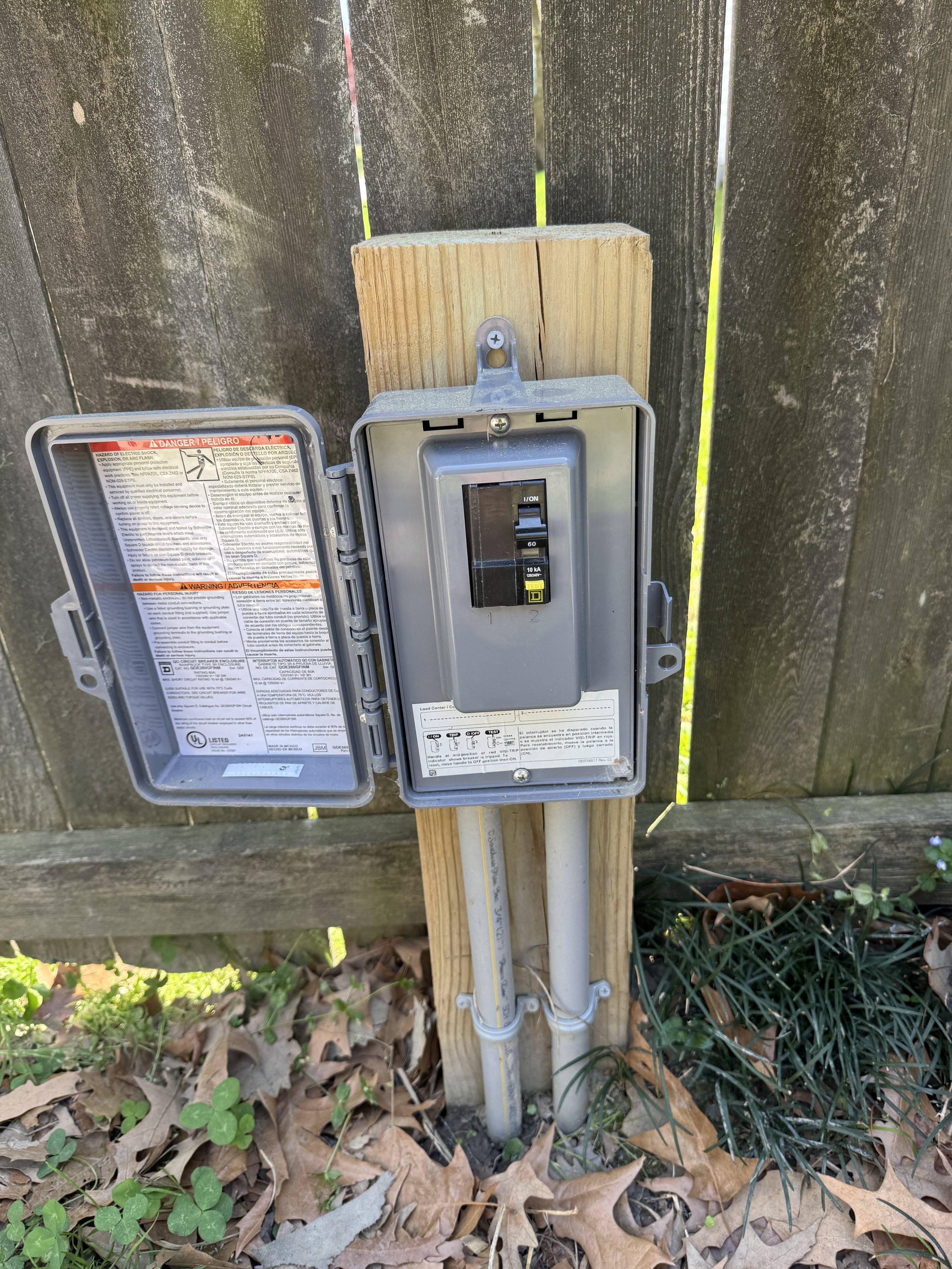
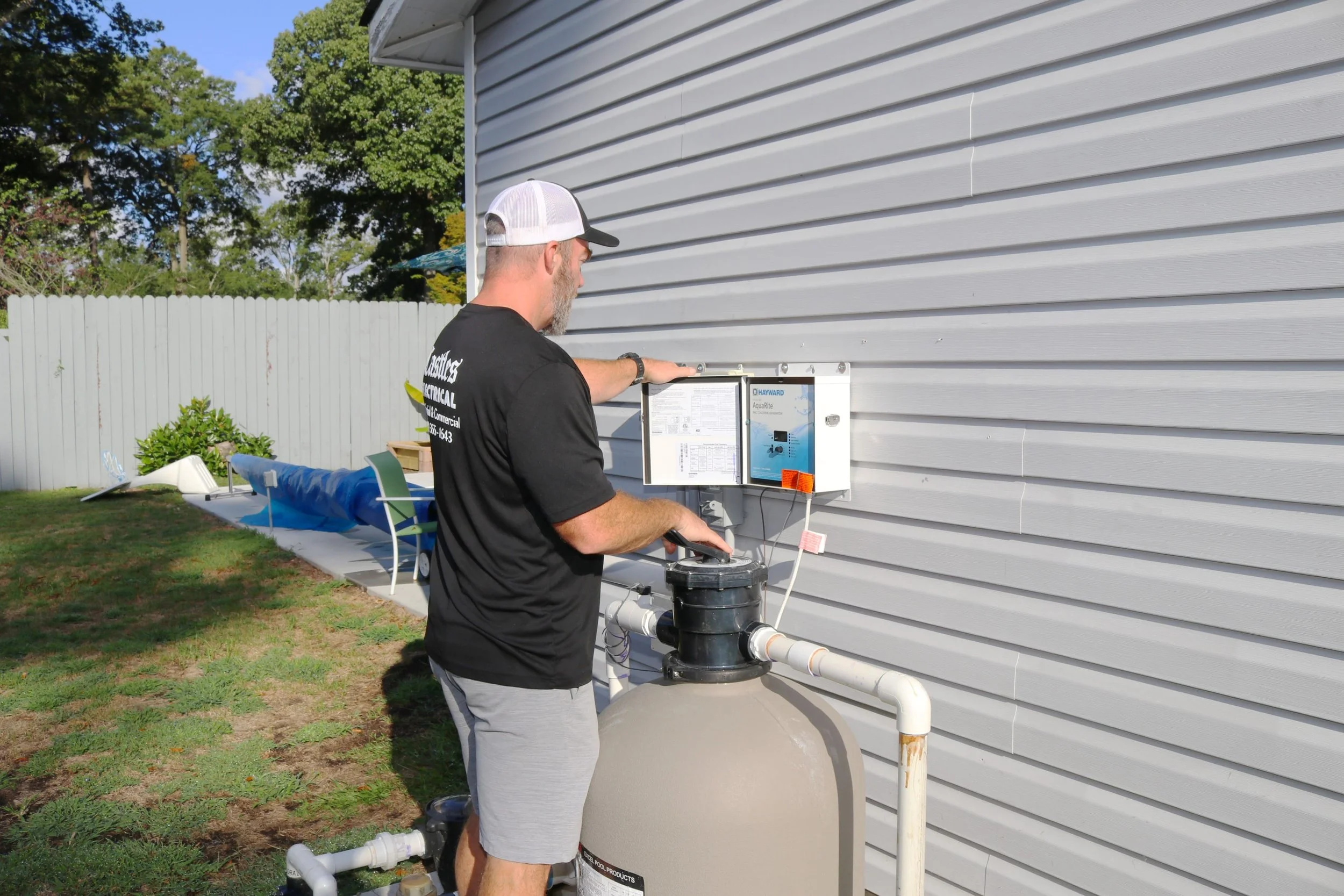
NEC 680.13 requires a maintenance disconnect for pool, storable pool, spa, and hot tub equipment other than lighting. It has to be readily accessible and within sight of the equipment, and at least 5 feet from the water unless a permanently installed barrier separates it from the open water. On a tight patio, that distance determines where the switch can be mounted.
Equipment rooms and pits
When pumps and filters are located in a pit or a small equipment room, NEC 680.12 requires drainage to prevent water from collecting during normal operation or filter maintenance. That matters where the yard sits at grade behind a Deep Creek house, since a sunken pit can hold rainwater, so the drainage plan is part of the conversation before any wiring goes in.
04 — Receptacles and Lighting
Receptacles and Lights Around the Pool
NEC 680.22 covers the outlets and fixtures homeowners tend to add around a pool area. For a permanently installed pool, at least one 125-volt, 15- or 20-amp receptacle on a general-purpose branch circuit is required between 6 and 20 feet from the inside wall, mounted no higher than 6 feet 6 inches above the grade serving the pool.
Receptacles for the pump and other loads are at least 6 feet from the inside walls, and every 125- or 250-volt receptacle within 20 feet of the pool has GFCI protection.
Lighting near the water
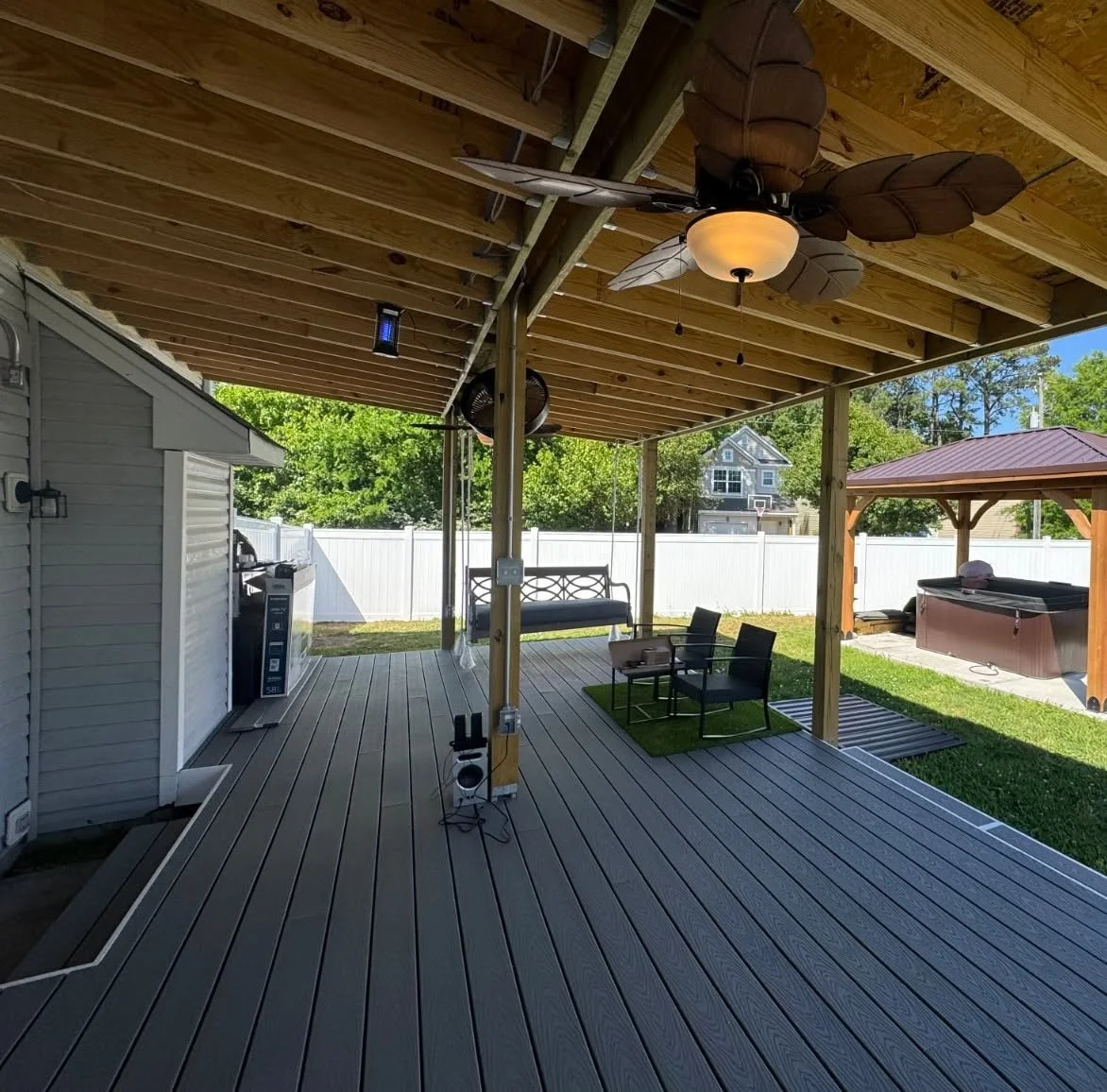
Outdoors, new luminaires, lighting outlets, and ceiling-suspended fans over the pool or within 5 feet horizontally of its inside walls must be at least 12 feet above the maximum water level under NEC 680.22(B)(1). Existing lighting in that zone may remain only if it meets code requirements, including a mounting height of at least 5 feet above the water, rigid attachment, and GFCI protection.
We mark those zones on the layout early, before string lights or a patio fan are planned.
05 — Pump Motors
Federal Rules for Pool Pump Motors
The U.S. Department of Energy regulates dedicated-purpose pool pump motors, which it describes as electric motors used to drive residential and small commercial pool pumps. A final rule published September 28, 2023, set new efficiency standards with compliance dates by motor size.
For motors with a total horsepower under 0.5, compliance is required on and after September 29, 2025. For motors from 0.5 to under 1.15 total horsepower, the rule’s compliance date is September 28, 2027, and under a DOE enforcement policy, the agency will delay enforcement for those motors manufactured before March 26, 2029.
The motor choice is shared by the owner and the pool professional. We handle the wiring behind it: the circuit, the GFCI protection, the bonding connection, and any control wiring the equipment’s instructions call for.
06 — Final Inspection
Perimeter Bonding Before the Pour
Perimeter bonding ends up under the deck or patio. Where the perimeter surface is bonded to a copper ring conductor, the 2020 NEC requires it to be located between 18 and 24 inches from the inside walls of the pool and secured within or under the perimeter surface, 4 to 6 inches below the subgrade.
The pool shell affects the approach. Vinyl liners and fiberglass composite shells are treated as nonconductive, while poured concrete, gunite or shotcrete, and plastered or painted concrete block shells are treated as conductive, and the bonding plan follows from that.
Because the bonding has to be inspected before the shell concrete and the deck are poured, we request those inspections around the pool builder’s calendar, with the city setting the time, and keep the homeowner posted on what was inspected and what comes next.
07 — Process
How a Chesapeake Pool or Hot Tub Gets Wired
Talk it through
Equipment, pad location, and what the pool builder or spa dealer has specified. Photos of the panel and yard help.
Check the service
We confirm the panel can carry the new pump, heater, or hot tub, and plan a panel upgrade if it cannot. Your written installation estimate follows.
Pull the electrical permit
We file with the city and time the work with the building, mechanical, and fence permits held by others.
Rough work and bonding
Bonding, feeders, and equipment wiring are installed and inspected before anything is covered.
Signed off before the pool fills
GFCI protection tested, the disconnect shown to you, the electrical inspection approved, and each device explained.
08 — Why Castles
What Castles Brings to a Pool Project
The Article 680 distances go on the layout before the dig
Where the disconnect, the receptacle, and the lights can sit is settled on paper first.
The bonding inspection is booked around your concrete date
We work to the pool builder’s excavation and pour dates, because the steel has to be seen first.
09 — FAQS
Pool and Hot Tub Wiring Questions
10 — Proof
A Hot Tub Wiring Customer on Google
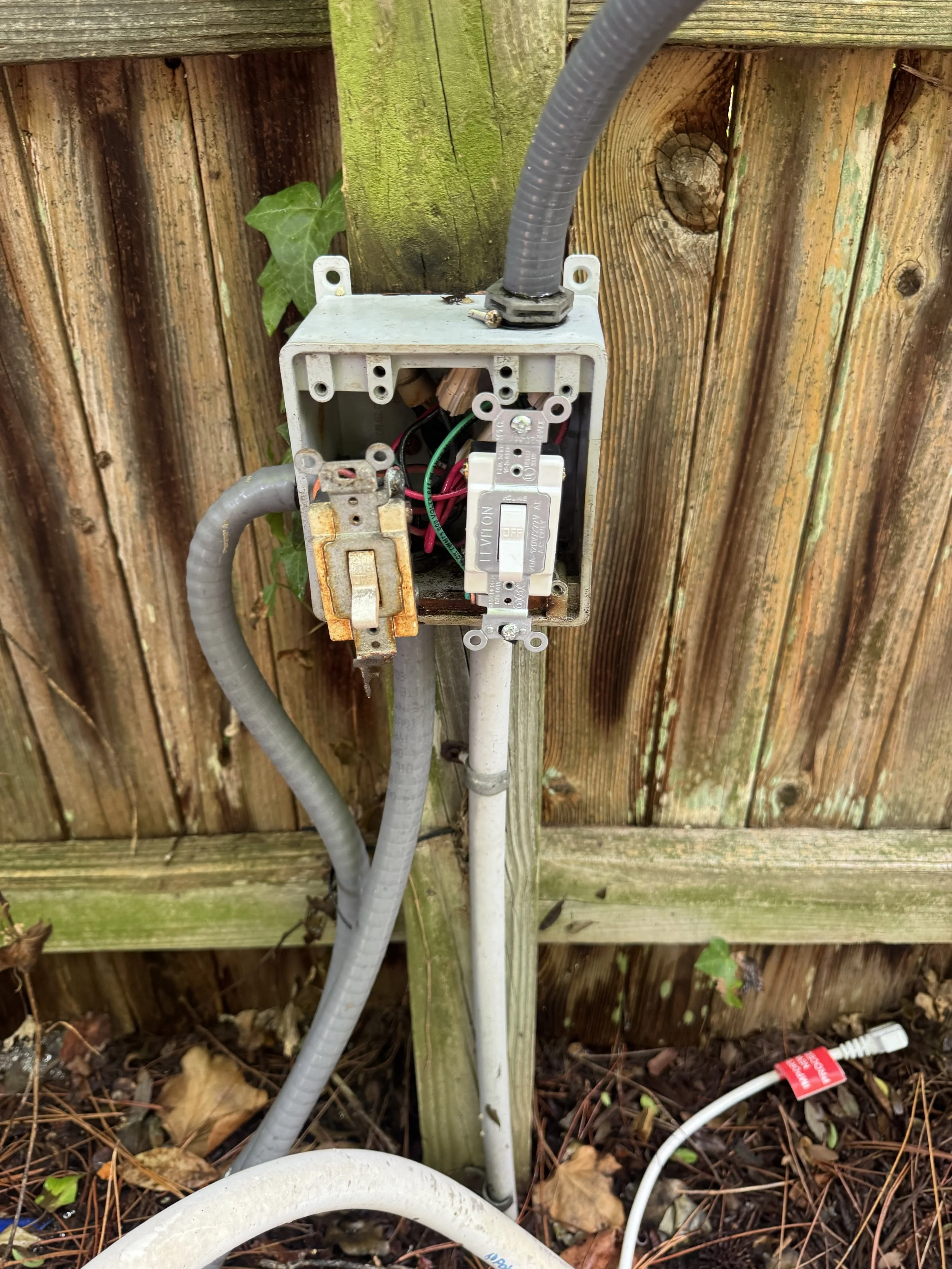
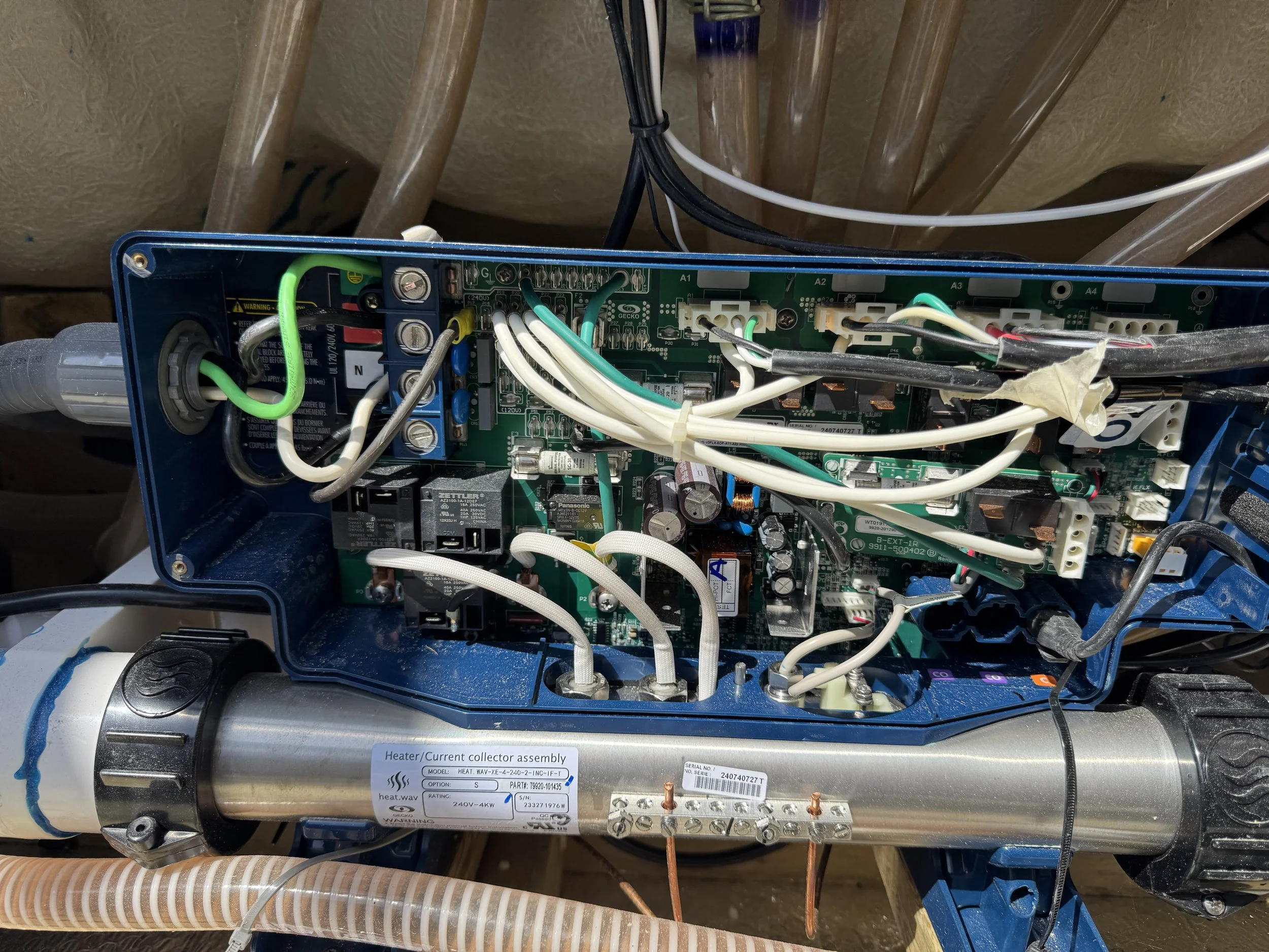
One customer’s review describes the wiring for a new hot tub, run and finished by our electricians.
From our five-star Google reviews
Google 5.0 Rated by Hampton Roads Customers
Castles Electrical maintains a 5.0 rating on Google. The reviews below load as a live widget, so this page shows current feedback from real Castles Electrical customers.