02 — Unit by Unit
One Building, Several Units, Several Panels
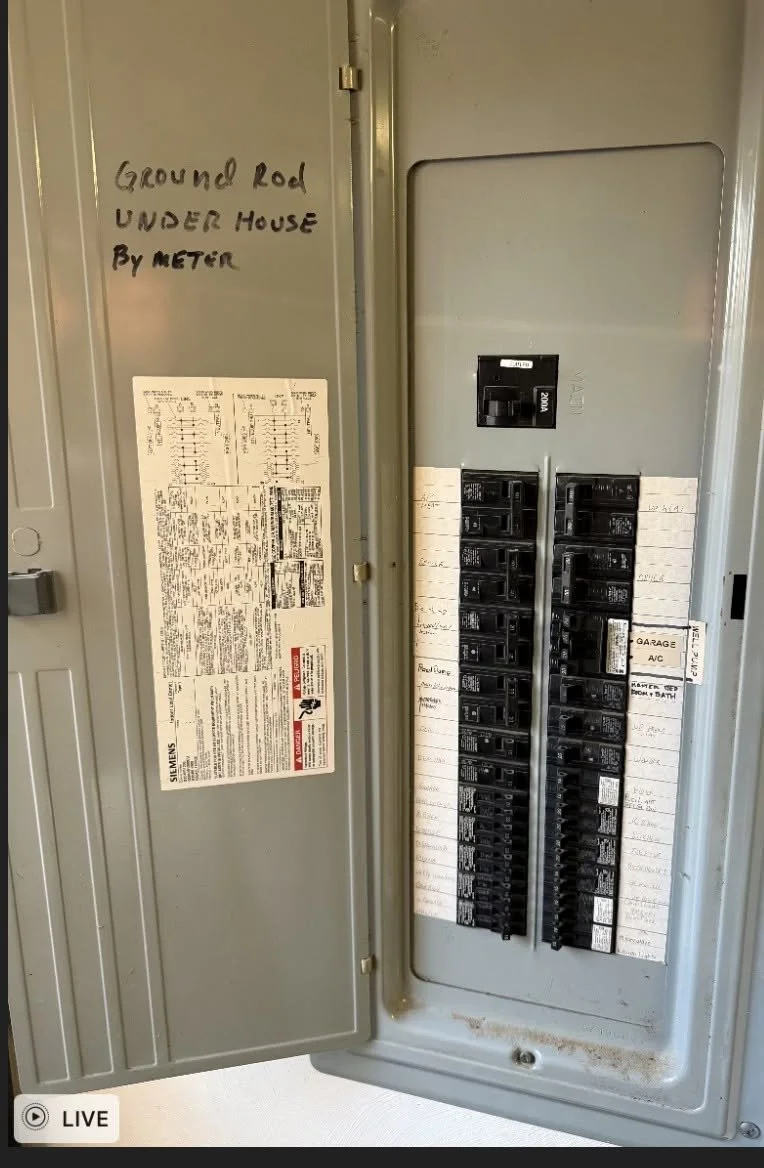
A fourplex where each unit has its own panel has four panels, four sets of branch circuits, and four sets of switches and receptacles. Each unit’s panel, circuits, and devices are part of the written scope.
Circuits that serve the whole building, such as those fed from a house panel or serving a laundry room, get their own scope.
Choosing a method per unit
A vacant unit or one under remodel gives access for copper. A unit that stays occupied may be better suited to connector repair at each device.
03 — Comparison
Planning Aluminum Work: Single House or Small Rental Building
04 — Panel Terminations
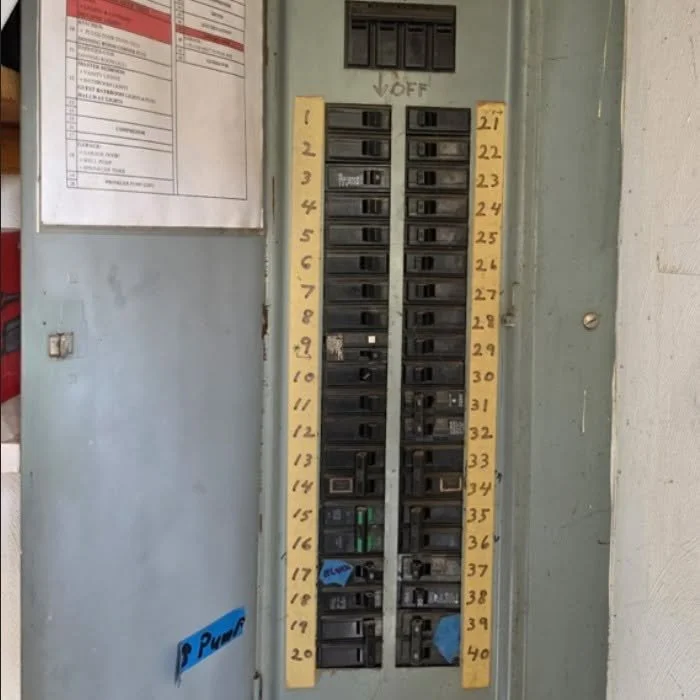
Where Aluminum Lands in the Unit Panel
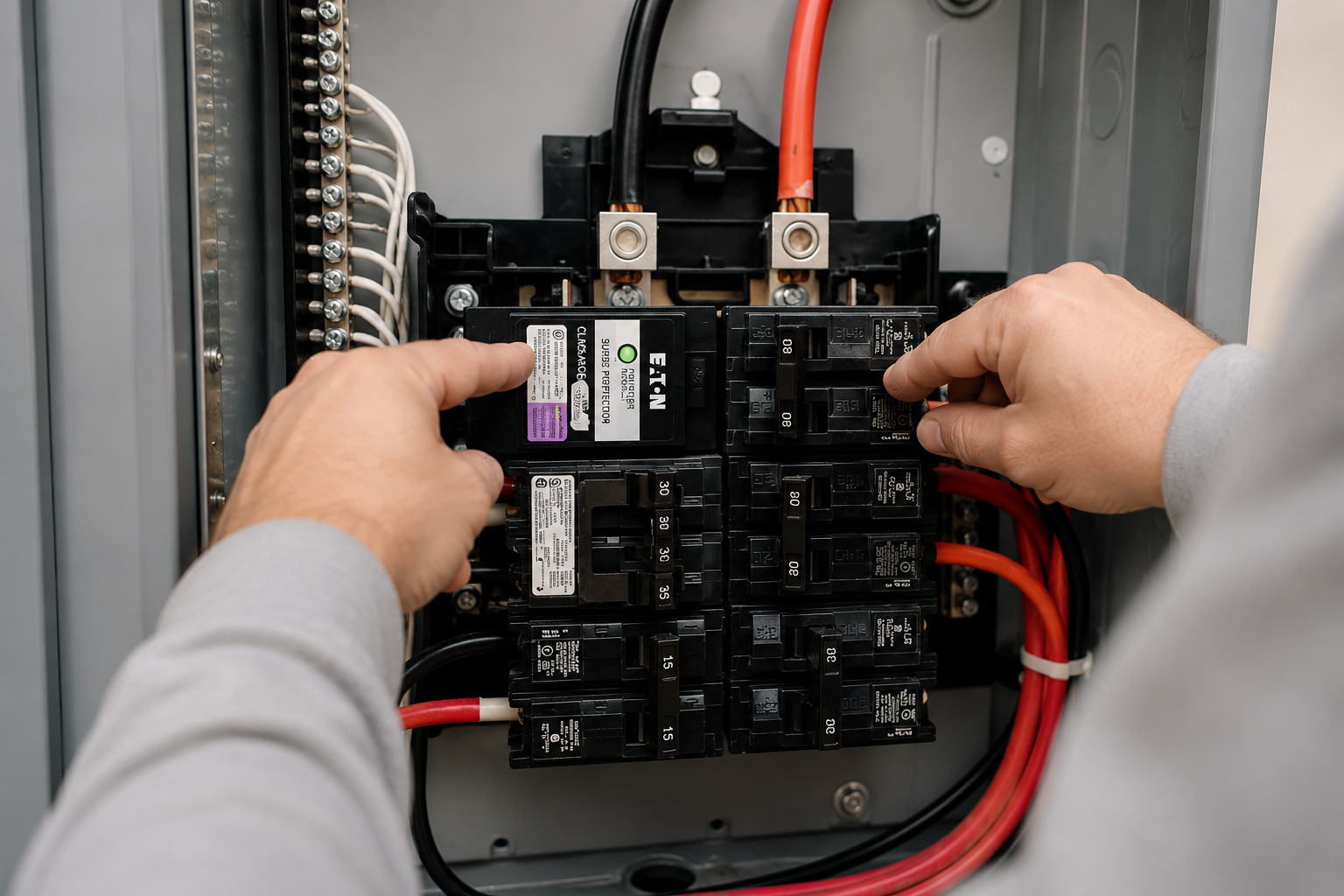
What matters about aluminum wiring shows up at its ends, where a conductor meets a breaker, a lug, or a device screw. In a unit panel, those ends are the breakers and the lugs, and the first question at each of them is whether the terminal is marked for aluminum.
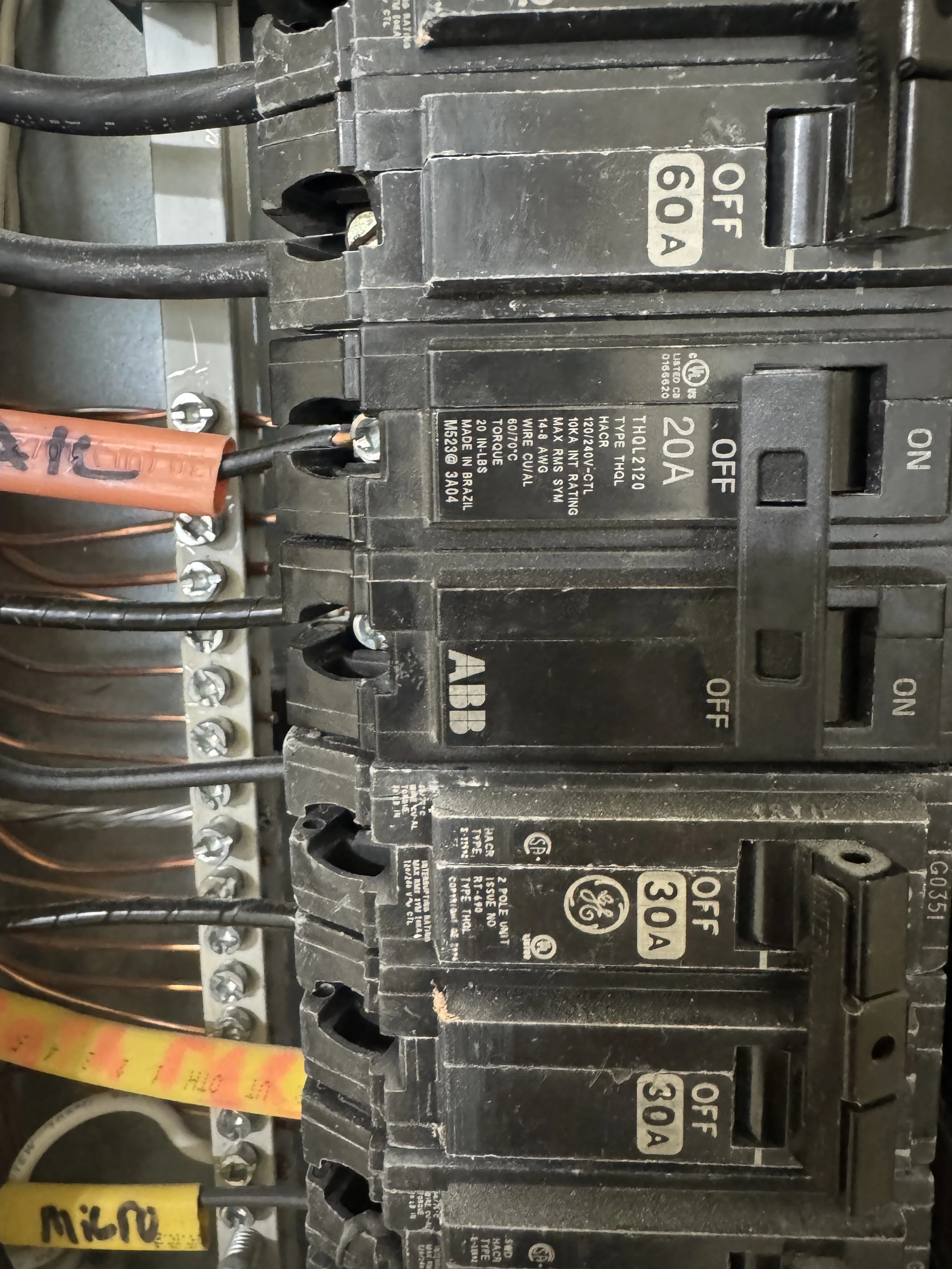
Under the UL 489 standard, a breaker marked Al/Cu or Cu/Al may be used with both aluminum and copper conductors. The marking, with the wire sizes, is on the breaker face or the label above the lugs.
Breakers in an older unit panel may have been swapped over the years, so the marking on a breaker that carries an aluminum circuit is worth checking against the conductor it holds.
When a unit panel is due for replacement anyway, the aluminum circuits are planned into that job. Our Norfolk panel upgrade and replacement page explains how a new panel affects the terminations.
05 — Antioxidant
Antioxidant Compound Follows the Equipment Maker
Breaker manufacturers publish different instructions for antioxidant compounds, so the answer depends on the equipment in that panel.
Square D’s FAQ for its molded case circuit breakers says no-ox grease is neither required nor recommended, because the lugs are designed for use without it, and grease on those lugs can throw off the tightening and strip the threads.
Eaton’s guidance says joint compound should be used only when the breaker’s instruction leaflet calls for it, and that some terminals specify compound for use with aluminum cable. Eaton also notes that its breaker aluminum lugs are tin-plated.
For the plug-on breakers in a unit panel, and for each lug or connector, we go by the markings and instructions for that specific piece of equipment.
06 — Dissimilar Metals
Where New Copper Meets Old Aluminum in a Unit
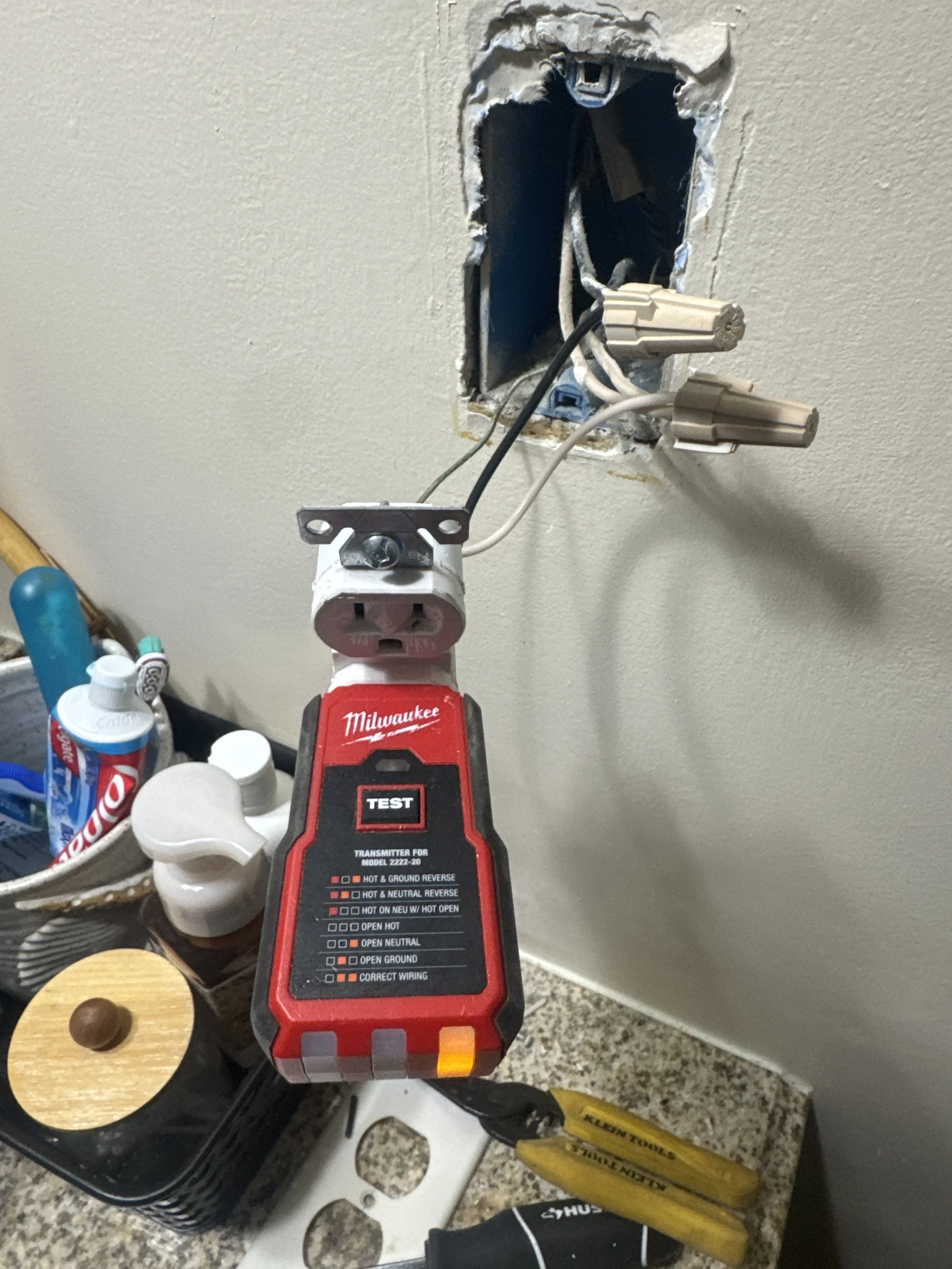
Section 110.14 of the 2020 National Electrical Code, which Virginia’s building code incorporates, allows copper and aluminum to touch in a terminal or splice only when the device is identified for that purpose and its conditions of use.
That matters most in a unit wired in stages, where new copper often meets aluminum that stays for now. Each of those meeting points gets a device identified for that combination.
07 — 240-Volt Circuits
240-Volt Appliance and HVAC Circuits in Each Unit
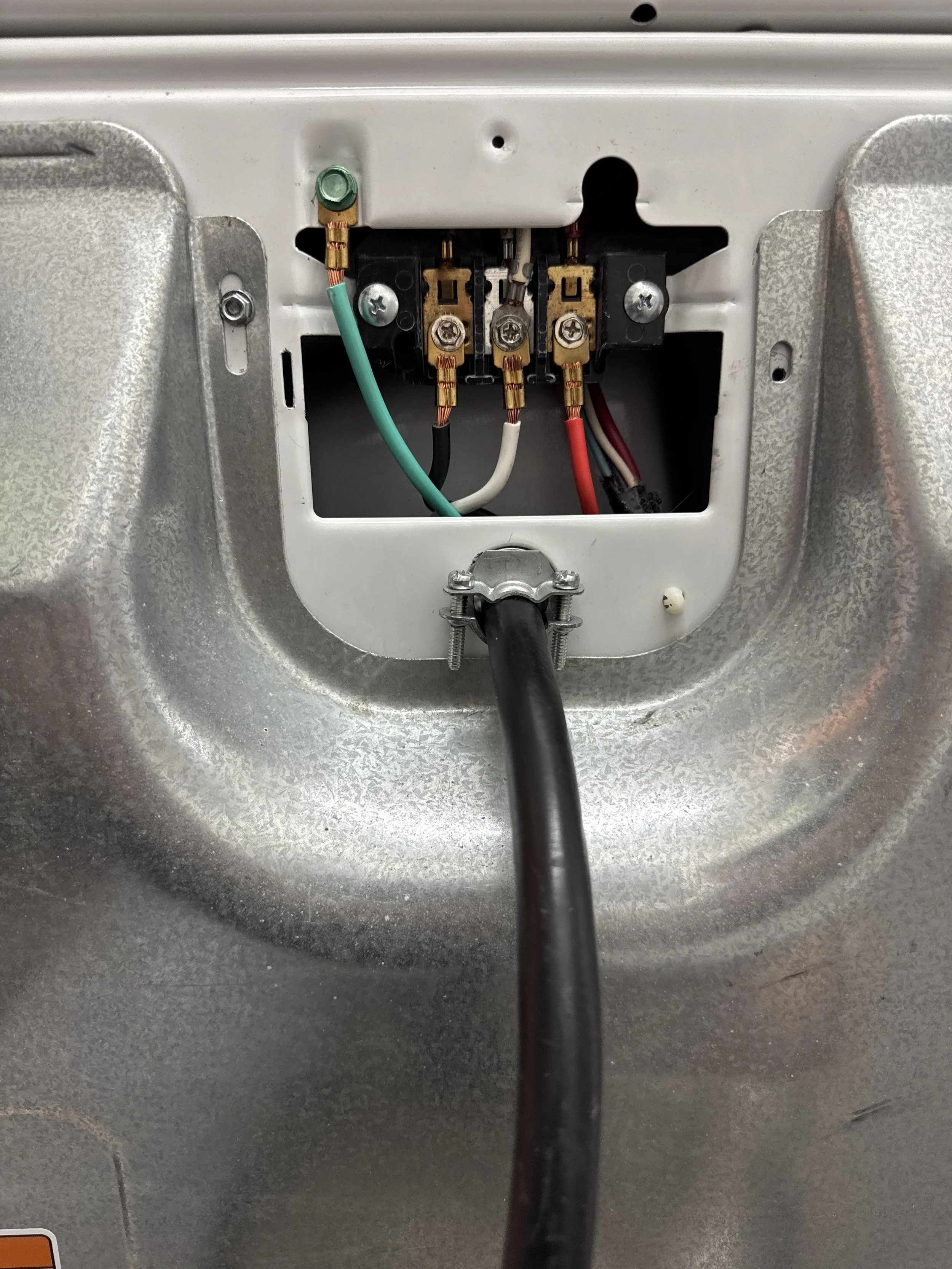
A 1960s or 1970s unit may have 240-volt circuits for a range, dryer, water heater, and air handler or heat pump. Each one ends at a breaker, usually in the unit panel, and at a terminal in the appliance or its disconnect.
Where one of those circuits is aluminum, we check the breaker marking, the terminal at the equipment disconnect or appliance, its instructions, and any sign of heat at the connection, and we coordinate with your HVAC contractor on the new unit’s terminal requirements.
The larger conductors on these circuits make the wire-size part of the breaker marking worth reading too, since the label lists the conductor sizes the terminal accepts along with Al/Cu.
08 — Scheduling
Scheduling Around Occupied and Vacant Units
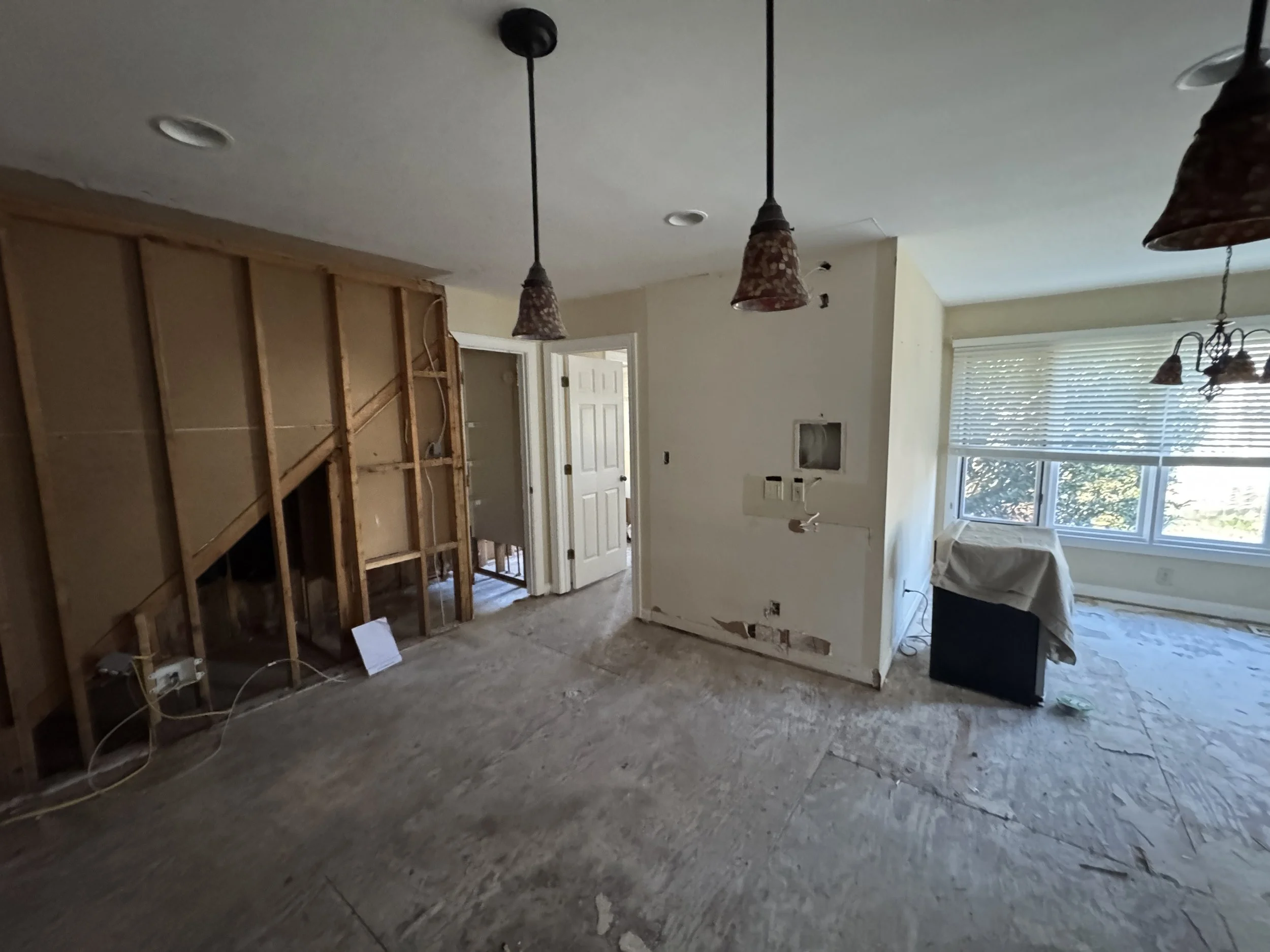
Turnover between tenants is often the most practical window for copper replacement, since the rooms are empty and walls can be opened. Our Norfolk whole-home rewiring page explains how much of a unit must be opened for a copper replacement.
In a unit that stays occupied, connector repair moves device by device, on a schedule set with the owner.
Earlier repairs, loose splices, and junction boxes needing correction are listed in the unit’s scope as we find them.
09 — Process
A Rental Building, Start to Finish
Walk the building
We look at the unit panels, devices, and shared areas, sorting branch circuits from feeders.
Scope each unit
Aluminum circuits, terminations to correct, and method options, with a free installation estimate.
Book the units in order
Vacant units, occupied units, and shared areas go on a calendar agreed with the owner, and permits are pulled where the scope requires them.
Repairs, inspection, and the unit records
Terminations are made to the equipment markings and instructions, splices and boxes are corrected, and after inspection the owner receives a record for each unit and the shared areas.
10 — Why Castles
Built for Multi-Unit Owners
Each Unit in the Scope
Shared-area circuits are scoped and scheduled apart from the units.
Terminations Made to the Marking
Breaker, lug, and appliance connections made to their Al/Cu marking and the maker’s instructions.
11 — FAQS
Norfolk Aluminum Wiring FAQs
12 — Proof
Wiring Work, and a Customer Who Called Back
A Google review of wiring work says the customer would use Castles Electrical again for everything electrical they need.
From our five-star Google reviews
Google 5.0 Rated by Hampton Roads Customers
Castles Electrical maintains a 5.0 rating on Google. The reviews below load as a live widget, so this page shows current feedback from real Castles Electrical customers.