
Aluminum Wiring in Older Homes: Is It Dangerous and Can It Be Fixed?
Why Aluminum Wiring Was Used in the First Place
Copper prices spiked sharply during the late 1960s and early 1970s, and builders looked for a cheaper substitute for the branch-circuit wiring that feeds outlets, switches, and lighting throughout a house. Aluminum was lighter, cheaper, and conducted electricity well enough to do the job on paper. Manufacturers rolled it into single-family construction on a wide scale for roughly a decade, and it shows up most often in houses built between the mid-1960s and mid-1970s.
The wire itself was never the real problem. Aluminum conducts electricity just fine along its length. What went wrong was almost entirely at the connection points: the screw terminals on outlets and switches, the wire nuts inside junction boxes, and the lugs where branch circuits land in the panel. Those are the spots that later research linked to a recurring pattern of overheating, and they're the reason this wiring type earns a level of caution that copper from the same era does not.
The Core Problem: What Happens at a Connection
Three physical properties of aluminum work against it at a wire connection, and they tend to compound over the years rather than show up right away.
First, aluminum oxidizes quickly when exposed to air. The oxide layer that forms on its surface is a poor conductor, unlike the thin oxide layer that forms on copper, which barely affects conductivity. Once oxidation builds up at a screw terminal, the resistance at that point alone increases even though the rest of the circuit remains unaffected.
Second, aluminum expands and contracts with temperature changes more than copper does, and it also deforms under sustained pressure in a way engineers call cold flow. Every time a circuit heats up under load and then cools back down, the metal at the connection shifts slightly. Over hundreds of cycles, a screw terminal that was properly torqued down during construction can end up slightly loose, even if nobody touched it.
Third, aluminum and the brass or steel commonly used in older outlets and switches expand at different rates when heated. That mismatch, combined with the cold-flow tendency described above, gradually opens a microscopic gap at the connection point.
None of these three things is dangerous on its own. The danger comes from what happens when they combine: a loosening connection with a thin layer of oxide sitting between two dissimilar metals is a connection with rising electrical resistance. Resistance at a poor connection generates heat, right at that spot, every time current flows through it. A device pulling a normal, unremarkable amount of power- a lamp, a window unit, a hair dryer- can be enough to push a degraded connection past a safe temperature, because the heat is being generated locally rather than distributed along the wire.
This is sometimes called a glowing connection failure in the electrical engineering literature, because a severely degraded connection can heat up enough to glow, char the surrounding insulation, and ignite nearby material, all without ever tripping a breaker. Breakers protect against overcurrent along the whole circuit; they do nothing to detect a hot spot forming at one screw terminal that's still carrying a normal current level.
How This Differs From a Copper Circuit
Copper does not oxidize in a way that meaningfully affects conductivity, and it does not cold-flow the way aluminum does. A copper connection made correctly during construction, using the standard tools and hardware of the day, tends to stay tight for the life of the house barring physical damage or a botched repair. That's the main reason copper branch wiring from the same construction era doesn't carry the same reputation.
It's worth being precise here: not every aluminum-wired house has a problem, and not every connection in an aluminum-wired house is degrading. Larger aluminum feeder cables, the kind used for service entrances, subpanels, and some 240-volt appliance circuits, have a long track record of safe use when installed with connectors rated for aluminum and maintained properly. The added risk is specifically tied to the smaller-gauge branch-circuit aluminum wiring used at standard 15- and 20-amp outlets and switches in that mid-century construction window, combined with devices of that era that weren't designed with aluminum's expansion behavior in mind.
Recognizing It in a House
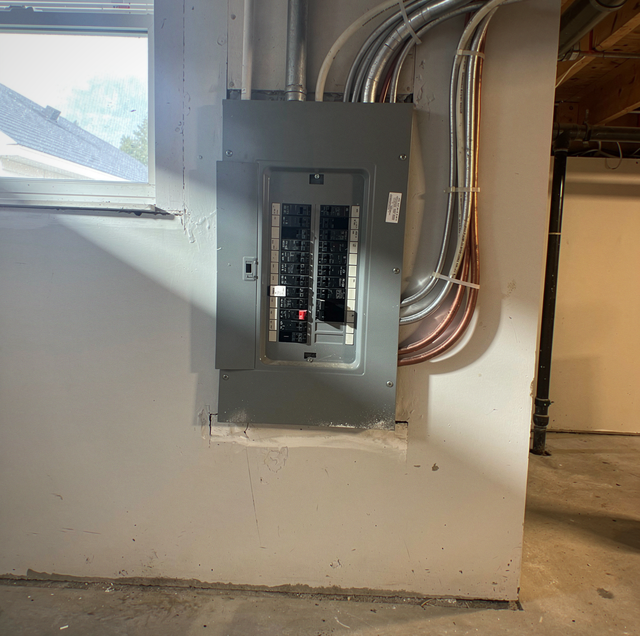
Aluminum branch wiring is usually visible where it's exposed, at the panel, in an unfinished basement or crawlspace, or in an attic. The insulation typically prints "AL" or "Aluminum" along its length, and the wire itself has a dull silver-gray color rather than copper's reddish tone. A dated permit history or a construction timeline that aligns with that decade-long window is a reasonable prompt to look further into, but the only reliable way to know for certain is a physical inspection of the wiring and the devices it feeds.
Warning signs that suggest connections have already begun to degrade include warm switch or outlet cover plates, a persistent odor near an outlet that resembles hot plastic, outlets or switches that intermittently stop working for no clear reason, and visible discoloration around a cover plate or receptacle. None of these signs is exclusive to aluminum wiring, and their absence doesn't rule out a developing problem, since a connection can be degrading well before it produces a symptom a homeowner would notice.
What Remediation Actually Looks Like
Once aluminum branch wiring has been identified, there are a few accepted paths forward, and they aren't all equally involved.
Pigtailing with approved connectors: This is the most common fix and involves splicing a short length of copper wire onto the end of each aluminum conductor at every outlet, switch, and junction box, using a connector specifically listed and rated for aluminum-to-copper connections. The device itself is then wired to the copper pigtail rather than directly to the aluminum. This removes the failure point, the direct aluminum-to-device connection, without requiring the aluminum wire to be pulled out of the walls. It's labor-intensive because every single connection point in the house needs to be addressed individually, but it doesn't involve opening up finished walls.
Replacing devices with aluminum-rated hardware: In some cases, outlets and switches marked as rated for direct aluminum connection can be substituted for standard devices, though this approach has fallen out of favor compared to pigtailing because it still leaves a dissimilar-metal connection in place, just one built to tolerate it slightly better.
Full rewiring: This means removing the aluminum branch circuits entirely and running new copper wiring, which is the most complete fix but also the most disruptive, since it typically requires opening walls and ceilings unless the house has accessible chases or an open attic and basement to route new runs through.
Which approach makes sense for a given house depends on the layout, how much of the wiring is affected, the condition of the boxes and devices already in place, and what else might be planned for the space anyway, such as a renovation that already involves opening walls. There isn't a single correct answer that applies to every house, which is exactly why this decision belongs to a licensed electrician who can inspect the actual wiring and devices rather than working from a general description of the era.
Why This Isn't a DIY Project
Working on live branch circuits carries an obvious shock hazard, but the bigger reason this falls outside do-it-yourself territory is that identifying which connections have already degraded, and applying connectors correctly rated and torqued for aluminum, requires both training and the right materials. A connector that isn't listed for aluminum use, or one installed without the correct technique, can make a connection worse rather than better while looking identical to a proper repair from the outside. An electrician evaluating a house with aluminum wiring will typically open a representative sample of outlets, switches, and junction boxes to assess the condition of the connections before recommending pigtailing, device replacement, or a full rewire, and will pull permits where required so the work is recorded as code-compliant.
If a home inspection report flags aluminum wiring, or if the visible wire in the attic or panel is stamped "AL," the reasonable next step is a professional evaluation rather than assumptions in either direction. Some aluminum-wired homes have already had connections addressed by a previous owner; others have never been touched since construction. Only a hands-on inspection tells you which situation you're actually in.
Frequently Asked Questions
No. The risk is tied to the condition of individual connections, not the presence of aluminum wire itself. A house where the connections have been properly pigtailed or otherwise addressed can be just as safe as one wired entirely in copper. The concern applies to connections that haven't been evaluated or repaired.
Check accessible areas first: the main panel, an unfinished basement, or an attic where wiring runs are visible. Aluminum wire is dull gray rather than copper's reddish color, and the insulation is usually printed with "AL" or "Aluminum." A home built during the affected construction window is worth checking even if no wiring is immediately visible.
Some insurers ask about it during underwriting or renewal, and coverage or premiums can be affected depending on the carrier and whether the wiring has been inspected or remediated. Requirements vary enough by insurer that it's worth checking directly with your policy provider rather than assuming either way.
When done with connectors listed for aluminum-to-copper splices and installed correctly, pigtailing is considered a lasting repair, not a temporary measure. It doesn't need to be periodically redone. The key variable is whether the original work was done with the correct materials and technique, which is part of why a professional evaluation matters even for a house where pigtailing was supposedly done years ago.
Swapping a cover plate or a like-for-like device isn't the same as addressing an aluminum connection safely, and doing so without the correct connector and technique can leave the underlying issue in place or disturb a connection that was otherwise stable. Any work involving the aluminum conductors themselves should go through a licensed electrician.
Nothing happens on a fixed timeline, since degradation depends on how heavily circuits are used and how each connection was originally installed. Some connections stay stable for decades; others reach a failure point sooner. Because there's no way to predict which connections in a given house are at risk without inspecting them, an evaluation is the only way to know where a house actually stands.
Schedule an aluminum wiring inspection — a licensed electrician can check your connections and recommend pigtailing, device upgrades, or a full rewire based on your home's actual needs. Castles Electrical serves Virginia Beach, Chesapeake, and Norfolk. Call (757) 765-8222.
