Do You Need 200-Amp Service for an EV Charger and Heat Pump?
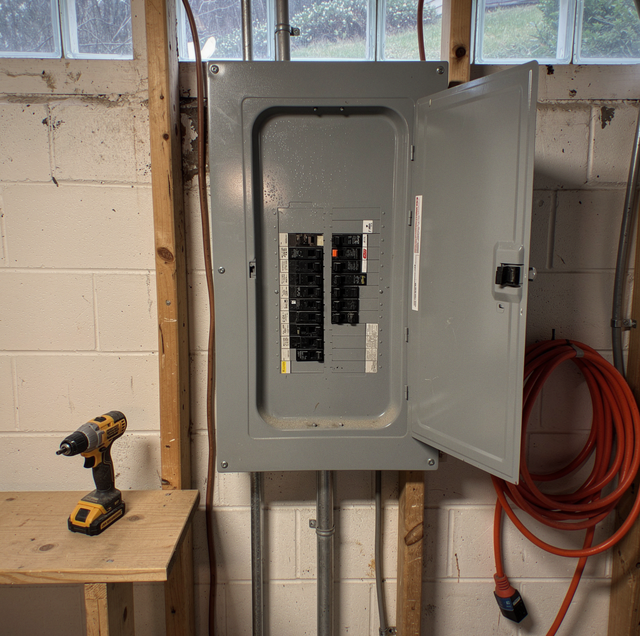
Quick Answer: Whether you need a 200-amp upgrade depends on a load calculation, not on the size of either appliance alone. An electrician adds up your home's existing demand, then layers in the EV charger and heat pump at their full rated draw, since both can call for maximum current on the same cold night. If the total stays comfortably under your service rating, no upgrade is needed. If it's close or over, your options are a service upgrade, a subpanel where slots (not capacity) are the issue, or a load-management device that keeps the two new loads from overlapping.
A homeowner planning an EV charger usually has a rough idea of what that project involves. A heat pump is a separate decision, often made for different reasons: an aging AC, a utility bill that keeps climbing, or a furnace on its last winter. The problem shows up when both land on the calendar in the same year. Each might fit comfortably inside your existing electrical service alone. Put them on the same panel at once, and the math that worked for one project no longer applies because two of the largest loads a house can carry are now drawing from the same supply.
Why Two Large Loads at Once Changes the Math
An EV charger and a heat pump are both continuous, high-draw loads, unlike most of what runs in a house. A dishwasher cycles for an hour and shuts off. A heat pump's outdoor unit and backup heat strips can run for hours during a cold snap, and a Level 2 charger often runs overnight for six to ten hours straight. Neither is a brief spike you can average out over the day.
Timing overlap is what creates the risk. Picture a cold evening: the heat pump runs its compressor plus backup resistance heat, the range is on for dinner, the dryer kicks in afterward, and the car starts charging the moment it's plugged in. None of those loads is unusual on its own, but all landing in the same two-hour window is exactly what a load calculation has to plan for, since that's when your service is asked to do the most at once.
This differs from asking whether your panel has an open slot. A panel can have empty breaker positions and still lack the amperage to spare. Slots and capacity are separate questions, and mixing them up is the most common reason a homeowner is surprised mid-project.
What Your Existing Service Actually Tells You
Start with the number stamped on your main breaker, usually 100, 150, or 200 amps: the total the utility feed and panel are built to deliver at once, across every circuit combined. It doesn't grow because you need it to.
A 100-amp service was common on homes built decades ago, before central air, an electric range, and an electric water heater were standard. Many of those homes have since added central air, then a dryer, then maybe a hot tub, each treated as its own small decision. A heat pump and an EV charger are usually the additions that finally expose how little room was left.
A 200-amp service was sized with more slack from the start, which is why newer construction defaults to it. But a 200-amp panel already carrying electric heat, an electric range, and a hot tub can be closer to its ceiling than the number on the door suggests.
Neither size answers the question alone. What matters is the gap between what the service is rated for and what the household asks of it at the busiest moment, and that gap is what a load calculation measures.
How a Load Calculation Actually Works
A load calculation turns "does this fit" into a real number instead of a guess. It starts with the home's general demand: square footage, kitchen and laundry circuits, and major fixed appliances, each counted at its rated draw, with a diversity factor applied where not everything runs full tilt at once.
Large fixed appliances get counted closer to their full nameplate rating instead: a central air conditioner, an electric range, an electric water heater, and a heat pump, because a compressor working hard on a hot afternoon isn't something you can discount the way you can a hallway light. An EV charger is treated the same way, a continuous load added at its full rated amperage, since the charger has no reason to back off once a session starts.
Once all existing and proposed loads are totaled, the electrician compares the total against your service rating. A total comfortably under the rating means the service has headroom for both new loads. A total at or above the rating indicates that something has to change before the new circuits go in: more capacity, a different equipment choice, or a way to prevent the two loads from drawing simultaneously.
An in-person inspection matters alongside the math, since a calculation built on nameplate numbers can miss real-world details, like aging conductors or a worn meter base, that change what an electrician is willing to recommend.
Signs the Panel Is Already Close to Its Limit
A handful of clues suggest a panel is already running near its ceiling.
Breakers, especially the main, that trip more than occasionally: A branch circuit tripping on its own points to that one circuit. The main breaker tripping points to the whole service being asked for more than it can deliver.
Lights that dim noticeably across the house when a big appliance starts: A brief flicker when the AC compressor kicks on can be normal; repeated, house-wide dimming means the service is straining under a large starting load.
A panel that's already full, with no open breaker slots: That's a physical-space problem, separate from whether the amperage itself is sufficient.
Double-tapped breakers, two conductors jammed under a single terminal built for one. It's a strong hint someone ran out of slots and improvised rather than adding capacity the right way.
An old, small service on a home that's since added central air, a dryer, a range, or a workshop: Each addition alone may have fit; the cumulative effect warrants a second look before another large load joins the list.
None of these signs alone confirms an upgrade is required, but they're reasons to schedule a load calculation rather than assume the panel will absorb two more large circuits without complaint.
What a Service Upgrade Actually Involves
A service upgrade replaces the main panel, the service entrance conductors, and often the meter base with equipment rated for the higher amperage, most commonly 200 amps. Because the work touches the utility's connection point, it isn't a project an electrician handles alone: the utility coordinates a temporary disconnect and reconnect, and the building department requires a permit and inspection before the new service is energized.
Expect a partial-day outage while the old equipment is removed and the new panel, conductors, and meter base are installed. Every circuit is then reconnected to the new panel, and an electrician often adds extra slots for future circuits at the same time, since running new conductors back a second time is far more disruptive than leaving room now. The upgrade solves both problems at once: more amperage and more physical slots.
That doesn't make an upgrade the automatic answer. It's a larger project with utility coordination and a permit attached, and the right call only when the calculation actually shows the service falling short, not simply because two large appliances are being added.
Alternatives When Headroom Is Marginal
A load calculation doesn't always land on a clean yes or no. Sometimes a home is close enough to its limit that a full service upgrade feels like overkill for the actual shortfall. That's where load-management approaches come in, and they solve a different problem: instead of raising the ceiling, they keep the EV charger and heat pump from drawing at full demand simultaneously.
An EV energy-management device sits between the charger and the panel, monitoring real-time current draw. When the heat pump, the range, or another large appliance pulls hard, the device automatically reduces or pauses the charger's output, then resumes once demand drops. The car still gets a full charge by morning in most cases, since overnight charging has hours to work with; it simply stops competing head-on with the heat pump for the same slice of amperage.
A subpanel fits a different situation: the amperage is fine, but there's nowhere left to land a new circuit. It adds breaker slots fed from the existing service, solving a physical space problem without increasing total capacity. If the calculation shows the service itself maxed out rather than just out of room, a subpanel doesn't fix that.
A whole-home load-management or smart-panel setup takes the idea further, monitoring several circuits at once and prioritizing which loads run as demand approaches the limit. It's a more involved install than a single charger-specific device, and earns its keep when a home has several large, flexible loads that don't all need peak output at once.
None of these options increase what your service can deliver in an absolute sense. They manage timing so the loads you already have room for don't collide, which is a useful fix for a marginal shortfall, not a substitute for a real upgrade when the service is truly undersized.
Weighing the Two Paths
A full service upgrade is the more permanent fix. It removes the ceiling as a recurring conversation, adds slots for whatever comes next, and it's the only real option when the calculation shows the service is meaningfully undersized. The tradeoff is the scope: utility coordination, a permit, and a temporary outage while the work happens.
A load-management device is the lighter-touch fix. It incurs far less disruption, doesn't affect the service entrance, and can be added or removed without permanent changes to the wiring. Its limit is that it manages timing rather than raising capacity, so it fits a marginal shortfall, not a service that's truly undersized.
Neither path is universally correct. The honest way to choose is the same load calculation either decision depends on: a real number showing how far the existing service is from what the EV charger and heat pump, combined with everything else in the house, actually demand.
Frequently Asked Questions
Often close to the same, or somewhat more, depending on equipment size and how much backup resistance heat is installed. A heat pump moves heat rather than generating it, which is efficient in mild weather, but backup strip heat kicks in during cold stretches and can draw several thousand watts on its own, a figure the load calculation has to account for.
The order matters less than making sure whoever runs the load calculation accounts for both, even if only one is installed today. Sizing the EV circuit on current demand alone while ignoring a heat pump coming within a year or two risks a service that passes the calculation now and falls short once the second project happens, meaning work gets revisited that could have been planned once.
The immediate risk is nuisance tripping of the main breaker whenever both loads and other appliances line up, inconvenient but not dangerous, since the breaker is doing its job. The greater risk is a homeowner or installer disabling or oversizing a breaker to prevent tripping rather than fixing the actual shortfall, which removes the protection the breaker is meant to provide.
Yes, in a way separate from the amperage question. Aluminum wiring from certain eras is prone to loose connections at breaker and outlet terminals as the metal oxidizes, a termination issue rather than a capacity one. An electrician evaluating your service for this addition should flag aluminum branch circuits too, so both problems get addressed in one visit.
Typically the device itself, as an add-on rather than new service equipment, carries a lighter permitting footprint than a full upgrade, though requirements vary by jurisdiction. What doesn't vary is that the load calculation behind the choice, and the installation itself, should come from a licensed electrician, since the device makes automated decisions about how power gets distributed.
Treat it as a living number, not a one-time exercise. Any project adding a large fixed load, a hot tub, a second EV, or a workshop is a reasonable trigger to revisit the calculation rather than assume headroom that was true two additions ago still holds. A home that adds several large appliances over several years without ever rechecking the total is how a service quietly goes from adequate to marginal.
Schedule a load calculation before you commit to an EV charger and heat pump installation — find out whether your existing service has enough capacity or needs an upgrade. Castles Electrical serves Virginia Beach, Chesapeake, and Norfolk. Call (757) 765-8222.