02 — Inside the House
Garage or Utility Room: What Virginia’s Residential Code Lays Out
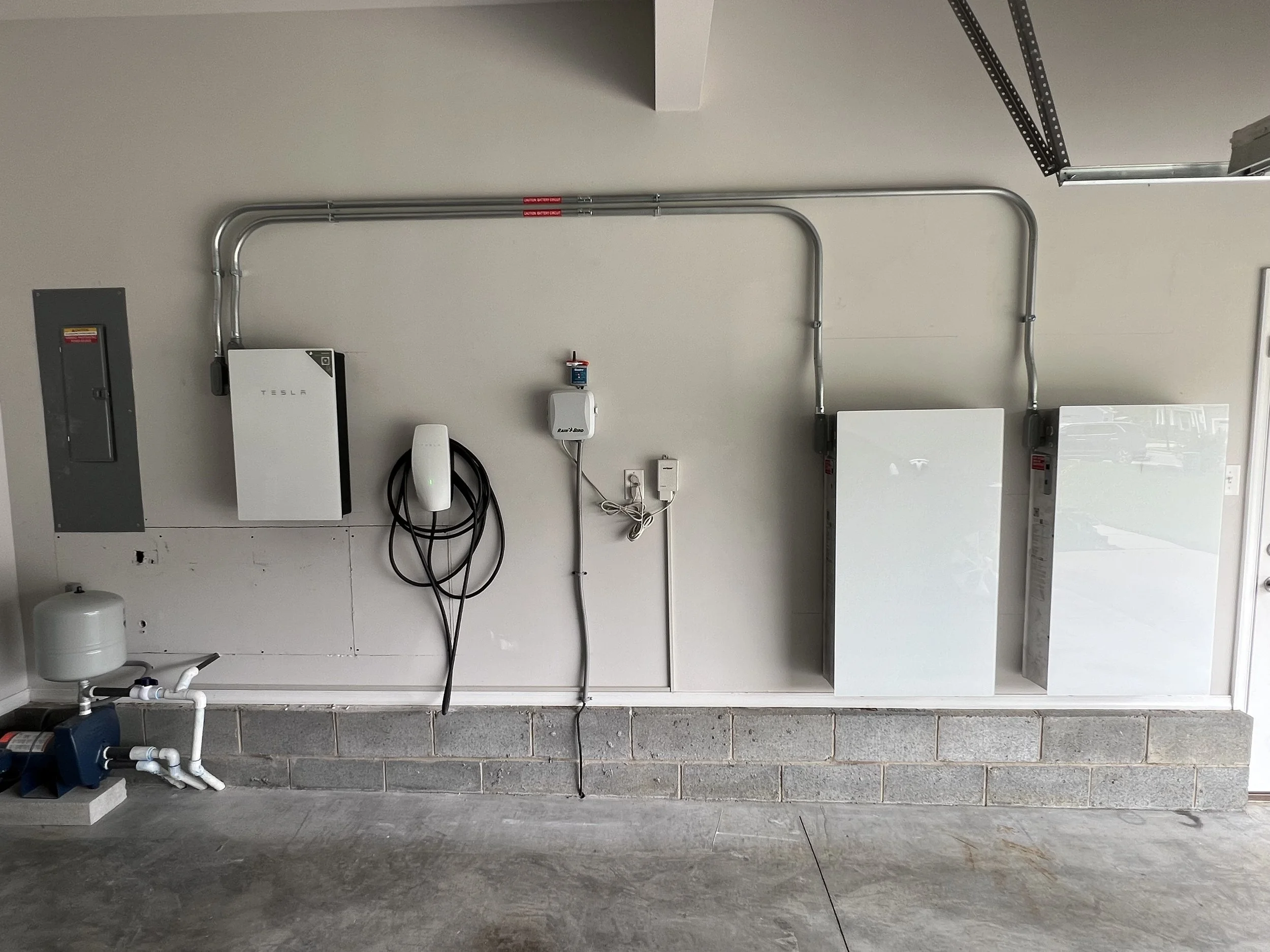
When an outside wall is too crowded, the next question is an inside location. Virginia’s 2021 residential code lists attached garages separated from the living space as required, and utility closets, basements, and storage or utility spaces with finished or noncombustible walls and ceilings. Tesla separately rules out habitable spaces and interior hallways.
The code calls for smoke alarm coverage where these systems go, and a listed heat detector interconnected with the smoke alarms where a smoke alarm cannot be installed, which is common in garages. It also asks that the manufacturer’s instructions be given to the owner or kept near the system, with a label listing service contacts. Spacing between units follows the code and Tesla’s installation documents.
Some listed residential systems are exempt from these rules when installed in accordance with the manufacturer’s instructions and the electrical code, and Norfolk’s inspectors determine how that applies to a given installation.
03 — Choosing
Battery, Generator, or Both for a Norfolk Home
04 — Whole or Partial
Whole-Home or Partial Backup: What a Norfolk Powerwall Can Run
Tesla describes two designs. With whole-home backup, every circuit in the house stays available during an outage. With partial-home backup, you choose essential loads such as lights and outlets, and heavier loads such as air conditioning stay off until the grid returns, even though everything works normally the rest of the time.
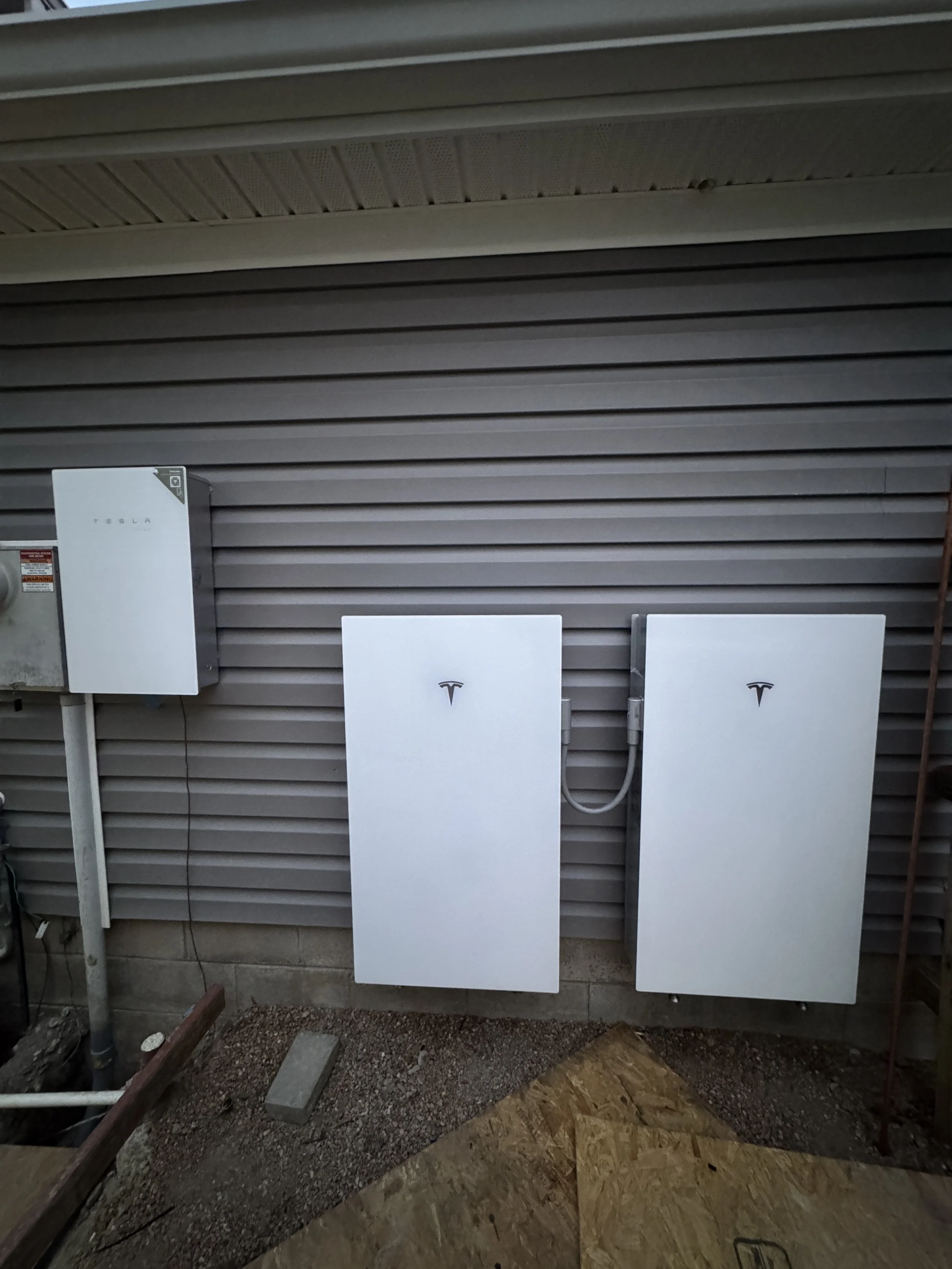
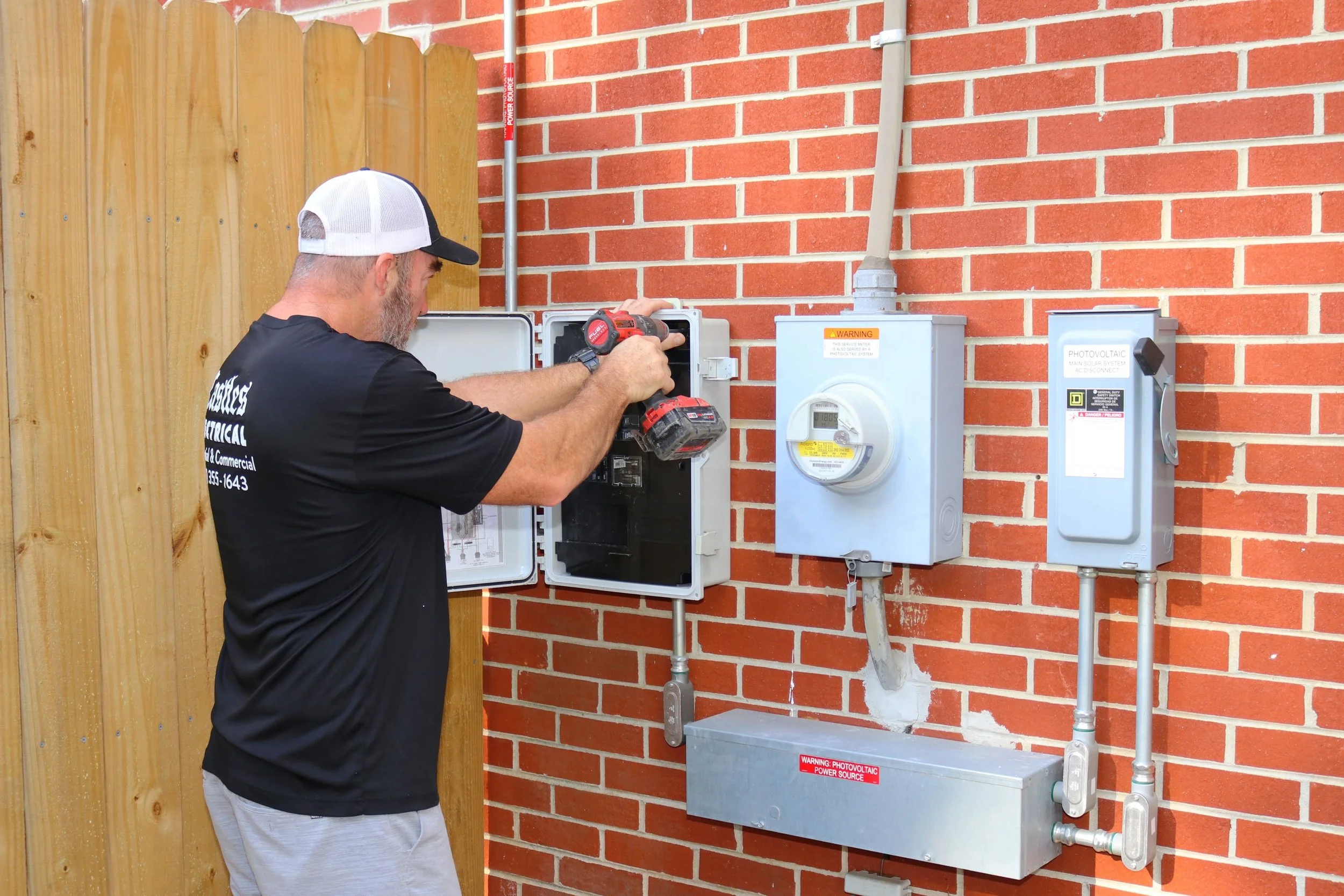
Partial backup places the chosen circuits on their own panel, while whole-home backup keeps the main panel intact; each design uses different switching equipment. On a townhouse wall that already holds a meter and a condenser, that decides how much new hardware the exterior carries.
Either way, the limit is combined running power. Tesla says any number of appliances can run during an outage as long as their total draw stays within the power rating of the installed Powerwalls, and each Powerwall 3 supplies up to 11.5 kW of continuous power.
05 — Runtime
How Long the Backup Lasts, and the Settings That Decide It
Each Powerwall 3 stores 13.5 kWh, and how long that lasts depends on what is running, so Tesla does not publish a number of hours. The Backup Reserve setting decides how much stored energy is held back for outages. Tesla flags a reserve set below 20 percent as potentially too low for an extended outage and suggests maintaining higher reserves in areas prone to outages.
When the grid goes down, the Powerwall disconnects and restores power in a fraction of a second. If stored energy falls below 10 percent during the outage, it enters standby. Tesla’s advice for stretching the energy is to cut back on air conditioning, vehicle charging, electric heat, and dishwashers, and when the grid returns, the Powerwall charges back above your reserve before resuming normal operation.
In a home without solar, a drained battery waits for the grid to return before it can recharge. That is why heavy loads are planned carefully, or a generator stays on its own switch for a long outage.
06 — Growing
Adding Capacity Later, and Charging a Tesla in an Outage
A Norfolk system can start small. Tesla supports up to four Powerwall 3 units and up to three Powerwall 3 Expansion units, for a maximum of seven. An Expansion adds 13.5 kWh, works only with Powerwall 3, and can be floor-stacked behind one, which saves wall width on a tight lot. More running power takes another Powerwall 3; an Expansion adds stored energy only, in a unit about 6.6 inches deep.
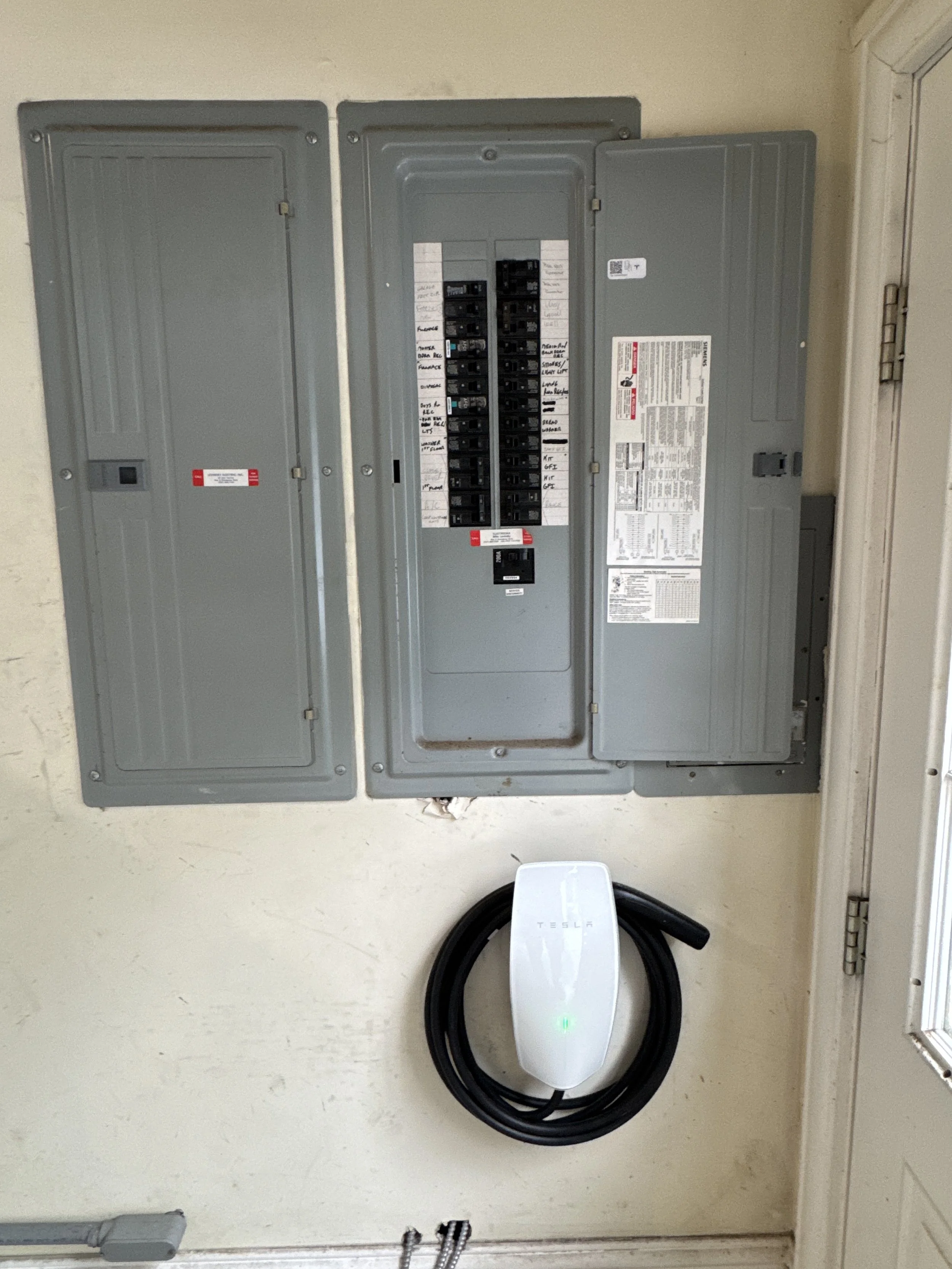
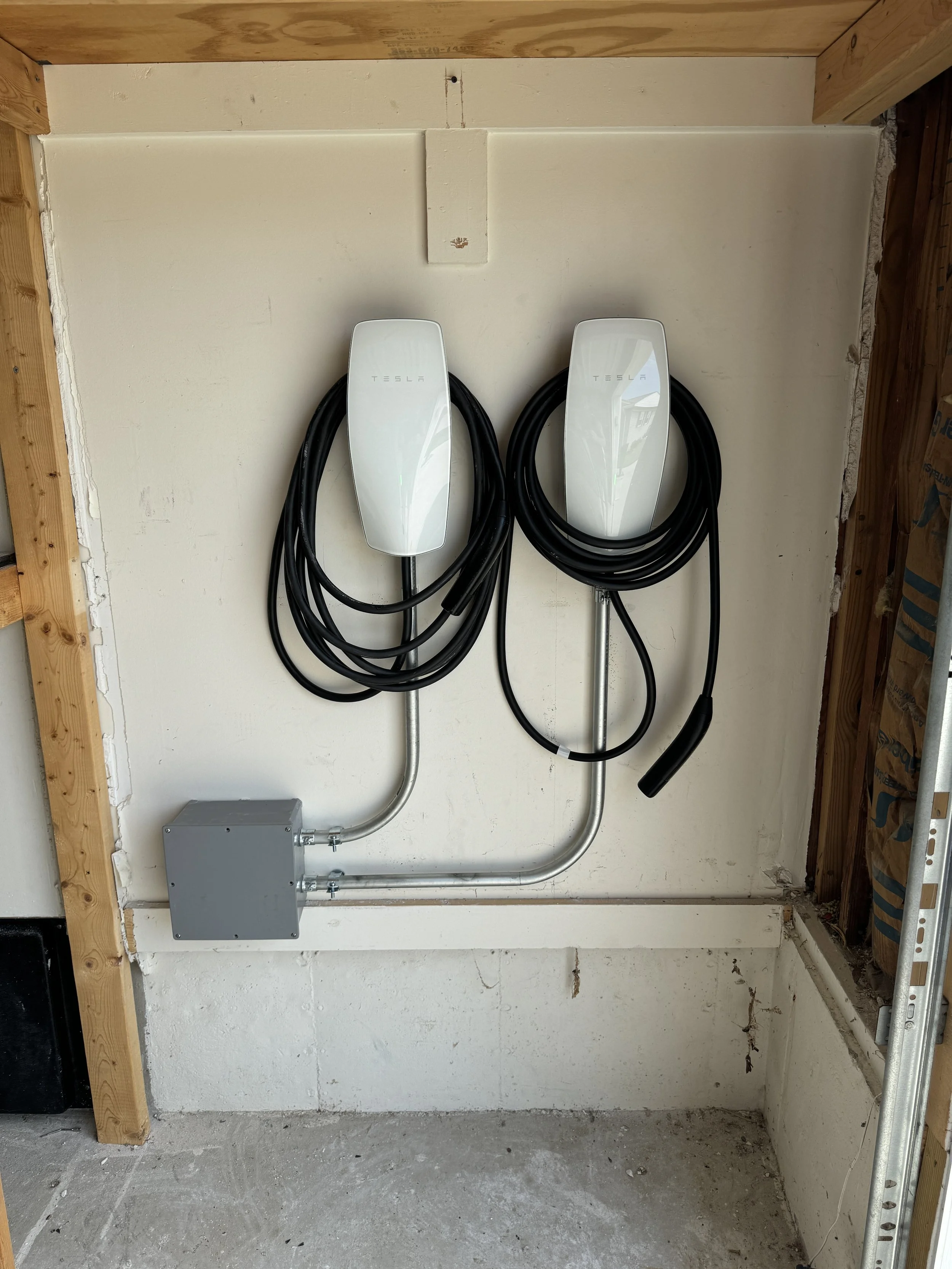
Tesla vehicles can also charge during an outage. The Powerwall coordinates with a Tesla Wall Connector or Mobile Connector on a backed-up circuit, slows or stops vehicle charging to keep the house powered, and stops sharing once stored energy drops below a threshold you set in the app. With partial-home backup, the charger belongs on the essential-loads panel for this to work.
07 — Process
How a Norfolk Powerwall Project Runs
Check the neighbors’ side
Where the unit sits relative to shared walls and bedroom windows, plus the panel and any generator hookup.
Choose whole-home or partial backup
The loads that must run decide the switching device and the number of units.
Permit, install, and walk through it
The system goes in under permit, and the backup settings are set with you in the app before we leave.
08 — Why Castles
Castles Backup Power Services
Tesla and Generac Under One Roof
Battery, generator, or both, designed together.
Existing Hookups Reviewed
Generator switches checked before design.
Wall Space Planned
Clearances from doors and windows.
Permit and Inspection Handled
We file the permit and meet the inspector.
09 — Proof
Battery, Panel, and Charger in One Project
A reviewer had a Tesla Powerwall installed, the electrical panel upgraded, and an EV charger added in one coordinated project, and pointed to the workmanship, communication, and attention to detail.
From our five-star Google reviews

Google 5.0 Rated by Hampton Roads Customers
Castles Electrical maintains a 5.0 rating on Google. The reviews below load as a live widget, so this page shows current feedback from real Castles Electrical customers.
10 — FAQs