01 — The Height Rule
How High Does a Generator Have to Sit in Norfolk?
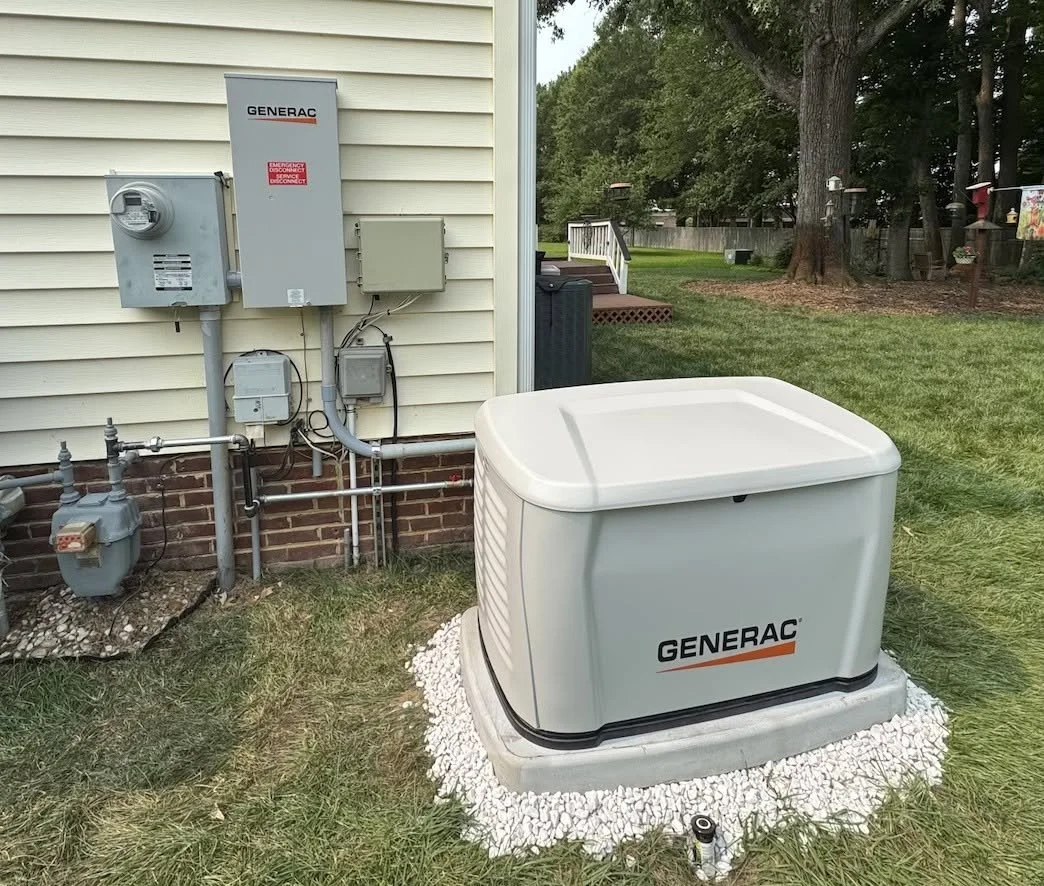
Section 3.9.7 of Norfolk’s zoning ordinance, the Flood Plain / Coastal Hazard Overlay, says electrical, heating, ventilation, plumbing, air conditioning, and other service equipment shall be located at or above the design flood elevation. The ordinance sets the freeboard at three feet and defines the design flood elevation as the base flood elevation plus that freeboard, in the VE, Coastal A, AE, and AH zones.
The target is fixed by the flood map, so the pad height depends on the ground. A lot that sits lower needs a taller pad or platform to reach the same elevation as a higher lot next door.
03 — Natural Gas
Natural Gas for a Norfolk Standby Generator
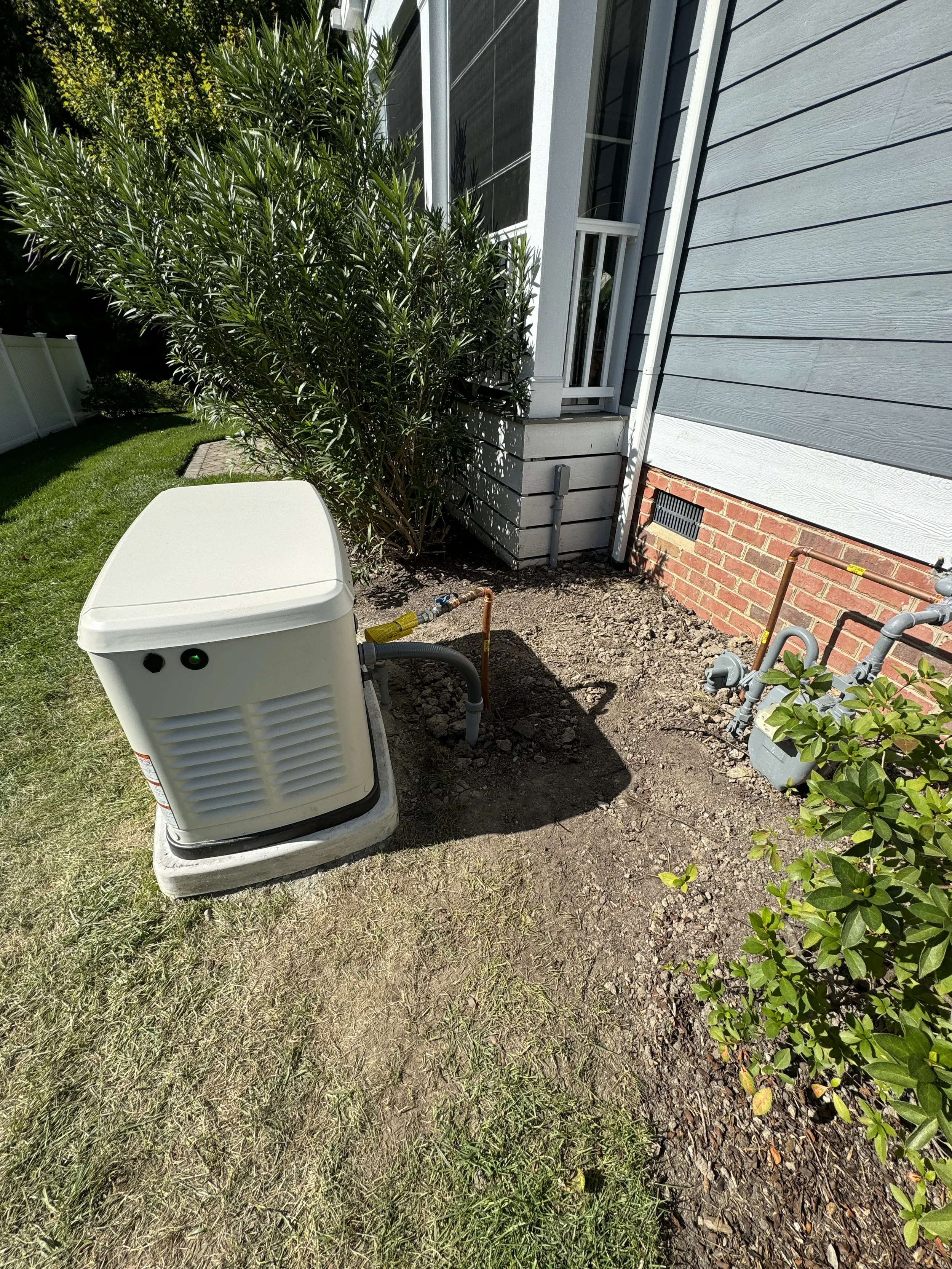
Virginia Natural Gas serves more than 300,000 customers in southeast Virginia, and many Norfolk homes already have a gas meter. Adding a standby generator means installing a large gas appliance, and VNG asks homeowners to contact it first when adding a generator, stove, or fireplace, so it can explain what the home needs for the added service. It takes those requests by phone or through an online appliance request form.
Its storm guidance also recommends installing a standby generator by a qualified contractor and sizing it correctly.
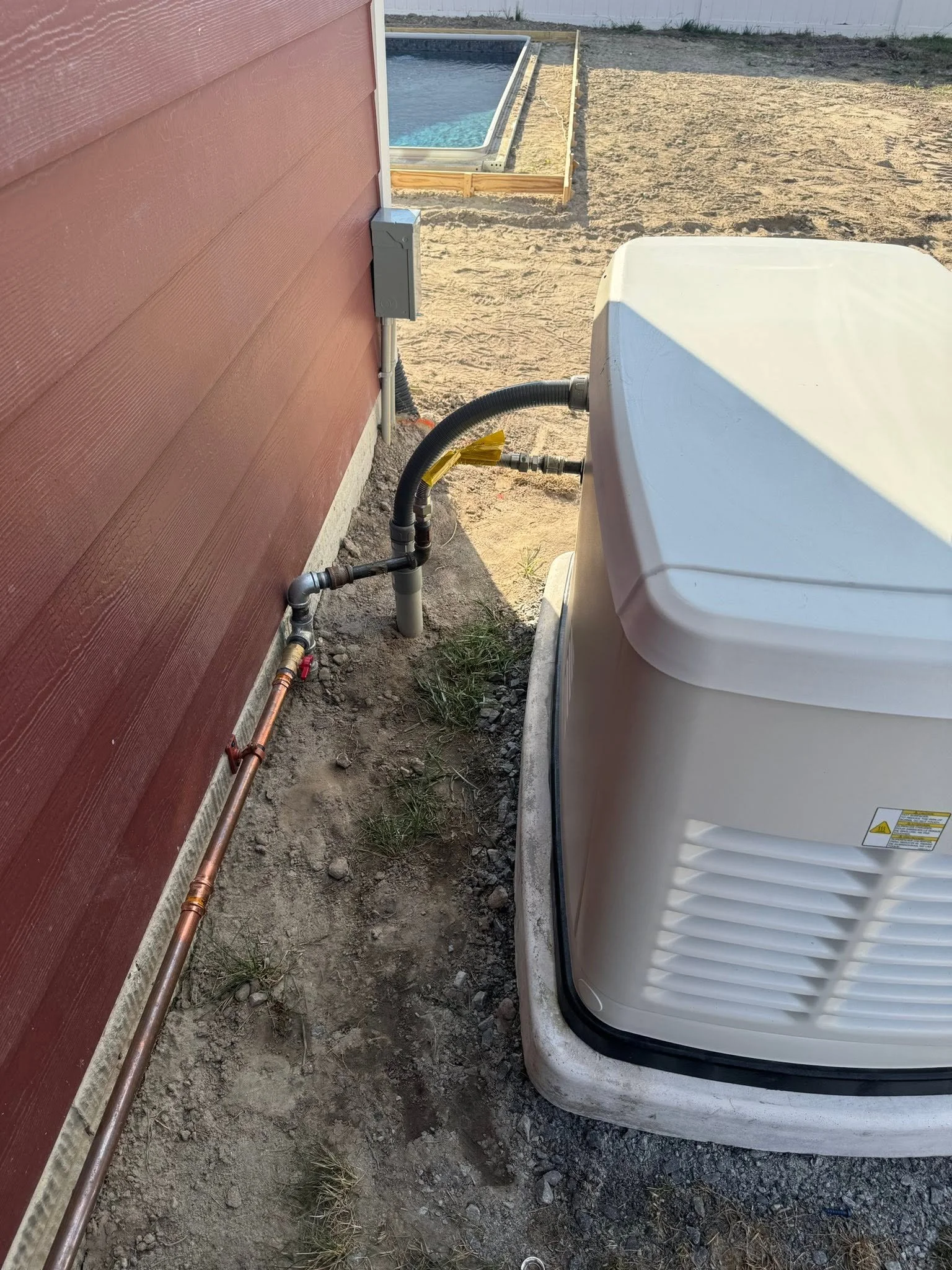
Generac’s guidance says fuel supplies should be sized for the generator running at 100% load, and that its support team provides the BTU and fuel pressure figures an installer uses to size gas lines, tanks, and regulators. Generac says fuel pressure testing should be performed by a qualified service professional, a licensed plumber, or the gas utility.
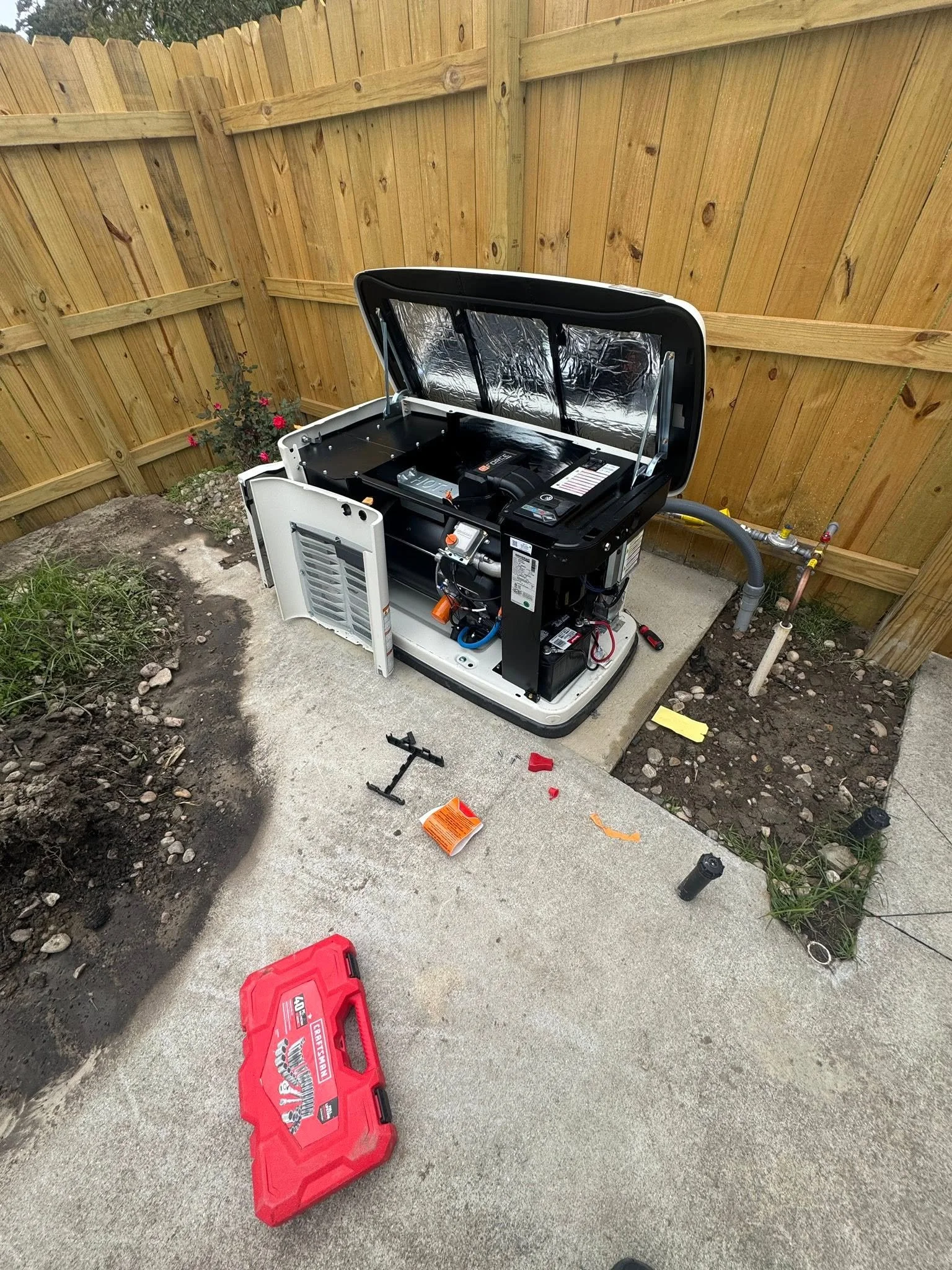
On a Norfolk flood lot, the gas line must also reach a generator set at the required height. The gas connection is made by a plumbing company we partner with, not by our electricians. We supply the unit’s fuel figures, arrange that visit along with VNG, and fit the electrical work around it.
04 — Portable Safety
If You Run a Portable Generator in the Meantime
Many households rely on a portable generator until a standby unit is in place. The Consumer Product Safety Commission’s February 2026 guidance says to operate portable generators outside only, at least 20 feet from the house, and never inside a home, garage, basement, crawlspace, or shed. It adds that a porch or carport is too close, and that exhaust should be pointed away from the home and other buildings’ entrances.
CPSC also suggests looking for portable generators with a carbon monoxide shut-off safety feature, and installing interconnected CO alarms. Virginia Natural Gas gives similar advice, saying generators should run only outdoors with plenty of ventilation, away from windows, doors, and vents.
On a narrow Norfolk lot, 20 feet from the house can be hard to find, which is one reason some owners plan a permanent unit with its own set location and a properly installed transfer switch.
05 — Maintenance
Maintenance in Norfolk Heat
A standby generator exercises itself on a schedule, running for a few minutes weekly, biweekly, or monthly while in automatic mode, which gives the system a regular run between outages. Generac’s owner’s manuals also call for regular visual inspections for corrosion on the base frame and other metal parts, which is especially important on a coastal property.
Temperature changes the oil schedule. Generac’s maintenance guidance says generators operating in environments above 85°F or below 40°F need an oil and filter change every year or after every 100 hours of operation. The National Weather Service’s 1991 to 2020 normal high for Norfolk in August is 86.9°F, so many Norfolk units spend their summers in that range.
Ask us what service options are available for your unit when we install it, and keep the owner’s manual with the generator’s paperwork.
06 — Process
Flood Zone to Final Inspection
Look up the flood zone
We find where the property falls on the flood map and whether the ordinance’s equipment rule applies.
Elevation certificate where required
A licensed design professional provides the sealed certificate, and its numbers set the pad height.
Permit, install, and inspection
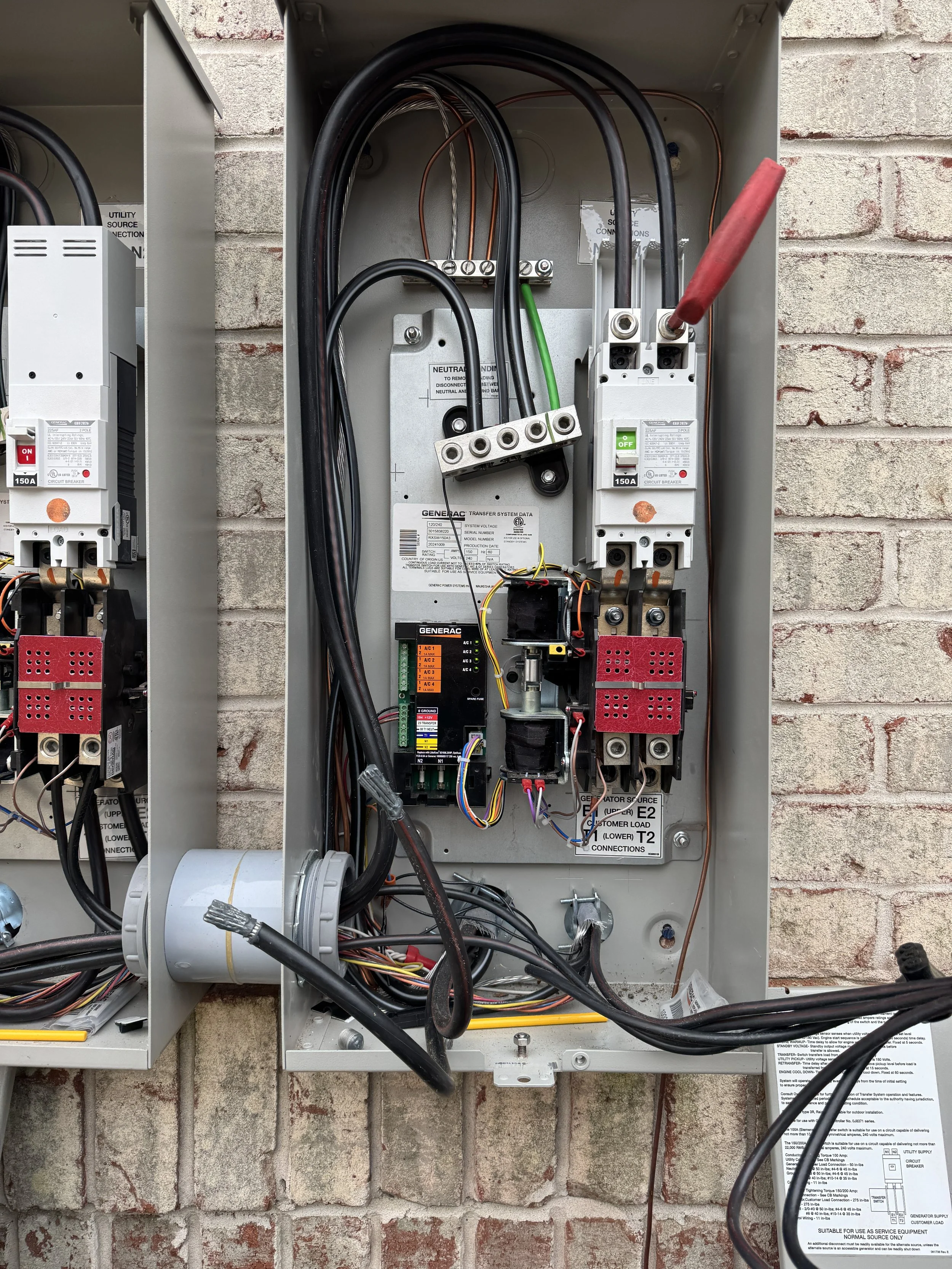
The electrical permit comes first. Then the unit goes onto its pad or platform at the required height, the transfer switch is wired, our partner plumber connects the gas line and its own paperwork, and the city inspects the finished work before you learn the controls.
07 — Why Castles
Standby Power Built for Norfolk’s Flood Rules
Certificate Built Into the Schedule
The elevation step planned before equipment is ordered.
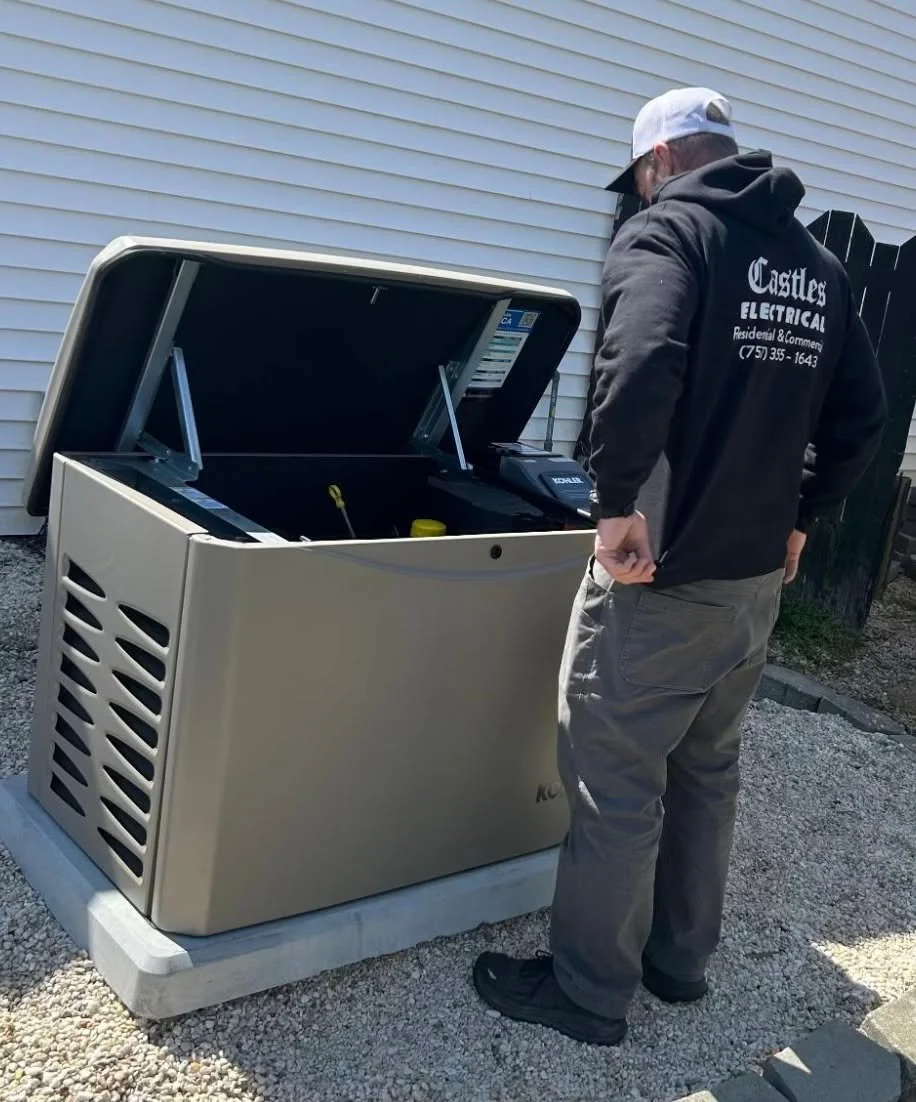
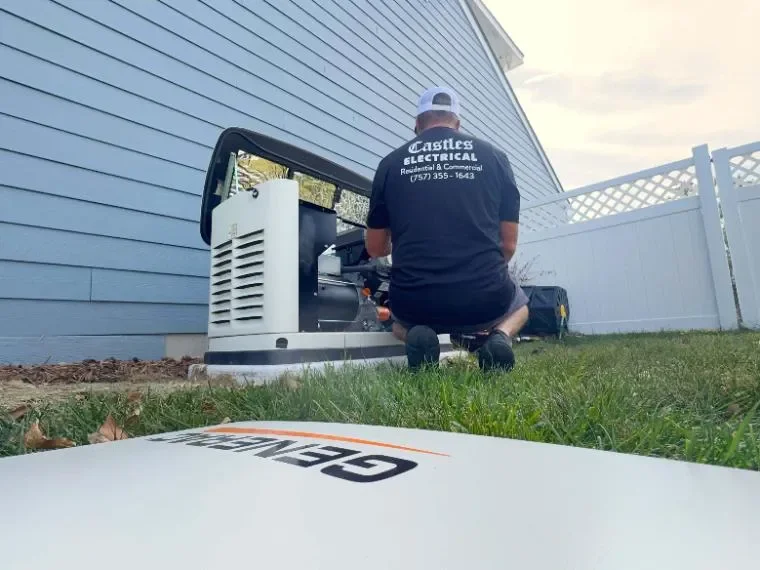
Generac or Kohler
Both installed, so the unit fits the platform and the load.
08 — Proof
A Standby Generator Install, Reviewed
A reviewer who had a whole-house generator installed praised the friendly, professional staff.
From our five-star Google reviews
Google 5.0 Rated by Hampton Roads Customers
Castles Electrical maintains a 5.0 rating on Google. The reviews below load as a live widget, so this page shows current feedback from real Castles Electrical customers.
09 — FAQS