
Burning Smell from an Outlet? Virginia Beach Electricians Explain What to Do
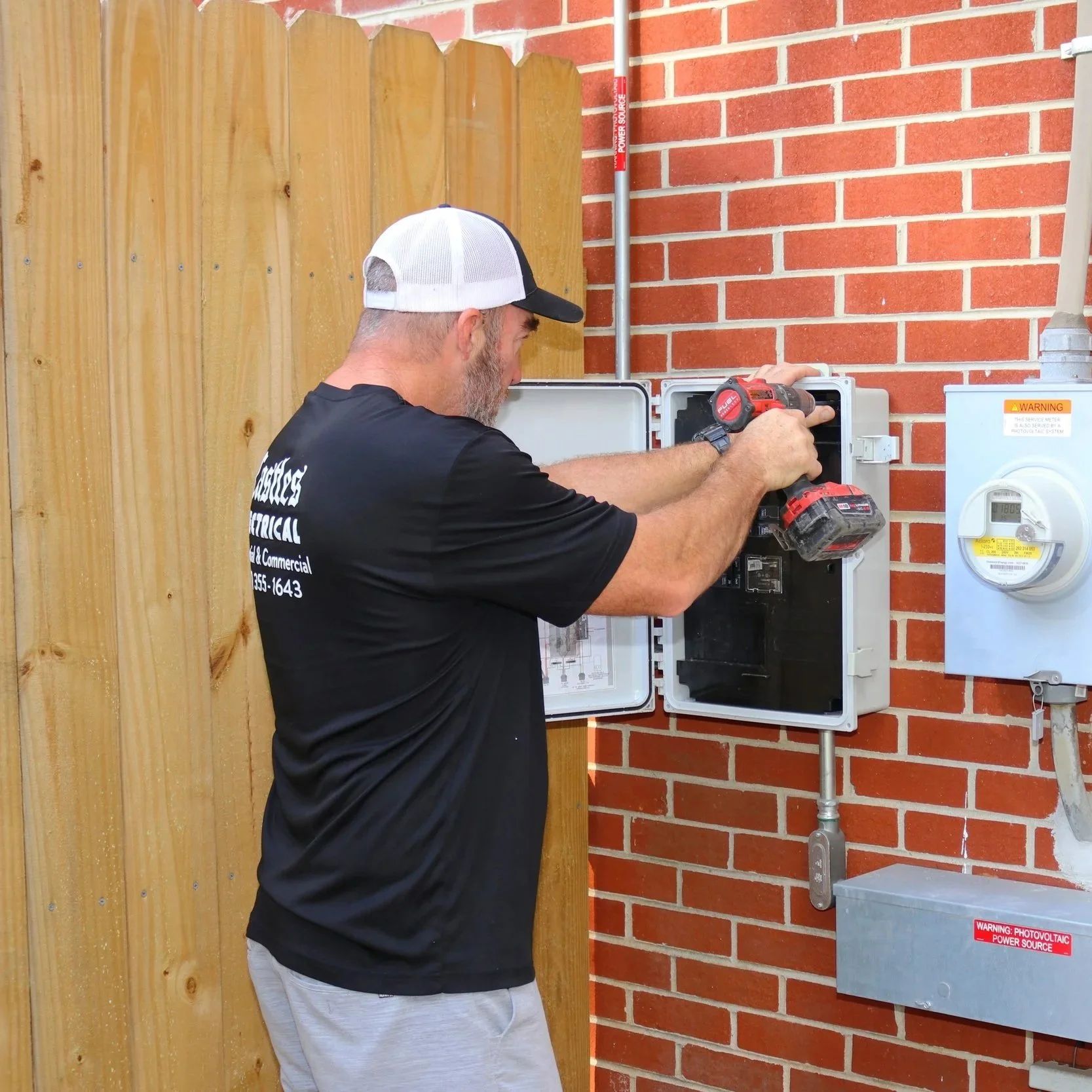
A burning smell from your outlet is an emergency; shut off the breaker immediately and contact a licensed professional electrician.
Why a Burning Smell at an Outlet Demands Immediate Attention
A burning smell coming from an outlet is one of the clearest warning signs an electrical system can give. Unlike flickering lights or a tripped breaker, odor means materials inside the wall are already reacting to heat. Electrical systems are designed to operate silently and without smell. When insulation, outlet bodies, or wire jackets heat up enough to release odor, something has moved well outside normal operating conditions. In Virginia Beach homes, electricians treat burning smells as time-sensitive issues because coastal humidity and salt exposure accelerate how quickly minor defects turn into serious hazards.
Homeowners often describe the smell as plastic, chemical, or slightly sweet, sometimes mixed with a faint electrical scent. That description matters because it points directly to synthetic materials breaking down under heat. Outlets contain plastic components, and wiring insulation relies on polymers designed to tolerate only specific temperature ranges. Once those materials start off gassing, they do not recover. Each heating cycle permanently weakens insulation and increases the chance of arcing or ignition. The smell is not the problem itself. It is evidence that damage has already started.
How Electrical Heat Develops Behind Outlet Covers
Outlets handle electrical current through a combination of metal contacts, terminal screws, and internal springs. When those components remain tight and clean, current flows smoothly with minimal heat. Over time, everyday use degrades that balance. Plugging and unplugging devices loosens internal contacts slightly. Thermal expansion and contraction during normal operation cause screws to back off by fractions of a turn. Those tiny changes increase electrical resistance at the connection point.
Resistance converts electrical energy into heat. That heat builds up inside the outlet box, which offers very little ventilation. Plastic components warm first, followed by wire insulation. In Virginia Beach homes, elevated humidity reduces heat dissipation and encourages corrosion, which further increases resistance. Once temperatures climb high enough, plastics release odor long before any visible damage appears. Smelling burning plastic means heat has already cycled repeatedly, not just once.
Loose Wiring Connections as a Primary Cause
Loose wiring connections sit at the top of the list when electricians investigate burning outlet smells. Wires secured under terminal screws rely on mechanical pressure to maintain conductivity. As screws loosen, electricity jumps microscopic gaps between the wire and the terminal. That jumping creates arcing, which produces intense localized heat.
Electricians frequently find wires behind outlets that look intact but show discoloration or brittle insulation near the termination point. In Virginia Beach homes, corrosion accelerates loosening by reducing surface contact quality. A loose neutral or hot wire can generate enough heat to soften outlet bodies without drawing excessive current. That explains why breakers often remain on while odors develop. The breaker does not sense the localized resistance. The outlet absorbs the damage.
Backstabbed Outlets and Hidden Heat Generation
Many homes built during past construction booms used backstabbed outlets, where wires push into spring-loaded holes instead of being secured with screws. While code-compliant at the time, these connections depend on spring tension that weakens with age and heat exposure. Once spring pressure drops, resistance increases at the back of the outlet.
Backstabbed connections frequently produce burning smells because heat builds where homeowners cannot see it. The back of the outlet sits inside the wall cavity, allowing heat to accumulate and insulation to degrade silently. Odor escapes through the faceplate opening or the wall material. In Virginia Beach homes, electricians often find that the front of the outlet looks fine while the back shows severe heat damage. Correcting these issues requires rewiring the outlet using screw terminals, not simply replacing the device.
Overloaded Outlets and Continuous Heat Stress
Outlets can overheat even when they are technically within their rated amperage. Continuous load plays a significant role. Devices like space heaters, window air conditioners, refrigerators, aquariums, and entertainment centers draw sustained current for long periods. When multiple devices share a single outlet through adapters or power strips, heat builds gradually.
In older Virginia Beach homes, branch circuits were never designed for modern usage patterns. Wiring runs longer, insulation ages, and outlets experience more stress than intended. Heat accumulates slowly, often without tripping a breaker. Plastic odor appears as materials approach their thermal limit. Sustained heat damages insulation in stages, meaning the smell may appear intermittently before becoming constant. Each episode indicates further degradation inside the wall.
Environmental Conditions That Intensify Burning Smells
Coastal conditions add another layer of complexity. Humidity infiltrates wall cavities, outlet boxes, and junction points. Moisture promotes corrosion on metal components, increasing resistance and heat generation. Salt carried in the air accelerates that corrosion even indoors, especially near exterior walls.
Virginia Beach electricians often notice that burning smells worsen during humid weather, storms, or at night when moisture levels rise. Environmental factors do not create the electrical defect, but they magnify its effects. An outlet that runs warm under dry conditions may overheat significantly when moisture reduces insulation effectiveness. Odor intensity fluctuates with the weather, which can mislead homeowners into thinking the problem resolved itself. In reality, environmental changes simply alter how noticeable the damage becomes.
Why the Smell Sometimes Appears Without Anything Plugged In
Homeowners are often alarmed when a burning smell persists after unplugging everything from the outlet. Voltage remains present on the wiring even when no device draws current. Damaged connections, arcing points, or compromised insulation can continue generating heat under minimal load conditions.
In some cases, heat comes from upstream wiring rather than the outlet itself. A junction box or splice feeding the outlet may be failing, allowing heat to travel along conductors and release odor near the outlet opening. In Virginia Beach homes, moisture-related leakage can also cause localized heating without obvious appliance involvement. Unplugging devices removes one variable but does not eliminate wiring defects already in place.
How Burning Smells Relate to Fire Risk
Electrical fires rarely start with sparks shooting from outlets. They begin with heat accumulating at weak points over time. Burning plastic odor indicates that materials have already reached temperatures capable of degrading insulation. Once insulation breaks down, bare conductors may contact each other or nearby combustible materials.
Wood framing, dust, and insulation products inside walls ignite more easily when exposed to sustained heat. Each heating cycle lowers ignition thresholds. In Virginia Beach homes, humidity can mask early visual signs while still allowing heat damage to progress. The smell serves as an early alert before flames or smoke appear. Ignoring it increases the risk of a sudden, uncontrolled event.
Why Cosmetic Fixes Do Not Solve the Problem
Replacing a faceplate, cleaning the outlet, or masking odors with air fresheners does nothing to address internal heat. In some cases, covering the outlet traps heat further, accelerating damage. Electricians frequently encounter outlets that failed catastrophically after homeowners attempted cosmetic fixes that delayed proper repair. Applying sprays or cleaners to outlets introduces additional hazards. Residues can degrade insulation or increase arcing. Burning smells require investigation, not concealment. Treating the symptom rather than the cause allows the underlying defect to worsen unchecked.
What Electricians Look for During Inspection
Professional inspection starts with safely de-energizing the circuit and removing the outlet from the wall. Electricians examine wiring insulation, terminal connections, and outlet bodies for discoloration, brittleness, or melting. They look beyond the outlet itself, checking upstream splices, junction boxes, and panel connections.
In Virginia Beach homes, electricians pay close attention to environmental exposure points. Exterior walls, bathrooms, kitchens, and garages receive extra scrutiny due to moisture risk. Thermal imaging may reveal hotspots invisible to the naked eye. Inspection focuses on identifying not just the damaged component, but the condition that caused the damage in the first place.
Long-term Consequences of Ignoring a Burning Outlet Smell
When a burning smell near an outlet goes unaddressed, damage rarely stays contained. Heat migrates outward along conductors, into insulation, and toward adjacent outlets or junction boxes. Copper oxidizes more rapidly under elevated temperatures, which raises resistance and creates a feedback loop where each use generates more heat than the last. Insulation that has softened or partially melted loses its ability to protect conductors from contact or arcing. Even if the smell fades temporarily, the structural integrity of the wiring has already been compromised.
In Virginia Beach homes, environmental exposure accelerates this progression. Humidity keeps damaged insulation pliable and corrosion active, preventing the system from stabilizing. Over time, homeowners may notice new symptoms such as flickering lights, warm wall surfaces, or additional odors from nearby outlets. What began as a single warning smell often evolves into a circuit-wide reliability issue. Addressing the problem early prevents heat damage from spreading and reduces the likelihood of extensive rewiring later.
Why Older Homes Experience Burning Smells More Often
Older electrical systems were built for a very different pattern of use. Outlets installed decades ago were never intended to support today’s continuous electrical demand or modern device density. Materials age, contact tension weakens, and insulation formulations from earlier eras break down faster under heat. When these systems operate in a coastal environment like Virginia Beach, their margin for error narrows even further.
Electricians frequently find that burning smells in older homes point to components nearing the end of their service life rather than isolated defects. Original outlets, splices, and wiring methods struggle to dissipate heat efficiently. Moisture penetration through older wall assemblies exposes wiring to conditions it was not designed to handle. Burning odor in these homes often signals the need for targeted upgrades rather than spot repairs, especially on heavily used circuits.
Why Temporary Fixes Create a False Sense of Safety
Homeowners sometimes attempt short-term solutions such as tightening plugs, swapping faceplates, or avoiding the outlet entirely. While these steps may reduce odor briefly, they do not stop internal heat generation. In some cases, avoiding the outlet allows damage to worsen unnoticed because the warning smell appears less frequently.
Electricians often encounter outlets that failed more severely after months of temporary avoidance. Heat damage continued upstream, eventually affecting wiring that served other outlets or fixtures. Temporary fixes delay proper diagnosis and allow insulation and conductors to degrade further. A burning smell represents an active failure process, not a cosmetic nuisance. Ignoring it or masking it increases the risk of sudden failure under normal use.
How Circuit Load Distribution Influences Outlet Overheating
Outlet overheating does not always occur at the point of highest visible load. Circuit design and load distribution determine where heat concentrates. Weak connections along a circuit act as bottlenecks, absorbing heat even when the outlet itself powers only modest devices. An outlet emitting odor may sit at a vulnerable point between heavier loads elsewhere on the circuit.
In Virginia Beach homes, kitchens, living areas, and home offices often share circuits that carry sustained demand. Long wiring runs, aging conductors, and marginal connections increase temperature rise along the path. Evaluating load distribution helps electricians identify why one outlet overheats while others appear unaffected. Correcting the weak point restores balance and reduces heat throughout the circuit rather than chasing individual symptoms.
FAQs
Voltage remains present on outlet wiring even without a device connected. Loose connections, damaged insulation, or upstream wiring issues can still generate heat and produce odor under those conditions.
A burning smell indicates active overheating of electrical components. While flames may not be present, the condition warrants prompt inspection to prevent escalation into fire or wiring failure.
Humidity promotes corrosion and reduces insulation effectiveness, which increases heat generation. Coastal moisture often intensifies odor release from already damaged components.
Replacing the outlet alone may not resolve underlying wiring or connection problems. Professional inspection identifies the true source of heat and prevents recurrence.
Stop using the outlet, avoid plugging devices into it, and arrange for an electrical inspection as soon as possible to identify and correct the cause.