
Can a Breaker Go Bad Without Tripping? Virginia Beach Electrical Warnings
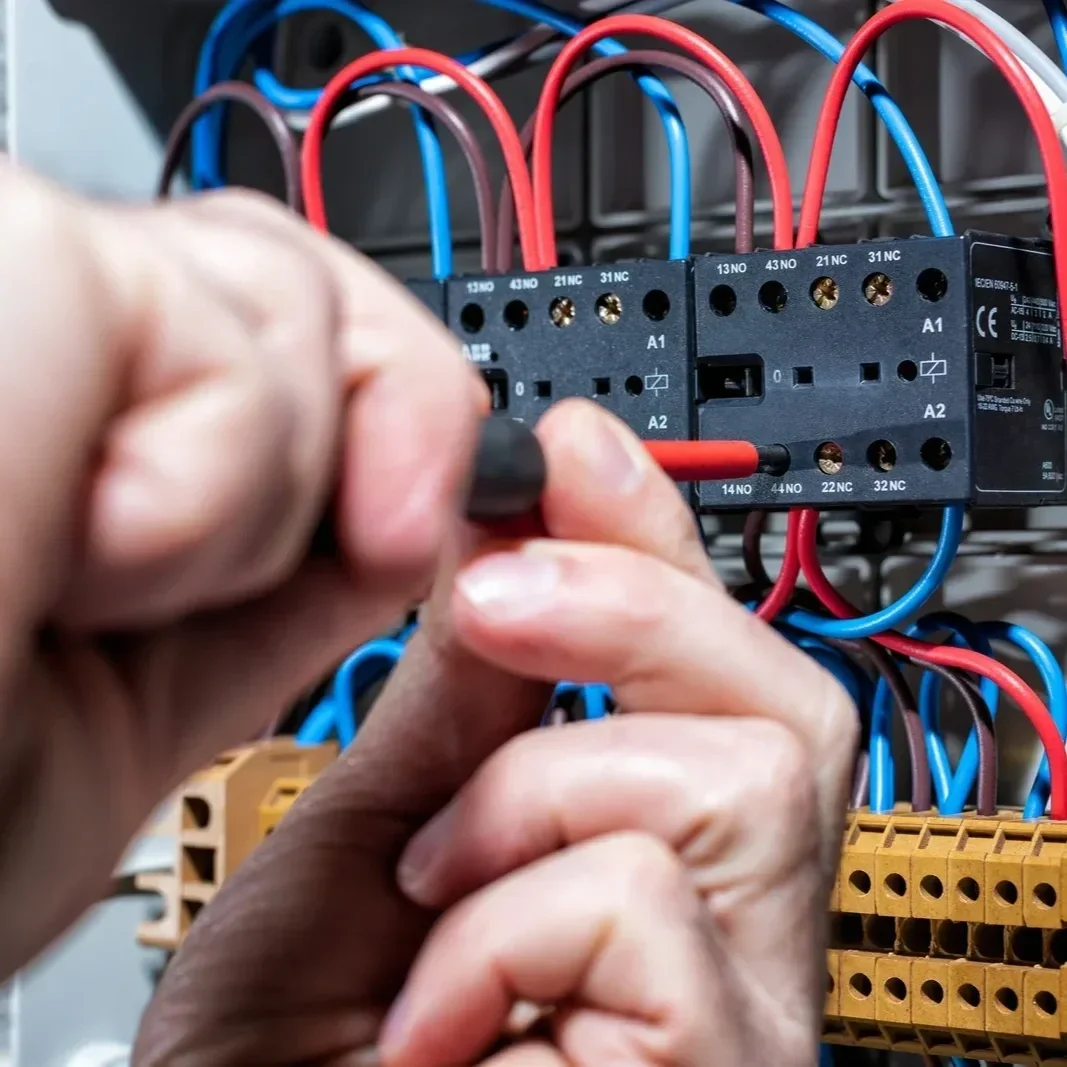
A faulty circuit breaker can remain in the on position despite internal damage, posing a fire risk without ever tripping.
How Breakers Are Supposed to Protect Your Home
Circuit breakers serve one primary purpose inside an electrical system. They interrupt power when conditions become unsafe. Most homeowners associate breaker problems with nuisance trips or frequent shutdowns, but breakers also fail in quieter, more dangerous ways. A breaker can degrade internally while continuing to supply power, giving the appearance of normal operation even as its protective function weakens. In Virginia Beach homes, electricians regularly encounter breakers that no longer respond correctly to heat, load, or fault conditions despite never tripping.
Electrical systems rely on breakers as the last line of defense between everyday electrical use and fire risk. Breakers monitor current flow and internal temperature through calibrated mechanical components. Over time, heat exposure, corrosion, and mechanical wear change how those components behave. When that happens, a breaker may allow unsafe conditions to persist without interruption. The absence of tripping does not guarantee the breaker is healthy. In many cases, silence signals failure rather than reliability.
What “Going Bad” Really Means for a Circuit Breaker
A breaker does not fail the same way an appliance fails. It does not stop working entirely. Instead, its internal calibration drifts. Breakers contain bimetal strips, springs, and contact assemblies designed to respond within specific temperature and current ranges. When those parts degrade, response time changes. The breaker may trip too late, not trip at all, or fail to recognize overload conditions entirely.
Virginia Beach electricians often describe bad breakers as desensitized rather than broken. Repeated heat cycles weaken springs. Corrosion on contacts increases resistance. Internal components lose their ability to move freely. The breaker still delivers power, but it no longer reacts when conditions exceed safe limits. That failure mode creates risk because wiring and outlets absorb damage silently while the breaker remains engaged.
Why Breakers Degrade Faster in Coastal Environments
Environmental exposure plays a significant role in breaker longevity. Virginia Beach’s coastal climate introduces salt air and high humidity into homes, even indoors. Electrical panels draw air through small openings, allowing moisture and salt particles to settle on breaker components. Over time, corrosion develops on metal surfaces inside the breaker.
Corrosion increases resistance at contact points and interferes with mechanical movement. Springs lose tension more quickly when exposed to humidity. Bimetal elements respond less accurately to heat when their surfaces degrade. These changes do not cause immediate failure. They gradually reduce sensitivity. A breaker that once tripped appropriately under overload may now tolerate higher temperatures without reacting. That silent degradation explains why some Virginia Beach homes experience outlet overheating or wire damage without any breaker activity.
How Heat Exposure Weakens Breaker Performance
Every breaker experiences heat during normal operation. That heat comes from current flow through internal contacts. Under ideal conditions, heat stays within design limits. Over years of service, especially on heavily loaded circuits, cumulative heat exposure weakens internal components.
Breakers serving kitchens, HVAC equipment, or home offices in Virginia Beach homes often run warmer than others. Continuous loads accelerate wear on thermal elements. Once calibration shifts, the breaker may no longer respond when wiring insulation begins to overheat. Electricians frequently find wiring damage downstream from breakers that never tripped. The breaker did not fail visibly. It failed functionally.
Why a Breaker Can Appear Fine While Allowing Damage
Homeowners often trust breakers because they expect visible symptoms like frequent trips. A breaker that stays on feels reliable. Unfortunately, breaker failure often presents the opposite behavior. The breaker remains on when it should shut off.
In Virginia Beach homes, electricians commonly trace burned outlets, scorched wiring, or melted insulation back to breakers that never tripped. The breaker contacts still pass current, but internal sensing elements no longer react properly. The breaker does not recognize rising temperatures or sustained overload. By the time damage becomes visible elsewhere, the breaker has already failed in its protective role.
The Difference Between Mechanical Failure and Calibration Drift
Some breaker failures involve obvious mechanical problems, such as stuck handles or an inability to reset. Those failures are easy to identify. More dangerous failures involve calibration drift. Calibration drift occurs when the breaker’s internal response curve changes gradually.
With calibration drift, the breaker still opens and closes normally under manual operation. It simply responds at the wrong thresholds. It may allow higher current for longer periods before reacting, or it may not react at all under certain conditions. Virginia Beach electricians encounter this type of failure frequently in older panels and panels exposed to humidity. Calibration drift leaves no obvious external clues, making routine inspection critical.
How Aging Electrical Panels Contribute to Breaker Failure
Breakers do not operate in isolation. Their performance depends on the panel condition as well. Corroded bus bars, loose breaker seating, and oxidation at contact points increase heat at the breaker interface. That added heat accelerates internal degradation.
In Virginia Beach homes, panels located in garages, exterior walls, or utility rooms face increased environmental exposure. Panels that appear intact from the outside often hide corrosion inside. Breakers installed in compromised panels degrade faster due to constant low-level heat stress. Even new breakers can fail prematurely when installed in aging panels. Electricians assess panel health alongside breaker conditions when diagnosing unexplained electrical issues.
Why Bad Breakers Often Go Unnoticed
Breaker failure without tripping often escapes detection because symptoms appear elsewhere. Homeowners notice flickering lights, warm outlets, or intermittent power issues, not the breaker itself. Because the breaker stays on, it rarely becomes the suspected cause.
Virginia Beach electricians frequently respond to calls for outlet replacement or wiring repair, only to discover the breaker feeding the circuit has lost proper response. Replacing outlets without addressing the breaker leads to repeat failures. The breaker continues allowing unsafe conditions to develop. Understanding that breakers can fail silently changes how electrical problems should be evaluated.
The Relationship Between Bad Breakers and Outlet Overheating
Outlet overheating often signals excessive resistance somewhere along the circuit. While loose outlet connections cause heat locally, bad breakers contribute by failing to interrupt current when temperatures rise. A healthy breaker would trip once downstream conditions exceed safe limits.
When a breaker no longer responds accurately, outlets absorb heat unchecked. Plastic components soften. Insulation degrades. Burning odors appear. Virginia Beach homes experiencing repeated outlet failures on the same circuit often have an underlying breaker issue. Addressing only the outlet treats the symptom while leaving the cause intact.
Why Breakers Rarely Fail All at Once
Breaker degradation is gradual. Internal components weaken incrementally with each heat cycle. Environmental exposure accelerates the process, but failure still unfolds over years rather than days. That gradual decline makes it easy to overlook.
Homeowners may live with a bad breaker for a long time without realizing it. The system appears functional until a serious event occurs. Electricians often describe bad breakers as ticking clocks. They function until they suddenly cannot protect the system anymore. In Virginia Beach homes, early identification prevents damage from escalating into costly repairs or fire risk.
How Electricians Identify Breakers That Have Gone Bad
Diagnosing a bad breaker requires more than flipping it off and on. Electricians use load testing, thermal scanning, and inspection of downstream wiring to assess breaker performance. A breaker that runs unusually warm under normal load raises concern. Evidence of downstream heat damage without corresponding breaker activity points toward breaker failure.
In Virginia Beach homes, electricians also evaluate the panel environment and breaker age. Breakers exposed to humidity or installed decades ago face a higher risk of silent failure. Identifying these breakers early allows replacement before damage spreads.
Long-Term Risks of Leaving a Bad Breaker in Service
A breaker that no longer trips correctly allows unsafe conditions to persist indefinitely. Wiring insulation degrades gradually under sustained heat, and that degradation rarely stays confined to one spot. Heat migrates along conductors, affecting outlets, switches, and junction boxes connected to the same circuit. Over time, copper oxidizes faster, resistance increases, and the system becomes progressively less stable. None of these changes happens suddenly, which makes the risk easy to underestimate.
In Virginia Beach homes, environmental exposure compounds the problem. Humidity keeps damaged insulation flexible rather than brittle, allowing it to deform further under heat instead of cracking outright. Salt contamination continues to promote corrosion at every energized connection. A bad breaker quietly enables this slow failure process, increasing the likelihood that the first obvious sign will be a burning smell, melted device, or visible charring rather than a harmless trip.
Why Bad Breakers Often Get Misdiagnosed
Electrical issues caused by failing breakers rarely point back to the breaker directly. Homeowners report flickering lights, buzzing outlets, warm switches, or repeated device failures. Each symptom appears isolated, leading to piecemeal repairs that never address the underlying cause. The breaker remains untouched because it never trips and appears to function normally.
Virginia Beach electricians often encounter homes where outlets have been replaced multiple times on the same circuit. Each replacement temporarily resolves surface damage while the breaker continues supplying unchecked current. Misdiagnosis wastes time and increases repair costs. Recognizing that a breaker can fail silently changes how electricians interpret repeated downstream damage and inconsistent electrical behavior.
Why Resetting or Exercising a Breaker Does Not Restore Protection
Some homeowners believe flipping a breaker off and on can restore proper operation. While cycling, a breaker may temporarily improve contact at the handle or seating point, but it does not recalibrate internal components. Springs that have lost tension do not regain strength. Corroded contacts do not clean themselves. Thermal elements do not reset to factory accuracy.
In fact, cycling a weakened breaker can worsen wear by stressing already degraded components. Virginia Beach electricians discourage relying on breaker resets as a solution when symptoms point to deeper failure. Functional protection depends on precise internal behavior, not on handling movement. Once calibration drifts, replacement becomes the only reliable corrective action.
The Role of Electrical Age and Service History
Breaker lifespan varies depending on usage patterns, installation quality, and environment. Circuits that carry heavy loads daily age faster than lightly used ones. Panels installed decades ago often house breakers that have endured thousands of heat cycles. Even without visible corrosion, internal wear accumulates.
In Virginia Beach homes, breakers serving HVAC systems, water heaters, or kitchen circuits often show earlier degradation. Service history matters as well. Breakers that have tripped frequently due to past overloads or faults experience additional mechanical stress. Each trip weakens internal components slightly. Over time, that stress contributes to silent failure, where the breaker stops reacting appropriately.
Why Panel Condition Matters as Much as the Breaker
A breaker cannot perform properly if the panel itself is compromised. Corroded bus bars, loose seating, or oxidation at contact points introduce additional resistance and heat. That heat feeds directly into the breaker, accelerating internal degradation. Installing a new breaker into a deteriorated panel often shortens its lifespan significantly.
Virginia Beach electricians routinely inspect panels when evaluating breaker health. Panels located in garages or exterior walls face higher moisture exposure. Even indoor panels draw air through small gaps, allowing salt and humidity inside. Panel condition influences breaker performance just as much as breaker age. Ignoring panel health leads to repeated failures even after breaker replacement.
FAQs
Yes. Breakers can lose proper calibration over time and stop responding to unsafe conditions while still supplying power normally.
Common signs include warm outlets, repeated outlet or switch damage, burning smells, flickering lights, and wiring issues without breaker activity.
Not necessarily. A breaker that never trips may no longer provide protection, while occasional tripping can indicate that protection is still working.
Breaker lifespan depends on usage and environment, but breakers over twenty to thirty years old face a higher risk of silent failure, especially in coastal areas.
Not always, but panel condition and breaker age should be evaluated together. In older panels, multiple breakers may be nearing the end of their effective service life.