
Why Do Lights Flicker in Virginia Beach Homes When You Use Appliances?
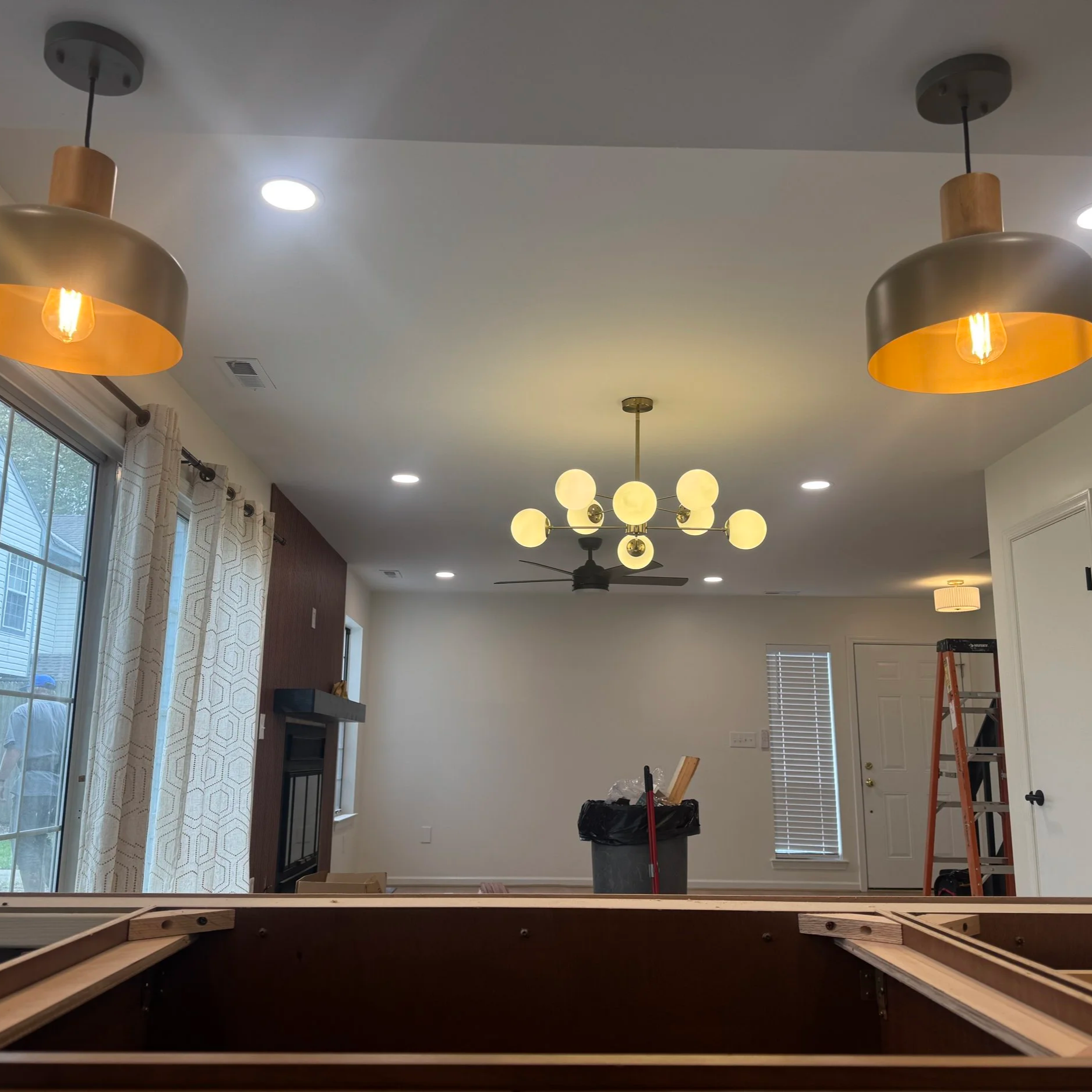
High-draw appliances can cause noticeable light flickering in Virginia Beach homes if the electrical panel is outdated or circuits are overloaded.
Why Appliance Startup Loads Cause Momentary Voltage Drop
Lights flickering when an appliance turns on usually traces back to how electricity behaves under sudden load. Many household appliances draw a brief surge of current at startup. Refrigerators, air conditioners, washing machines, and even microwaves require extra power for a fraction of a second to overcome mechanical resistance. When that surge occurs, voltage momentarily dips on the shared circuit, and lights respond by dimming or flickering. In homes where wiring, connections, or circuit design already operate close to capacity, that dip becomes noticeable rather than subtle.
In Virginia Beach homes, this effect shows up more often because of a mix of older wiring layouts and modern appliance demand. Homes built decades ago were not designed for today’s electrical usage patterns, where multiple high-draw appliances run simultaneously. Flickering lights during appliance startup signal that the electrical system lacks sufficient buffering capacity. While a brief flicker does not automatically indicate imminent failure, repeated or worsening flicker suggests stress that compounds over time, gradually degrading connections and increasing the likelihood of larger electrical issues.
How Shared Circuits Create Flicker Throughout a Room
Shared circuits remain one of the most common contributors to flickering lights. In many homes, lighting and receptacles in the same room share a single branch circuit. When an appliance plugged into one outlet activates, the entire circuit experiences the surge. Lights connected to that same circuit react immediately because they rely on stable voltage to maintain consistent brightness.
Older Virginia Beach homes frequently use fewer circuits to serve larger areas, increasing the likelihood that lights and appliances overlap. Homeowners often assume flicker points are in the light fixture itself, replacing bulbs or switches without improvement. In reality, the underlying issue involves circuit design rather than the lighting component. Shared circuits amplify normal appliance behavior into visible symptoms. Over time, repeated voltage fluctuation accelerates wear on bulbs, fixtures, and wiring insulation, turning a nuisance into a maintenance and safety concern.
Why Loose Connections Make Flickering Worse
Loose electrical connections exaggerate flicker by adding resistance where it does not belong. Every connection point, including breakers, outlets, switches, and splices, must maintain firm contact to allow smooth current flow. When a connection loosens, even slightly, resistance increases. During appliance startup, that resistance causes a more dramatic voltage drop, resulting in sharper flicker or dimming.
Coastal conditions in Virginia Beach accelerate connection degradation. Humidity, salt air, and temperature swings encourage corrosion and metal fatigue. Connections that once held firm slowly relax, particularly in backstabbed outlets or older screw terminals. Flickering lights often represent an early warning that a connection no longer performs reliably. Ignoring that signal allows heat to build at the weak point, increasing the chance of arcing, outlet failure, or breaker damage later.
The Role of Neutral Wires in Appliance-Related Flicker
Neutral wires play a critical role in stabilizing voltage across a circuit. When neutrals loosen or degrade, voltage imbalance becomes more noticeable during load changes. Appliances draw current unevenly, and without a solid neutral return path, lights respond with flicker or brightness changes that appear random.
Neutral problems can be difficult to identify because lights still work, outlets still show power, and breakers may not trip. In Virginia Beach homes with aging wiring or past renovations, neutral splices often exist in junction boxes or behind devices. A compromised neutral introduces unpredictable behavior that worsens under load. Flicker caused by neutral issues often spreads beyond one room, affecting multiple fixtures in different areas of the home, making a professional diagnosis essential before damage spreads further.
Why Panel and Service Limitations Affect Flicker
Electrical panels and service equipment determine how effectively a home handles load changes. Older panels, undersized services, or worn breaker connections struggle to distribute power smoothly when appliances start. Voltage drop originating at the panel propagates throughout connected circuits, making flicker appear widespread rather than isolated.
Many Virginia Beach homes still operate on service capacities that were adequate decades ago but now face heavier demand. As appliances age, their startup draw increases, further straining the system. Flickering lights during appliance use often reflect a system operating at its limits. Without upgrades or load redistribution, that strain gradually degrades breakers, bus bars, and service connections. Addressing flicker at the panel level restores stability and protects the electrical system from progressive failure.
How Appliance Condition Influences Light Flicker
Appliances themselves contribute to flicker when internal components wear. Motors with failing bearings, compressors nearing the end of their lifespan, or malfunctioning control boards draw irregular current. That irregular draw produces inconsistent voltage dips, causing lights to flicker more noticeably or repeatedly.
In humid coastal environments like Virginia Beach, appliance wear accelerates. Moisture exposure affects motors and electronics, increasing startup demand and runtime inefficiency. Homeowners often replace light bulbs repeatedly without realizing that the appliance causes the disturbance. Evaluating appliance condition alongside electrical infrastructure provides a complete picture of flicker causes. Treating only one side of the equation leaves the issue unresolved and allows system stress to persist.
Why Flicker Should Not Be Ignored Long Term
Occasional flicker during heavy appliance startup may seem harmless, but persistent flickering signals cumulative stress within the electrical system. Each voltage dip slightly heats connections, degrades insulation, and weakens contact points. Over months and years, that stress compounds, turning flicker into more serious symptoms like warm outlets, tripping breakers, or intermittent power loss.
Virginia Beach homeowners benefit from early evaluation when a flicker appears. Addressing the issue while symptoms remain mild reduces repair scope and cost. Ignoring flicker allows small weaknesses to become major failures, often surfacing at inconvenient or dangerous times. Electrical systems rarely fail without warning, and flickering lights often serve as one of the earliest indicators.
How Voltage Drop Affects Sensitive Electronics and Lighting Controls
Voltage drop caused by appliance startup does more than make lights flicker. Modern homes rely on sensitive electronics that respond poorly to unstable power. LED bulbs, smart switches, dimmers, and electronic ballasts require consistent voltage to operate correctly. When voltage fluctuates, these devices may flicker, reset, buzz, or fail prematurely. Unlike older incandescent bulbs that tolerated variation, modern lighting technology exposes electrical instability more clearly.
In Virginia Beach homes, homeowners often notice flicker most clearly after switching to LED lighting. Rather than causing the problem, LED bulbs reveal it. Voltage dips that once went unnoticed now appear as a visible flicker. Over time, repeated voltage fluctuation shortens the lifespan of lighting controls and connected electronics. Smart devices may disconnect, dimmers may behave erratically, and fixtures may buzz. Addressing the root electrical issue protects both lighting performance and the growing number of electronic devices integrated into modern homes.
Why Improper Circuit Balancing Creates Whole-Home Flicker
Circuit balancing refers to distributing electrical loads evenly across available circuits and phases. When too many high-draw appliances share the same leg of the electrical system, voltage instability becomes more pronounced. Lights flicker not because of individual circuit failure, but because one side of the system bears disproportionate load during appliance operation.
In older Virginia Beach homes, circuit layouts often evolved through incremental renovations rather than comprehensive planning. Appliances added over time may overload specific circuits while others remain lightly used. Improper balancing stresses breakers, wiring, and service equipment unevenly. Flickering lights during appliance use often signal that the system requires redistribution or additional circuits. Correcting the balance restores stability and reduces wear across the entire electrical infrastructure rather than treating flicker as a localized nuisance.
How Utility Supply and Service Connections Contribute to Flicker
Not all flickering originates inside the home. Utility-side factors sometimes contribute to voltage instability, particularly when service connections degrade. The point where power enters the home includes meter connections, service conductors, and main lugs. Loose or corroded connections at these locations introduce resistance that amplifies voltage drop during load changes.
Virginia Beach’s coastal environment accelerates corrosion at service connections exposed to moisture and salt air. A flicker that affects multiple rooms simultaneously, especially during large appliance startup, may indicate service-side issues. While homeowners cannot access these components safely, professional electricians coordinate with utility providers to inspect and correct service-related problems. Ignoring flicker rooted at the service entrance allows damage to propagate inward, affecting panels, circuits, and connected equipment.
Why Flicker Patterns Help Identify the Underlying Problem
The way lights flicker provides clues about the cause. Brief dimming during appliance startup often points to normal voltage drop amplified by shared circuits or aging infrastructure. Repeated flicker during appliance operation suggests loose connections or failing components. Widespread flicker affecting multiple rooms hints at panel, service, or neutral issues.
Homeowners in Virginia Beach can observe patterns to assist diagnosis. Flicker isolated to one room typically involves circuit-level problems. Flicker throughout the home often signals system-level imbalance or service limitations. Understanding these patterns helps avoid unnecessary replacements and directs attention to the true source of instability. Professional electricians use these observations alongside testing to pinpoint faults efficiently and accurately.
Long-Term Risks of Ignoring Appliance-Related Flicker
Allowing flicker to persist introduces long-term risks that extend beyond lighting annoyance. Repeated voltage fluctuation increases heat at weak points, accelerating insulation breakdown and metal fatigue. Over time, those conditions raise the likelihood of arcing, outlet failure, and even electrical fires. Appliances subjected to unstable voltage also experience shortened lifespans and reduced efficiency.
In Virginia Beach homes, where humidity already challenges electrical durability, flicker-related stress compounds environmental wear. Addressing flicker early protects not only lights but the entire electrical system. Long-term reliability depends on stable voltage delivery across all operating conditions. Flicker represents an early signal that stability has eroded and intervention is needed to prevent escalation.
How Professional Evaluation Restores Electrical Stability
Professional evaluation focuses on identifying and correcting the conditions that allow flicker to occur. Electricians inspect panels, tighten and replace connections, evaluate neutral integrity, and assess circuit loading. They measure voltage under load rather than relying on static readings. Where necessary, they recommend circuit additions, panel upgrades, or service improvements.
In Virginia Beach, professionals also account for environmental exposure by selecting materials suited to coastal conditions. Restoring electrical stability improves lighting performance, appliance operation, and overall safety. Rather than masking flicker symptoms, professional repairs reestablish controlled current flow throughout the system, supporting modern electrical demand without ongoing stress.
FAQs
Appliances with motors or compressors draw a brief surge of power at startup, causing a voltage drop on shared or stressed circuits.
A brief flicker can occur, but repeated or worsening flicker indicates underlying electrical stress that should be evaluated.
Yes, ongoing voltage instability shortens the lifespan of sensitive electronics and lighting controls.
LED bulbs reveal voltage instability more clearly, but are not the root cause of flicker.
Professional evaluation identifies whether flicker reflects normal behavior or a developing electrical issue that needs correction.