02 — Ground-Fault Layers
Three Trip Levels on One Dock
The 2020 NEC splits ground-fault protection at a docking facility into separate layers in Section 555.35. Each layer protects a different part of the dock and opens at a different leakage-current level.
Shore power receptacles: 30 mA
A receptacle that supplies shore power to a boat has its own ground-fault protection equipment (GFPE), set to open at no more than 30 milliamperes.
Ordinary dock outlets: GFCI
Every 125-volt, single-phase, 15- and 20-amp receptacle on the dock that is not a shore power outlet gets GFCI protection for personnel. Those devices trip at about 4 to 6 milliamperes, far below the dock feeder’s level.
Feeders and branch circuits on the dock: 100 mA
The feeder and branch-circuit conductors installed on the docking facility get GFPE set to open at no more than 100 milliamperes. The code permits that device to be coordinated with the protection downstream of it, at the feeder’s overcurrent device.
Coordination is the practical point for a homeowner. When the layers are chosen and placed with care, a fault at one receptacle is meant to open that receptacle’s device first, so the lift and the pier lights on other circuits can stay on.
03 — Boat Lift Circuit
GFCI on the Boat Lift Circuit
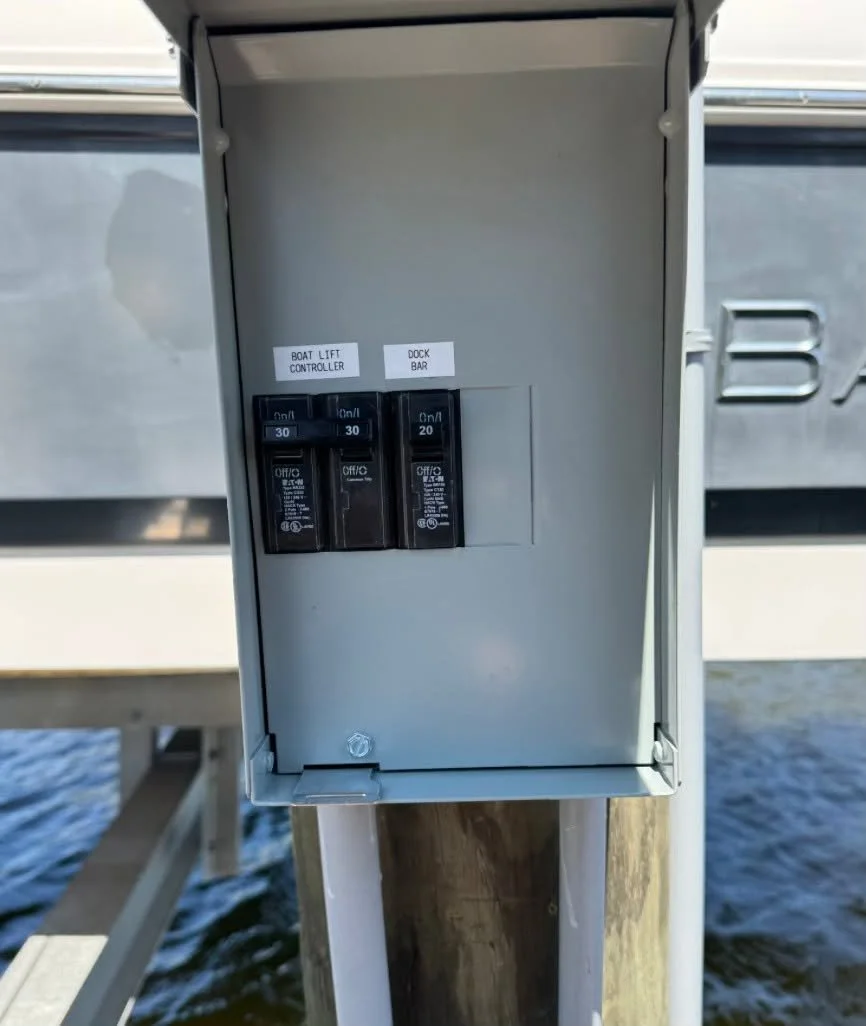
An NFPA blog on the electrical inspector’s role in preventing shock drowning notes that homes with private docks don’t always have shore power but may have electrically powered boat hoists. The 2020 NEC reaches those docks too: Section 555.9 requires GFCI protection for the outlet, 240 volts or less, that supplies a boat hoist at a dwelling unit docking facility.
That voltage limit matters. A 240-volt lift motor is covered, as is a 120-volt one.
04 — Warning Sign
The Shock Hazard Sign the Code Calls For
Section 555.10 of the 2020 NEC calls for a permanent safety sign giving notice of electrical shock hazard risks to people using or swimming near a docking facility. The code also fixes the wording, which warns of a potential shock hazard due to electrical currents that may be present in the water.
The sign has to use effective words, colors, and symbols under the code’s general warning label rule in Section 110.21(B)(1), and it has to be durable enough for the conditions where it hangs. We can point out where a code-worded sign belongs at the landing, and your inspector can tell you how the city applies the rule to a private dock.
05 — Boathouses
Boathouses and Covered Slips Follow the Dock Rules
Article 555 defines a docking facility as a covered or open, fixed or floating structure that provides access to the water and to which boats are secured. A roof over the slip leaves it in that definition, so a boathouse built over the water is wired to the same layered protection as the open pier beside it.
That covers the boathouse lights, its receptacles, the lift inside it, and the circuit that feeds them.
If the backyard also has a pool or hot tub, that equipment falls under a different article of the code, covered on our pool and spa wiring in Chesapeake page.
06 — Approvals
The Dock’s Approvals and the Wiring Permit Are Separate
The city’s Chesapeake Bay Preservation Area specifications manual lists marinas and other boat docking structures as water-dependent facilities, meaning development that cannot exist outside the Resource Protection Area and must sit on the shoreline because of what it is.
Because a dock has to sit in the Resource Protection Area, the city may ask for a water quality impact assessment before it is built. You or your dock builder handle those approvals and any wetlands review. Castles does not file them.
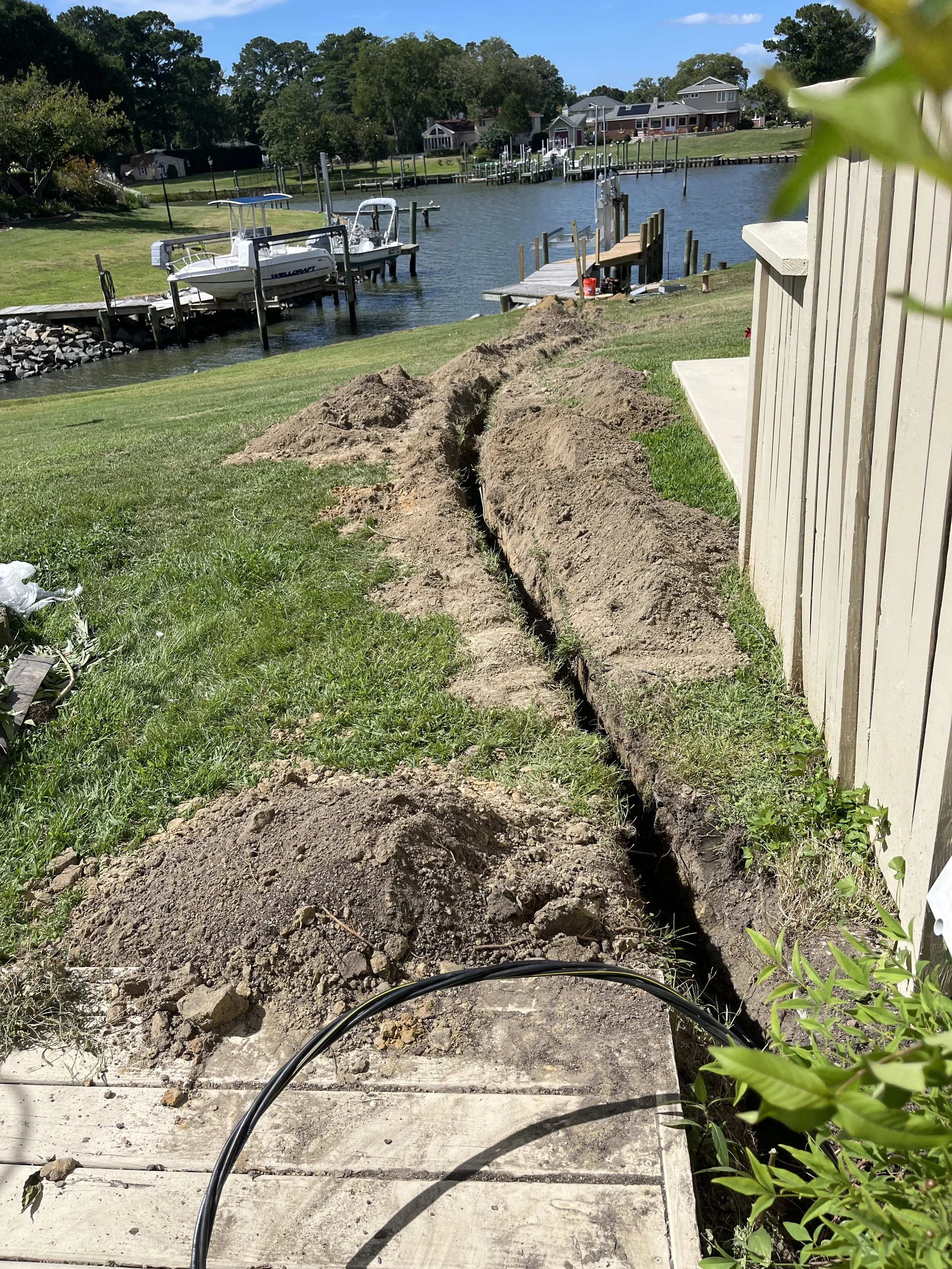
Our part is the city electrical permit for the dock feeder, the lift, lights, receptacles, and boathouse wiring. We plan the feeder route from the house to the landing with you and your dock builder.
07 — Process
From Dock Walk to Final Inspection
Look over the dock
We look at what needs power, from the lift and lights to receptacles, shore power, or a boathouse, and where a feeder can run from the house. A photo of an existing lift’s nameplate helps.
Lay out the protection
We select and coordinate the GFPE and GFCI levels, verify panel capacity, and provide you with a written installation estimate.
Pull the permit
Castles pulls the city electrical permit for the dock wiring.
Install and rough inspection
Protected wiring, the lift circuit, and receptacles go in, and the city inspects the rough work.
The city signs off, then we walk the dock
We go through the devices with you one by one so you know which part of the structure each protects.

08 — Why Castles
What You Get at Handoff
A fault at one outlet should trip that outlet
Levels are coordinated so a single problem does not take the whole dock down.
Each device is labeled for the circuit it protects
The next electrician to open that panel reads it the way you do.
09 — FAQS
Dock Wiring Questions
10 — Proof
Power for a Boat Lift
A waterfront homeowner who had power installed for a boat lift wrote that it was a great job and much appreciated.
From our five-star Google reviews
Google 5.0 Rated by Hampton Roads Customers
Castles Electrical maintains a 5.0 rating on Google. The reviews below load as a live widget, so this page shows current feedback from real Castles Electrical customers.