02 — Options
Original Recessed Cans: Choosing the Right Replacement
03 — Finished Ceilings
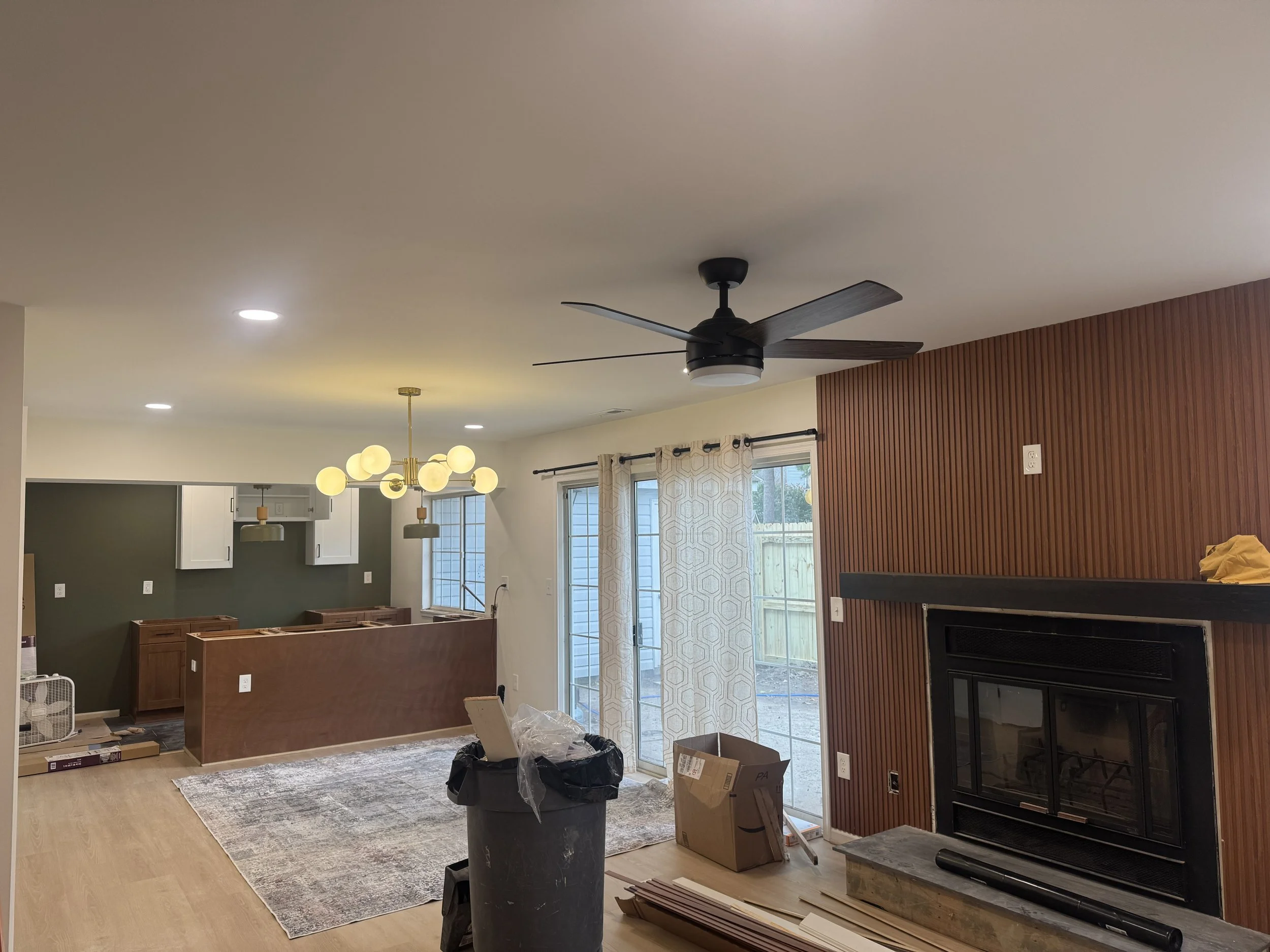
Adding Lights to a Finished Ceiling
Most homeowners who want more light are not remodeling, so the ceiling stays, and in a two-story house the first-floor ceilings have no attic above them. With canless wafers, we plan the route from the switch to each light to limit extra openings. Where a run needs an access hole, it is kept small and noted in the estimate so patching is not a surprise.
Pendants, under-cabinet, and vanity lights
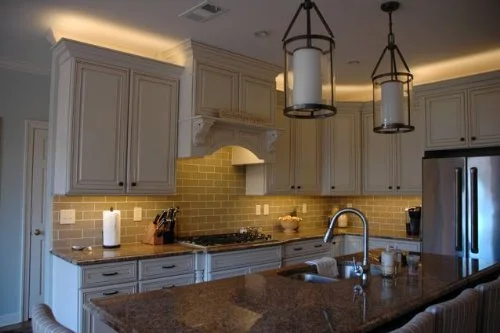
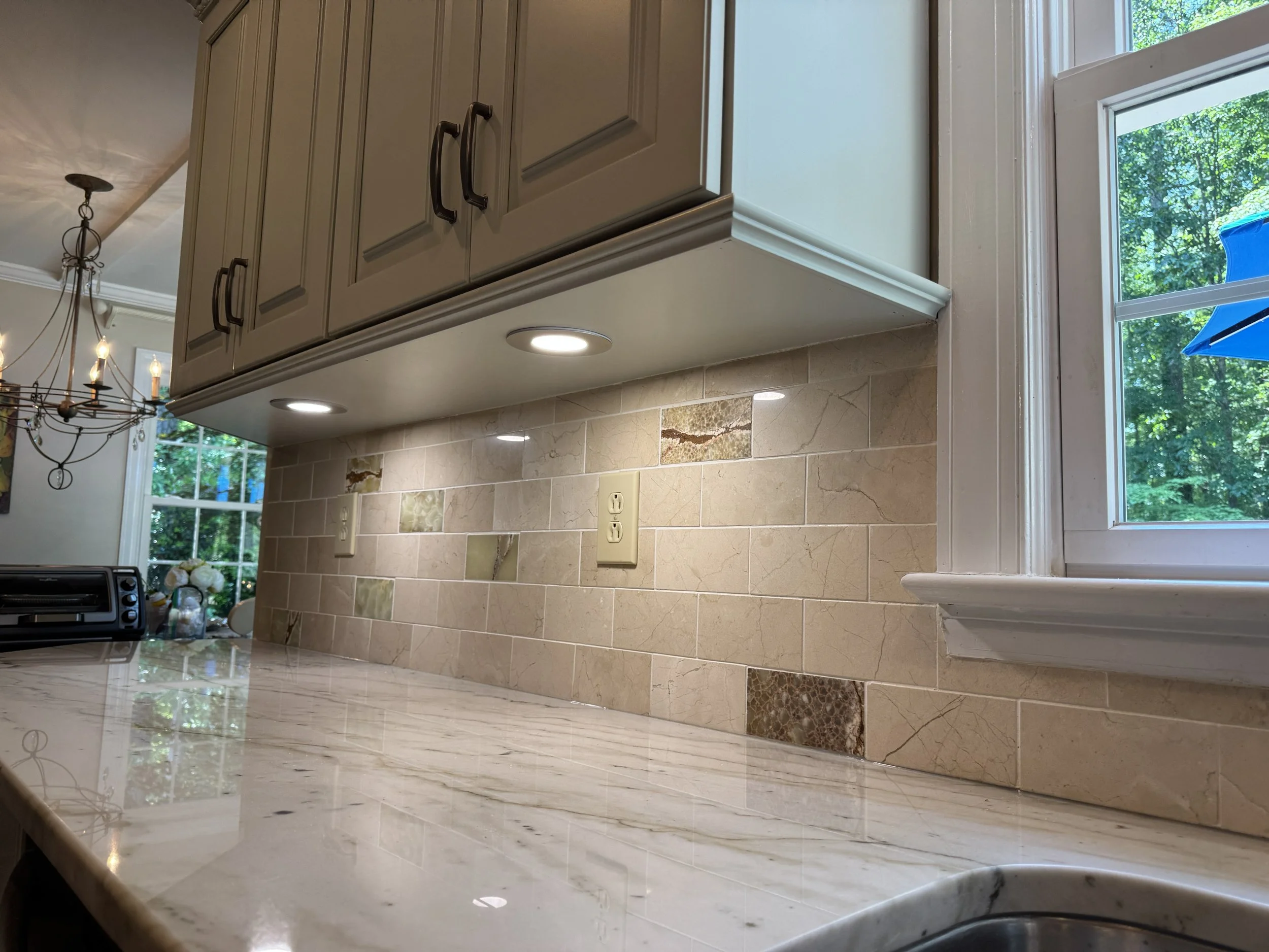
Recessed lights handle general light, and the rest of a kitchen or bath usually needs task light. Pendants over an island, under-cabinet strips along the counters, and vanity lights beside a mirror each need their own box or feed, and we plan them with the recessed layout so the switches make sense in the room.
04 — Brightness
Brightness Is Measured in Lumens
Watts measure the energy a lamp uses, and brightness is measured in lumens. The Federal Trade Commission points shoppers to lumens and to the Lighting Facts label on the package, which lists a lamp’s brightness and estimated life. ENERGY STAR matches a 40-watt incandescent bulb with at least 450 lumens, a 60-watt bulb with 800, a 75-watt bulb with 1,100, and a 100-watt bulb with 1,600.
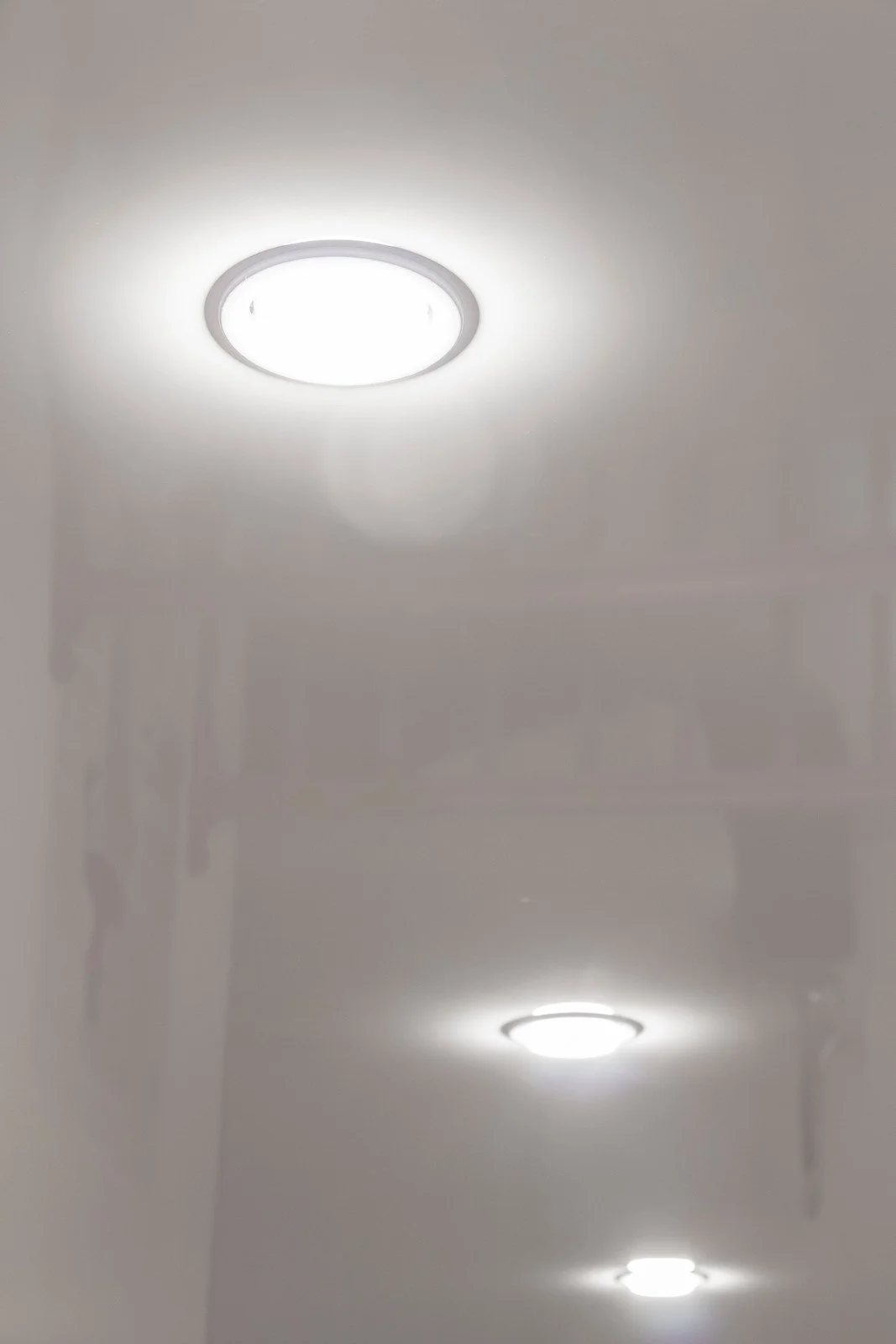
Integrated LED wafers and integrated LED flush mounts have no bulb to replace later, so the fixture’s lumen rating is what the room lives with. When old flood bulbs in a kitchen give way to wafers, compare the lumen ratings, and treat a watt-equivalent claim on the box as a rough guide.
The switch on the wall is part of that choice. ENERGY STAR notes that not every LED light works well with every dimmer, and a dimmer designed for incandescent lamps can leave a new LED fixture flickering or humming at low settings. We list the dimmer alongside the fixture for each room so the two are bought as a pair.
LEDs also age differently. The Department of Energy notes that they do not burn out; an LED product’s rated life is the point at which its light output is predicted to drop by 30 percent. On a tall great-room ceiling, where reaching a fixture takes a tall ladder, that rating is worth comparing.
05 — Closets
Closet Lights: What Virginia’s Code Allows
Plenty of walk-in closets in those same 1980s and 1990s houses still have a bare bulb in a porcelain holder with a pull chain. Virginia’s 2021 residential code allows enclosed incandescent or LED fixtures and fluorescent fixtures in closets, plus surface-mounted fluorescent or LED fixtures identified for use inside the storage area.
Open or partly enclosed bulbs, pendants, and bare lampholders are not types the current code allows in new work. An existing one is not something you have to tear out, but it is the first thing we suggest swapping when a closet gets touched.
Placement depends on clearance to the storage space. A surface-mounted, enclosed LED fixture on the ceiling or wall above the door needs at least 12 inches from the nearest point in that space, and a recessed one needs 6 inches.
The code treats the storage space as the area 24 inches out from the side and back walls, from the floor up to 6 feet or the highest rod, and 12 inches out or the shelf width, whichever is greater, above that.
A deep shelf pushes the allowed spot toward the door, so we measure the shelves before choosing a fixture. An enclosed LED fixture is the usual replacement for a bare-bulb holder.
06 — Bathrooms
Bathroom Lights, Fans, and the Zone Over the Tub
Virginia’s code sets a zone that reaches 3 feet out and 8 feet up from the top of a tub rim or shower threshold, including the space directly above. Pendants and other hanging fixtures, lighting track, and ceiling paddle fans must stay entirely out of that zone, so a chandelier over a soaking tub is off the table.
Fixtures inside the tub or shower footprint, up to 8 feet above the rim or threshold, must be marked for damp locations, and for wet locations where shower spray reaches them. A recessed or flush fixture with the right marking is the usual way to light that area.
A combination exhaust fan and light has its own rules on the fan side. Bathroom exhaust has to go directly outdoors, never into the attic, soffit, ridge vent, or crawl space, and where a bathroom has an exhaust fan, it needs at least 50 cfm running intermittently or 20 cfm running continuously. If a fan-light unit is ever replaced, it is worth confirming where the existing duct ends.
07 — New Homes
What Virginia’s Energy Code Requires in a New Build
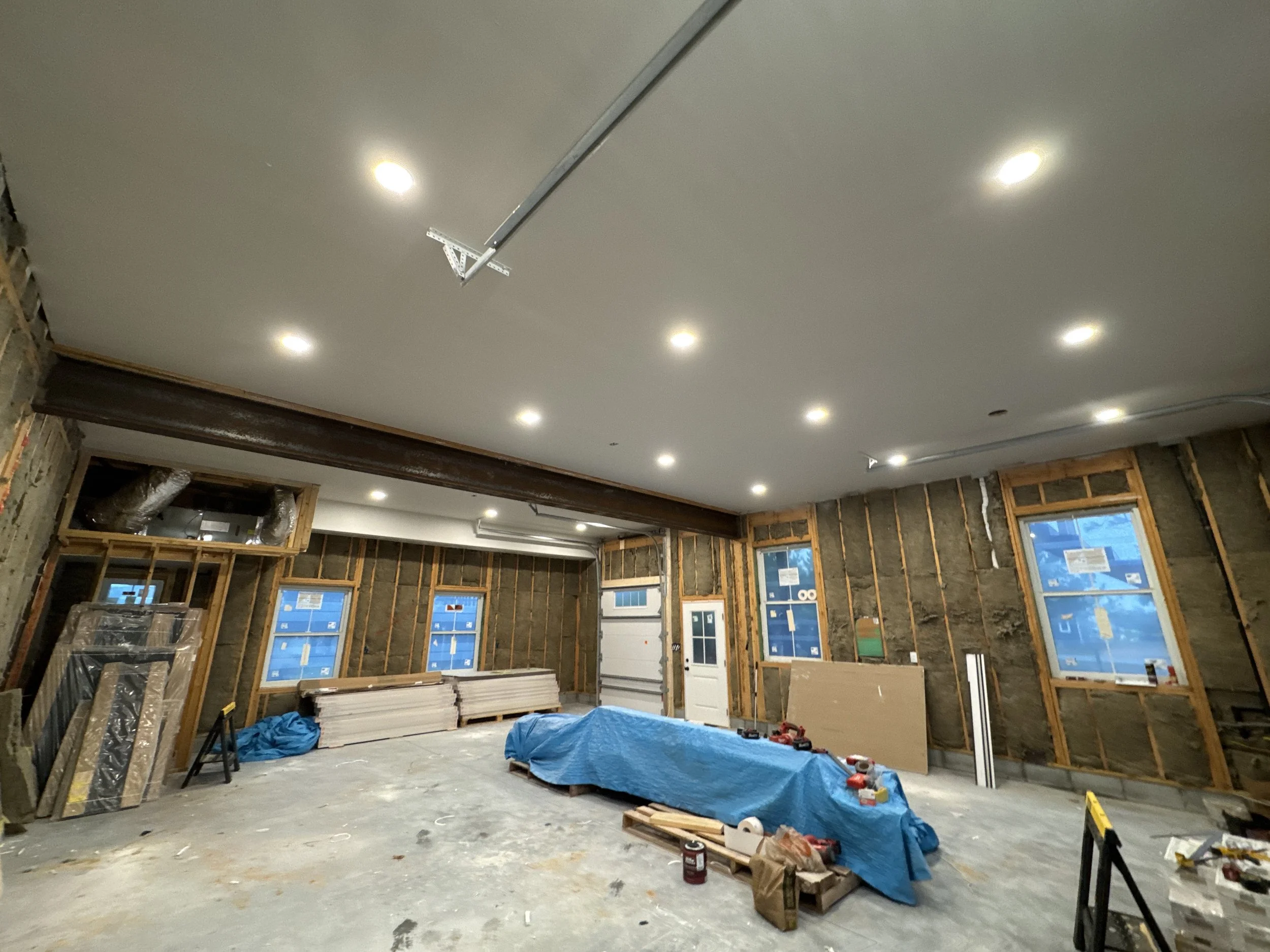
Virginia’s 2021 residential energy provisions require every permanently installed fixture in a new home, excluding kitchen appliance lights, to use only high-efficacy light sources. The model code set that shares at 90 percent, and Virginia made it all fixtures. A high-efficacy lamp produces at least 65 lumens per watt, or a fixture at least 45 lumens per watt, and LED fixtures are the usual way to meet it.
The same provisions call for permanently installed fixtures to be controlled by a dimmer, an occupant sensor, or another control installed with or built into the fixture. Bathrooms, hallways, exterior fixtures, and lighting designed for safety or security are exceptions. On a new build, living areas and bedrooms get their controls planned with the fixtures, and the estimate lists the control for each room.
For additions, the residential code’s energy chapter points to Section 805 of Virginia’s existing building code, so permit review confirms which lighting requirements apply to a new room.
08 — FAQS
Chesapeake Lighting FAQs
09 — Why Castles
Two Things We Check Before Quoting
We read the label inside the can before quoting a replacement
The IC and airtight ratings decide whether insulation can go back over the housing.
The dimmer is picked for the LED it will control
A dimmer meant for incandescent lamps can make a new LED fixture flicker.
10 — Proof
A Lighting Job From Google Reviews
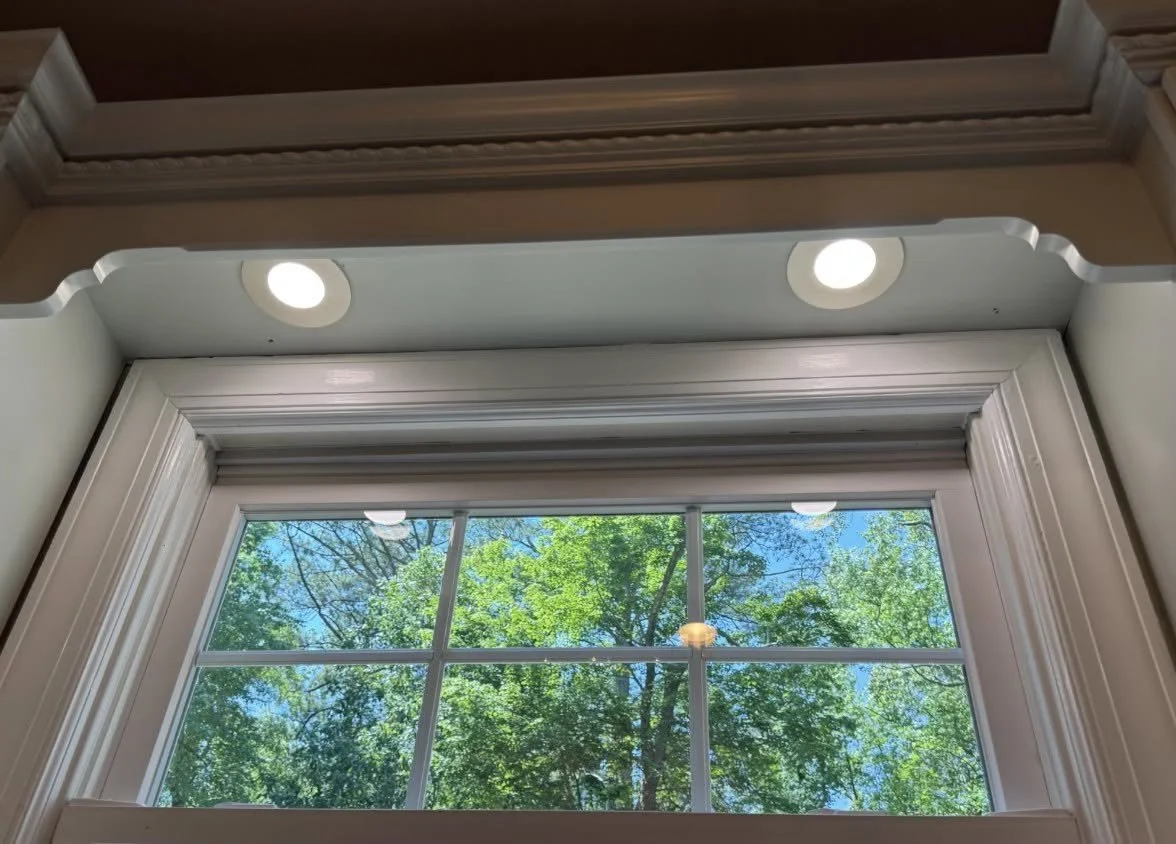
One homeowner’s review covers a first ceiling light added to a finished room, with the box and wiring run carefully and the furniture protected. Read it in the feed below.
From our five-star Google reviews
Google 5.0 Rated by Hampton Roads Customers
Castles Electrical maintains a 5.0 rating on Google. The reviews below load as a live widget, so this page shows current feedback from real Castles Electrical customers.