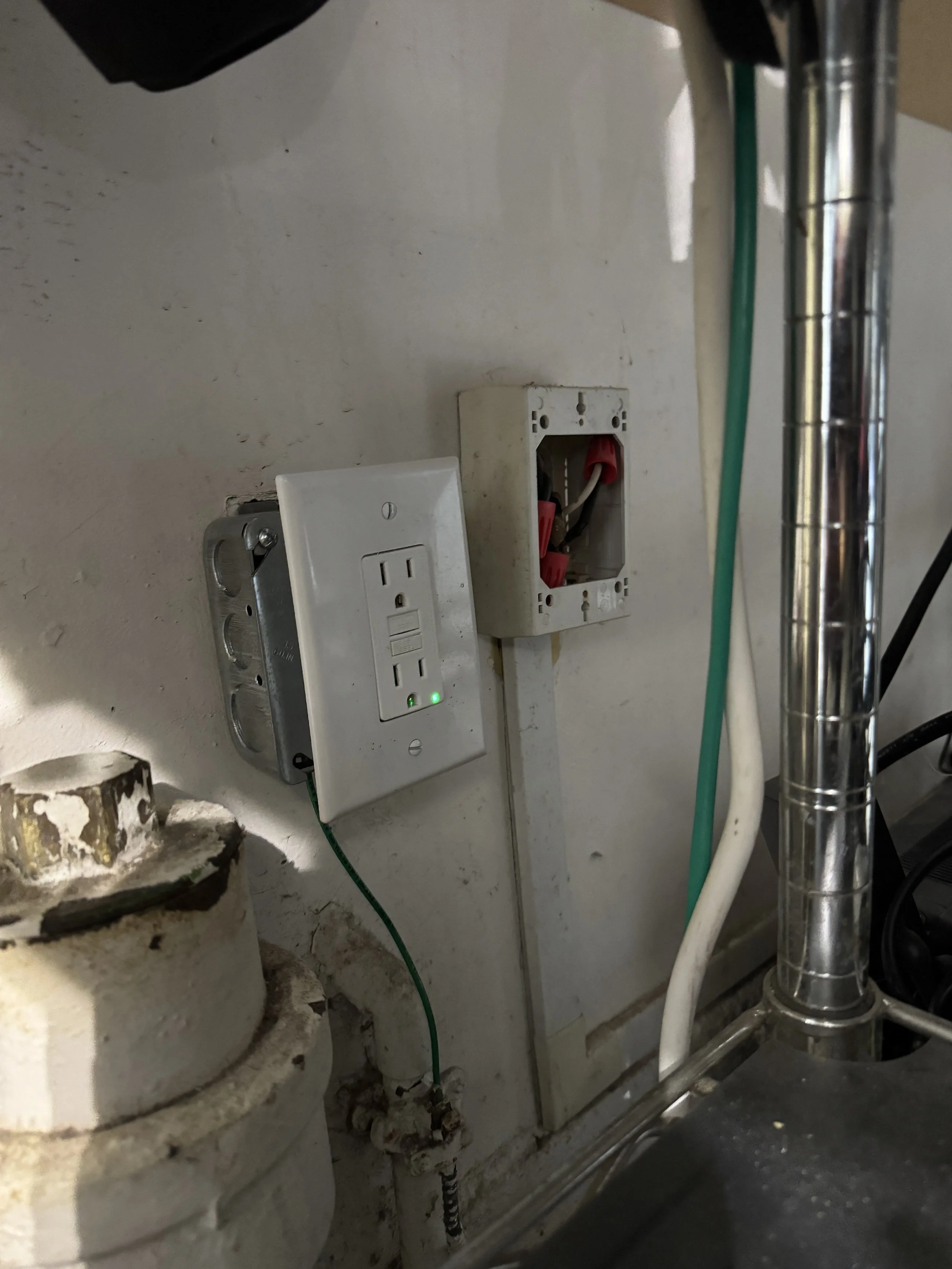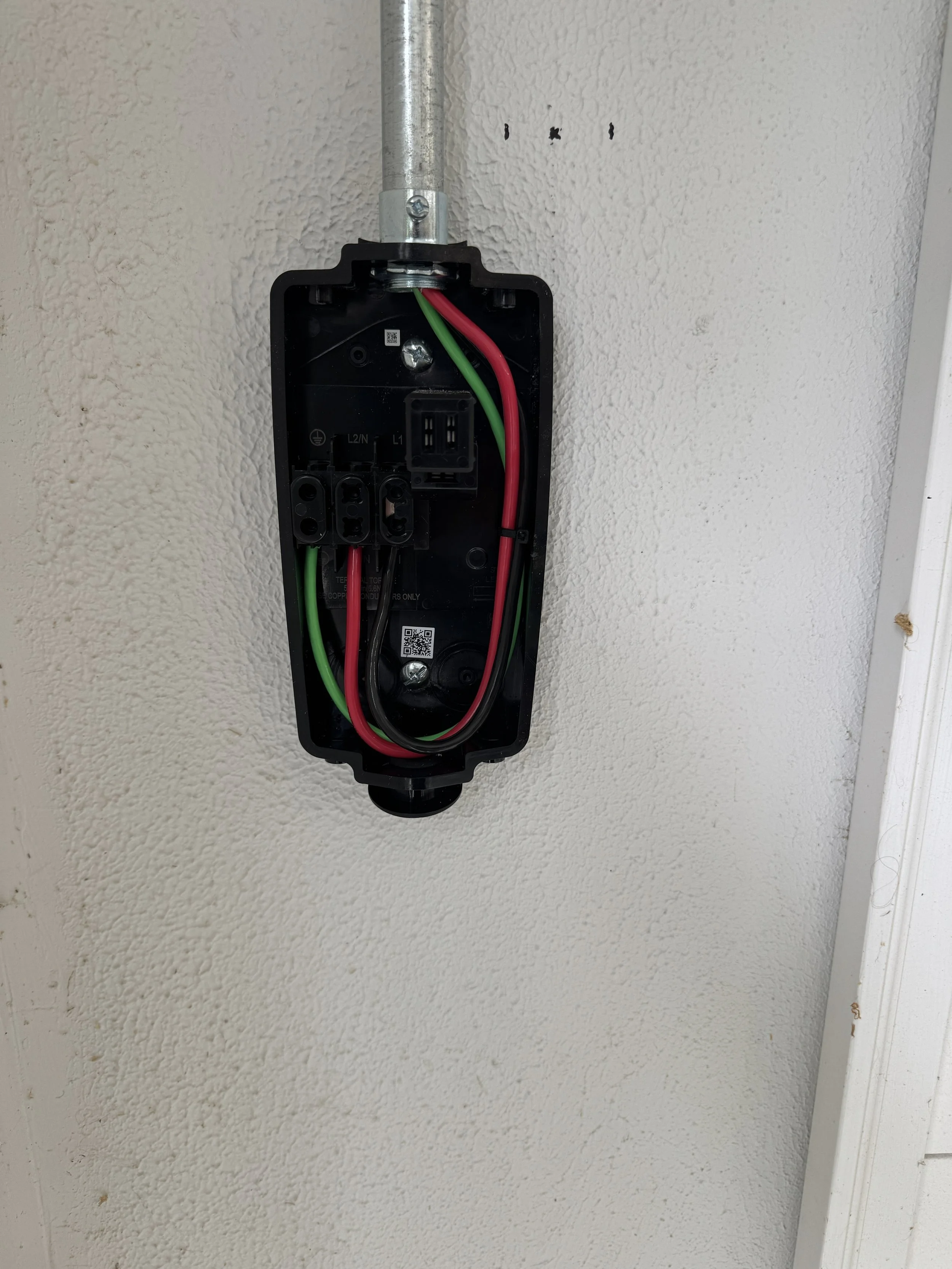
RV outlet and dedicated-circuit wiring in Suffolk, VA, Castles Electrical

Master Electrician & Class B Licensed

RV & Appliance Circuit Wiring in Suffolk, VA

A 30-amp RV plug and a 1960s dryer outlet look almost alike, and one of them is 120 volts while the other is 240. That resemblance is why a travel trailer parked at a Suffolk house gets a circuit sized from the plug on its cord, just as a range gets one sized from its nameplate.

Ranges, dryers, water heaters, well pumps, heat pumps, hot tubs, and RV outlets all get the same treatment: read the label first, then pick the breaker. We match each circuit to the appliance nameplate or to the plug on the RV’s cord, and we pull the permit where required.

Master Electrical & Alternative Energy License #2710048784 Class B Contractors License #2705166194 Google 5.0 Rated Family-Owned & Operated Since 2012 Licensed Electricians, Never Subcontracted Free Installation Estimates
Licensed. Insured. Trusted. We treat your home like it’s our own.
Locally Owned in Virginia Beach Since 2012 Serving Virginia Beach & Nearby Cities
GENERAC
TESLA
KOHLER
NABCEP
BBBA+
SquareD
GENERAC
TESLA
KOHLER
NABCEP
BBBA+
SquareD
Home / Suffolk, VA / RV & Appliance Circuit Wiring in Suffolk

01 — Suffolk Parking Rule

What a Home RV Outlet Is Really For

Suffolk’s Unified Development Ordinance, in Section 31-701, allows recreational vehicles, including motor homes, tent trailers, and boats, to be parked or stored on a residential lot. Two conditions shape where the power goes. The equipment “may not be parked or stored in front yards except on the driveway,” and it “shall not be used for living, housekeeping or business purposes when parked or stored on the lot.”

So a home RV outlet here is for getting the coach ready, not for living in it. Its job is to keep the batteries charged, cool the refrigerator the day before a trip, run the air conditioner while you load up, and test systems after the rig has sat for a season.

That is the difference between a receptacle that stages a coach and one built to run a household, and it is why the breaker gets chosen from the cord rather than from the panel.

02 — Read the Plug

Read the Cord Before Anyone Picks a Breaker

RV power comes in two common home-circuit sizes, and the cord tells you which one a coach uses. Hubbell describes its TT-30 plug and receptacle as NEMA TT-30 devices that deliver 30 amps at 120 volts, commonly used for RV shore power.

Airstream’s support pages compare the two. A 30-amp cordset has a single 120-volt hot wire, a neutral, and a ground, for a maximum of 3,600 watts. A 50-amp cordset has two 120-volt hot wires, a neutral, and a ground, for a maximum of 12,000 watts. Airstream notes that several of its travel trailer models come with 30-amp service, and some can be upgraded to 50-amp service. The plug on your own cord is what counts.

Hubbell lists its TT-30 devices as UL and cUL Listed, and a receptacle listed for the plug belongs at the parking spot. Before we quote, we ask for photos of the cord’s plug end and the coach’s electrical label. Those settle the outlet type and breaker.

What the RV cord has
What that means
What the home circuit needs
30-amp RV plug
One 120-volt hot, neutral, ground; up to 3,600 watts
TT-30 receptacle on a single-pole 30-amp breaker
50-amp RV plug
Two 120-volt hots, neutral, ground; up to 12,000 watts
NEMA 14-50 receptacle on a two-pole 50-amp breaker

03 — 30-Amp Outlet

The 30-Amp RV Outlet That Looks Like an Old Dryer Outlet

RV electrical writer Mike Sokol points out that the TT-30 closely resembles the old-style dryer outlets common in the 1960s. The two shapes look alike, yet the RV version is a 120-volt device, and Sokol stresses that a 30-amp RV belongs on a single-pole, 120-volt breaker.

The converter and microwave in a 30-amp coach are built for 120 volts, and a TT-30 wired across both legs of a 240-volt circuit would hand them twice that.

04 — Adapters

What an Adapter Leaves Unchanged

Adapters let one kind of cord reach the other kind of outlet, and Airstream is direct about their limits. A 50-amp coach on a 30-amp source can run a single air conditioner, and owners may be unable to run all their appliances at once. Airstream calls a dogbone a power cable cord adapter, recommends that style, and advises against plug-style adapters.

Winnebago’s manual adds that any adapter must keep the ground.
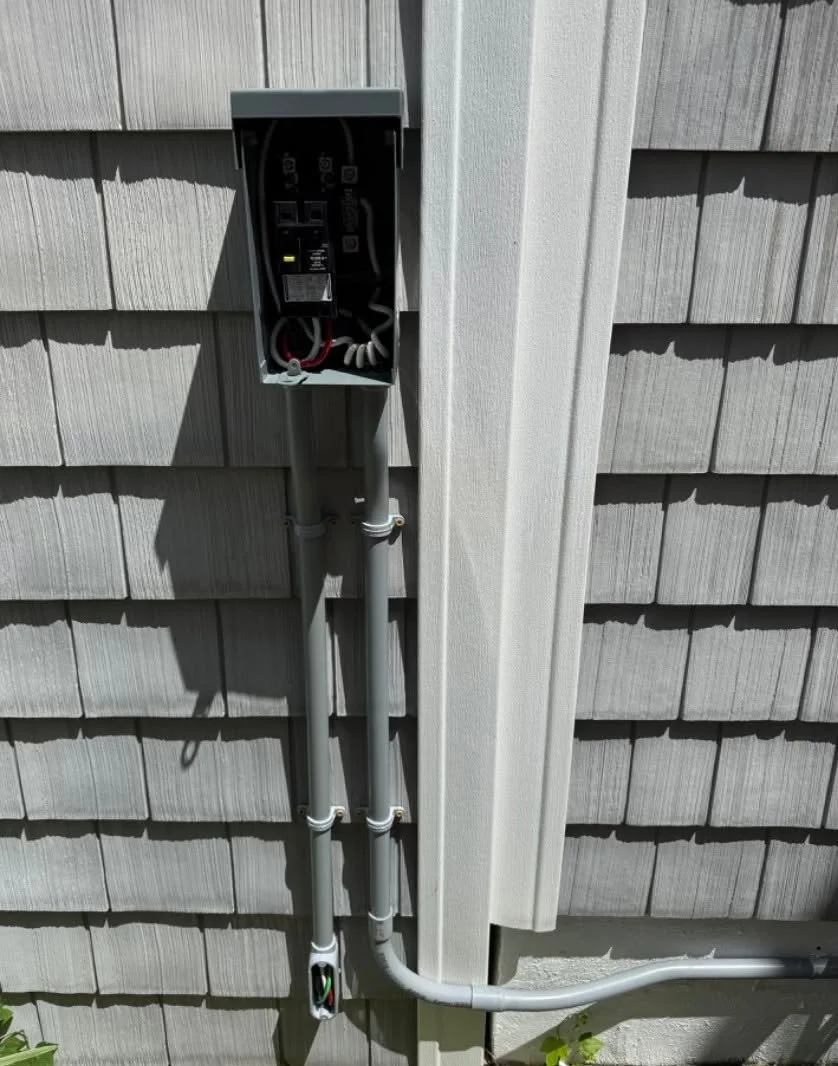
Outdoor enclosure mounted on the wall where a Suffolk, VA circuit is needed

05 — Outlet Placement

Placing the Outlet Where the Rig Actually Parks

The driveway edge, a side yard, and a pad out back each put the coach’s power inlet somewhere different. We look at how the rig backs in and where that inlet ends up, so its own cord reaches the receptacle without strain.

Outdoors, the RV receptacle gets GFCI protection. It needs a solid wall or post and a weatherproof cover suited to a cord left plugged in.

06 — Process

From Parking Spot to Plugged-In Coach

01

Photos of the plug and the spot

The RV cord’s plug, the coach’s electrical label or the appliance nameplate, your main panel, where the rig parks, and any larger coach you are considering.

02

Walk the spot

Parking location under Section 31-701, outlet placement, cord reach, and panel space are reviewed.

03

Written estimate

The RV outlet and any other circuits on your list, with the permit where required.

04

Install

Listed receptacle matched to the plug, the correct breaker (single-pole for a TT-30, two-pole for 50 amps), GFCI outdoors, and a weatherproof cover.

05

Test and hand over

Voltage checked at the outlet, city inspection where required, and a walk-through of which breaker controls it.
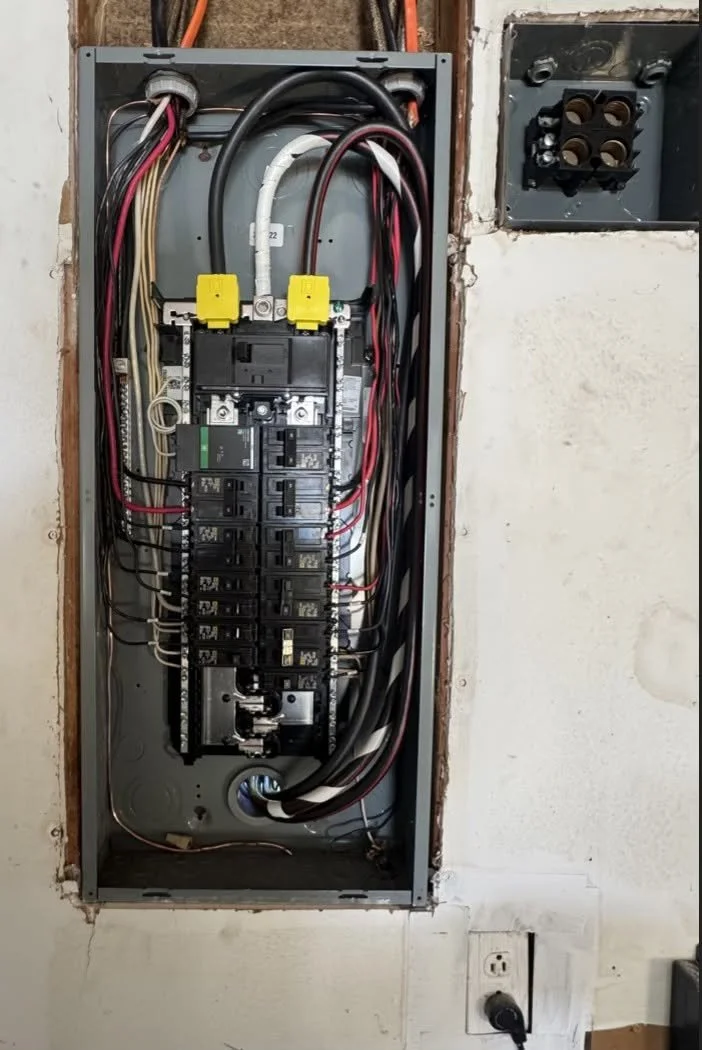
Panel checked for room for a 30- or 50-amp breaker in Suffolk, VA

07 — Other Appliances

The Rest of the Appliance List on a Suffolk Property

The RV is often one item on a longer list: a range or dryer, a well pump, a heat pump, a hot tub, or shop tools. A dishwasher, a disposal, a hardwired microwave, a sump pump, or a mini-split belongs on the same list, and each of those gets a circuit of its own.

One look at the panel shows whether there is room for a 30- or 50-amp breaker along with a spa circuit or a new range circuit, and whether the panel itself needs attention first. One estimate covers the group, and we handle the permit required by the city for the work. Range, dryer, and water heater circuits follow the appliance nameplate and the maker’s installation sheet, just as the RV outlet follows the plug.
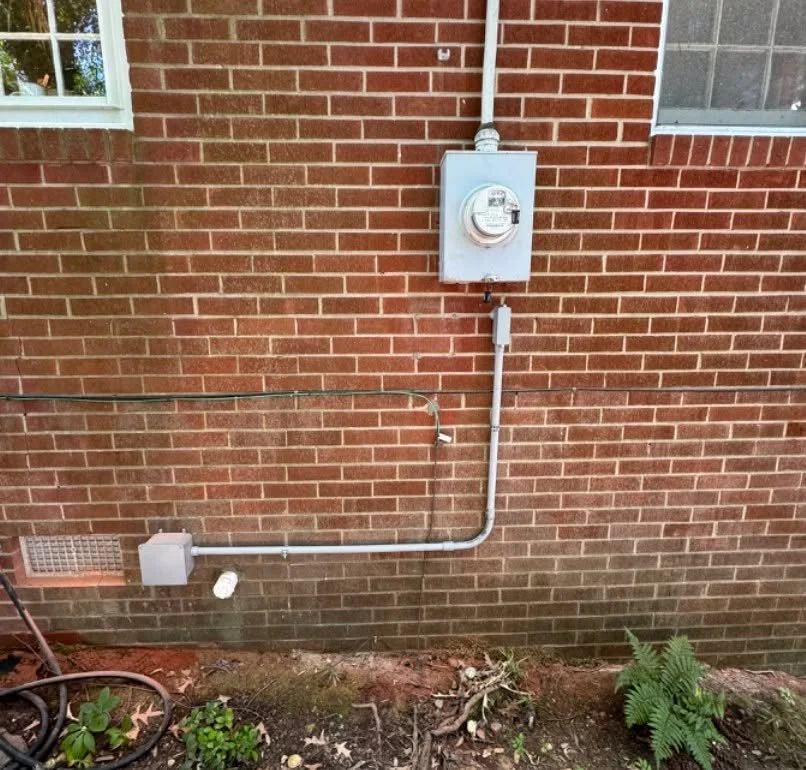
Outdoor circuit run down the wall of a Suffolk, VA home to the spot where it is needed

Castles Electrical

Licensed, insured, and locally owned. The work is done by our own electricians, never subcontracted.

08 — Why Castles

Two Things Settled Before the Breaker Goes In

Single-Pole for a TT-30

A 30-amp coach lands on one 120-volt leg, never across both, on a receptacle listed for that plug.

RV, Spa, and Kitchen Planned Together

One look at the panel answers the whole list at once.

09 — FAQS

Suffolk RV and Appliance Circuit FAQs

Can relatives sleep in the camper in our driveway during a visit?+

The ordinance bars living and housekeeping use of a parked RV. Suffolk’s zoning staff can say how that applies to a short family visit.

Does the same parking rule cover our boat or utility trailer?+

Yes. Section 31-701 lists boats and boat trailers with recreational vehicles, under the same driveway condition, so a boat that needs power at home follows the same outlet planning.

Our coach has a 30-amp cord, but the dealer fitted a 50-amp inlet. Which one do we wire to?+

Wire to the cord you plug in at the post. If the coach was converted to a 50-amp inlet, its cordset should be the 50-amp type, and a TT-30 at the house would then mean a dogbone every time. Send photos of the plug end and the coach’s electrical label, and we’ll size the circuit for the cord rather than the paperwork.

We have a 30-amp trailer but may buy a 50-amp coach. What should we install?+

Tell us at the estimate. Airstream says that a 30-amp trailer on a 50-amp outlet, via an adapter, still maxes out at 30 amps, so a 50-amp outlet serves both coaches with a dogbone. If a switch is unlikely, a TT-30 matches the trailer you own.

Can the RV stay plugged into a regular outdoor outlet between trips?+

For battery charging, often yes. Airstream says a household outlet is a great way to keep batteries charged, but it supplies only 15 amps and cannot run the coach at full power. Winnebago’s manual says never to plug the coach’s cord into an ungrounded receptacle and to keep the ground through any adapter, so use a grounded outlet and a dogbone-style adapter.

10 — Proof

An RV Circuit on the Side of the House, Plus Two More

A Google reviewer mentions a 30-amp RV circuit we added on the side of the house, along with a bathroom outlet and a hot tub circuit.

From our five-star Google reviews
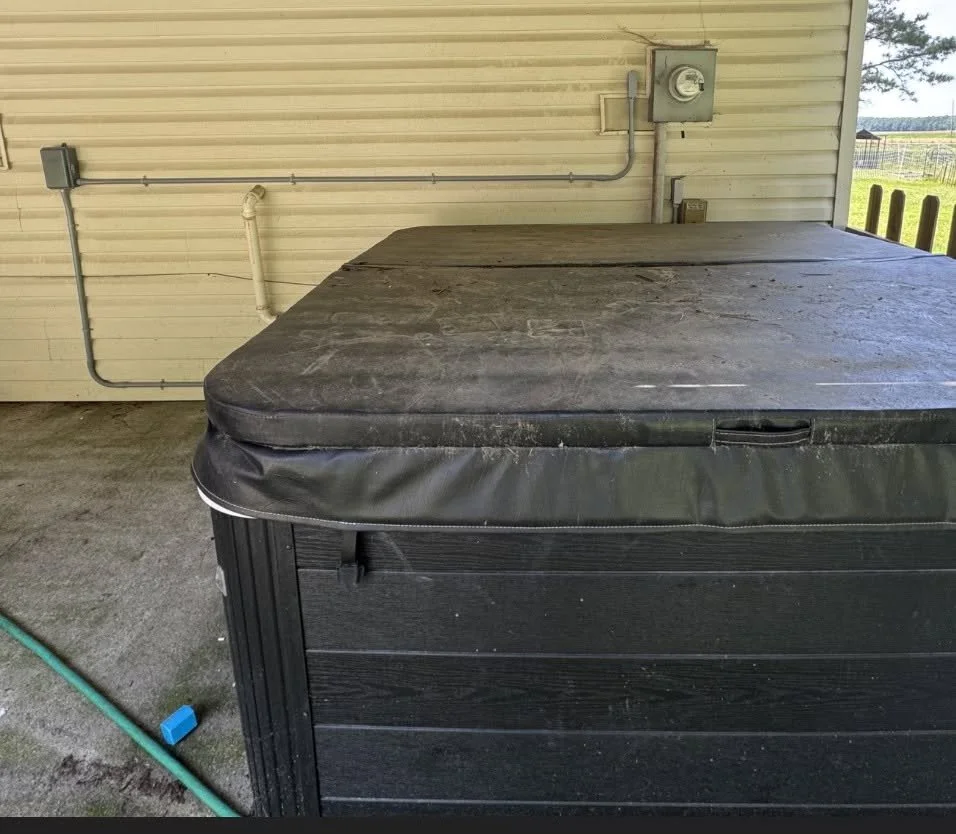
Hot tub circuit and its disconnect at a Suffolk, VA home
Receptacle added beside the water heater on a Suffolk, VA property

Google 5.0 Rated by Hampton Roads Customers

Castles Electrical maintains a 5.0 rating on Google. The reviews below load as a live widget, so this page shows current feedback from real Castles Electrical customers.
Leave Us a Google Review

Ready When You Need Us

Match the Circuit to the Coach

Photograph the plug on the coach’s cord, or name the appliance you are adding, and say where the rig parks. Installation estimates are free.

Office and hours

Based at 2984 S Lynnhaven Road, Suite 104, Virginia Beach, VA 23452.

  • Monday to Friday: 7:00 AM to 10:00 PM
  • Saturday: 7:00 AM to 7:00 PM
  • Sunday: Closed
  • After-hours voice messages are checked, and we take emergency and after-hours calls when we can

A 30-amp coach on a two-pole breaker sees 240 volts, which is why the plug decides the breaker.

Castles Electrical electrician reviewing the job with a homeowner