electrical panel repair in Suffolk, VA, Castles Electrical

Master Electrician & Class B Licensed

Electrical Panel Repair in Suffolk, VA

Rust along the bottom of an outdoor panel, or a drip mark running down onto a breaker, is a clue worth following. Outdoor panels and meter-main combinations are built to shed rain, so water on the inside usually means an opening, a fitting, a cover, or a conduit run has let it in.

Suffolk’s wettest months are also its hottest. The repair starts at the outside of the box: the exposure points first, then the connections and the devices the water reached, on your side of the service.

Free estimates cover installation work. A visit to trace and repair water damage carries a service-call charge, quoted by phone before anyone comes out.

Master Electrical & Alternative Energy License #2710048784 Class B Contractors License #2705166194 Google 5.0 Rated Family-Owned & Operated Since 2012 Licensed Electricians, Never Subcontracted Free Installation Estimates
Licensed. Insured. Trusted. We treat your home like it’s our own.
Locally Owned in Virginia Beach Since 2012 Serving Virginia Beach & Nearby Cities
GENERAC
TESLA
KOHLER
NABCEP
BBBA+
SquareD
GENERAC
TESLA
KOHLER
NABCEP
BBBA+
SquareD
Home / Suffolk, VA / Electrical Panel Repair in Suffolk

01 — Rain Rating

What an Outdoor Rating Covers

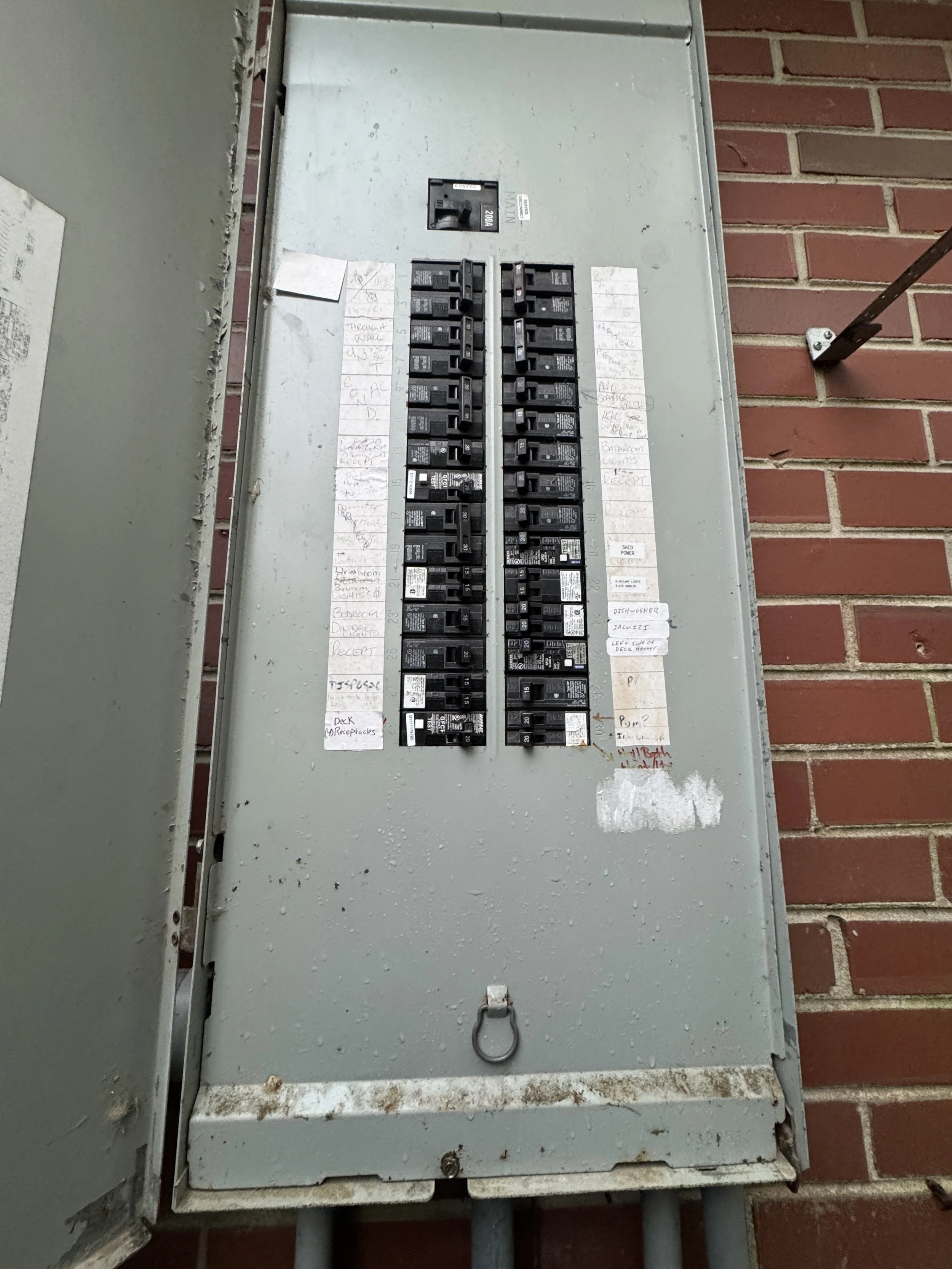
Outdoor residential panels are commonly rated NEMA Type 3R, meaning the enclosure gives a degree of protection against rain, sleet, snow, and falling dirt, and ice on the outside will not damage it.

The key phrase is a degree of protection. A 3R box is tested for weather resistance as-built, and a box that picks up a new hole, a loose cover, or the wrong connector over the years can let water past its rating.

02 — Suffolk Weather

Suffolk’s Wettest Months Include Its Hottest

The Western Regional Climate Center’s record for the Suffolk Lake Kilby station, which runs from 1945 to 2016, averages about 48 inches of precipitation a year. The heaviest totals come from July through September: 5.11 inches in July, 5.61 in August, and 4.73 in September.

Those same months are hot and humid. July averages a high of 88.1 degrees at the station, with nights that stay near 69. Air conditioning keeps the inside of the house far cooler than that.

Outdoor enclosure on a Suffolk, VA home with its top entry and conduit

03 — Top Entries

The Openings Above the Breakers

Water that gets into an outdoor panel often enters from above and runs down across whatever is below. Section 312.2 of the electrical code Virginia uses covers enclosures in damp and wet locations.

In practice, an outdoor box has to keep water from getting in and pooling, and anything entering above the live parts in a wet location has to use wet-location fittings. Surface-mounted boxes in those locations need at least 1/4 inch of airspace behind them, unless a nonmetallic box sits on masonry or a similar surface.

Outdoor enclosures are typically made with a closure plate or a rain-rated hub at the top. Trouble can start with changes made later: a hub swapped for an ordinary indoor connector, a missing closure plate, or a cable for a new circuit brought in through the top. Each can put water directly above the breakers.

On the back side, a metal box mounted tight against the siding can hold moisture where no one sees it.

04 — Conduit Condensation

When Water Travels Through the Conduit

Some water arrives without any rain. Section 300.7(A) covers conduit running from inside a building to outside, where warm, moist air can reach a colder stretch and condense. Where condensation is known to be a problem, those runs must be sealed with a sealant identified for the wiring. The same section names cold storage areas of buildings as another place where condensation is known to be a problem.

August is the wettest month in that record, and it lands in the middle of the hottest stretch. That means saturated outdoor air on one side of the wall and a conditioned room on the other, for weeks at a time.

An unsealed conduit running between them acts as a condenser, and the water it collects runs down into whichever enclosure is lower. It is why a panel here can take on water on a day it never rained.
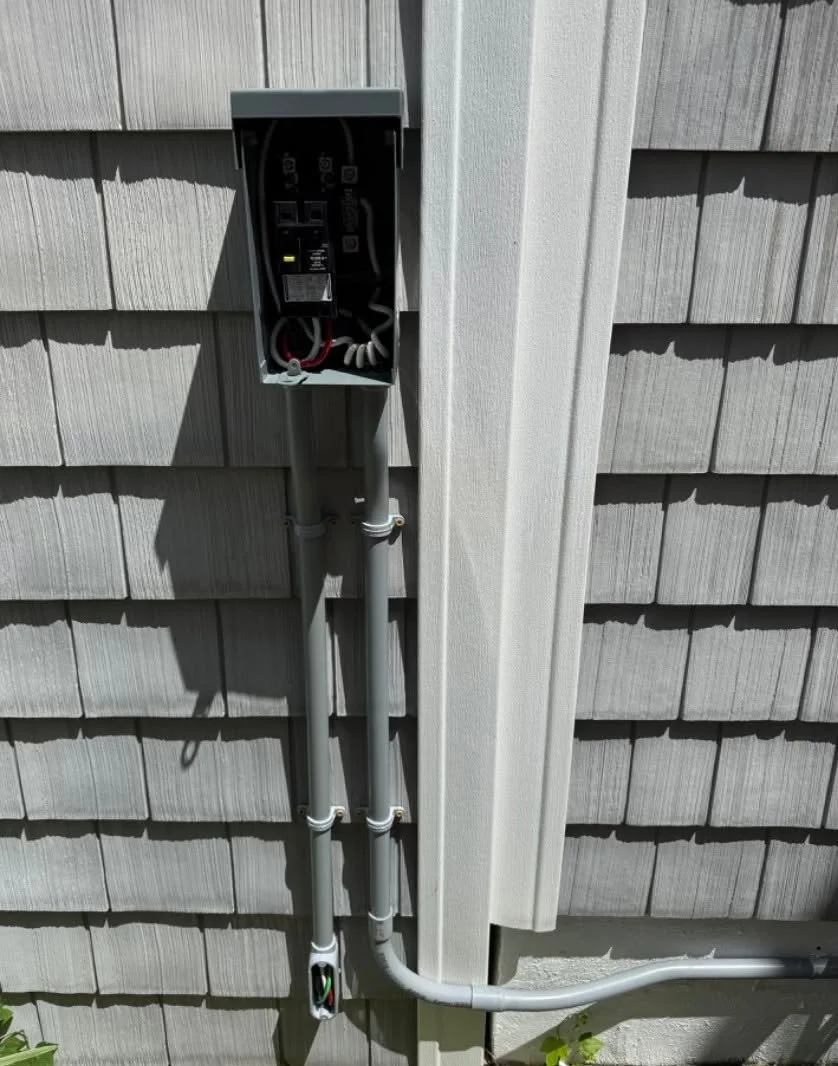
Conduit running from outside into a Suffolk, VA house wall

05 — Service Raceways

Service Raceways That Hold Water

The conductors bringing power into the house have their own rule. The NEC’s section 230.53 is commonly summarized this way: service-entrance raceways exposed to the weather must be listed or approved for wet locations and arranged to drain.

A run that dips or sags collects water and feeds it toward whatever sits below.

06 — Where Rain Gets In

Where Rain Gets In, and What It Looks Like Inside

Entry point
What you may notice
What to look at
Top of an outdoor enclosure
Rust or drip marks directly below the entry, wet breakers near the top
Whether the entry uses a wet-location fitting, and corrosion on the parts below
Conduit between an outdoor and an indoor enclosure
Moisture inside the indoor panel with no roof or wall leak in sight
Whether the raceway is sealed where it passes from inside to outside
Service raceway exposed to the weather
Staining that follows the service conductors into the box
Whether the run drains, and which side of the service it is on
Back of a surface-mounted box
Rust on the back of the enclosure and on the wall
Mounting airspace and the condition of the enclosure back
Cover or door that no longer closes well
Rust along the cover edge and the bottom of the box
Cover fit and fasteners, then the interior

07 — Process

What Happens on a Suffolk Water-Damage Visit

01

Outdoor exposure points first

The outside of the enclosure, including its cover, mounting, and top entries, is inspected before the cover is removed.

02

Inside the panel

Corrosion is evaluated, connections are checked and tightened or remade, and breakers that have failed or show water damage are identified.

03

Written recommendation

What to repair now, and any utility step, in writing.

04

Damaged devices replaced, panel retested

Breakers and devices with water damage are replaced, connections are remade, then the panel is checked again.
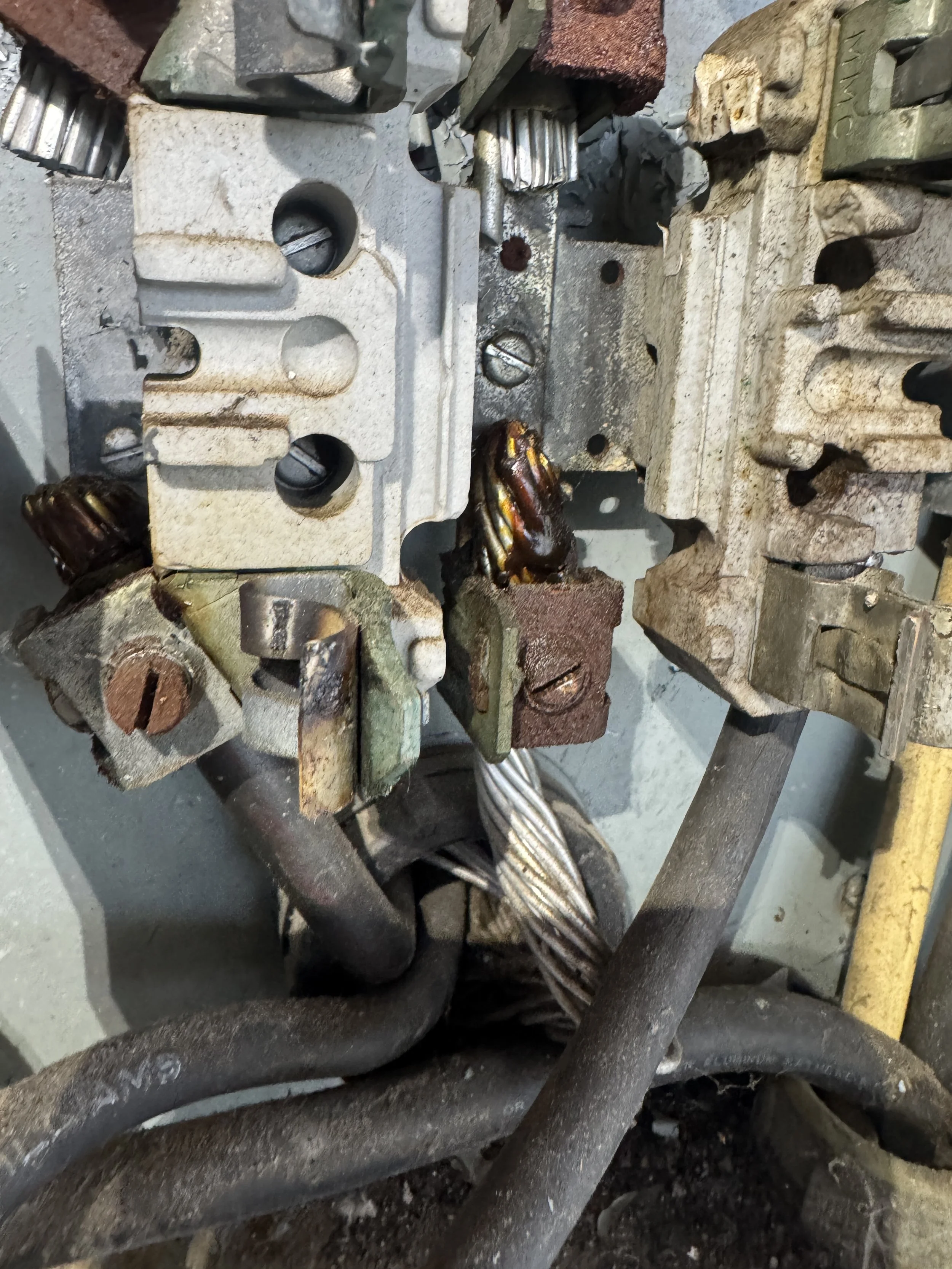
Corroded terminals and bar inside a Suffolk, VA enclosure that has taken on water

08 — What We Repair

What Water Leaves Behind, and What Gets Replaced

Signs of past water are often easier to see than the water itself: rust streaks or scale at the bottom of the enclosure, tide lines below an entry, green or white corrosion on breaker terminals or the neutral bar, discolored connections, or a breaker handle that feels stiff.

Inside, we judge how far the corrosion has gone and remake the connections that have loosened or discolored. A listed device that has taken in water is replaced, so breakers and other devices with water or corrosion damage come out, and new ones go in.

When a panel has taken on too much water for repair to make sense, we say so, and replacement is quoted as a separate written estimate. If water rose into the panel from a flood, that is a replacement conversation, covered on our panel upgrade page for Suffolk.
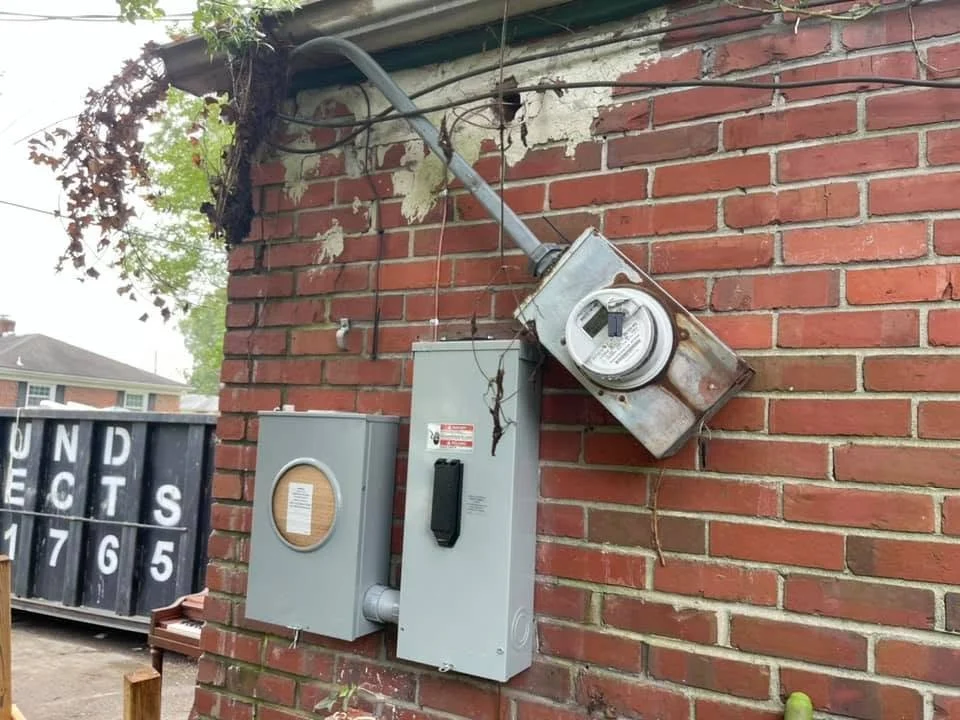
Weathered outdoor service equipment on a Suffolk, VA home

Castles Electrical

Licensed, insured, and locally owned. The work is done by our own electricians, never subcontracted.

09 — Why Castles

Outside the Box, Then Inside It

Exposure Points Inspected

We look at the cover, the top entries, and the mounting before we open the panel.

Damaged Devices Replaced

Water-damaged breakers and devices replaced, connections remade.

10 — FAQS

Suffolk Panel Repair FAQs

There is water on my breakers. Should I dry them off or spray something on them?+

Leave the cover closed and keep your hands and any sprays away from the inside of the panel. Reaching in risks a shock, and drying the surface can hide where the water came from. Call a licensed electrician and describe what you saw.

What rating should an outdoor panel carry?+

Look for the enclosure type marked on the panel label. Outdoor residential panels are commonly marked 3R, and any add-on enclosure mounted near them outside should carry an outdoor type as well.

Does an outdoor rating mean the box will never rust?+

No. NEMA lists added corrosion protection as its own designation, such as Type 3RX, so a standard 3R box is not rated for corrosive conditions. Its tests also apply to the box as built, so a missing plate or a new opening changes how it holds up.

My indoor panel is in the garage. Can rain still reach it?+

It can, through a wall penetration, a conduit from outside, or a leak above the panel. NEMA describes its common indoor enclosure, Type 1, as protecting against contact with hazardous parts and falling dirt, with no rating for water, so any steady source matters. We check the wall above and the conduit entries along with the panel itself.

Is a rusty meter socket something you repair?+

Not on this visit. Anything at the meter goes through your utility, Dominion Energy or Community Electric Cooperative, and we hand you what we found so you can open that call.

11 — Proof

Panel Work in the Google Feed

Our Google reviews include panel work carried out at customers’ homes. The reviews below load as a live widget, so you read what the customers wrote.

From our five-star Google reviews
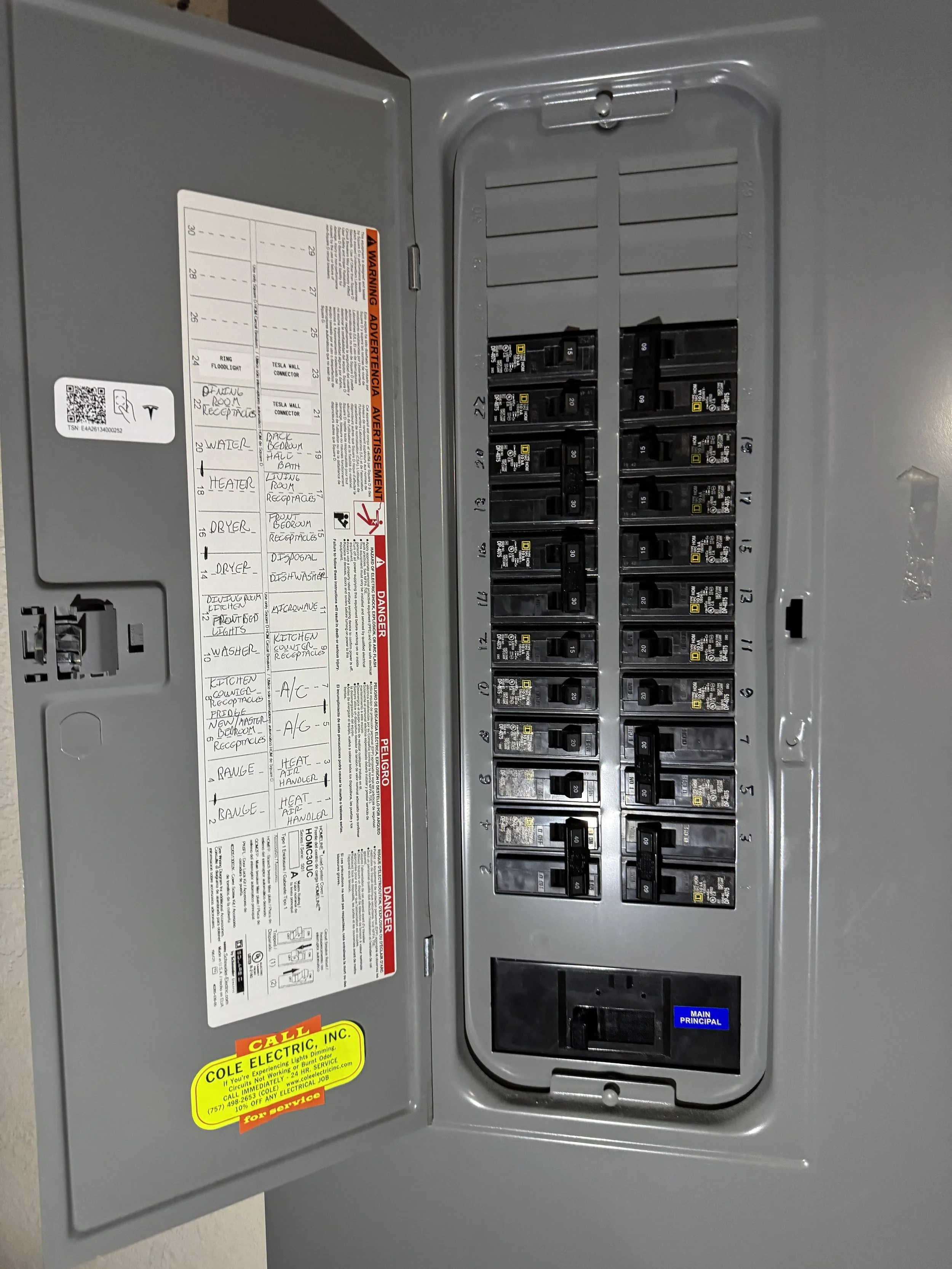
Panel back together with its directory readable, Suffolk, VA
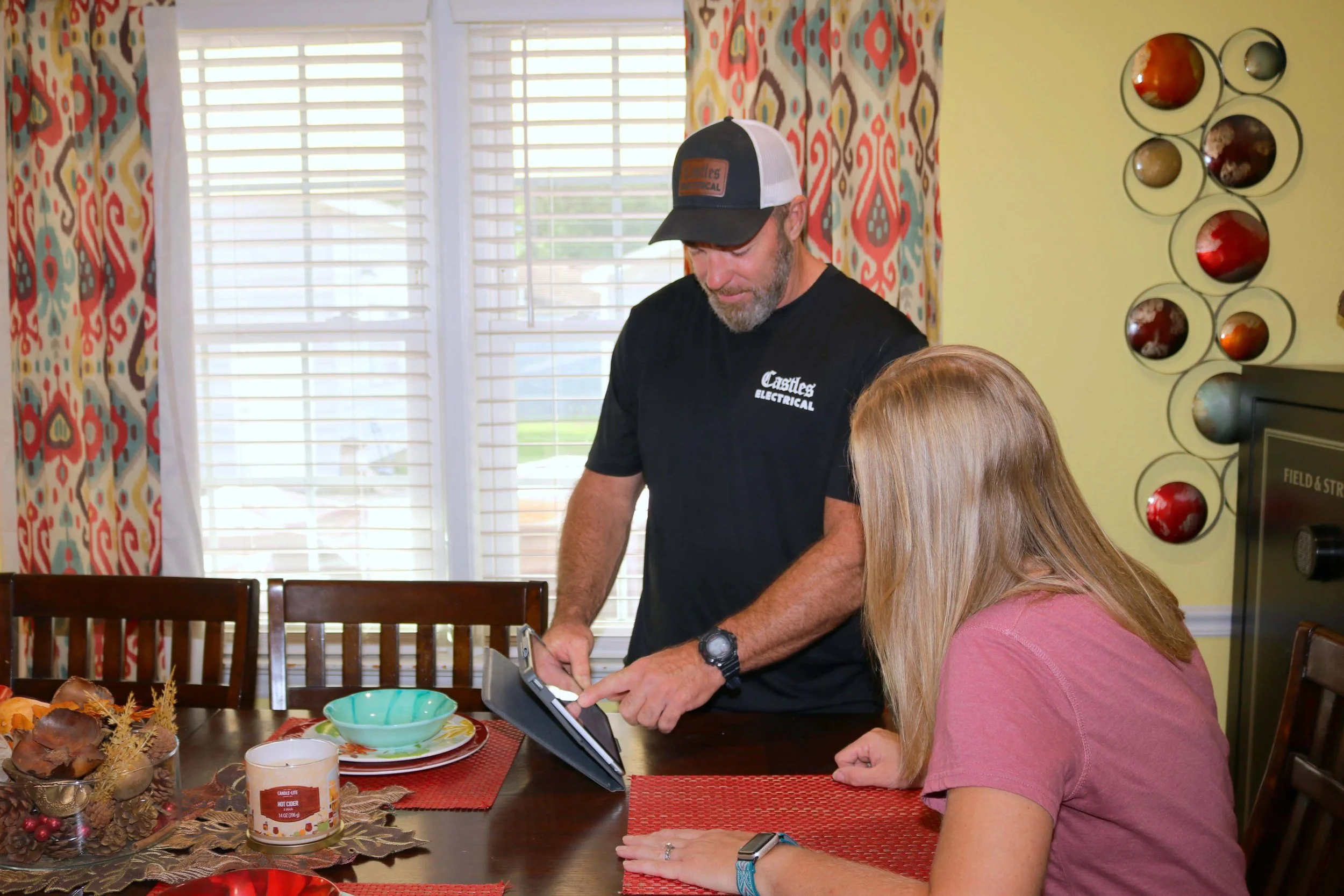
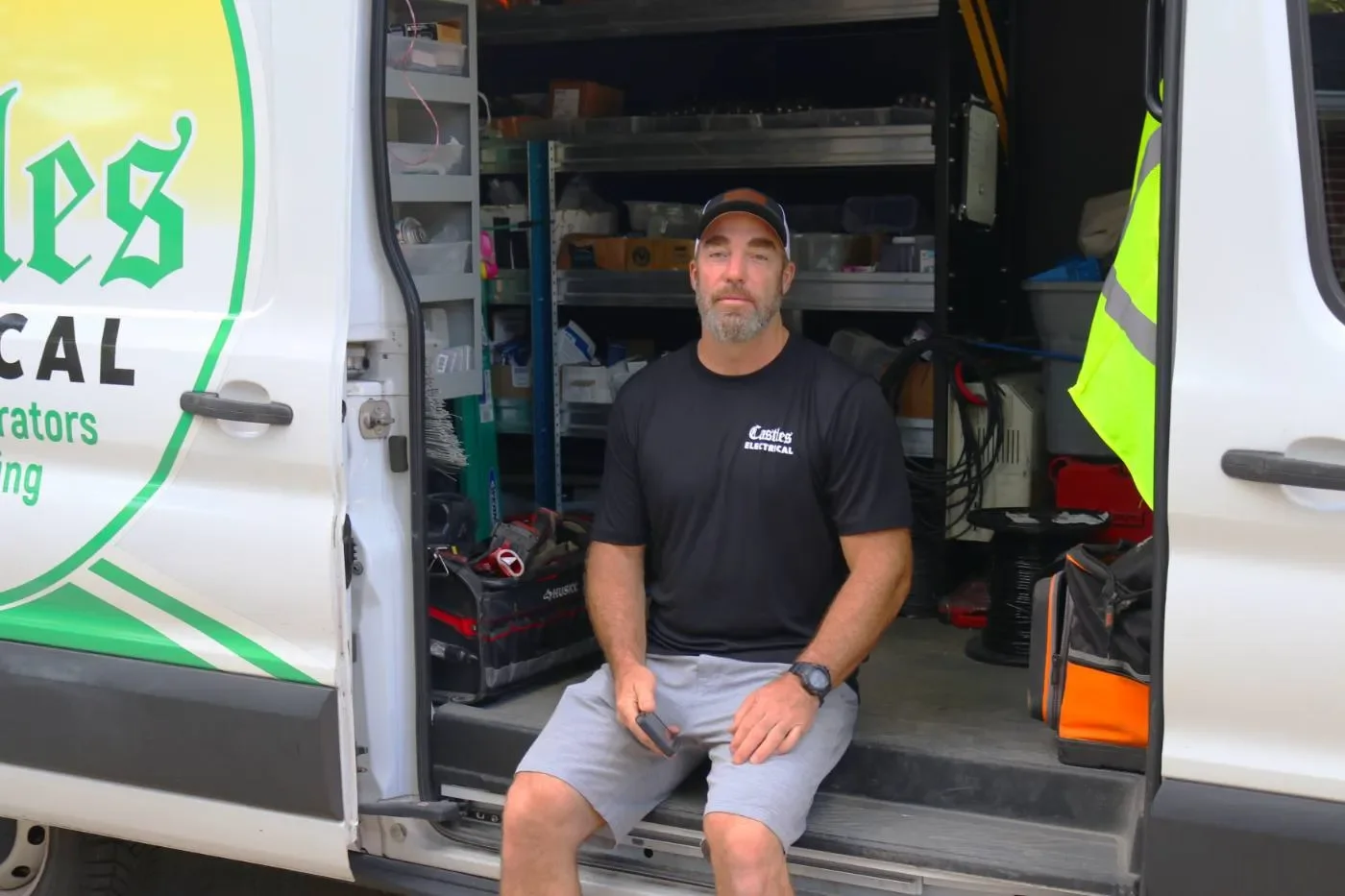
Castles Electrical electrician going over the visit with a Suffolk homeowner

Google 5.0 Rated by Hampton Roads Customers

Castles Electrical maintains a 5.0 rating on Google. The reviews below load as a live widget, so this page shows current feedback from real Castles Electrical customers.
Leave Us a Google Review

Ready When You Need Us

Show Us Where the Rust Is

A photo of the outside of the panel, plus whether it sits outdoors, in a garage, or indoors with an outdoor disconnect, is enough to start.

Office and hours

Based at 2984 S Lynnhaven Road, Suite 104, Virginia Beach, VA 23452.

  • Monday to Friday: 7:00 AM to 10:00 PM
  • Saturday: 7:00 AM to 7:00 PM
  • Sunday: Closed
  • After-hours voice messages are checked, and we take emergency and after-hours calls when we can

The rust at the bottom of the box is rarely where the water got in.

Castles Electrical electrician reviewing the job with a homeowner