electrical repair and troubleshooting in Suffolk, VA, Castles Electrical

Master Electrician & Class B Licensed

Electrical Repair & Troubleshooting in Suffolk, VA

A few blinks during a summer thunderstorm can mean protective equipment on the lines is doing its job. Blinks every time the air conditioner starts are a different story, and that difference is where troubleshooting begins. Community Electric Cooperative, which serves rural Suffolk, lists faulty wiring, loose connections, poor grounding, and undersized wiring as common causes of power quality problems in its member guidance.

Which of those two patterns you have decides who gets the call first. We troubleshoot blinking and dimming lights, partial power, and breakers that will not stay on, on Dominion homes and co-op homes alike.

Master Electrical & Alternative Energy License #2710048784 Class B Contractors License #2705166194 Google 5.0 Rated Family-Owned & Operated Since 2012 Thermal Imaging Diagnostics Workmanship Warranty on Repairs Licensed Electricians, Never Subcontracted
Licensed. Insured. Trusted. We treat your home like it’s our own.
Locally Owned in Virginia Beach Since 2012 Serving Virginia Beach & Nearby Cities
GENERAC
TESLA
KOHLER
NABCEP
BBBA+
SquareD
GENERAC
TESLA
KOHLER
NABCEP
BBBA+
SquareD
Home / Suffolk, VA / Electrical Repair & Troubleshooting in Suffolk

01 — Suffolk Conditions

Utility Side or House Side? Sorting It Out in Suffolk

Blinks on a co-op line

Community Electric Cooperative explains that some blinks result from reclosers, protective devices on its lines that open briefly before attempting to restore power. After trying three times, most stay open until the problem is fixed and the device is manually reset. A few blinks during a storm fit that pattern, and the co-op asks members to let it know when a home sees an excessive number of them.

Blinks that happen when the air conditioner or refrigerator starts, lights that dim in one part of the house, or flicker that neighbors are not seeing point back inside. The co-op says most power quality problems begin in the home, including loose connections, poor grounding, and undersized wire, and those are what a troubleshooting visit is for.

Damage at the service on a Dominion home

Dominion Energy says it can only repair service up to the point of connection to your home, and that when a storm damages the equipment between the weatherhead and the meter base, an electrician has to repair it before the utility will reconnect. We repair that equipment and coordinate the reconnection.

After a winter outage on the co-op

During widespread winter outages, the co-op has asked members to switch off their heat pump breakers while power is out and leave them off for about 30 minutes after power returns, so the whole system does not try to start at once. If a heat pump breaker will not reset after that, the problem is worth a service call.

Tree work on the co-op’s lines

Community Electric Cooperative maintains vegetation along its lines in Isle of Wight, Southampton, and Suffolk on a six-year cycle, pruning to ANSI A300 standards. Members with a question about limbs near the line to their house should ask the co-op how it handles them. Once the line is safe, any damage to the mast or meter base is a service call.

02 — Whose Side

Clues That Point to the Utility or to Your Wiring
What you notice
Points toward
Next step
A few blinks during a storm, then normal
Utility protective equipment
Report it if blinks become frequent
Neighbors have power, and you do not
Your breakers, your service equipment, or the utility’s line to your house
Check breakers, report it to your utility, then call us if power stays out
Lights dim when a motor starts
House wiring, connections, or wire size
Service call to test the circuit
Half the house dead, half working
A failed main breaker, a loose service connection, or a lost leg on the utility side
Turn off large appliances, report partial power, and call us
Storm damage at the weatherhead or mast
Customer-side equipment on Dominion homes
Stay clear, report it, then an electrician repairs before reconnection
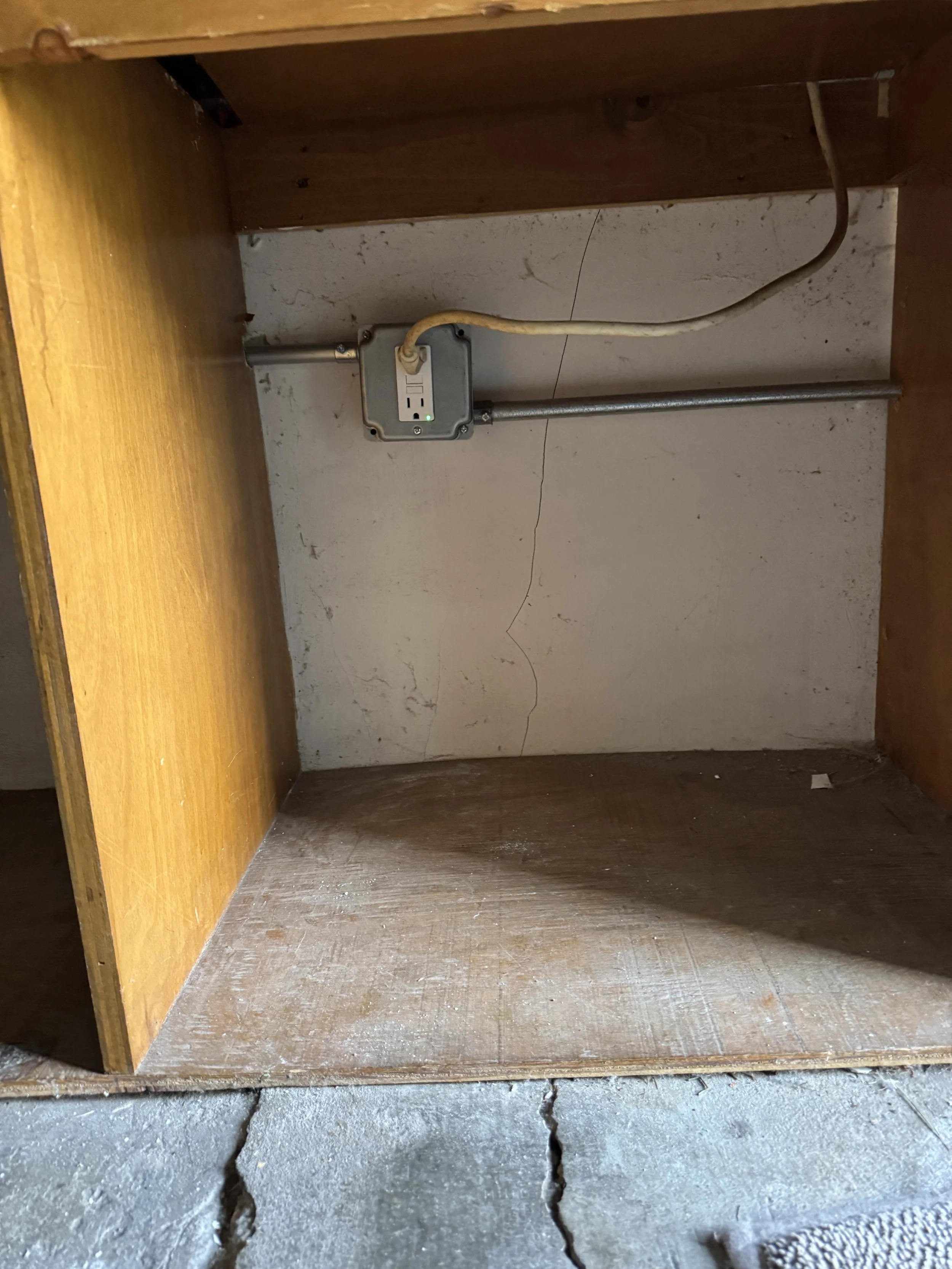
Junction box and exposed cable run in an unfinished storage space of a Suffolk, VA home

03 — Chewed Wiring

Chewed Wiring in Attics, Sheds, and Garages

University extension services describe the damage squirrels do once they get inside. University of Maryland Extension says that once in the attic, they may tear up insulation, chew on electrical wiring, and damage stored items, and University of Missouri Extension notes that they gnaw on wires and build nests in attics.

The calls that follow tend to sound alike: a circuit that went dead or started tripping after scratching in the ceiling, a burning smell in the attic, or a flicker on one circuit only. Chewed insulation can leave conductors exposed, so a breaker that tripped after animal activity should stay off and not be reset repeatedly.

The work runs in order. A wildlife or pest professional gets the animals out and closes the openings, and Missouri Extension’s list of steps includes trimming overhanging branches and filling openings made for pipes and wiring. Then we trace the affected circuits, replace damaged cable, and restore power once the circuit tests safe.

04 — Heat Tape

Heat Tape on Crawlspace Pipes: A Winter Tripping Culprit

Crawlspace foundations are common here, and plug-in heat tape keeps exposed pipes from freezing. The Consumer Product Safety Commission’s heat tape guidelines, issued in 1996, advise plugging heat tape into a GFCI-protected outlet. A GFCI that trips on the first cold night can be the protection reacting to a failing tape, so it is a signal to check the tape before resetting it.

The same guidance lists the warning signs to look for each year: discolored surfaces, especially at the plug, charring, cuts or breaks in the insulation, and bare wires. It also says to apply heat tape directly on the pipe and never over the pipe insulation, to keep the end cap sealed and off the ground since moisture can lead to a fire, and to plug a three-prong tape only into a three-prong outlet.

On a service call, unplugging the tape shows whether the GFCI holds without it. If it still trips, we test the crawlspace or porch outlet and its circuit to find whether the outlet, the wiring, or something else is at fault.
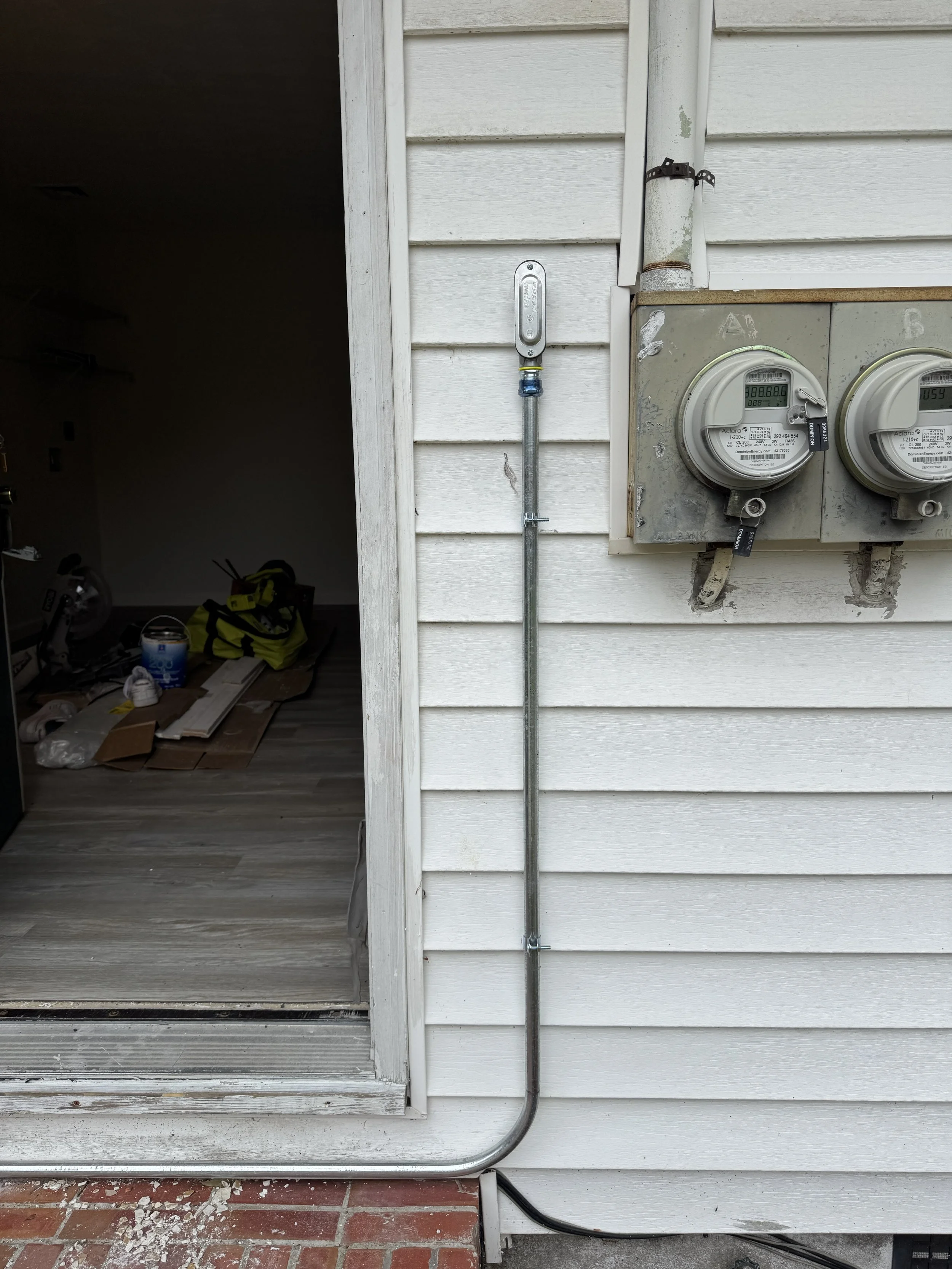
Crawlspace opening beside the meters on a Suffolk, VA home

05 — Lightning

After a Lightning Strike: What We Check

The National Weather Service says lightning enters structures in three main ways: a direct strike, through wires or pipes that extend outside the structure, or through the ground. It adds that the surges lightning generates can damage electronic equipment some distance from the strike.

If you see smoke or flames, or a burning smell that will not go away, call 911 first. After the storm has passed, these are the signs that call for testing the affected circuits and the service connections:

  • A breaker or GFCI that will not reset.
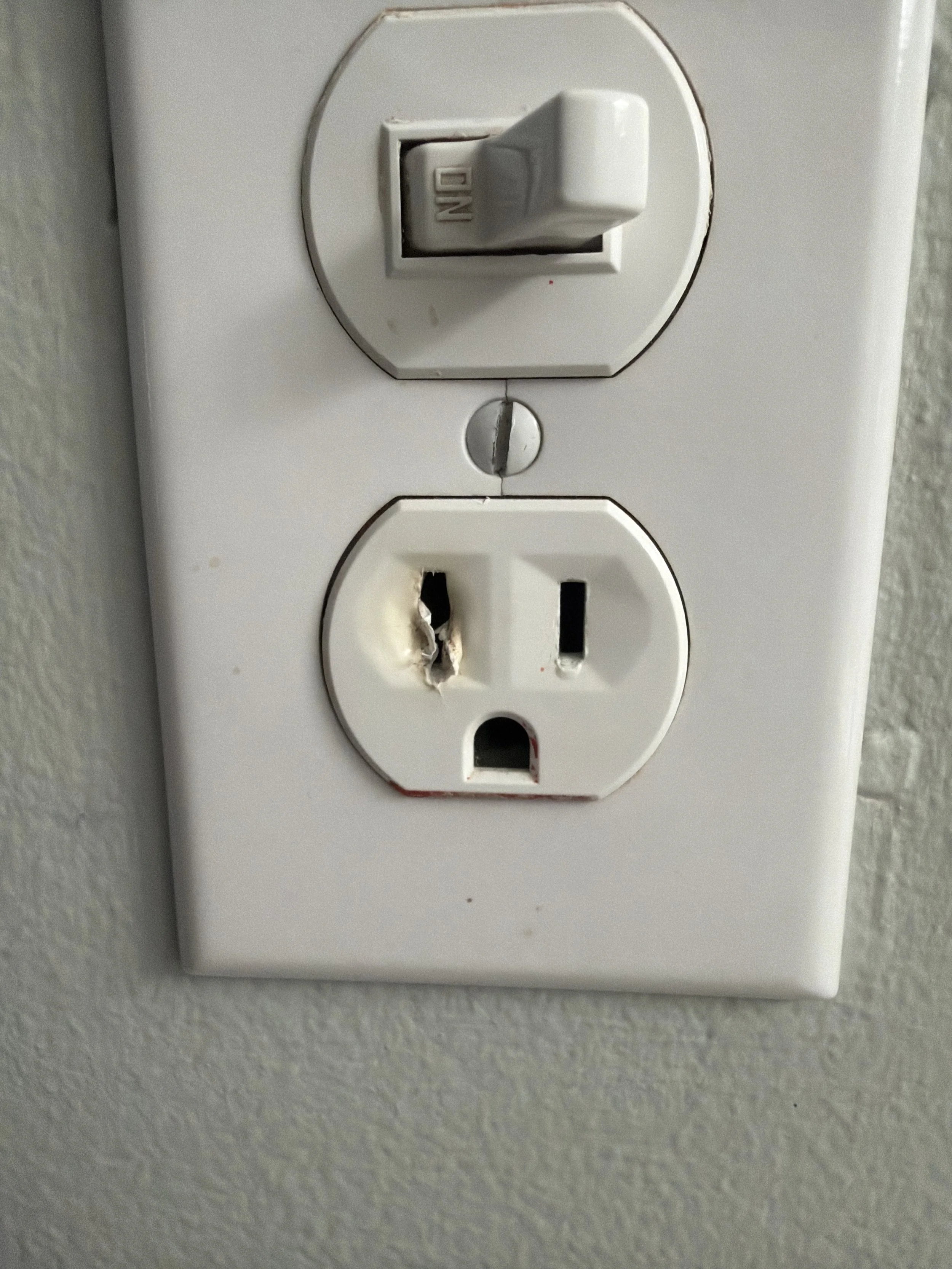
  • Scorch marks on an outlet, switch, or cover plate.
  • Several devices on one circuit that failed together.
  • A detached garage or shop that lost power.
  • Lights that behave oddly since the storm.
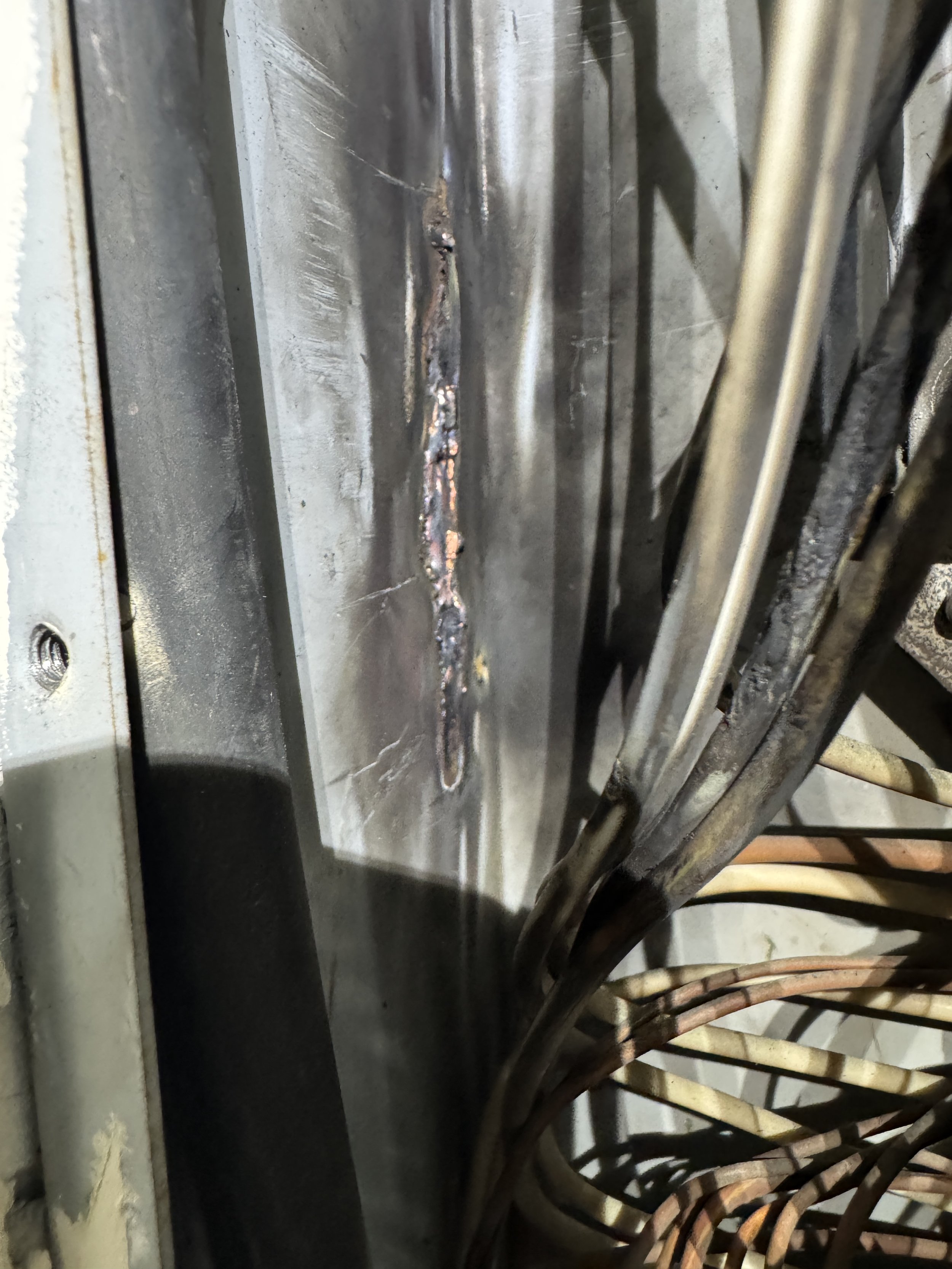
Scorch marks inside a Suffolk, VA panel enclosure checked after a storm

Write down what stopped working and when, since that list helps us test the right circuits first. Once the cause is found, the damaged devices and wiring get replaced. Whether to add a surge device at the panel afterward is a separate decision, and worth making then rather than after the next storm.
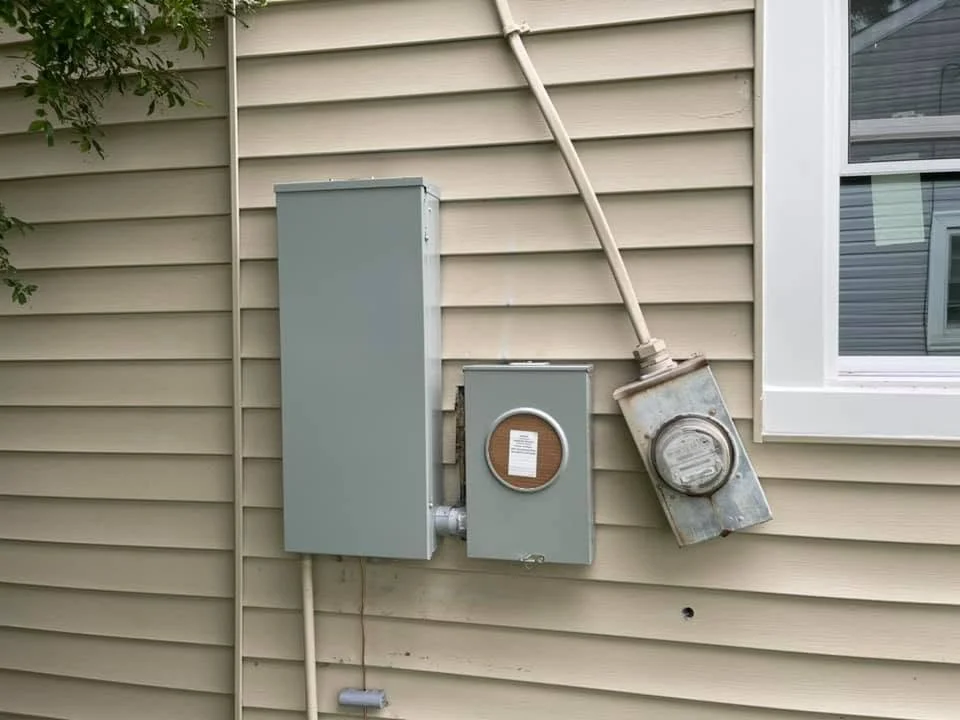
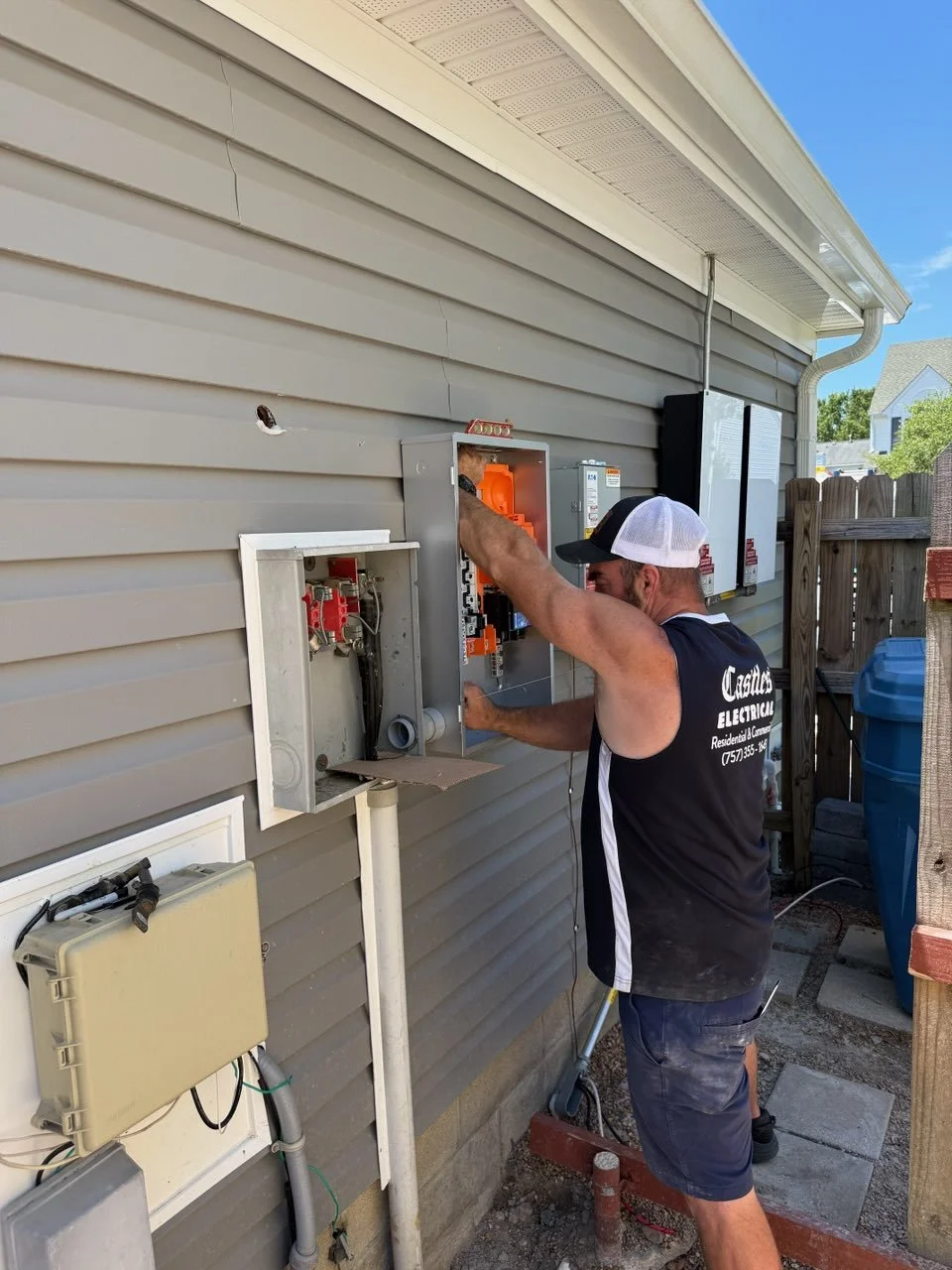
Meter, disconnect and service entrance on the outside wall of a Suffolk, VA home

Castles Electrical

Licensed, insured, and locally owned. The work is done by our own electricians, never subcontracted.

06 — Proof

Outlet Fixes Customers Mention

“

A Google review describes a few outlet problems resolved, with every workspace left cleaner than it was found. The full reviews are in the feed below.

From our five-star Google reviews
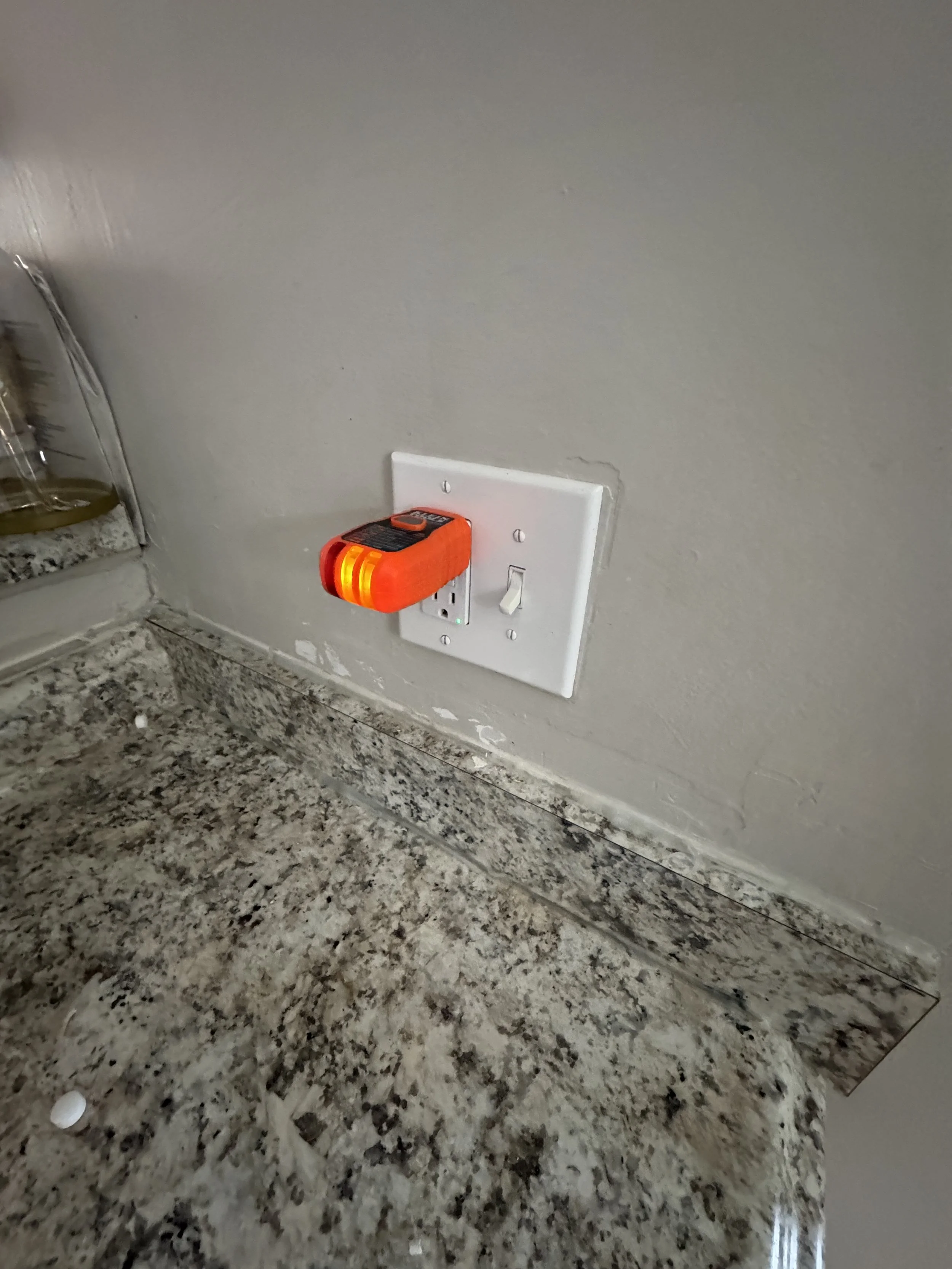
Outlet tester reading a countertop receptacle on a Suffolk, VA service call
Receptacle and switch left clean behind a fresh plate in a Suffolk, VA home

Google 5.0 Rated by Hampton Roads Customers

Castles Electrical maintains a 5.0 rating on Google. The reviews below load as a live widget, so this page shows current feedback from real Castles Electrical customers.

Leave Us a Google Review

07 — FAQS

Suffolk Electrical Repair FAQs

Why do my lights flicker only when it is windy?+

Wind moving the service wires can expose a loose connection at the weatherhead, the service drop, or the meter base. Have it checked, and report it to your utility if the problem is on its side of the connection.

Should I report blinks to the co-op or call you?+

It depends on the pattern. Frequent blinks your neighbors also notice are worth reporting to the cooperative. Blinks that follow your appliances or stay in one part of the house call for a wiring check.

The circuit in our detached shop went dead. Where do you start?+

At the house panel, with the breaker that feeds the shop. From there, we check the shop’s own disconnect and panel, then test each device on the dead circuit, since the fault can sit at either end of the run or anywhere between.

A garage GFCI tripped during a storm and will not reset. Why?+

Water in an outdoor or garage outlet box, or damage from a lightning surge, can keep a GFCI from holding. Leave it off, check whether any outdoor cover was open or wet, and have the circuit tested if it still will not reset once things dry out.

Can poor grounding cause flickering?+

It can contribute, and so can a loose neutral connection. Both can show up as flickering, dimming, or lights that brighten when something else turns on. That last symptom can mean a failing neutral: unplug sensitive electronics, turn off large appliances, and call us or your utility right away.

08 — Why Castles

Where We Look on a Suffolk Call

Dominion or Co-op

Same diagnosis on either system.

Service Equipment Repaired

Mast, weatherhead, and meter base work.

Grounding Tested

Neutral and grounding connections tested.

Heat Pump Breakers Checked

After a winter outage, if one will not reset.

Partial Power Traced

Lost legs and loose service connections found.

Windy-Day Flicker Checked

Weatherhead and drop connections inspected.
Ready When You Need Us

Lights Blinking or Power Half Out in Suffolk?

One room, half the house, or every light: each points in a different direction.

Office and hours

Based at 2984 S Lynnhaven Road, Suite 104, Virginia Beach, VA 23452.

  • Monday to Friday: 7:00 AM to 10:00 PM
  • Saturday: 7:00 AM to 7:00 PM
  • Sunday: Closed
  • After-hours voice messages are checked, and we take emergency and after-hours calls when we can

Utility side or house side: sorted first, then repaired. Troubleshooting is a paid service call, and you get the rate by phone before we schedule.

Castles Electrical electrician reviewing the job with a homeowner