electrical repair and troubleshooting in Norfolk, VA, Castles Electrical

Master Electrician & Class B Licensed

Electrical Repair & Troubleshooting in Norfolk, VA

Run a window air conditioner and a microwave on the same 1950s Norfolk circuit, and the breaker can trip. Norfolk has more than 20,000 homes built in that decade, by Census estimates, more than Chesapeake, Portsmouth, and Suffolk have from the 1950s combined, and another quarter of its housing is older still. The first thing to sort out on those calls is whether the circuit is overloaded or something is failing.

Our licensed electricians trace the breaker that keeps tripping, the fuse that keeps blowing, and the circuit that cannot carry a window AC in Norfolk’s mid-century and pre-war homes.

Master Electrical & Alternative Energy License #2710048784 Class B Contractors License #2705166194 Google 5.0 Rated Family-Owned & Operated Since 2012 Thermal Imaging Diagnostics Workmanship Warranty on Repairs Licensed Electricians, Never Subcontracted
Licensed. Insured. Trusted. We treat your home like it’s our own.
Locally Owned in Virginia Beach Since 2012 Serving Virginia Beach & Nearby Cities
GENERAC
TESLA
KOHLER
NABCEP
BBBA+
SquareD
GENERAC
TESLA
KOHLER
NABCEP
BBBA+
SquareD
Home / Norfolk, VA / Electrical Repair & Troubleshooting in Norfolk

01 — Norfolk Conditions

Overload or Fault in a Mid-Century Norfolk House

A 1950s house often has fewer circuits than a modern one, with several rooms sharing each circuit. Add a window air conditioner, a space heater, a gaming setup, and a microwave to that layout, and the breaker trips as designed. That is an overload.

Timing is a useful clue. A breaker that trips after the load has been running for a while usually points to an overload. One that trips the instant it is reset, or with almost nothing running, points to a shorted wire, a ground fault, or a breaker that is wearing out, and that is a repair.

The HUD guide used by rehabilitation inspectors lists physical signs of overloaded circuits in older homes: the odor of burned insulation, melted insulation, discolored contacts in fuse holders, and warm fuses or breakers. It also warns to be suspicious of 20- or 25-amp fuses on household lighting circuits, a sign someone may have installed a larger fuse to stop the blowing.

Houses older than the 1950s

Norfolk’s pre-war homes add another layer. Where original knob-and-tube wiring survives, its insulation turns dry and brittle with age and can fall off on contact, according to the same HUD guide, which says wiring with failed insulation should be replaced. Troubleshooting in those houses includes checking whether an intermittent problem traces back to that wiring. If it does, the repair becomes a rewiring conversation.

02 — Symptoms

Common Symptoms in Older Norfolk Homes and What They Usually Mean

What you notice
Most likely cause
What to do
Trips after two appliances run a while
Overloaded shared circuit
Split the loads, then ask about a new circuit
Trips instantly on reset
Short, ground fault, or failing breaker
Call for a fault check
Fuse blows repeatedly
Overload or a fault on that circuit
Use only the correct size, and call if it blows again
Extension cords and power strips everywhere
Too few circuits for the rooms
Have the circuit layout reviewed
Warm panel cover, fuse, or breaker
Loose connection or overheating
Keep clear of it and have it checked
Smoke or flames
Active fire
Get out and call 911

Never tape, wedge, or hold a breaker in the on position. A breaker that will not stay on is protecting the wiring behind it.

03 — Proof

A Friday Burning Smell

“

A Google review describes a burning smell at a breaker and meter that was diagnosed and fixed in a little over an hour, at the end of the day on a Friday.

From our five-star Google reviews
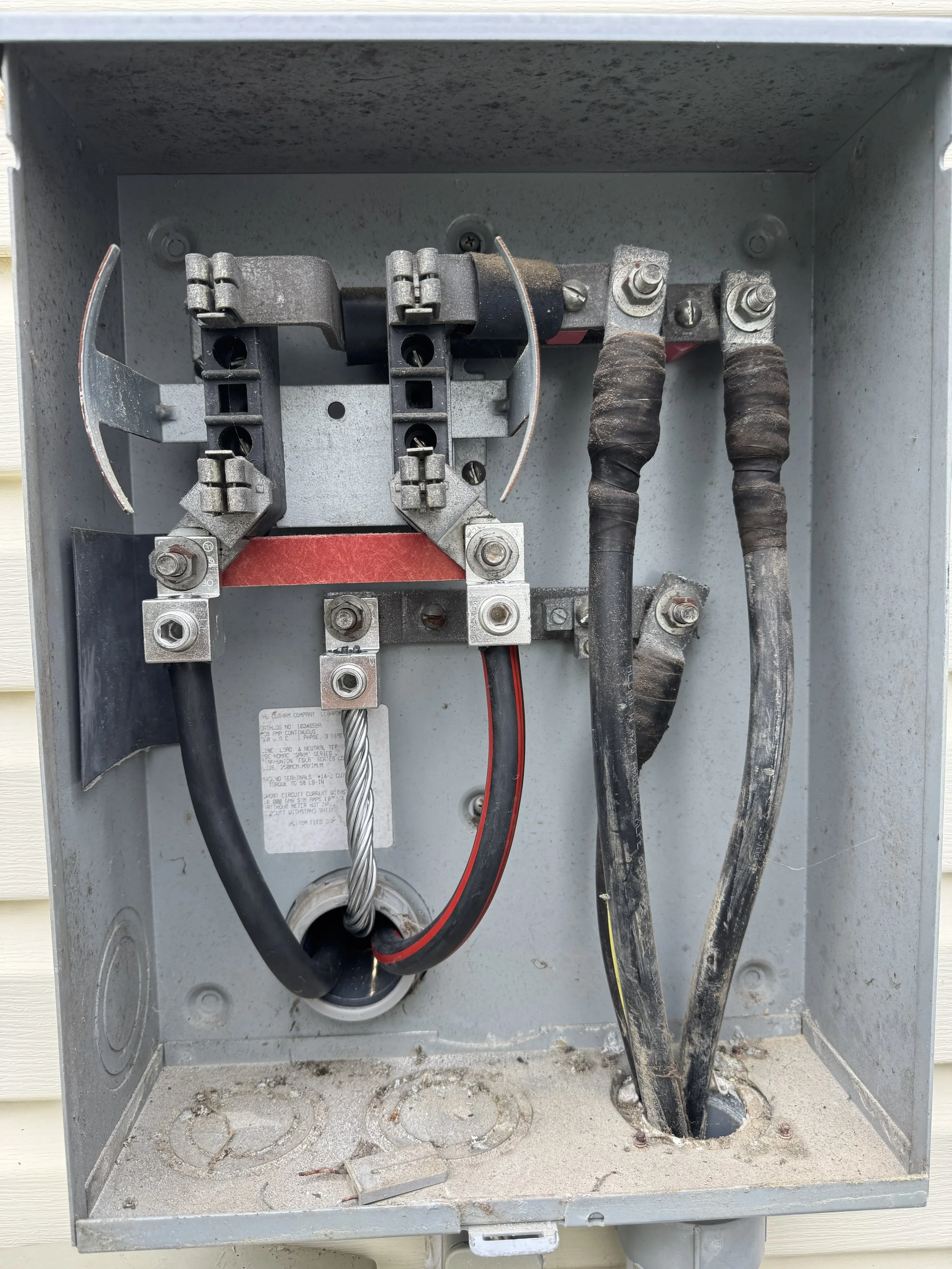
Heat damage found at the lugs inside a Norfolk, VA meter base
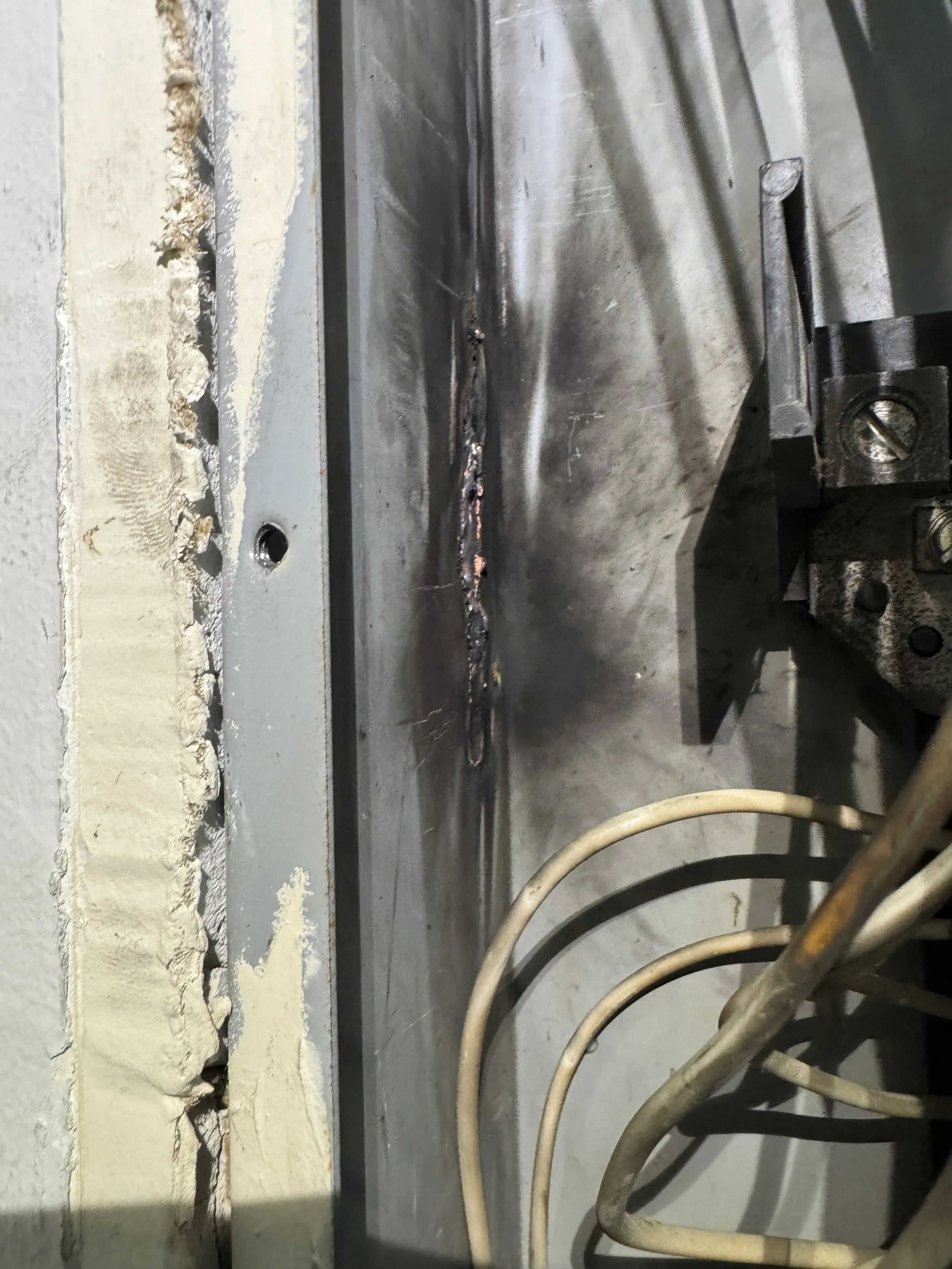
Scorch marks inside a Norfolk, VA panel enclosure found during a service call

Google 5.0 Rated by Hampton Roads Customers

Castles Electrical maintains a 5.0 rating on Google. The reviews below load as a live widget, so this page shows current feedback from real Castles Electrical customers.
Leave Us a Google Review
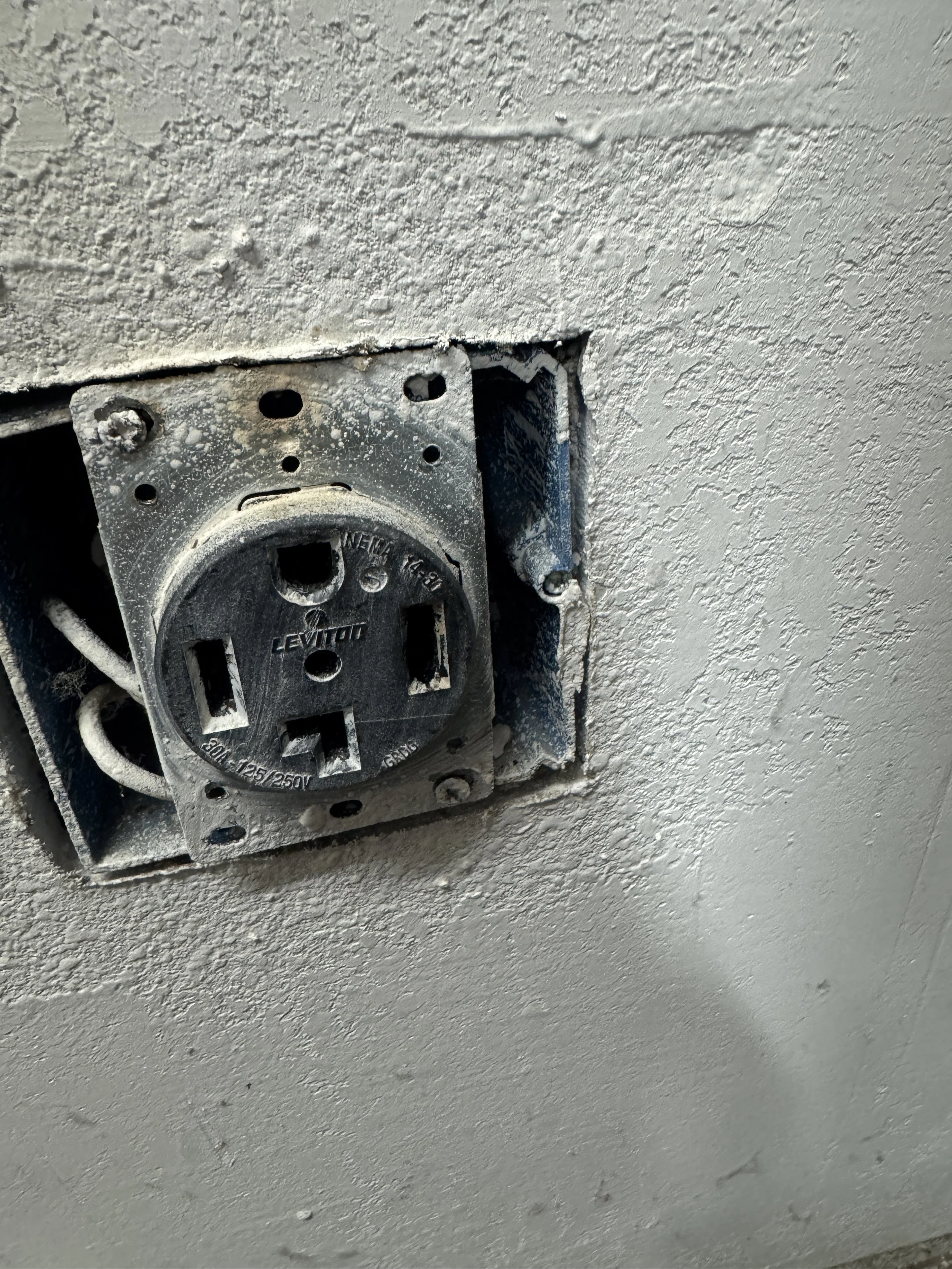
Heat-damaged receptacle pulled from the wall of an older Norfolk, VA home

04 — Space Heaters

Space Heaters on a 1950s Norfolk Circuit

A plug-in electric heater is one of the largest loads most homes put on an ordinary receptacle, and it runs for hours. On a mid-century circuit that already feeds several rooms, a heater can draw most of the circuit’s capacity before anything else is plugged in.

The Consumer Product Safety Commission estimates that portable heaters, including electric space heaters, were involved in an average of 1,600 fires a year from 2020 to 2022. Its winter advice is to plug a heater directly into a wall outlet, never into an extension cord or power strip, to keep it at least three feet from bedding, drapes, and furniture, and to turn it off when sleeping.

U.S. Fire Administration data for 2017 to 2019 put portable heaters at only 3% of residential heating fires but 41% of fatal ones, with a January peak and bedrooms the most common starting point.

On a repair call, a breaker that trips only on cold nights, or a plug or faceplate that feels warm where a heater runs, gets checked. The fix can be moving the heater to a lightly loaded circuit, replacing a worn receptacle, or adding a circuit where a room needs steady heat.

05 — Power Strips

Chained Power Strips and Extension Cords

In November 2021, Norfolk Fire-Rescue traced an apartment fire that displaced seven people to two extension cords and two power strips connected together and pushed under a bed, according to local news coverage.

National numbers point the same way. The National Fire Protection Association reports that cords and plugs were involved in only 1 percent of home fires but 3 percent of home fire deaths, and that electrical distribution and lighting equipment, a category that includes cords, plugs, and outlets, was the leading cause of fires starting in bedrooms.

Chained strips are a sign that a room has too few receptacles or too few circuits for what it runs. The lasting repair adds capacity, such as another receptacle or a new circuit with a permit where required, so the strips can come out.

06 — Fuses

Keeping the Right Fuse in an Older Norfolk Fuse Box

Old screw-in fuse holders accept 15-, 20-, and 30-amp fuses alike, which is how an oversized fuse ends up protecting a small wire. The National Electrical Code specifies the Type S fuse. A Type S adapter screws into the old holder and is designed to be non-removable; once the correct adapter is in, only the matching Type S fuse fits.

Getting that right means taking the panel cover off, confirming each wire’s size, and matching the adapter to it. That is part of what we check when a Norfolk fuse keeps blowing: whether each fuse suits the wire it protects, and which options fit the house, from the right fuses to a breaker panel. A fuse that still blows with the correct-size fuse in place points to an overload or a fault on that circuit.

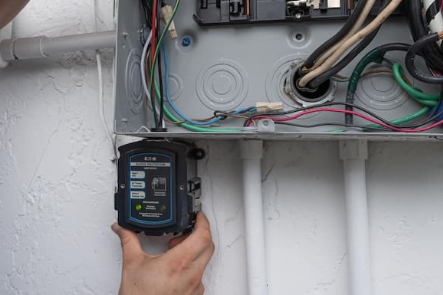
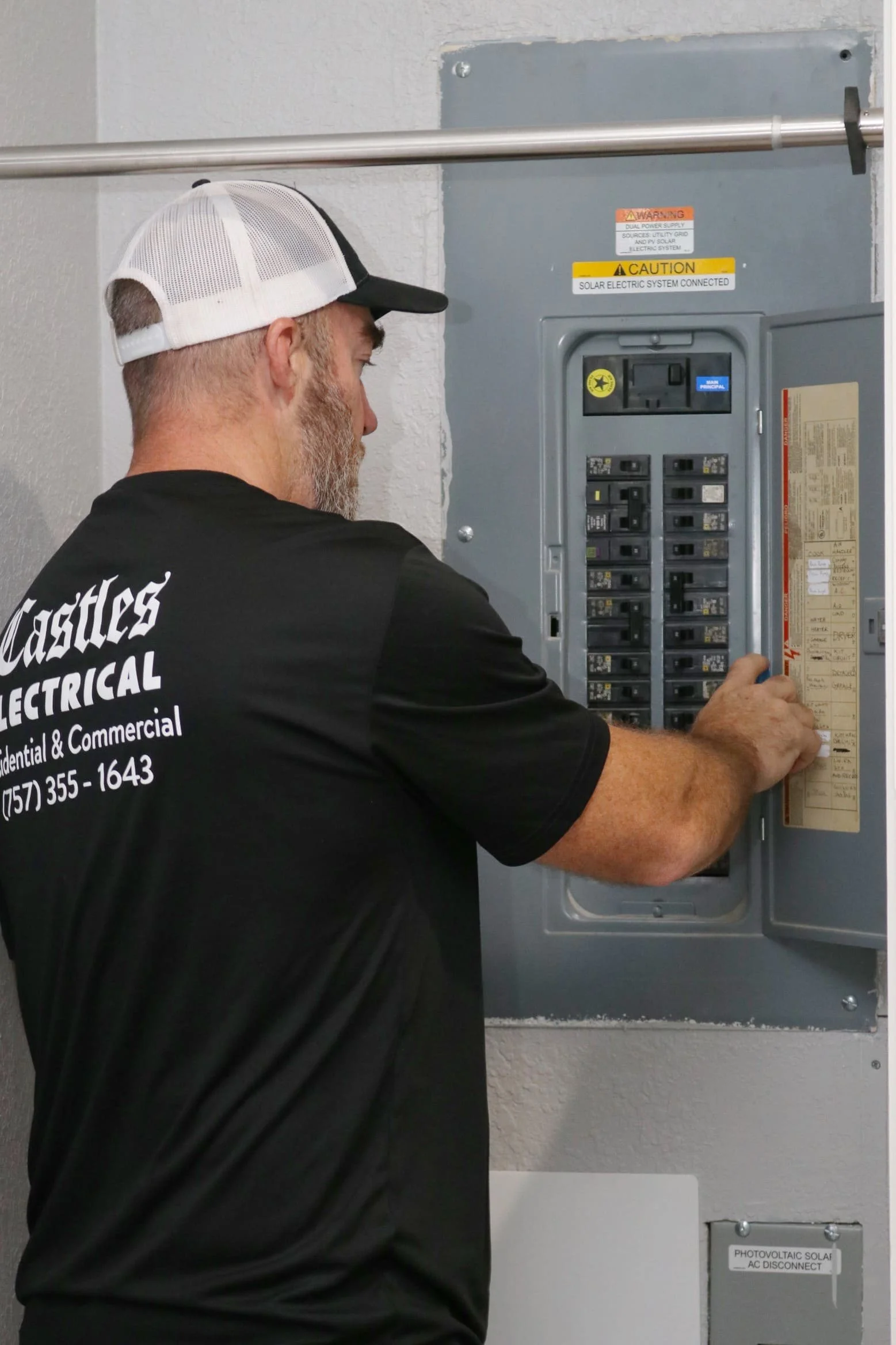
Older Norfolk, VA panel opened up so each conductor and its protection can be checked
Castles Electrical electrician testing a circuit at an opened enclosure in Norfolk, VA

Castles Electrical

Licensed, insured, and locally owned. The work is done by our own electricians, never subcontracted.

07 — Rentals

Renting in Norfolk: Who Arranges the Repair

Many Norfolk repair calls start with a tenant noticing a problem. Virginia’s landlord and tenant law makes the landlord responsible for keeping supplied electrical facilities in good and safe working order.

For a condition that could become a fire hazard or a serious threat to safety, or a lack of electricity or light, the law describes written notice from the tenant and a 14-day period for the landlord to take reasonable steps to repair it, with further remedies in some cases. The statute sets out the details and limits, and a tenant with questions about it should speak with an attorney.

Whoever books the visit, tell us who owns the property and who authorizes the work, so the diagnosis and any repair quote go to the right person. For sparks, smoke, or a burning smell, let the landlord know right away, and call 911 for an active fire.

08 — Why Castles

Troubleshooting Built for Norfolk’s Older Houses

Overload vs. Fault Sorted

We tell you which one you have.

Fuse Sizes Checked

Oversized fuses found and options explained.

Warm Breakers Scanned

Thermal imaging on panels and connections.

Circuit Map Explained

Which rooms share which circuit.

Pre-War Wiring Assessed

Knob-and-tube checked for brittle insulation.

Repairs Warrantied

Workmanship plus manufacturer parts warranty.

09 — FAQS
Norfolk Electrical Repair FAQs

My fuse keeps blowing. Can I put in a bigger one, or switch to breakers?+

Breakers trip for the same reasons fuses blow, so we find the overload or fault first, then talk about the fuse box if it makes sense.

How do I reset a tripped breaker safely?+

Turn off or unplug what was running on that circuit, push the breaker fully off, then back on, once. Add things back one at a time. If it trips again right away, leave it off and call.

The breaker trips when the window AC and microwave run together. Is the breaker bad?+

Probably not. That pattern usually means the two share a circuit that cannot carry both. The fix may be moving a load or adding a dedicated circuit, which we can plan.

What are the signs a breaker itself has gone bad?+

A breaker that trips well below its load, feels warm, buzzes, or will not stay reset with everything unplugged may be failing. We test it before replacing it.

Why do the lights dim when the space heater kicks on?+

On an older circuit shared by lights and a heater, the heater’s draw can pull the voltage down a little on that circuit. A slight dip on a busy circuit is common. Lights that dim sharply or a plug or faceplate that turns warm indicate a loose connection that should be checked.

Ready When You Need Us

Breaker, Fuse, or Outlet Acting Up in Norfolk?

Say what was running when it tripped and roughly when the house was built. Troubleshooting is a paid service call, with the rate given by phone before anyone is sent.

Office and hours

Based at 2984 S Lynnhaven Road, Suite 104, Virginia Beach, VA 23452.

  • Monday to Friday: 7:00 AM to 10:00 PM
  • Saturday: 7:00 AM to 7:00 PM
  • Sunday: Closed
  • After-hours voice messages are checked, and we take emergency and after-hours calls when we can

Overload or fault: in a 1950s Norfolk house, that is the first question.

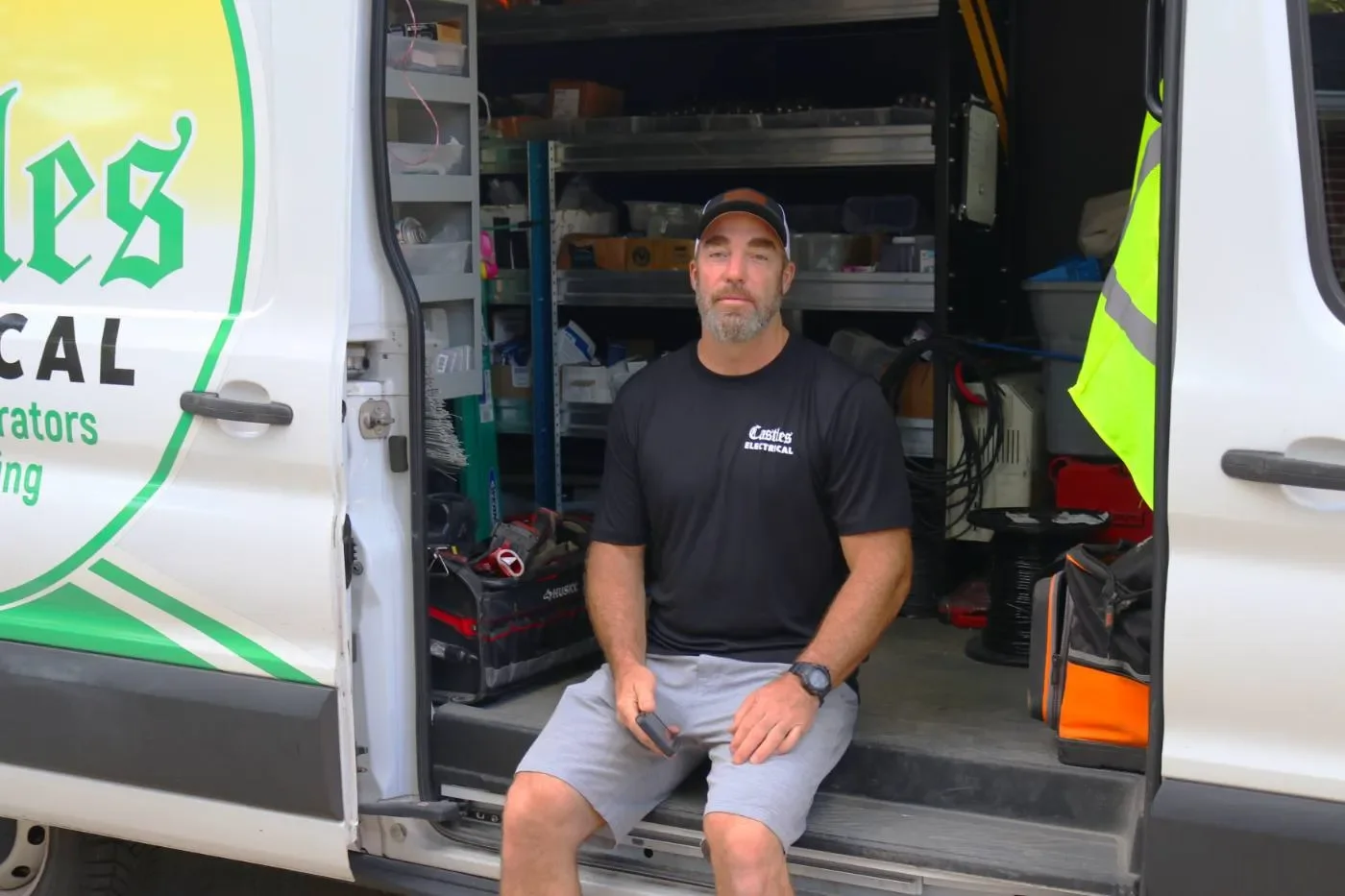
Castles Electrical electrician reviewing the job with a homeowner