01 — Why Castles
How We Approach a Portsmouth Charger
Driveway, Pad, or Garage
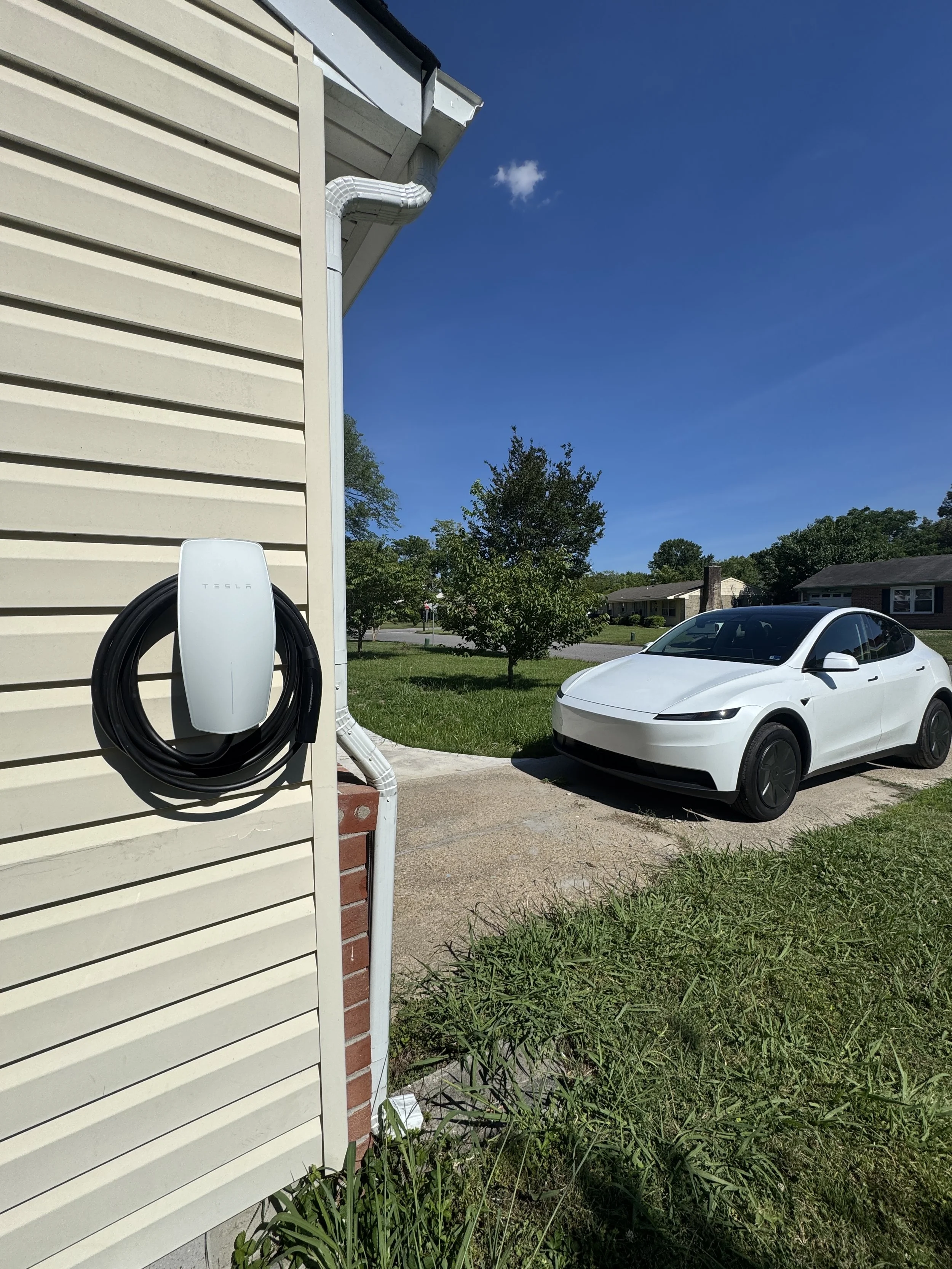
Charger placed at the paved spot the car uses.
Breaker Matched to the Car
Circuit sized to what the vehicle can use.
02 — Parking Rules
Start With Where the Car Parks
Portsmouth’s parking rules call for off-street parking areas to be surfaced with materials such as asphalt, concrete, brick, stone pavers, or aligned concrete strips. If the only open space near the panel is grass, the charger belongs at the driveway, a rear pad, a garage, or a carport instead. On a narrow lot, the existing driveway usually decides the location, and we do not run charging cables across a public sidewalk.
03 — Process
Parking Spot, Panel, Permit
Look at the parking spot
Driveway, rear pad, garage, or carport, and how the cable reaches the charge port.
Check the panel and the route
Service capacity and the route from the panel.
Permit and install
Final inspection, then the charger is tested and ready.
05 — Breaker Sizing
Matching the Breaker to the Car
Because a car can charge for hours at a stretch, the code sizes the breaker above the charger’s output. Tesla’s manual for the Universal Wall Connector lists these settings, and the breaker size is entered into the unit during setup. Other brands publish their own breaker settings, and we follow the charger’s manual.
A bigger circuit only helps a car that can use it. Tesla says the Model 3 and Model Y Rear-Wheel Drive top out at 32 amps, the same rate whether they use a Wall Connector on a 40-amp breaker or a Mobile Connector on a 50-amp, 240-volt outlet. On an older Portsmouth service with limited room, matching the circuit to the car can matter more than maximum output.
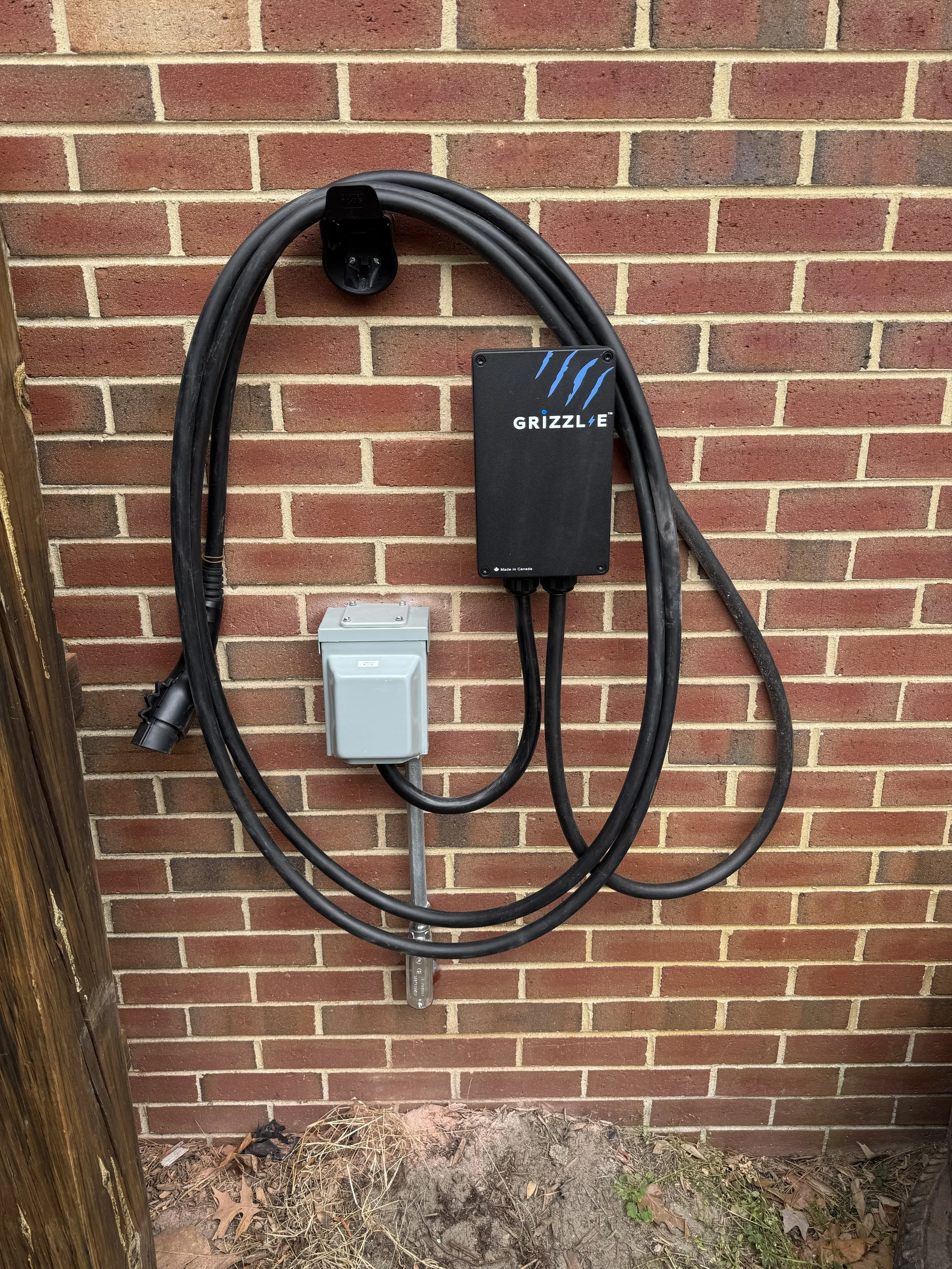
The outlet or hardwired choice follows from that. A hardwired charger can deliver more to cars that accept it, while an outlet lets you unplug a portable charger and take it along.
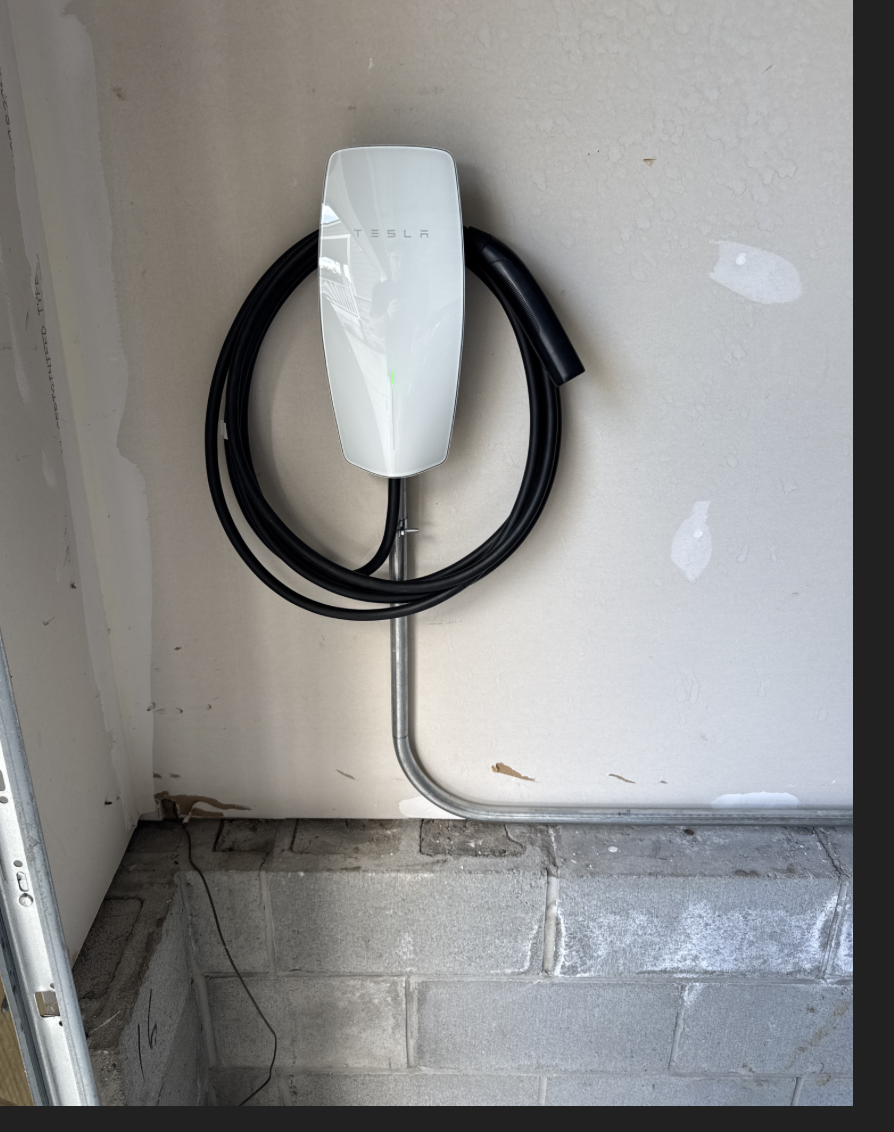
Each EV charging outlet is supplied by its own branch circuit, and under the 2020 electrical code, which Virginia’s building code uses, receptacles for EV charging must be GFCI-protected. The Universal Wall Connector has built-in ground-fault protection, and its 24-foot cable determines how far the mounting wall can be from the charge port.
When a regular outlet is enough
The Department of Energy estimates that Level 1 charging from a standard 120-volt outlet adds about 5 miles of range per hour, and that eight hours can replenish about 40 miles for a mid-size EV. Level 2 adds about 25 miles per hour. A driver with a short commute and a dedicated 120-volt circuit near the parking spot may manage on Level 1, while Level 2 suits longer daily drives.
06 — Flood-Prone Parking
Where the Charger Sits When the Street Floods
NOAA’s high-tide flooding outlook puts the regional gauge at Sewells Point among the most flood-prone in the area, and a low Portsmouth carport or garage that takes on water changes how a charger should be mounted. Tesla’s Universal Wall Connector manual allows a mounting height of up to 60 inches, recommends 45 inches, and sets 24 inches as the minimum for outdoor installations.
The enclosure is rated Type 3R, an outdoor rating for rain, not for standing water, and Tesla lists an operating range of -22 to 122 degrees Fahrenheit, which covers a summer carport. In a space that has flooded before, we lean toward the upper part of that height range and keep the circuit’s route out of the wet zone.
After water reaches a charger, its breaker, or a receptacle, the Electrical Safety Foundation International recommends an evaluation by qualified electricians before power is restored.
07 — HOA and Condo
Before You Ask Your HOA or Condo Board
Your recorded documents can change these defaults, so read them before the board meeting.
A condo association that approves a charger can require the owner’s certificate of insurance within 14 days after approval, and the conditions it sets run with the title to the unit. In an owners’ association, the lot owner installing a charger also indemnifies the association. A common-area parking space is its own question because Virginia’s owners’ association law permits an association to prohibit or restrict chargers in common areas.
08 — Proof
A 240-Volt Outlet for a New Model Y
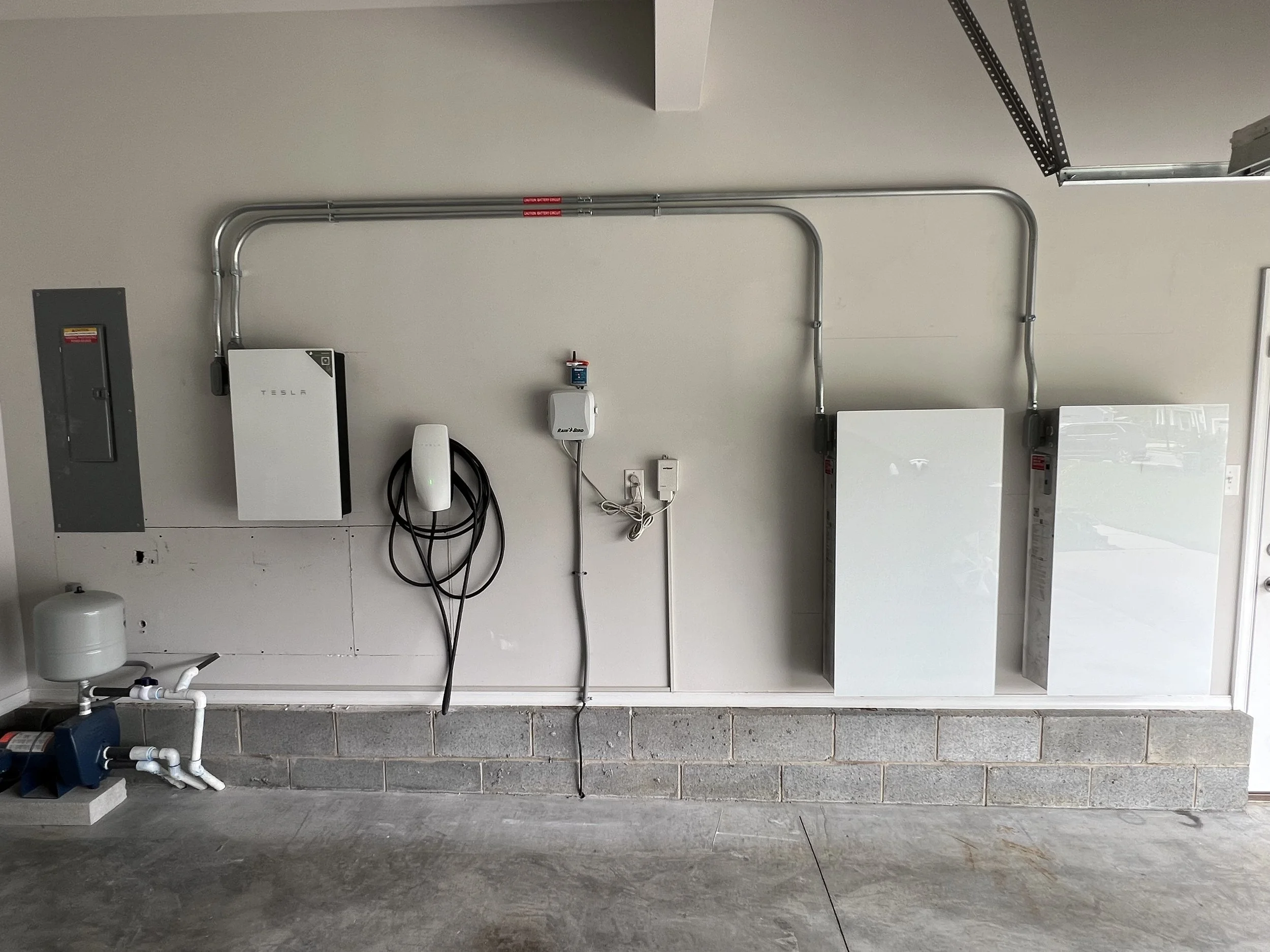
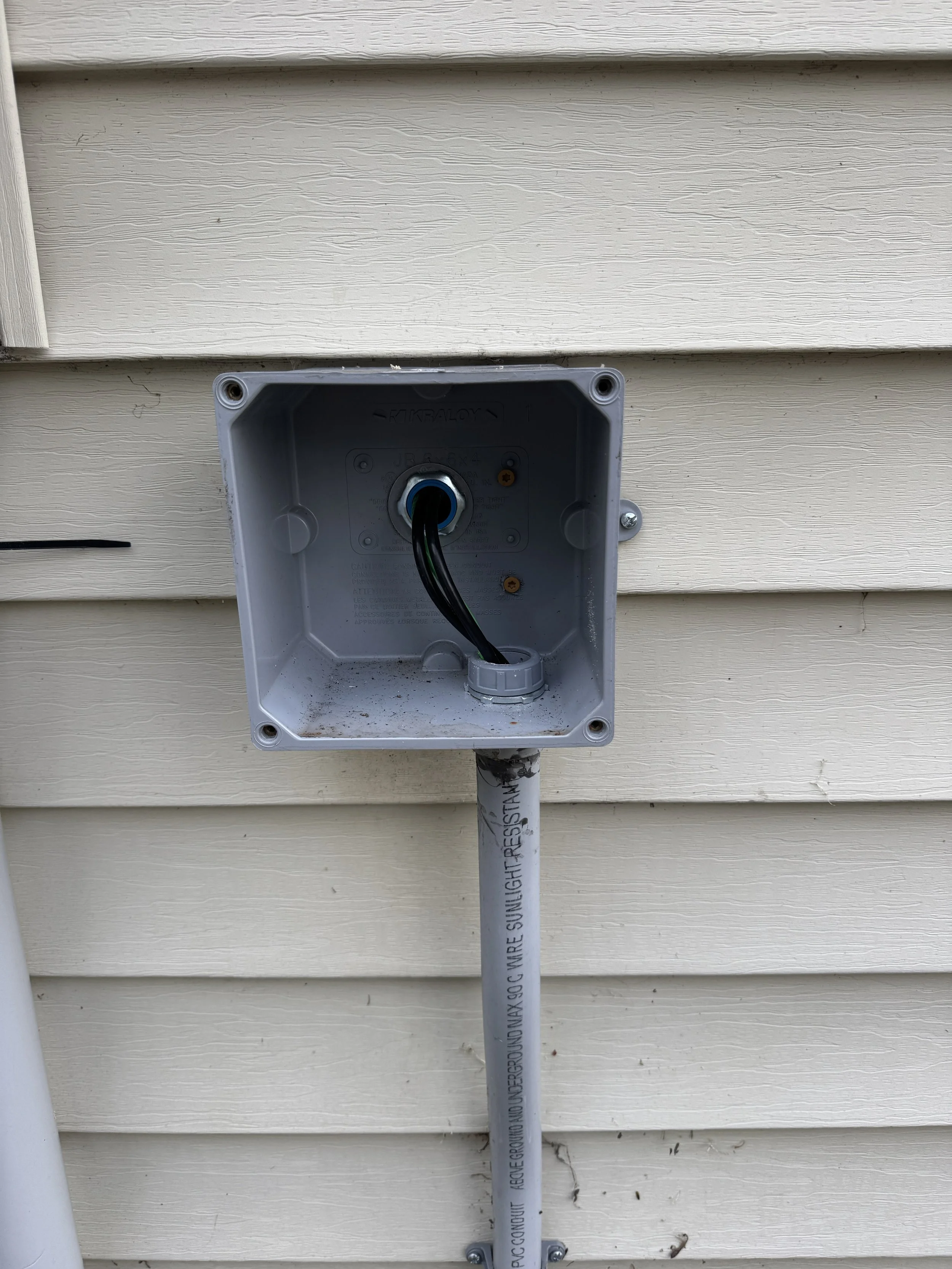
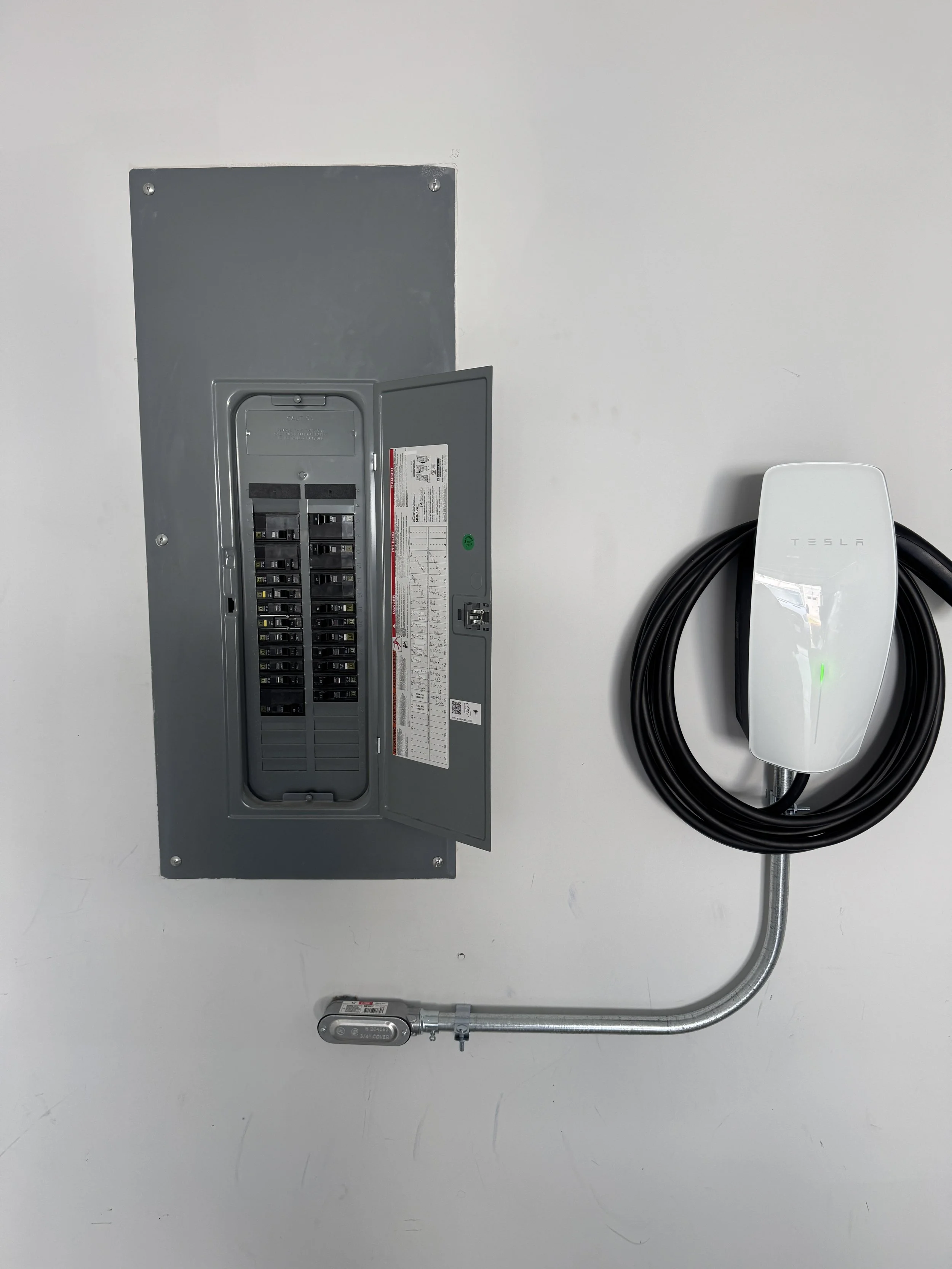
A reviewer had a 240-volt outlet and breaker installed for a new Model Y, and our electrician ran extra wire so a Tesla Wall Connector could be added later.
From our five-star Google reviews
Google 5.0 Rated by Hampton Roads Customers
Castles Electrical maintains a 5.0 rating on Google. The reviews below load as a live widget, so this page shows current feedback from real Castles Electrical customers.
09 — FAQS